It’s hard to believe it is has been almost two full years since the publication of Women of the Post. It feels like the characters in the book are with me all the time, even as I work on my next book.
A large part of that has been the warm reception, the kind words and notes others have shared about the book. It was nice to see, just the other day, that Women of the Post was included in this Book Riot roundup of books about the 6888th Central Postal Battalion. I also loved seeing every member of the battalion listed at the end of Six Triple Eight, Tyler Perry’s Netflix movie — that kind of recognition is long overdue. It’s exciting to see all the different ways creators, storytellers and historians are amplifying the story of the Women’s Army Corps, and the 855 Black women who served as part of the Six Triple Eight.
In the broader world, there is an aggressive push to proclaim the end of diversity, equity and inclusion. That war is separate but related to a false sense of competition between my version of the 6888th history and other versions. First, those of us who embody the histories central to Black History Month and Women’s History Month know that the work of pulling important, erased narratives from the margins to the center of discourse is not done. If it were, I would not get regular emails from readers sharing their dismay that they never learned about these Black women veterans. I would not hear from women veterans all over the country that each year during Veterans’ Day, their husbands are thanked for their service but they continue to be overlooked, even when they are the veterans and their spouses are not.
But second, history has been generous to non-Black and male veterans in this country, to put it mildly. There are many millions of stories, movies, books, plays and other archives brimming with descriptions of service to this country that do not include Black women at all. So there is much more to be written, told and shared about Black women veterans, and Black women, period. There is more than enough room for all of our stories.
It’s encouraging to me, always, to be in the virtual literary community that continues to lift up Women’s History all year long. This year, I’m also delighted to note that Women of the Post is included in great company as part of author Janis R. Daly’s 2025 list of 31 Titles about Women in History that educate and inspire. I’m looking forward to picking up some of these titles myself, and I hope you’ll spread the word about them, too.
I’ve been thinking a lot about Juneteenth and a common response that I have when anyone asks me how I deal with writer’s block. I know more people became familiar with Juneteenth during the pandemic, but I learned about the holiday in the state where it was born, Texas. (I highly recommend reading Annette Gordon-Reed’s slim, enlightening book, On Juneteenth, which I like to return to once in awhile.) I was in my 30s, working in Austin, when I first learned about it. Before that moment, I had never considered the quantum emotional leap that had to be required for enslaved people to transition to full, legal (on paper, at least) autonomy.
And, as a native New Yorker, I had mixed feelings about the holiday, which on its surface felt to me like the celebration of delayed freedom. And understanding what little I do about the Reconstruction Era, thanks to Bryan Stevenson and Kidada Williams especially, the holiday seems to have been observed, always, in an environment of extreme animosity for former dehumanized engines of labor resting up, relaxing and otherwise trying to see what this nation and its attraction to a simple freedom narrative really meant for them. After all, the end of slavery really reached a chilling crescendo in the twelve-year period immediately following the Civil War, when there were so many promising laws meant to offer Black folks a path to full citizenship.
But as part of a system of racial hierarchy, the caste system built here to justify slavery in the first place, the first tool of dehumanization was to cut Black people off from educating themselves. Because without reading or writing, you are chained to ignorance. Reading as a practice is what lead me to writing. Writing is what became the catalyst for personal expression that built the architecture of this amazing life.
Anti-Black literacy laws in this country were meant to strip us of any chance at navigating the world around us. And, as a kind of shorthand whenever anyone asks me about writer’s block and how I deal with it, I say that given that my ancestors were forbidden by law to read or write, I do not have the luxury that the phrase writer’s block insinuates.
The Harvard library talks about the barriers to education for Black people this way:
Between 1740 and 1867, anti-literacy laws in the United States prohibited enslaved, and sometimes free, Black Americans from learning to read or write. White elites viewed Black literacy as a threat to the institution of slavery – it facilitated escape, uprisings, and the sharing of information and ideas among enslaved people. Indeed, literacy undermined the false foundation slavery was built on: the intellectual inferiority and inhumanity of African-descended people.
The small percentage of enslaved people who became literate did so at great risk – those who were caught were often violently punished, sold, or even killed. Because of the danger, enslaved people had to be strategic and resourceful in learning to read and write. They attended secret informal schools taught by free Blacks at night, covertly learned from white enslavers’ children, or found opportunities when enslavers were away.
So, what does this have to do with Juneteenth? For me, when I consider the struggle of being truly freed after being conditioned to believe you were unworthy, I also wonder about what it must have felt like to realize that the promise of freedom is not the same as being truly liberated. And the true liberation of Black people in this country has always been and will always be contested, and greeted with hostility.
Freedom to read and write does not equal liberation from work — in fact, the more you read and write, the more work is ahead of you. You have to understand the context: Once the slaves were free, they had nothing of their own; everything they touched with their hands belonged to white people — Land, clothing, books. There was hunger and drought especially in the South. The last thing anyone probably cared about was writing about it, but this is a reminder to me to read W.E.B. Du Bois’s Black Reconstruction.
The hardest thing about writing is how often you fail, no matter how often you try. Much like the paradox my ancestors found themselves living at the end of the Civil War, writing is not a 1:1 scenario. What you put in is not what you get out. Everything about writing is complex, and it resists platitudes and reason.
But these complexities also make writing beautiful, just like the ongoing freedom struggle. They have made me pledge my undying devotion to sitting in quiet places trying to put my thoughts into the right order to share them with you.
Writers and those who profit from our weirdness make up so many romantic stories about writer’s block and fatigue and distraction. And those ideas are not entirely without merit. But what Black writers have that others do not is the haunting reality of a legacy truncated by racism and racist practices in this country.
Black people who looked like us, who had dreams for their lives and their families like us, also had to go to school in secret and risk their lives to learn what is so abundantly available to us. How many millions of stories have not been written and therefore remain unread that our ancestors did not have the luxury of writing down? Understanding this past, it feels impossible to believe in writer’s block. Whenever I run out of things that feel new to write, I imagine what got buried in the Atlantic Ocean during the Middle Passage. I try to imagine all the other possible futures for those gone too soon.
I think of this when I have to make much smaller sacrifices to make room for what I am here to write, like getting up early before most of the world (on the East Coast, anyway) is up or writing on the rare quiet weekend morning. I think of this whenever anyone asks me a question about how it is I manage to write so much with all the things that I always have going on. And I especially think of these things when I remember that it was not long ago that my ancestors were enslaved, when this country dragged its feet to do what was morally sound, even though we were the ones everyone said were morally corrupt, dangerous and inferior.
My offering this Juneteenth/Freedom Day is just the reminder that while our freedoms as Black writers may be fraught, contested and resented, they are, nonetheless, freedoms that our ancestors endured much for us to have. May we continue to revel in this abundance, and write to our heart’s content, in their honor.
Happy summer, as happy as it can be, I suppose. I wanted to drop by to rave a little about Isabel Wilkerson’s masterpiece, Caste, publishing soon and definitely one for you to pick up. Here’s my full review from the Sunday Boston Globe and an excerpt:
“With an old house, the work is never done, and you don’t expect it to be,” writes Isabel Wilkerson in her new book, “Caste: The Origins of Our Discontents.” “America is an old house.” It is a simple analogy that is classic Wilkerson, whose previous book, “The Warmth of Other Suns,” chronicled the Great Migration through the masterful weaving of thousands of narratives within the United States. In her new book, which should be required reading for generations to come and is as propulsive a reading experience as her debut, she turns her attention to India, Germany, and what their histories have in common with America’s.
A significant work of social science, journalism, and history, “Caste” removes the tenuous language of racial animus and replaces it with a sturdier lexicon based on power relationships. “Caste is the infrastructure of our divisions,” Wilkerson explains, “an artificial construction, a fixed and embedded ranking of human value that sets the presumed supremacy of one group against the presumed inferiority of other groups on the basis of ancestry.” Using examples from around the world, she goes on to demonstrate how the codification of caste throughout the world has hardened economic and political inequality into seemingly permanent markers of difference.
If we have anything in common (and maybe we do, since you’re here), it’s difficult to pull yourself away from the surreal every day world into a book at this moment. This morning, news about some of the major independent booksellers that I love laying off hundreds of workers makes me feel small and powerless. There are still things in our control: Our attention, for starters. And, if we have enough to give, our support of authors and others whose book tours and gigs and opportunities have been gutted, canceled and rearranged due to our new world disorder and chaos.
We can also:
Read All The Things: I pulled Aja Monet’s My Mother Was a Freedom Fighter & Tanisha Ford’s Dressed in Dreams off a dusty bookshelf to get started after I finish a few of these books, mainly by people of color, about pandemics & surviving them for HuffPost. I am greatly enjoying Sharks In The Time of Saviors. I just finished the very readable & inspirational More Than Enough by Elaine Welteroth. What are you reading?
Pre-order: When I was still moving freely about in the world, last weekend, one of the first things I did was pre-order Elizabeth Acevedo’s two new projects: Write Yourself A Lantern & Clap When You Land. Because I could and I wanted to and she is one of the writers I adore. (It’s such an unusual thing for me to do from my phone that Apple called me to alert me to fradulent activity!! So much shade.) It also feels nice to believe in the future ahead of us and beyond the pandemic. We will flatten the curve and life will not be the same, but we can hope that all of us will still be here with good books.
Stop Reading & Go Outside: This is also book related. It is safe for you to take your book to a park or walk it around the block with you, for now, I guess. But also good for your brain and your retention of story for you to step away from the screens as much as possible and ground yourself.
You have other tips? Let me know in the comments. And be well. Thanks for stopping by.
“If you are tired, keep going; if you are scared, keep going; if you are hungry, keep going; if you want to taste freedom, keep going.”
We all need to hear that message all the time, regardless of who delivers it. I wrote about my thoughts on the movie, Harriet, on Medium. I’d love to hear your thoughts if you’ve seen it.
I think all the time about blogging, but then life calls. I don’t even know if people blog anymore, but to me, it feels like the people who care the most about hearing anything I have to say are over here, so I appreciate your patience. And that you have stuck around all this time.
Without saying too much more about it, if you have been a fan of my nonfiction work, consider pre-ordering a copy of the Oxford American 21st Annual South Carolina Music Issue. When the piece is out in the world, I’ll say a little more about it. I’m the most proud of the essay that appears in this issue that I have ever been about anything I’ve written.
In the past week, I’ve wrapped up a revision of about half of a novel; submitted a short story & received an acceptance (!) talked about the gloriousness of writing with a mentee — I am honored to be in the company of writers who are part of the AWP Writer to Writer Mentorship program, which you can read more about here — and was excited to see this Lambda Literary video from the Emerging Writers Fellowship readings pop up on the timeline.
I also decided that it’s time for me to find an actual hobby.
Also: I am not without hobbies. I draw. I cook. But all of these things are productive. You know, like running marathons. [ Side note: The NYC Marathon is next Sunday, Nov. 3rd! If you’re in New York, come through! I’m at 42% of my fundraising goal, the deadline is Oct. 31st but I’m floored by the generosity of donors to my campaign who have helped get me to $1,268. That’s a lot of meals for the people who deserve to have the services of a food pantry and a hot meal served to them with respect & embodied empathy.]
And now I’m worn out. Totally pooped. Exhausted.
So, picture me out here in these virtual streets trying to play Grand Theft Auto V.
Yup, I’m dipping my toes in gamer world. If you have suggestions and tips on how to not suck, let me know? It took me a smooth 10 minutes to figure out how to make the main character walk around. I was irritated, but then, something cool happened.
I realize how much I love being a beginner. Maybe it’s the essence of being underestimated, both the self’s underestimation and that of others. I sort of enjoy not being very good at gaming. I can see how people get swept up into these other worlds, start spending money they don’t have (this is why I had to break up with Candy Crush! I was about to start buying lives and my soul just shook its imaginary head…) I mean, I only just started a few days ago. So, like, there’s time.
But this is also what I love about National Novel Writing Month every November– what matters so much isn’t the end product; there may not be one! The point is that you write like hell, roughly 1,667 words a day, and then hopefully, by the end of the month, you have 50,000 words. I just so happen to have a project or two that I want to sink into in November, so I’m in. I’ve been doing it almost every year for about five years. What about you?
Last night, I was watching Brene Brown’s The Call to Courage and so much of it resonated with me because what writers do, all the time, is meet risk and vulnerability with courage. We have this in common, of course, with other artists: Actors, visual artists, musicians. I spend a lot of time wondering about the paradoxical nature of how our culture both obsesses over creation and art and devalues it, simultaneously. It has become part of my personal and spiritual practice to do what Maya Angelou is quoted saying in Beyonce’s film, “Homecoming” which I’ve seen three times now (and is definitely another Netflix film for you to watch, which is “Tell the truth. To yourself first.”
To that end, I wrote about a trend I’ve watched emerge in recent years online for Topic about Black spirituality particularly among young black women. The TL; DR version of this is that traditional church institutions (not unlike government, I might add) have tried to suppress and belittle women’s sexuality, personhood and desires for centuries. I think that seeing the perverse ways in which the negation of people’s true selves manifests — in pedophilia in the Catholic Church, in homophobia and transphobia that warps relationships in similar ways in the Black Church — has led thousands of Black women and many others to choose a different way. In some ways, creating individualized spiritual practices for oneself is nothing new. But I believe it’s become more popular because we are seeking more control over our worlds and our lives. And it’s just too painful to hand over our personal power to patriarchal systems that fundamentally ask us to remain faithful to systems that make us feel shame for wanting to be free.
TO UNDERSTAND WHAT nontraditional Christianity looks like for many black millennials, we have to, perhaps unsurprisingly, turn to the internet. There, one can find a robust community of black and Afro Latina women leveraging social media to gain followers and clients—the majority of them also black women—while offering free guidance about how to use the energy of the cosmos to their benefit.
Over the past seven years, I have noted, with some delight, a growing and powerful group of young people, primarily women, preaching messages of self-empowerment, intuitive guidance, and ancestral reverence. They are everywhere, from Twitter and Instagram to YouTube and the crowdfunding platform Patreon.
It makes sense: in a world where young people’s attachment to smartphones has become one of their most intimate relationships, it would follow that divinely inspired messages of empowerment would reach us via our devices, like everything else we think has meaning. (No judgment—I used to sleep with my phone, too.) And because most social media is used predominantly by women and people of color, there’s a natural synchronicity to digital interactions that allows for seemingly disparate groups to connect to alternative forms of faith.
So that piece was the most vulnerable I’ve been about my faith journey pretty much ever and it gave me a gigantic vulnerability hangover of the sort that is probably tiny compared to what Brene Brown describes in her special. Nevertheless, it was with so much joy that I watched “Homecoming” again and again and got back all of the energy that was expended over ten revisions of the Topic piece, which I kind of loved every minute of. I was tweeting about the fact that Beyonce is the best entertainer of all time and thankfully one of my former colleagues (thank you, Omar!!) suggested me as a writer who could attempt to slay writing about “Homecoming” for Book Plus Film.
Beyoncé is the greatest entertainer of our era and one of the quietest, most silent workers in the game. But she’s a lot of other things, including a scholar. She doesn’t talk about it; she is about it. Her references make evident her awareness and respect for history. She wields silence strategically, working behind the scenes until she’s ready for you to see what she’s been doing. This, along with other methods evident in Homecoming, connects her to a tradition of Black women guarding our sacred inner lives–what historian Darlene Clark Hine calls a “culture of dissemblance.”
In the Reconstruction Era, the Historically Black Colleges and Universities to which Beyoncé pays homage directly in Homecoming offered alternatives to Black people in the South who had no other outlet for edifying themselves spiritually and intellectually. Black women perfected the art of protecting their inner lives through performing personae of intimacy and vulnerability. The damage slavery wrought to our spirits, bodies and position in American popular culture meant the broader world considered us worthless.
But we reclaimed our value and worth through the important, necessary alchemy of consorting with and among ourselves to transform ugly stereotypes. We would never be protected like white women, or valued in the same way, but we had ourselves. We had one another.
“Without community, there is no liberation,” Audre Lorde said.
“The most disrespected woman in America is the Black woman,” Malcolm X said.
A Modern-Day Nefertiti
A little Black Girl Magic in Beyoncé’s Homecoming.
The truths that unfurl in “Homecoming” flip what most people thought they knew about Black Girl Magic into a two-hour spectacle of reunion pageantry, Black Boy Joy intersecting with a Texas Bamma steeped in the glory of her abundant, glorious Black womanness.
Throughout the athletic and awe-inspiring performances that make up Homecoming, Beyoncé as always, does multiple things at once. She channels a spiritual clinic on how to birth one’s singular vision while also allowing us, as viewers, to project our dreams onto her everywoman canvas. She signifies with subversive and overt joy, refracting and projecting light that’s illuminated by a pulsing, alive darkness.
Beyoncé summons us in Homecoming to witness an intimate-looking, vulnerable and considered return to herself. This, she tells us, is her homecoming, too. We feel that without her having to say a word as the show begins. A Black woman drummer commands the camera’s attention with a ferocity that every living being on the stage will soon match. A modern-day Nefertiti saunters her way to her pyramid of vibrantly clad dancers, singers and a Black orchestra, a swelling, uproarious band that aptly represents the pinnacle of swag.
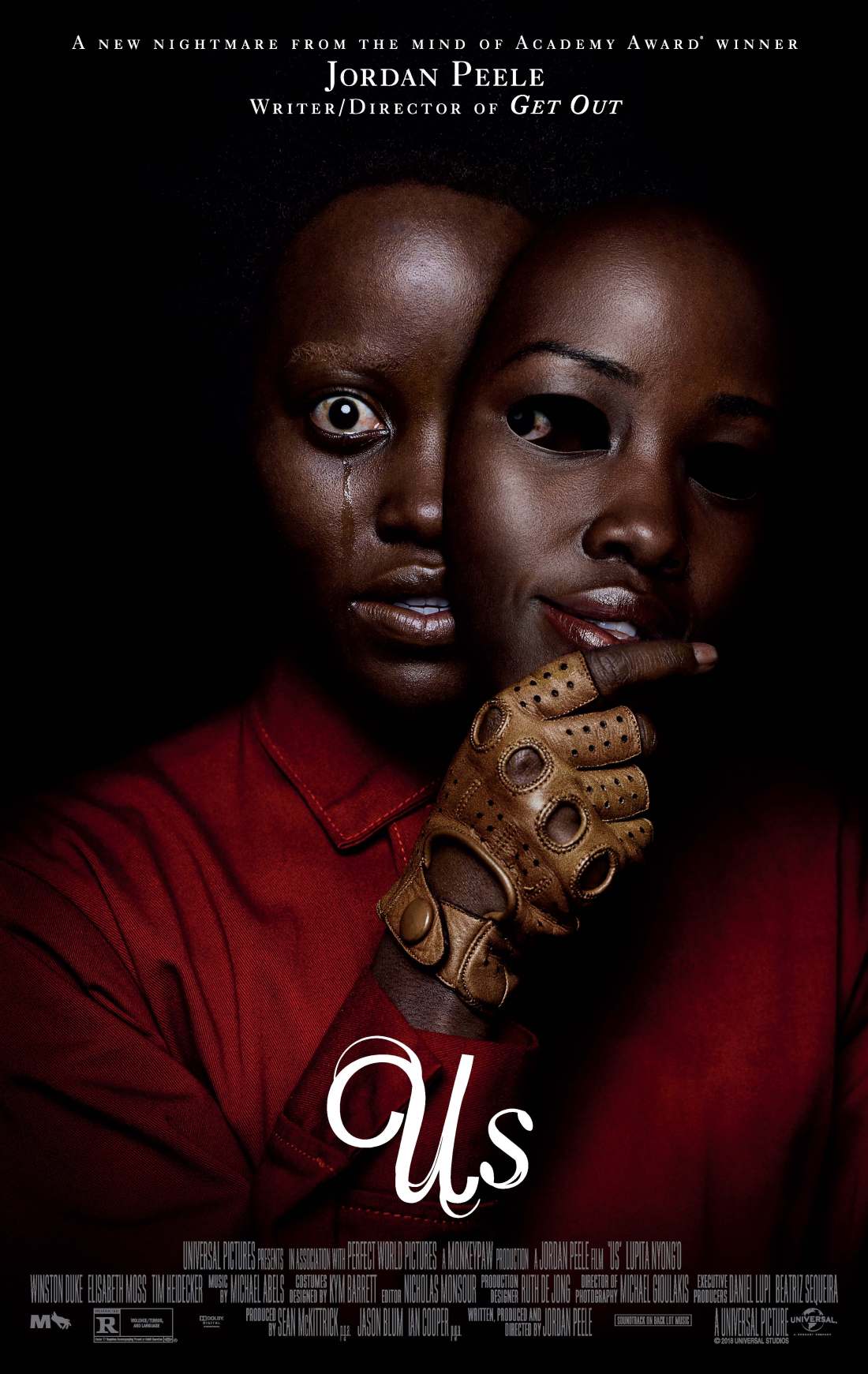
I wish I knew how to talk about Us in a way that makes it clear that I love the aspiration but the execution was both confusing and intriguing. I tried to do that here, but I’m not sure it worked. If you’ve seen the film, I’m curious to hear what you think.
Horror is not really my jam — I believe being a Black woman in America is scary enough, TYSVM — but when I saw “Get Out” in Harlem, the folks on either side of me were screaming at the main characters and cracking up in the right parts and groaning when the white father mentions his liberal bonafides a little too pointedly. The feeling in the theater was, “This is so good this is so good this is a movie for us.” And the cheering that commenced at the end was phenomenal, unforgettable. We felt not just that we had been vindicated, vicariously, of course, through the main character, but that we all knew a woman or a story about a woman, about a family, like “Get Out”’s chief villain and the side pieces too.
OK, back to “Us.”
A young Adelaide Wilson wanders off from her parents into a house of mirrors off the Santa Cruz boardwalk in 1986. What she discovers in this creepy place is a reflection of herself that turns out to be a hostile doppelganger, which will turn out to be not just her own problem as we find her, present day, returning to a summer home with her husband, the adorably clueless Gabe (Winston Duke), and their two children, a boy, Jason, and a girl, Zora.
They seem to have everything — they are beautiful, they are talented, and they are just regular Americans. The biggest challenge the Wilson family seems to have at first is that Gabe gets a new boat (true story: it’s like, a dinghy) and he can’t seem to figure out the engine situation. Things get weird again when they end up back on the same beach in Santa Cruz where Adelaide first encountered her evil look-a-like.
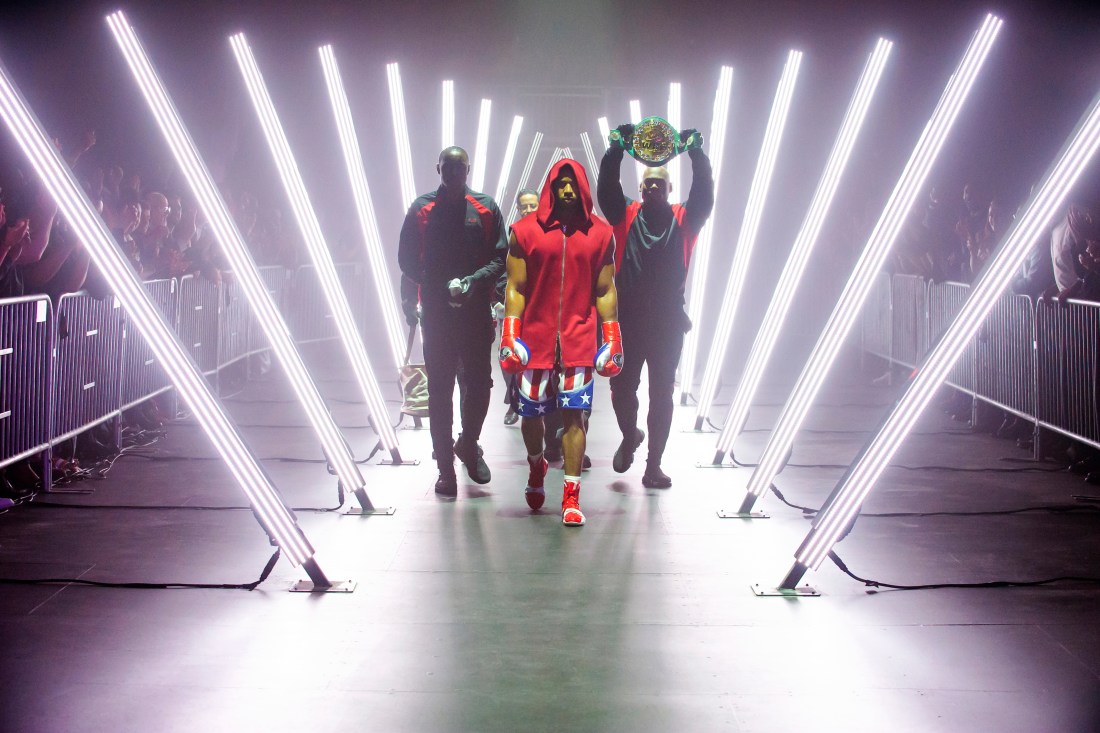
I have, finally, written a review that doesn’t have spoilers in it. Whew, that was hard. Sequels are tricky – you want to get the past right but you don’t want to dwell. The pitch and the tone here was perfect.
All of us have some nostalgia for parts of the past that also have painful trauma that keep us stuck in a painful pattern of some sort that it feels like we can’t rewrite. Creed II helps us ask ourselves if we are really fighting to write a new story or if we like the old one better. In this way, it’s deeply satisfying because it evokes memory and tradition while also keeping an eye on the future.
Boxing, after all, is a fight against another person, but before that, it’s a battle with your heart and mind for the soul, for the self to be whole, to be free.
I took myself to a matinee Friday to see “Widows” because I love all things Viola Davis. I was expecting something along the lines of “Oceans 8” but, like, elegant. And “Widows” is something more complex. Not in a bad way. It’s good. It’s just different. Quiet. Intense.
If you’re going to see the movie, I ask that you bookmark my review on Medium and feel free to disagree with me vehemently (but respectfully) there or here. Curious to know what fellow movie lovers think or will say.




 Joshunda Sanders