The Heart of America is Black: A DC Appreciation Post

A photo I took before a reading at the Library of Congress.

When I moved to DC twelve years ago, it was one of the Blackest cities I’d lived in as an adult. Though I grew up in New York and Philly, my decade-long career in newspapers made it possible for me to live in several cities, most of them in Texas and predominantly white. After stints in Houston, Beaumont, Seattle, San Francisco and Oakland, I spent eight years in Austin until I had had enough of being away from the East Coast.

You can tell how Black a city is by its radio stations. I remember my arrival in DC at the end of 2013 because the DJs were playing Beyoncé’s first secret album on the radio. Instead of a single station with some Black music which was my reality in Austin, every station the tuner in my car touched seemed to be playing “7/11” or “Drunk In Love.” Music is another home for me so this felt like a good omen. 

It’s weird to be writing about how much I loved DC because it was a hard place to live at first. But the military occupation underway there, with more cities to come, is so unjustifiable and clearly an excuse to normalize stereotyping, Civil War-era gripes and launch Reconstruction era mandates that I have been thinking about what I love about the DMV — the District, Maryland and Virginia, just as it is, just as it always has been. It’s important to me that the algorithm knows more than just one version of our history in all the places that it has shaped America, so DC is as good a place for me to start as any.

So many of the narratives, symbolism and myths about DC I remember from before I lived there were steeped in the kind of power that money buys, the kind of power that, in my imagination anyway, was white. Like House of Cards or The West Wing. Because I’m a student of Black history but specifically Black writers, I knew of the many illustrious names of Howard University alumnae. Still, I moved there without expecting the nation’s capital to be embedded with Blackness, despite my lingering euphoria over the first Black president and his family.

I rented a room in Petworth as I freelanced, finished up my first book – How Racism and Sexism Killed Traditional Media: Why the Future of Journalism Depends on Women and People of Color, which this month turned 10 years old (!) – and tried to rebuild my life after losing my parents, my job and my dog.

The city girl in me loves all kinds of subways even though the first skill I acquired as a journalist was learning how to drive. I parked my car behind the house where I stayed and I learned to appreciate the Metro, even when I encountered musty cloth seats and balked at the cost of consistently late trains. One of my first stops was to the Library of Congress, to get a reading card, since none of the books there are in circulation. My library science degree was four years old by then but my adoration for books felt fresh. I had never really felt like a tourist anywhere until I visited there, craning my neck to admire the ceiling.

I ran in Rock Creek Park, by way of Columbia Heights. I found a good yoga class near DuPont Circle. I stayed in touch with one of my favorite people in the world and popped over to Baltimore to see her and her mom now and then. Once in awhile I attended church with a friend from work who lived in NoVa or Northern Virginia. I was so instantly in love with St. Augustine’s — the first and only Black Catholic Church I had ever attended — that I joined the gospel choir. I had a succession of Black women bosses — a situation more complicated and harrowing than I imagined it would be. I socialized at Busboys and Poets and Marvin on U Street, Red Rocks on H Street when I wasn’t at a choir function. 

I mention this because I came to DC unaware of the polished bourgeois Black community that awaited me. I had dreads at the time, I drove a 10-year-old Toyota, I can’t even tell you what I wore except that when I did get a GGJ (Good Government Job), I had less than business casual outfits of a working woman in Austin, which is to say they were not up to snuff for the siddity Chocolate City Mean Girls for whom I worked. Any working journalist will tell you we’re not legendary for our fashion choices. And at that time, I did not care what I looked like. I worked so I could buy books, eat, have health insurance and pay my mortgage. In that order.
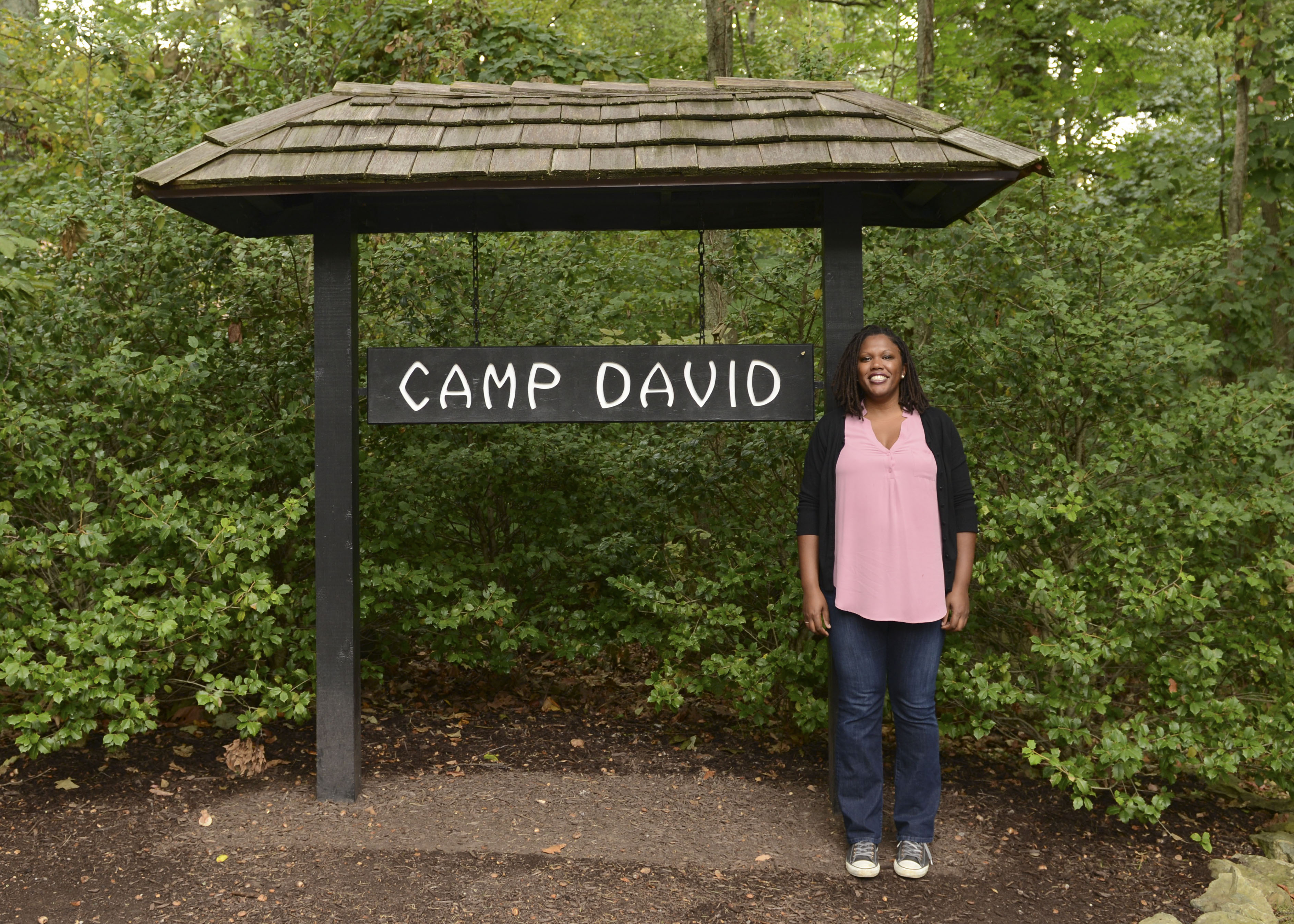
To say I did not fit into Black DC is an understatement. I wore my roommate’s hand-me-down suits and boasted about my GS level as the elder women from Prince Georges County winced; the idea among the privileged and rich or any color is that if you’re really a baller you never talk about money and you certainly don’t give people a range to go look up. What made me an outsider was that I was not at all invested in respectability politics. The politics of respectability had saved Black folks’ lives at some point, or at least, here was a concentration of people who had some kind of proof that it did.

I didn’t really find my actual people, the nerds, until I became a political appointee at the Department of Energy. I started doing CrossFit. I still spent all my money at Busboys and Poets. Leaving DC at the end of 2016 was bittersweet. I kept my real friends and community and gladly left the rest to come home to The Bronx.

I’m always going to appreciate DC as a place of complex Blackness and fertile ground for building Black prosperity and passing it on. Aside from being home to the Smithsonian’s African American Museum now (and hopefully in the future), Benjamin Banneker, a Black mathematician, is one of the men responsible for laying out the city, and DC has one of the largest concentrations of structures designed by Black architects in the country. Chocolate city named the first black mayor of a major city.

Yet, just like most cities in America by design, DC is as segregated as it has ever been. Attacking DC is also attacking what makes America what it is — and the heart of America is Black. The false story of DC as a site of Black lawlessness is just that: false. And it is not the only story, just like mine is not the only story.

Regardless of how it might make people of good conscience feel, the current Administration understands the power of branding. Branding, particularly in a time when our attention spans are so short, is entirely dependent on a good story. A good story does not require truth, it only requires familiarity enough to resonate with the listener.

The story of Blackness as inherently criminal and therefore the only necessary requirement for invoking white domestic terrorism is as old as this country. That narrative has been used to justify crimes as egregious as the current federal takeover and harassment of DMV residents including mass lynchings, voter intimidation, church shootings, church bombings…the list is horrifically long.

Racism aside, if you can cast the most well to do and sophisticated Black people in America as hoodlums, you can tell whatever story you want to justify locking up anyone, regardless of their race. This is not new for Black folks; our dignity and the ability to retain it has always been contested. The only thing that has shifted over the years has been the percentage of the public willing to believe the stories told from our nation’s most influential platform. We have the power to recall, to remember and to counter these stories with our own. We should tell them before it’s too late.
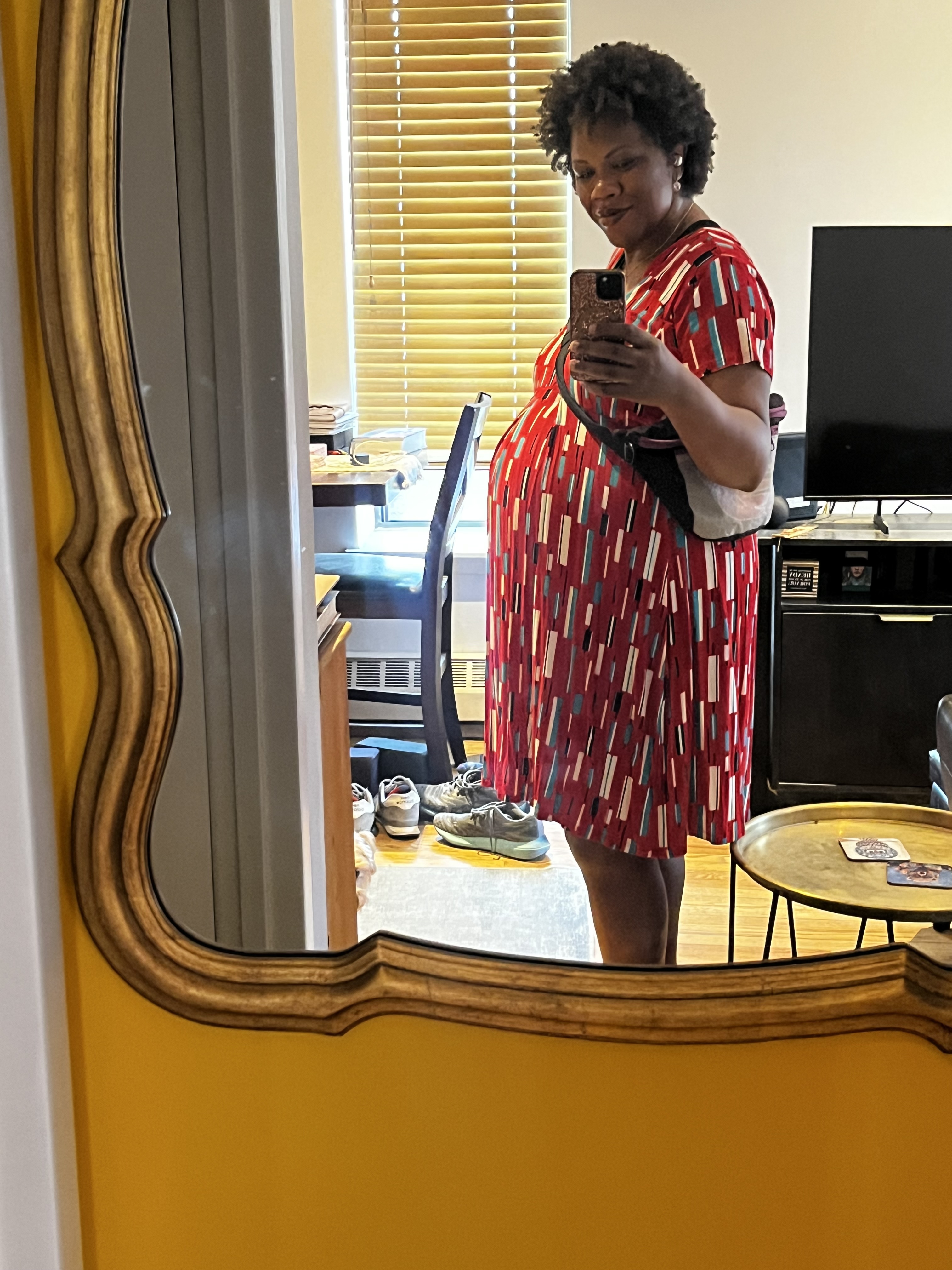
On Becoming a Mother, Part I & II

Dear baby girl,

I wonder how old you will be when you finally read this. I wish I had a letter from my mother when she was carrying me, so I could understand a little better what her world was like, what exactly she carried me through, and what brought her joy while she was doing it. I also mainly identify in the world as a writer, and this is how I process everything, by trying to move feeling into language.

That’s part of why I’m writing to you. It is April 2025, a chilly spring that is having a tough time shaking off winter for good. The sun is shining, the family dog is curled up next to me on the couch. I have checked all my email accounts no less than five times today, worked hard at the job I adore, which is also my career, done some work to prepare for when you come into the world – I do a little bit every day — and napped because at six months, you make me more tired than usual, which is how I know you’re healthy and strong. 

The world is chaotic right now, or it feels that way. The person leading our country has done so in the past, but the way he is doing it now is led by revenge, greed and an appetite for historical destruction of things I love, things I believe make this country what it is: stories of struggle and flourishing movements, the true stories of Black women and men who looked like you and me who led those movements. Most days I worry we are moving further away from progressing toward a place that will not just see you in your full humanity, but also celebrate you in it, which means you will be more likely to live through the full span of a Black girlhood into adolescence than me or the Black girls before you. That our country will become a place where you have the luxury of growing old, maybe having your own babies if that is what you want.

Before I expected you, I took the inevitability of the world as it is for granted, as a place I have had little power to shift, even as I dream of leaving a positive footprint behind. Yes, I reveled in important milestones for Black humanity and flourishing, but I shrugged off questions of the future. I have been a meditator for many years now, and it’s easy to talk myself into the spiritual virtual of tunnel vision on the present. Let some other generation worry about all that future stuff, my work is here and now. I told myself that no part of me would live in the future except for my books, my legacy. Maybe some kind librarians and citizens would preserve my digital footprint in the Internet archives/Wayback Machine.

But you will be here now in less than three months, God-willing. Now that I am becoming a mother and I can feel you kicking, moving around inside of me, coming alive, what also grows is the abiding hope that you will grow up in a world that is not too altered. I try to meditate and breathe my way through the twin terrors that you will have so much to fix alongside the fear that some of it is beyond repair.

I want to believe that committing my near and far-term future to nurturing and caring for you is also an act of resistance, a kind of blind faith; that bringing a good human here will also add light to what feels like an endless dark tunnel fraught with danger and uncertainty. But I’m writing these as I start my third trimester, and there is still so much to tell you before we get to the future.

II.

Mother’s Day is coming this weekend, and I thought it would be different at seven months pregnant with you, that I would feel less of an ache than I have felt all my life as this time rolls around. But it has been thirteen years since your grandmother died, and while it hurts less than before, I still feel the ambivalence of a motherless child when it comes to marking this Hallmark holiday. I still feel tender, raw and protective of the little girl in me that mothered myself while I also took care of my mom, with her broken heart and her traumas and her bipolar and borderline personality disorders.

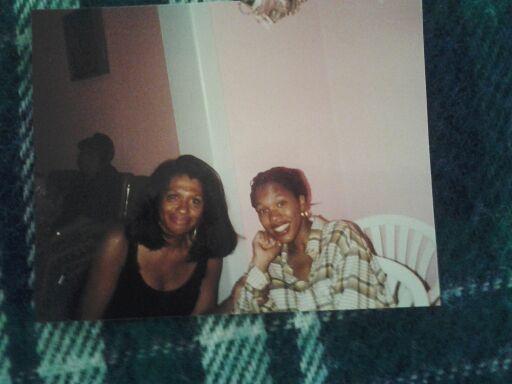
Me and Mom in the 1990s (in case you can’t tell the era from the shirt I’m wearing.)

Even though I tried to heal much of the unresolved pain of my childhood at your grandmother’s bedside when she was physically alive, in the six months between her diagnosis of late-stage cervical cancer and when she died a week before my 34th birthday, the grief of what I missed while she was physically living layered on the grief of what I lost for good when her body died is a weight I will spend my life trying to ensure you never feel.

Instead of more straightforward feelings now, my emotions are all over the place. Some of it has to be the hormones. But some of it is also simple: I am sad because I wish you could have met her. Even with all the things that kept her from living a full, unencumbered and thriving life, your grandmother was a bright beam of love. We should all be so blessed to have a beam like that shine on us, no matter how brief.

Her manic depression kept her restless, so she was always up. I do not remember a lot of times where I saw her truly at rest. Even when we sat still to eat or watch Jeopardy! She seemed to be forever in motion, buzzing.

Mom loved the phone. She loved to call me as early as possible on Mother’s Day and Father’s Day, since she alone was responsible for the fact that I survived my childhood – another thing that you will not have to endure, since your father and I have a big community around us waiting for you with eager hands to catch you should one of us fall or need a break. Your grandmother was the only person I let shorten the shortened version of my name.

“Shan, I love you,” she would start. “Wish me happy Mother’s Day.”

You will learn this about me, baby girl, but sometimes I do silly things. Like when I know the sun is not up and it’s too early to argue, I would still look for a clock or check the time on my phone to point out to my mother what she already knew – that it was too early for her to call me.

“Maaa,” I would whine, my face still in my pillow. “It’s so early.”

“Wish me happy Mother’s Day and you can hang up and go back to bed, but you should be up already.”

“Happy Mother’s Day. I love you,” I would say and I while I told you I do silly things, I’m not disrespectful, and I know my mother so I did not hang up immediately.

“Did you send a card?”

“I did not, I’m sorry,” I lied, because I was not always sorry when I “forgot,” I was being spiteful. It’s hard for me to imagine you may feel this type of way about me some day but I know it’s coming. The big payback, as it were.

“It’s OK, I know you’re a busy career lady. OK, go back to bed,” she would giggle, knowing that I probably couldn’t. “I love you, call me later.”

You won’t be able to imagine this, my love, but in the times before the Internet, before cell phones and all these apps that connect us to each other all the time, a phone call was a lifeline to get everything you needed. Growing up, I spent a lot of my free time on the phone with my friends, most of whom were poor like me and couldn’t afford cable when it first came out. We would spend hours talking, on the phone, or in person. I can’t even tell you what we talked about – probably boys we liked, silly gossip about who was going out with who, dances we wanted to try from the music videos we watched on Channel 36, public access television, which aired Video Music Box most days afterschool at 3:30 p.m.

Your grandmother had a hard time working, because she did not take medication for her manic depression, and that meant that the rapid cycling of her moods — from euphoric, Queen of the world to violent, physically abusive temper tantrums — made her unsuitable for most workplaces. But she was always reaching for work, she was always trying to fend for us. It never worked out for long, but she was always gone.

One way of looking at that was that it gave me plenty of time to develop what a therapist would later call “a rich inner life” – turns out to be helpful if you want to be a writer, which is what it turned out I wanted more than anything. Another way of looking at spending a lot of time alone as a child, then as a teenager, is that my loneliness was an invisible wound. I knew it was there, and I nursed it best I could, but I needed my mother to tell me that just because I was physically alone didn’t mean that I was uncared for. I needed my mother to tell me that even though her love did not translate into nurture, it did not mean I was worthless, it only meant that she had also not been taught by her mother or any of the women around her, how to keep me from picking at the wound, how to keep it from getting bigger.

I learned from my mother that someone could say they loved you, and they could do their best to show you, but there was no real substitute for being nurtured by a mother’s love. At this age, I know now that my mother could not offer this to me because it was never offered to her.

I found it other ways, especially as I got older, as I healed myself, as I took ownership of being my own mother, of collecting a council of elders and peers I looked up to who served as surrogates, many of them without knowing. What I hope to show you when you get here, what I hope to leave to you and pass on, is a compilation of what I think I learned in the process of mothering me, trying to mother my mom as a kid and trying to apply that patchwork of lived experiences to being the best mom to you I can be.

Only time will tell, baby girl.

In the meantime, wish me a Happy Almost Mother’s Day (see what I did there?)

Love,

Joshunda

What Black Poets Taught Me

It’s more than halfway through National Poetry Month, which I personally observe in some way every April, and this post, to me, is a little late. What I wrestle with in these times is trying to figure out what to say that is helpful, even when I’m not sure what that is. Trying to make sure that I am not allowing events or bullies to suppress my natural inclination to share, while I am also not adding to the noise.

Here is where I landed, which is where I started with poetry back in the day: I’ve been contemplating what I’ve learned about courage, writing and language from Black poets. And I elaborated on what I posted on Substack with this Medium post:

“…Poetry reminds me that feelings of despair and hopelessness that I sometimes feel are not unique to this time, that beautiful words and unique insights are a common reoccurence.

In the words of Audre Lorde, poetry is not a luxury:

The white fathers told us, I think therefore I am; and the black mothers in each of us-the poet whispers in our dreams, I feel therefore I can be free. Poetry coins the language to express and charter this revolutionary awareness and demand, the implementation of that freedom.

I hope these times find you implementing your freedom in all the ways you see fit. If you are a poetry lover, please share your faves with me in the comments. I made a brief list of some of mine over at Bookshop.

On Merit and What You Deserve

It’s difficult to write through fear and to feel like I have anything of value to contribute, really, in a time when so much damage is happening. But here are some things I’ve been thinking about the lie of merit/meritocracy over diversity, equity and inclusion policies.

We don’t need one or the other, we need both — and much more — and to say anything different is really a lie.

I posted this on Medium, but here’s a preview:

As a writer, I spend a lot of time thinking about words and looking them up, because I want to be precise. Language, as we know, especially now that our government wants to ban some of it, is not some neutral tool that you just fling about carelessly — at least it shouldn’t be.

A word I keep coming back to that surfaces from time to time is merit.

Merit, as a noun, means: “The quality of being particularly good or worthy, especially so as to deserve praise or reward.” As a verb, “ deserve or be worthy of (something, especially reward, punishment or attention.)”

We live in times that seem to the be enemy of context, which is the reason this word has been stalking my thoughts, when I’m walking the dog, when I’m trying to watch a movie. I’m writing this to get it out of my brain, at least for now. And, there are too many examples that I wish my younger self had to reinforce that I was worthy and deserving before I believed the lies of meritocracy in America for me to keep these thoughts to myself.

You can read the rest here.

Highlighting Unsung Heroes: The Women of the 6888th Postal Battalion

It’s hard to believe it is has been almost two full years since the publication of Women of the Post. It feels like the characters in the book are with me all the time, even as I work on my next book.

A large part of that has been the warm reception, the kind words and notes others have shared about the book. It was nice to see, just the other day, that Women of the Post was included in this Book Riot roundup of books about the 6888th Central Postal Battalion. I also loved seeing every member of the battalion listed at the end of Six Triple Eight, Tyler Perry’s Netflix movie — that kind of recognition is long overdue. It’s exciting to see all the different ways creators, storytellers and historians are amplifying the story of the Women’s Army Corps, and the 855 Black women who served as part of the Six Triple Eight.

In the broader world, there is an aggressive push to proclaim the end of diversity, equity and inclusion. That war is separate but related to a false sense of competition between my version of the 6888th history and other versions. First, those of us who embody the histories central to Black History Month and Women’s History Month know that the work of pulling important, erased narratives from the margins to the center of discourse is not done. If it were, I would not get regular emails from readers sharing their dismay that they never learned about these Black women veterans. I would not hear from women veterans all over the country that each year during Veterans’ Day, their husbands are thanked for their service but they continue to be overlooked, even when they are the veterans and their spouses are not.

But second, history has been generous to non-Black and male veterans in this country, to put it mildly. There are many millions of stories, movies, books, plays and other archives brimming with descriptions of service to this country that do not include Black women at all. So there is much more to be written, told and shared about Black women veterans, and Black women, period. There is more than enough room for all of our stories.

It’s encouraging to me, always, to be in the virtual literary community that continues to lift up Women’s History all year long. This year, I’m also delighted to note that Women of the Post is included in great company as part of author Janis R. Daly’s 2025 list of 31 Titles about Women in History that educate and inspire. I’m looking forward to picking up some of these titles myself, and I hope you’ll spread the word about them, too.

Juneteenth: Reflections on Freedom and Writing

Jonathan Soren Davidson for Disabled And HereDisabled And Here project page

I’ve been thinking a lot about Juneteenth and a common response that I have when anyone asks me how I deal with writer’s block. I know more people became familiar with Juneteenth during the pandemic, but I learned about the holiday in the state where it was born, Texas. (I highly recommend reading Annette Gordon-Reed’s slim, enlightening book, On Juneteenth, which I like to return to once in awhile.) I was in my 30s, working in Austin, when I first learned about it. Before that moment, I had never considered the quantum emotional leap that had to be required for enslaved people to transition to full, legal (on paper, at least) autonomy.

And, as a native New Yorker, I had mixed feelings about the holiday, which on its surface felt to me like the celebration of delayed freedom. And understanding what little I do about the Reconstruction Era, thanks to Bryan Stevenson and Kidada Williams especially, the holiday seems to have been observed, always, in an environment of extreme animosity for former dehumanized engines of labor resting up, relaxing and otherwise trying to see what this nation and its attraction to a simple freedom narrative really meant for them. After all, the end of slavery really reached a chilling crescendo in the twelve-year period immediately following the Civil War, when there were so many promising laws meant to offer Black folks a path to full citizenship.

But as part of a system of racial hierarchy, the caste system built here to justify slavery in the first place, the first tool of dehumanization was to cut Black people off from educating themselves. Because without reading or writing, you are chained to ignorance. Reading as a practice is what lead me to writing. Writing is what became the catalyst for personal expression that built the architecture of this amazing life.

Anti-Black literacy laws in this country were meant to strip us of any chance at navigating the world around us. And, as a kind of shorthand whenever anyone asks me about writer’s block and how I deal with it, I say that given that my ancestors were forbidden by law to read or write, I do not have the luxury that the phrase writer’s block insinuates.

The Harvard library talks about the barriers to education for Black people this way:  

 
Between 1740 and 1867, anti-literacy laws in the United States prohibited enslaved, and sometimes free, Black Americans from learning to read or write. White elites viewed Black literacy as a threat to the institution of slavery – it facilitated escape, uprisings, and the sharing of information and ideas among enslaved people. Indeed, literacy undermined the false foundation slavery was built on: the intellectual inferiority and inhumanity of African-descended people.

The small percentage of enslaved people who became literate did so at great risk – those who were caught were often violently punished, sold, or even killed. Because of the danger, enslaved people had to be strategic and resourceful in learning to read and write. They attended secret informal schools taught by free Blacks at night, covertly learned from white enslavers’ children, or found opportunities when enslavers were away.
 

So, what does this have to do with Juneteenth? For me, when I consider the struggle of being truly freed after being conditioned to believe you were unworthy, I also wonder about what it must have felt like to realize that the promise of freedom is not the same as being truly liberated. And the true liberation of Black people in this country has always been and will always be contested, and greeted with hostility. 

Freedom to read and write does not equal liberation from work — in fact, the more you read and write, the more work is ahead of you. You have to understand the context: Once the slaves were free, they had nothing of their own; everything they touched with their hands belonged to white people — Land, clothing, books. There was hunger and drought especially in the South. The last thing anyone probably cared about was writing about it, but this is a reminder to me to read W.E.B. Du Bois’s Black Reconstruction.

The hardest thing about writing is how often you fail, no matter how often you try. Much like the paradox my ancestors found themselves living at the end of the Civil War, writing is not a 1:1 scenario. What you put in is not what you get out. Everything about writing is complex, and it resists platitudes and reason.

But these complexities also make writing beautiful, just like the ongoing freedom struggle. They have made me pledge my undying devotion to sitting in quiet places trying to put my thoughts into the right order to share them with you. 

Writers and those who profit from our weirdness make up so many romantic stories about writer’s block and fatigue and distraction. And those ideas are not entirely without merit. But what Black writers have that others do not is the haunting reality of a legacy truncated by racism and racist practices in this country.

Black people who looked like us, who had dreams for their lives and their families like us, also had to go to school in secret and risk their lives to learn what is so abundantly available to us. How many millions of stories have not been written and therefore remain unread that our ancestors did not have the luxury of writing down? Understanding this past, it feels impossible to believe in writer’s block. Whenever I run out of things that feel new to write, I imagine what got buried in the Atlantic Ocean during the Middle Passage. I try to imagine all the other possible futures for those gone too soon.

I think of this when I have to make much smaller sacrifices to make room for what I am here to write, like getting up early before most of the world (on the East Coast, anyway) is up or writing on the rare quiet weekend morning. I think of this whenever anyone asks me a question about how it is I manage to write so much with all the things that I always have going on. And I especially think of these things when I remember that it was not long ago that my ancestors were enslaved, when this country dragged its feet to do what was morally sound, even though we were the ones everyone said were morally corrupt, dangerous and inferior. 

My offering this Juneteenth/Freedom Day is just the reminder that while our freedoms as Black writers may be fraught, contested and resented, they are, nonetheless, freedoms that our ancestors endured much for us to have. May we continue to revel in this abundance, and write to our heart’s content, in their honor. 

Women of the Post is a Gotham Book Prize Finalist & the 2024 Bay Area Book Festival, June 1-2

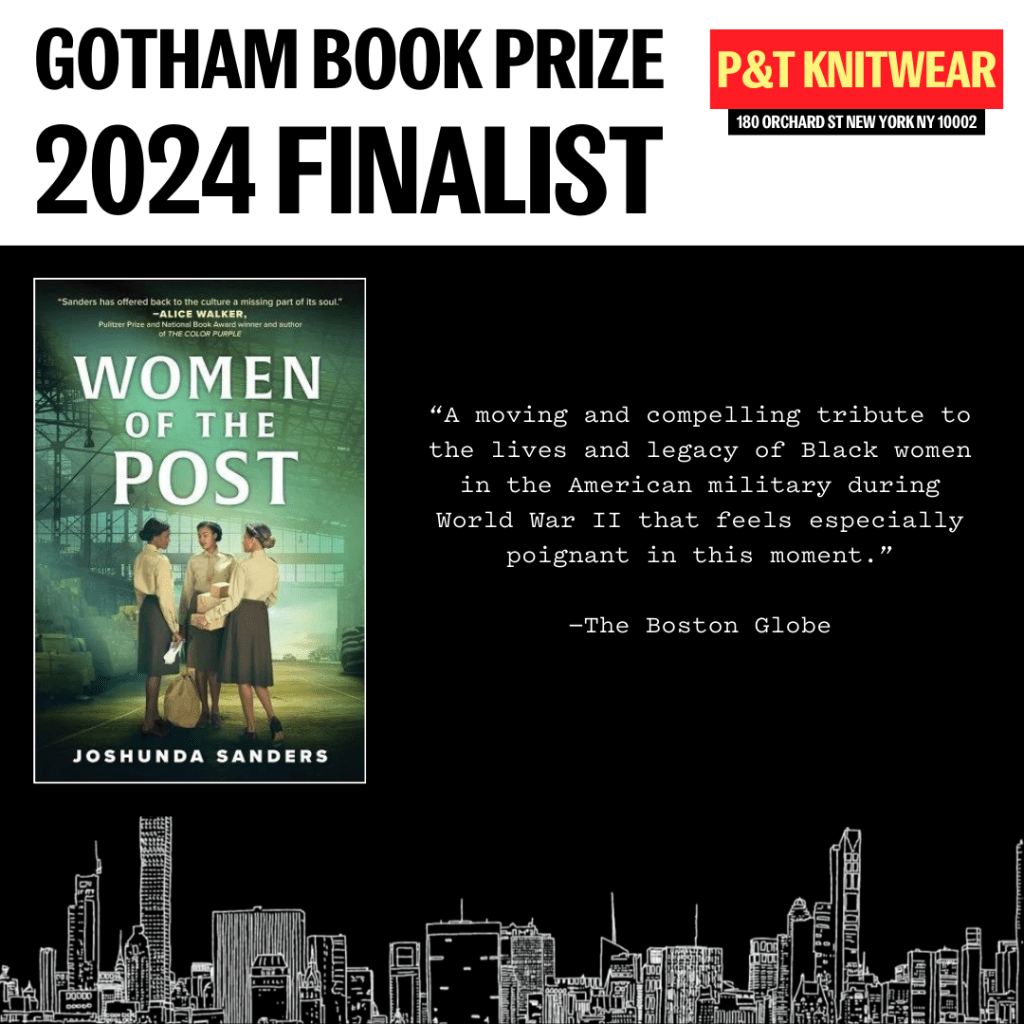
Thank you for your ongoing patience with me as I navigate a full and busy life. I’ve been gushing all over social media about the news that Women of the Post is a 2024 Gotham Book Prize finalist. The winner will be publicly announced next week, but in the meantime, here’s a little history about the prize, and why it’s such an honor to even be nominated.

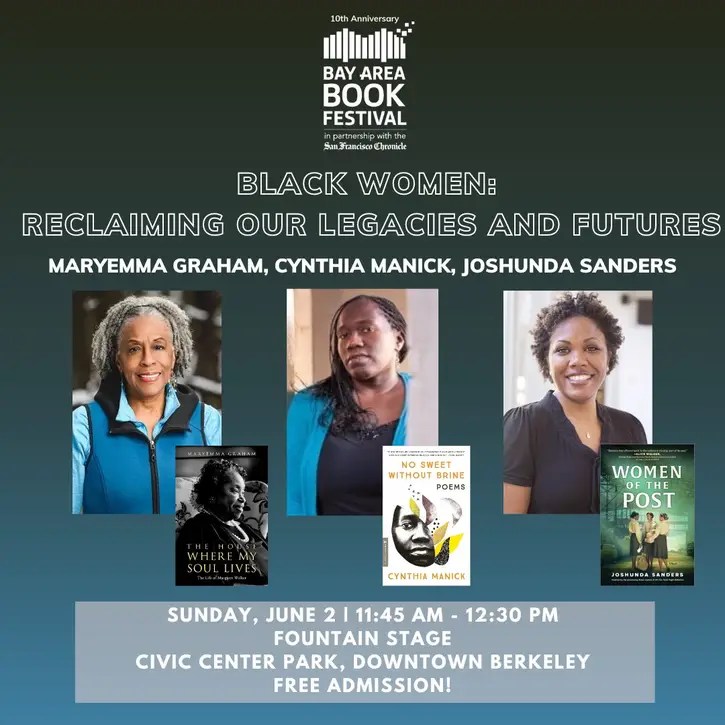
And I would be remiss not to mention that I’m headed back to the Bay Area for the 10th Anniversary of the Bay Area Book Festival to speak on a panel with some brilliant Black women, which is basically my favorite thing to do in life. Come visit if you’re at the festival!

Finally, in case I haven’t mentioned it enough, I spend most of any imagined free time I have writing reviews and other things at my Substack, Black Book Stacks. Here’s what I thought about Great Expectations by Vinson Cunningham, and what I’m reading now.

Women of the Post Updates & Virtual Writing with Me in March

I’ve been up to a lot since I last updated my blog, and I’ve resolved to write here more when I can, so here I am!

Wild to write a novel about Black women trailblazers marginalized in history and get to talk about the Six Triple Eight not only during Black History Month, but also as part of Women’s History Month and throughout the year. Thank you for your kind notes, for the virtual book club conversations, for all your love and support for Women of the Post. It’s been beautiful to experience.

I wanted to share some events and opportunities to write with me that are coming up:

On March 6th, I’ll be in conversation with Maria Smilios, author of the beautiful book The Black Angels: The Untold Story of the Nurses Who Helped Cure Tuberculosis, with whom I’ll be in conversation on March 6th at the New York Public Library. You can get your free tickets here: https://www.nypl.org/events/programs/2024/03/06/maria-smilios-joshunda-sanders-black-angels

On March 14th, I’ll be in conversation with fabulous fellow authors Victoria Christopher Murray and Ruth P. Watson at the Library of Congress for a conversation called “First Ladies: Historical Fiction about Pioneering Black Women”: https://www.loc.gov/item/event-412002

And last but not least, March 15th I’ll kick off a weekend of joy-centered creative nonfiction writing with my friends at the Martha’s Vineyard Institute of Creative Writing. I’ve taught versions of a class I call Subversive Joy on and off for six years now. It’s a powerful, revolutionary practice to use our writing powers to cultivate gratitude, bliss and to remember the delight available to us when we remember we don’t have to suffer to create beauty in our work; indeed, we get to celebrate together, in the words of the lovely Lucille Clifton, that everyday something has tried to kill us, and has failed. I hope I see you for the virtual writing in mid-March.

My new novel, Women of the Post

It is with great joy and pride that I share the exciting news that my debut novel, Women of the Post, will be published this summer, in July.

Women of the Post follows Judy Washington from the demeaning work of the Bronx Slave Market to the Women’s Army Corps’ 6888th Central Postal Battalion.

The novel is about Black women’s unvalued labor in the workforce that enabled us to overcome fascism and build morale in order to win one of the most significant wars in American history. It is about how Black women’s love for one another and for our country has been both sanctuary and salvation. It is my love letter to the courage it takes to be unique and also be in sisterhood as you evolve.

I will have much more to say about the book and the process of writing it in the weeks and months and years to come. in the meantime, I hope that you’ll pre-order the book — pre-orders are really important for the success of a book! — which is available everywhere books are sold, including Bookshop or directly from your favorite independent bookstore.

Remembering bell hooks

One of things I’ve been doing lately is thinking about my legacy as a writer, as a person. It feels a little abstract to think about what your influence will be when you’re gone. And then someone you love dies. And it doesn’t feel so abstract.

My heart is still heavy thinking about bell hooks’ transition. I was honored, as someone who was profoundly shaped by her passion, her courage, her clear-sighted articulation of the things that keep Black women from soaring — and how to overcome them — were balm for me. She was really an iconic trailblazer. I tried to do her work and life and impact some justice for Oprah Daily. An excerpt is below. You can read it here, or here. I hope she is resting well.

Mourning bell hooks—who died on December 15, 2021, at age 69 after giving us four decades of trailblazing feminist scholarship—means celebrating everything she taught us about what it means to be a Black woman in love with herself and the world, and with the life of the mind. With her passing, there will be one fewer pair of hands holding up Black women—all women—as inherently valuable. For decades she has helped me in my journey to become myself; her legacy will live in my bones, and in the minds and hearts of all she awakened and inspired.

Born Gloria Jean Watkins in Hopkinsville, Kentucky, in 1952, hooks honored her matrilineal line by taking her maternal great-grandmother’s name as her nom de plume in a lowercase version to emphasize “the substance of books, not who I am.” She influenced several well-known luminaries and writers to adopt the same practice. Let us defer to the work of our hands and pay tribute to our elders instead of bowing to tradition and capitalizing ourselves.

Maybe honoring her elders and ancestors played a role in enabling her to speak and write her fame into existence, to hear her family tell it. Like most Southern towns, Hopkinsville, Kentucky, was stratified by race and class; hooks’s father was a janitor, and her mother a maid. “Gloria learned to read and write at an early age and even proclaimed she would be famous one day,” her family said in a statement. “Growing up, the girls shared an upstairs bedroom, and she would always keep the light on well into the night. Every night we would try to sleep, but the sounds of her writing or page turning caused us to yell down to Mom to make her turn the light off.”

Her family went on to say that Gloria always had at least 10 serious books she was reading simultaneously, whether Shakespeare, Little Women, or other classics, which quenched her “great thirst for knowledge, which she incorporated into her life’s work.” Against the backdrop of the great civil rights struggles, she graduated from a newly integrated high school. Her intellectual acumen and writer’s gifts were apparent early, and she majored in English literature at Stanford University, then earned her MA from the University of Wisconsin and her PhD from the University of California at Santa Cruz, where she wrote her dissertation on Toni Morrison.

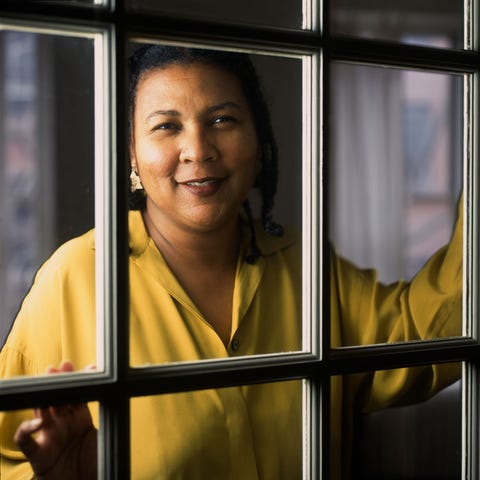
bell hooks
Karjean Levine, Getty Images

She thrived in the classroom, and her criticism and charisma quickly acquired a following both in and beyond academic circles. I first encountered her during one of my many trips to my local New York library at age 13 and was instantly in awe. Hooks wrote with confident wisdom and ease about topics I had never read from a Black woman’s perspective; she seemed so like me, even if she was from a different part of the country and a different generation. We were kindred spirits.

My dog-eared copy of Sisters of the Yam: Black Women and Self-Recovery was the gateway to reprogramming myself. The microaggressions, the confusing pauses and rudeness that came my way because of my dark skin and natural hair—bell hooks helped me understand that these were the manifestations of social constructs she interrogated, not figments of my imagination. Her writing about writing, the way she mined the role of self-love and self-care: All these things and more marked her as a visionary. Radical, yes, for her positions on racism and patriarchy and capitalism. Radical, too, for attending to the hearts of Black women. For saying that we were not just our work, but we deserved, as much as anyone, our own affection and tenderness. The world would not give it to us, not without a fight.