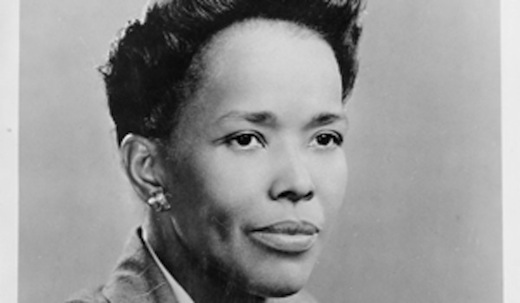
The Heart of America is Black: A DC Appreciation Post

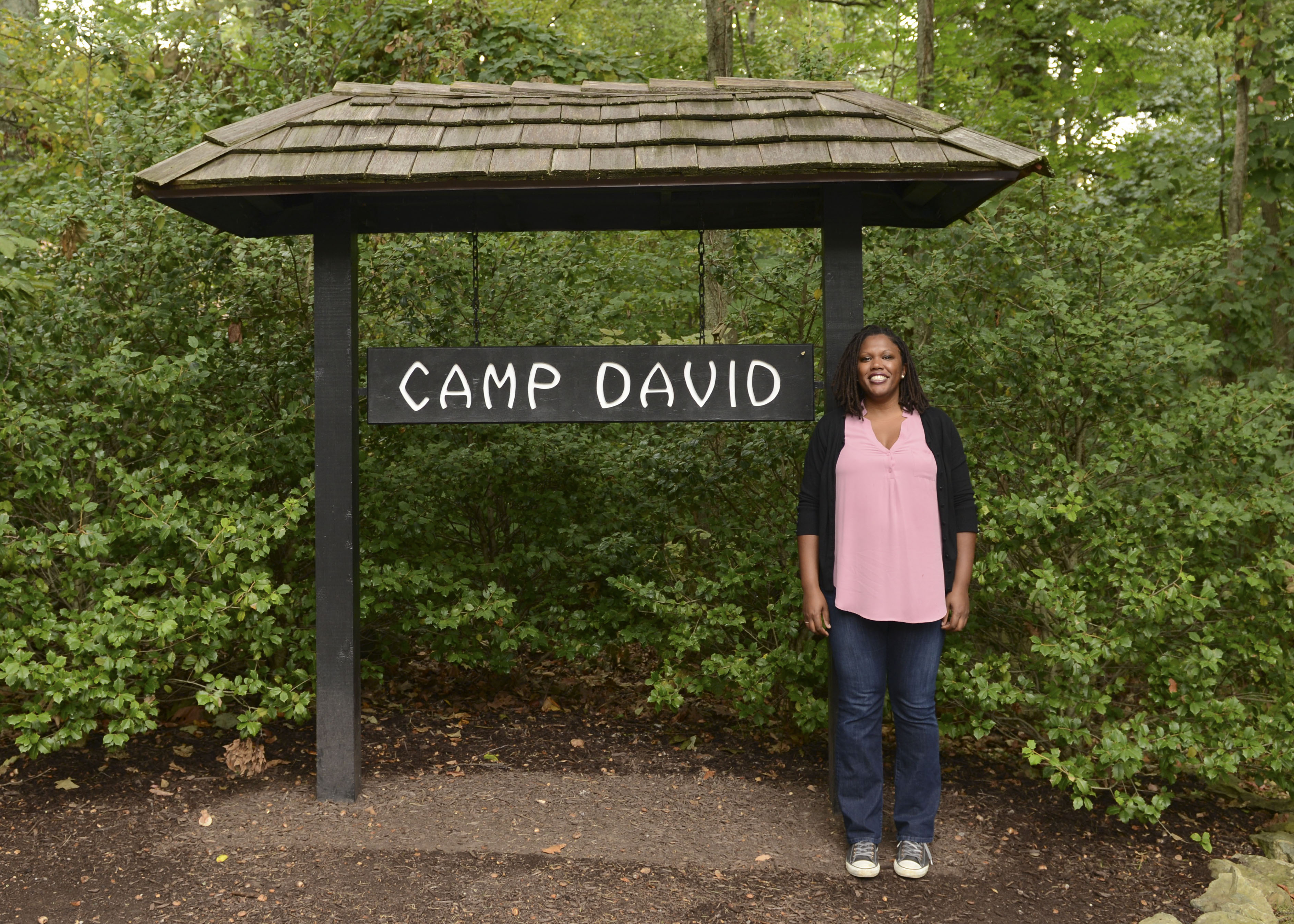
A photo I took before a reading at the Library of Congress.

When I moved to DC twelve years ago, it was one of the Blackest cities I’d lived in as an adult. Though I grew up in New York and Philly, my decade-long career in newspapers made it possible for me to live in several cities, most of them in Texas and predominantly white. After stints in Houston, Beaumont, Seattle, San Francisco and Oakland, I spent eight years in Austin until I had had enough of being away from the East Coast.

You can tell how Black a city is by its radio stations. I remember my arrival in DC at the end of 2013 because the DJs were playing Beyoncé’s first secret album on the radio. Instead of a single station with some Black music which was my reality in Austin, every station the tuner in my car touched seemed to be playing “7/11” or “Drunk In Love.” Music is another home for me so this felt like a good omen. 

It’s weird to be writing about how much I loved DC because it was a hard place to live at first. But the military occupation underway there, with more cities to come, is so unjustifiable and clearly an excuse to normalize stereotyping, Civil War-era gripes and launch Reconstruction era mandates that I have been thinking about what I love about the DMV — the District, Maryland and Virginia, just as it is, just as it always has been. It’s important to me that the algorithm knows more than just one version of our history in all the places that it has shaped America, so DC is as good a place for me to start as any.

So many of the narratives, symbolism and myths about DC I remember from before I lived there were steeped in the kind of power that money buys, the kind of power that, in my imagination anyway, was white. Like House of Cards or The West Wing. Because I’m a student of Black history but specifically Black writers, I knew of the many illustrious names of Howard University alumnae. Still, I moved there without expecting the nation’s capital to be embedded with Blackness, despite my lingering euphoria over the first Black president and his family.

I rented a room in Petworth as I freelanced, finished up my first book – How Racism and Sexism Killed Traditional Media: Why the Future of Journalism Depends on Women and People of Color, which this month turned 10 years old (!) – and tried to rebuild my life after losing my parents, my job and my dog.

The city girl in me loves all kinds of subways even though the first skill I acquired as a journalist was learning how to drive. I parked my car behind the house where I stayed and I learned to appreciate the Metro, even when I encountered musty cloth seats and balked at the cost of consistently late trains. One of my first stops was to the Library of Congress, to get a reading card, since none of the books there are in circulation. My library science degree was four years old by then but my adoration for books felt fresh. I had never really felt like a tourist anywhere until I visited there, craning my neck to admire the ceiling.

I ran in Rock Creek Park, by way of Columbia Heights. I found a good yoga class near DuPont Circle. I stayed in touch with one of my favorite people in the world and popped over to Baltimore to see her and her mom now and then. Once in awhile I attended church with a friend from work who lived in NoVa or Northern Virginia. I was so instantly in love with St. Augustine’s — the first and only Black Catholic Church I had ever attended — that I joined the gospel choir. I had a succession of Black women bosses — a situation more complicated and harrowing than I imagined it would be. I socialized at Busboys and Poets and Marvin on U Street, Red Rocks on H Street when I wasn’t at a choir function. 

I mention this because I came to DC unaware of the polished bourgeois Black community that awaited me. I had dreads at the time, I drove a 10-year-old Toyota, I can’t even tell you what I wore except that when I did get a GGJ (Good Government Job), I had less than business casual outfits of a working woman in Austin, which is to say they were not up to snuff for the siddity Chocolate City Mean Girls for whom I worked. Any working journalist will tell you we’re not legendary for our fashion choices. And at that time, I did not care what I looked like. I worked so I could buy books, eat, have health insurance and pay my mortgage. In that order.
To say I did not fit into Black DC is an understatement. I wore my roommate’s hand-me-down suits and boasted about my GS level as the elder women from Prince Georges County winced; the idea among the privileged and rich or any color is that if you’re really a baller you never talk about money and you certainly don’t give people a range to go look up. What made me an outsider was that I was not at all invested in respectability politics. The politics of respectability had saved Black folks’ lives at some point, or at least, here was a concentration of people who had some kind of proof that it did.

I didn’t really find my actual people, the nerds, until I became a political appointee at the Department of Energy. I started doing CrossFit. I still spent all my money at Busboys and Poets. Leaving DC at the end of 2016 was bittersweet. I kept my real friends and community and gladly left the rest to come home to The Bronx.

I’m always going to appreciate DC as a place of complex Blackness and fertile ground for building Black prosperity and passing it on. Aside from being home to the Smithsonian’s African American Museum now (and hopefully in the future), Benjamin Banneker, a Black mathematician, is one of the men responsible for laying out the city, and DC has one of the largest concentrations of structures designed by Black architects in the country. Chocolate city named the first black mayor of a major city.

Yet, just like most cities in America by design, DC is as segregated as it has ever been. Attacking DC is also attacking what makes America what it is — and the heart of America is Black. The false story of DC as a site of Black lawlessness is just that: false. And it is not the only story, just like mine is not the only story.

Regardless of how it might make people of good conscience feel, the current Administration understands the power of branding. Branding, particularly in a time when our attention spans are so short, is entirely dependent on a good story. A good story does not require truth, it only requires familiarity enough to resonate with the listener.

The story of Blackness as inherently criminal and therefore the only necessary requirement for invoking white domestic terrorism is as old as this country. That narrative has been used to justify crimes as egregious as the current federal takeover and harassment of DMV residents including mass lynchings, voter intimidation, church shootings, church bombings…the list is horrifically long.

Racism aside, if you can cast the most well to do and sophisticated Black people in America as hoodlums, you can tell whatever story you want to justify locking up anyone, regardless of their race. This is not new for Black folks; our dignity and the ability to retain it has always been contested. The only thing that has shifted over the years has been the percentage of the public willing to believe the stories told from our nation’s most influential platform. We have the power to recall, to remember and to counter these stories with our own. We should tell them before it’s too late.

Highlighting Unsung Heroes: The Women of the 6888th Postal Battalion

It’s hard to believe it is has been almost two full years since the publication of Women of the Post. It feels like the characters in the book are with me all the time, even as I work on my next book.

A large part of that has been the warm reception, the kind words and notes others have shared about the book. It was nice to see, just the other day, that Women of the Post was included in this Book Riot roundup of books about the 6888th Central Postal Battalion. I also loved seeing every member of the battalion listed at the end of Six Triple Eight, Tyler Perry’s Netflix movie — that kind of recognition is long overdue. It’s exciting to see all the different ways creators, storytellers and historians are amplifying the story of the Women’s Army Corps, and the 855 Black women who served as part of the Six Triple Eight.

In the broader world, there is an aggressive push to proclaim the end of diversity, equity and inclusion. That war is separate but related to a false sense of competition between my version of the 6888th history and other versions. First, those of us who embody the histories central to Black History Month and Women’s History Month know that the work of pulling important, erased narratives from the margins to the center of discourse is not done. If it were, I would not get regular emails from readers sharing their dismay that they never learned about these Black women veterans. I would not hear from women veterans all over the country that each year during Veterans’ Day, their husbands are thanked for their service but they continue to be overlooked, even when they are the veterans and their spouses are not.

But second, history has been generous to non-Black and male veterans in this country, to put it mildly. There are many millions of stories, movies, books, plays and other archives brimming with descriptions of service to this country that do not include Black women at all. So there is much more to be written, told and shared about Black women veterans, and Black women, period. There is more than enough room for all of our stories.

It’s encouraging to me, always, to be in the virtual literary community that continues to lift up Women’s History all year long. This year, I’m also delighted to note that Women of the Post is included in great company as part of author Janis R. Daly’s 2025 list of 31 Titles about Women in History that educate and inspire. I’m looking forward to picking up some of these titles myself, and I hope you’ll spread the word about them, too.

My new novel, Women of the Post

It is with great joy and pride that I share the exciting news that my debut novel, Women of the Post, will be published this summer, in July.

Women of the Post follows Judy Washington from the demeaning work of the Bronx Slave Market to the Women’s Army Corps’ 6888th Central Postal Battalion.

The novel is about Black women’s unvalued labor in the workforce that enabled us to overcome fascism and build morale in order to win one of the most significant wars in American history. It is about how Black women’s love for one another and for our country has been both sanctuary and salvation. It is my love letter to the courage it takes to be unique and also be in sisterhood as you evolve.

I will have much more to say about the book and the process of writing it in the weeks and months and years to come. in the meantime, I hope that you’ll pre-order the book — pre-orders are really important for the success of a book! — which is available everywhere books are sold, including Bookshop or directly from your favorite independent bookstore.

Book Review: Caste by Isabel Wilkerson

Happy summer, as happy as it can be, I suppose. I wanted to drop by to rave a little about Isabel Wilkerson’s masterpiece, Caste, publishing soon and definitely one for you to pick up. Here’s my full review from the Sunday Boston Globe and an excerpt:

“With an old house, the work is never done, and you don’t expect it to be,” writes Isabel Wilkerson in her new book, “Caste: The Origins of Our Discontents.” “America is an old house.” It is a simple analogy that is classic Wilkerson, whose previous book, “The Warmth of Other Suns,” chronicled the Great Migration through the masterful weaving of thousands of narratives within the United States. In her new book, which should be required reading for generations to come and is as propulsive a reading experience as her debut, she turns her attention to India, Germany, and what their histories have in common with America’s.

A significant work of social science, journalism, and history, “Caste” removes the tenuous language of racial animus and replaces it with a sturdier lexicon based on power relationships. “Caste is the infrastructure of our divisions,” Wilkerson explains, “an artificial construction, a fixed and embedded ranking of human value that sets the presumed supremacy of one group against the presumed inferiority of other groups on the basis of ancestry.” Using examples from around the world, she goes on to demonstrate how the codification of caste throughout the world has hardened economic and political inequality into seemingly permanent markers of difference.

Meditations on Staying Safe in the Bronx

Probably like everyone else, I have my decent days under self-isolation and I have my difficult ones. Increasingly, they are complex, especially as the parental holidays approach…but every day now has some kind of asterisk, doesn’t it? Here’s my latest on Medium, (here’s a friend link!) which, like everything I seem to write, is about the Bronx but also about trying to navigate grief and humanity and showing up for ourselves in the midst of all of it.

Before the pandemic, my hometown had been changing dramatically, while also remaining very much anchored in what it has always been. The Bronx is always treated like a predominately Latinx and Black outpost of New York City. But it is actually the city, too. At last Census count, there were roughly 1.4 million people here.

Like Queens, the Bronx has been highlighted as an epicenter within an epicenter of the coronavirus because of the high rates of infection and death among people of color here. The deaths of people of color from coronavirus have been at rates 50 percent and higher here in the Bronx compared to Manhattan, with some of the wealthiest zip codes in the city.

Many stories have documented the health disparities that have been laid bare — showing that many black people at higher risk of being infected because of long-standing problems accessing affordable health care, distrust of healthcare providers and our likelihood of being among the ranks of essential workers.

I share in the collective anticipatory grief — grieving those you know will die — that now hangs over the city. It also feels hauntingly familiar. My father died by suicide a decade ago this month. As shocked and confused and angry as I was then, as long as it has taken for me to try to peel apart all of the emotions that still feel fresh in that grief, I know that to lose him now, when the way that we mourn is even shifting, would come with an additional stain and stigma.

I felt the most anticipatory grief for my mother, who died almost two years after my father in 2012. I watched her skin shrivel around her eyes and cheeks as Stage IV cervical cancer ate away at the fleshy, coy expressions she always made that taught me the finer ways to flirt, to help joy shine from one’s face.

In those months and days before she died, I felt a lot like I do now: I kept a daily vigil at the edge of the world I used to know with her at the center, whether I wanted her there or not. Mourning itself felt like a virus I needed to save others from.

A Black History Month Reading List, Part 2

DSC_0015


So you may have already seen my other list of recommendations, but if not, here’s Part I. Part 2 is not meant to be exhaustive or comprehensive, because there are many lists of books about Black history and culture that you can check out for even more recommendations, including the Zora Canon of 100 best books here, this Penguin Random House list of 25 contemporary fiction and nonfiction  or this Electric Literature list of 10 books about Black Appalachia and then there’s Goodreads and Twitter and a dozen other places.

I realized when I was thinking about some of my favorite works of history or of historical significance about Blackness that they were across genres.

For instance, for colored girls who have considered suicide when the rainbow is enuf by Ntozake Shange was actually the second or third book of hers I read. Before that, I was in love with Liliane, Sassafrass, Cypress & Indigo, her poetry collection, The Love Space Demands. But what I loved most about for colored girls — which was recently a sold out production in all of its glory at The Public Theater — was that it showed Black women in our multicultural context. As being in relationship to Latinx, Caribbean and African spiritualities, dreams and aspirations. It showed our love and joy and pain as being Diasporic like a lot of Ms. Shange’s work.

In this way she was definitely a part of the literary tradition of recovering the wholeness of Black womanhood in the way that Zora Neale Hurston did in Their Eyes Were Watching God, one of my favorite novels of all time.

Much has been said about the beauty and timelessness of Their Eyes Were Watching God; to understand more about the life of Zora, however, an essential text is Valerie Boyd’s Wrapped in Rainbows. It is a classic example of the ways Black women’s lives are cherished in unique ways when we have Black women biographers to attend to the beautiful and brutal details of our lives.

Speaking of the unique beauty of having a Black woman author reflecting the details of Black women writers, bell hooks’ work has been foundational in helping me decode and externalize internalized biases that get in the way of my work. This includes everything from Sisters of the Yam, Writing About Race (a book in which I was surprised to find myself cited!!) to one of her most important books to me, Remembered Rapture: The  Writer at Work. I often talk about this book because it was the first time I read a respected black woman author say that no Black woman could write too much; that we are always writing against time because of the illnesses that take us out, because our ancestors were silenced and we don’t have to be and much more.

I have not mentioned one of the most important writers in my development and understanding of the myriad possibilities for Black writers and intellectuals on a global scale yet, James Baldwin, in part because the book by which I was introduced to him is no longer in print. I had the great fortune to pick up a thick book, The Price of the Ticket, a collection of Baldwin’s essays in the early 1990s. Published in 1985, it represents some of his most powerful writing from 1948 to 1985. I read it in seventh grade and kept the book with me, somehow, across a lot of moves to a lot of different places. It reads to me like sacred text, and its beautiful cadences and nuances, the confidence and fear, the anger and disappointment, all elegant and alive, helped me really see America for the country that it is instead of the country I believe most of us want it to be.

A Black History Month Reading List, Part 1

Some of you have been kind enough to follow my musings about individual books on my new YouTube channel, Black Book Stacks. This is a natural endeavor for me, to find, devour and support books by and about Black people, who I define as people from throughout the African Diaspora. This is an evolving definition, I guess; I was reading David Yoon’s Frankly In Love, which is an addictive YA book that delves into interracial dating and intraracial friendship, including with his Black friend Q. Frankly In Love is a good, recent example of the kind of book that blends a lot of different kinds of diversity and that was part of what thrilled me about it.

I forget who I was talking to who said this, but it stuck with me: Black people in this country do not have the luxury of having as long a literary tradition as any other group in America because of the legacy of slavery. Because of being forbidden to read or write. To me, that makes it that much more important to lift up books that recover and restore us to ourselves; that expand what we know of ourselves and our lineage, real and imagined. Anyway, here is the beginning of a list of some essentials of Black history, to me, anyway, that can be a good resource and are some of my favorite books that filled in important gaps for me along my reading journey:

  1. (New) Daughters of Africa: An International Anthology of Writing by Women of African Descent, edited by Margaret Busby | I have the great fortune of having both a copy of the original Daughters of Africa, and the newest addition, which just expands the important, vast collection of significant work to include 200 writers. A classic.
  2. Sister Outsider by Audre Lorde | “Poetry is Not A Luxury,” “Uses of the Erotic,” and many other seminal works by Audre Lorde were first written or delivered as lectures in the 1970s. Like the Combahee River Collective as a whole, she was integral to giving us language to describe and express the interlocking oppressions we know now as an intersectionality framework.
  3. How We Get Free: Black Feminism and the Combahee River Collective by Keanga Yamahtta-Taylor | I was not familiar with Dr. Yamahtta-Taylor’s work until I taught it at the New School, and hearing first hand from the likes of Barbara Smith, Barbara Ransby and Alicia Garza helped contextualize not only a lot of what we’re seeing now in terms of how Black women are dismissed or lifted up, depending on the community, but also how much has happened behind the scenes along the way.
  4. At the Dark End of the Street: Black Women, Rape, and Resistance — a New History of the Civil Rights Movement from Rosa Parks to the Rise of Black Power by Danielle L. McGuire | No disrespect to Rosa Parks, but I did not know the name of Claudette Colvin until I read McGuire’s book, of my own volition, long after undergrad, where I had Africana Studies as a minor and learned a good deal, just not enough.
  5. The Warmth of Other Suns: The Epic Story of America’s Great Migration by Isabel Wilkerson | It’s hard to believe that 2020 is the 10th anniversary of this book’s publication (!) but what an incredible work of scholarship, recovery and re-membering from Wilkerson, who, if memory serves, interviewed thousands for this book, including a young pre-presidential hopeful named Barack Obama. No list of important Black historical texts is complete without this one.

Words of Fire is another underrated anthology of Black Feminist thought; Black Skin, White Masks has always haunted me, and Sisters of the Yam, by bell hooks, was the beginning of my understanding of wellness and self-care.

I’d love to hear what your thoughts are on these books if you’ve read them, or what books you consider essential to learning about Black history are.

Cut Me Loose | Oxford American Winter 2019

So on Mother’s Day, I wandered around Orangeburg to make peace with the parts of Marguerite I didn’t quite know but which still clung to me like smoke. Early in the morning, I parked my rental across the street from the Edisto Memorial Gardens, home to fifty-four varieties of roses. Babbling in the background was the longest blackwater river in North America, an oil-colored waterway connected to the Combahee River—the same water Harriet Tubman used to lead one hundred fifty Union soldiers to various rice plantations on June 2, 1863, to free seven hundred fifty slaves. One thing I knew for sure: my mother loved water and she loved roses.

Only two or three people were around, so I had the place to myself. Downhill, past incredible, tall trees, I went to the water, looking north and south. I walked west, toward the rows and rows of peach- and wine-colored roses, speckled, small, wide, glorious, with names like Glowing Peace and Coretta Scott King and Perfume Delight. Did you ever visit this place? Now, or then? 

Fondling the delicate velvet of a full-bodied rose, I thought of everything a rose would have meant to my mother. How I took for granted a ten-dollar bouquet of fresh flowers when I wanted to attend to my heart, but how such a simple gesture would have been too much for her to even dream about. Even though no one was around me, I didn’t want to disturb the silence, and also, the unchaining. Something rusty and dark in me moved aside, a stone rolling away from a tomb. This was not the raucous, grandstanding, trumpet-blaring Free At Last freedom I’d always said I wanted, but something more profound. A healing. What sounded like my mother’s voice in my ear. I can’t believe you made it. 

I looked up to stop the tears and spotted a Confederate flag flapping with nonchalance above the trees.

Only after my trip would I realize that, geographically, Orangeburg is a kind of nadir as defined by Imani Perry: “the lowest point in an orbit. It is the location directly below the gaze.” Look for it on a map: in comparison with its northern and eastern neighbors, Charleston and Columbia, Orangeburg is down and out of the way, overlooked. 

The rest of my essay in the Winter 2019 issue of Oxford American’s South Carolina issue is here.

The Nuances of Harriet

This was one of Harriet Tubman’s common refrains:

“If you are tired, keep going; if you are scared, keep going; if you are hungry, keep going; if you want to taste freedom, keep going.”

We all need to hear that message all the time, regardless of who delivers it. I wrote about my thoughts on the movie, Harriet, on Medium. I’d love to hear your thoughts if you’ve seen it.

A Letter to my Nieces & Nephews on Ella Baker’s Birthday

bitstream
Photo Credit:  NAACP Collection, Prints and Photographs Division, Library of Congress

My loves,

One of the greatest Black women poets of our time, Lucille Clifton, is not frequently taught in schools — or at least not taught enough. Her poem, song at midnight, contains a line you may have seen on the internet, in part. We like to circulate it among ourselves as a clarion call, a prayer, a balm & mantra, especially the last lines, but here is the second part of it, from The Collected Poems of Lucille Clifton 1965-2010, edited by Kevin Young and Michael S. Glaser:

born into babylon

both nonwhite and woman

what did i see to be except myself?

i made it up

here on this bridge between

starshine and clay,

my one hand holding tight

my other hand; come celebrate

with me that everyday

something has tried to kill me

and has failed.

The epigraph to this poem is from a Sonia Sanchez poem: “…do not send me out among strangers.”

Black women’s lives, for so long, were shaped around survival, and it had always been so, it’s true. In The People Could Fly: American Black Folktales told by Virginia Hamilton, in the introduction, though, I was reminded of something else.

“It is amazing,” she writes, “that the former Africans could ever smile and laugh, let alone make up riddles and songs and jokes and tell tales. As slaves, they were forced to live without citizenship, without rights, as property – like horses and cows – belonging to someone else. But no amount of hard labor and suffering could suppress their powers of imagination.”


Continue reading “A Letter to my Nieces & Nephews on Ella Baker’s Birthday”