Notes from the Bronx Book Festival

I wrote about the Bronx Book Festival for the Village Voice and how the Bronx is having a resurgence of the book scene with the work and leadership of Saraceia J. Fennell and Noelle Santos, but there were a couple of quotes from one of the panels that I wanted to add in the spirit of Throwback Thursday that didn’t fit in the context of the story that I wanted to put here.

  • “In this nation, the women’s movement was started by Black women. If we’re going to create a movement in this country that’s inclusive, we have to acknowledge indigenous women who get erased, and Black women specifically. That’s still not understood, which is why we struggle with solidarity. If your movement doesn’t lift all boats, we’re not going to win.”  — Sofia Quintero


  • “A large part of resistance is rejecting rejection…Part of the feminist project, especially in the arts, is a more liberating masculinity. It’s not that they don’t have privilege. Our feminism has to be one that heals and liberates everyone. We have to inform the brothers, but the brothers gotta do their own labor.” — Roya Marsh is one of the poets in the beautiful Black Girl Magic anthology, which you can buy here.
BronxBookFestHaul.JPG
I went a little overboard, but it was the first Bronx Book Festival, so what can I say? These are all Bronx authors, some books I bought from The Lit. Bar tent and a few that were given to attendees, plus my press pass which I will cherish for life. 

Reflecting on Italy & An Essay about Coming Home for the Village Voice

It feels like it’s been months since I’ve been home, but it’s only been a couple of weeks. The proximity of Mother’s Day to my return home from Italy, combined with jet lag, meant I needed a little bit of time to collect my thoughts.

I shared a little bit in a few essays on Medium. I realize that walls of text are not everyone’s thing so I broke them up:

The Beautiful Light in Florence: The Start of a Three-City Trip Through Italy

Lost & Found in the Eternal City

And soon, I’ll finish writing about Naples and the end of the trip, which I’ll update here. Maybe before the Royal Wedding and the Bronx Book Festival this weekend, (which are happening on the same day?!)

But I also just finished this piece for the Village Voice: The Bronx is Blooming, but for Whom? 

More soon…


The Art of the Pause

What introverts know that predators or people — mostly men — could stand to learn in the midst of the reckoning #MeToo has wrought is the art of the pause.

Pausing is free. It is tremendously underrated & yet, invaluable.
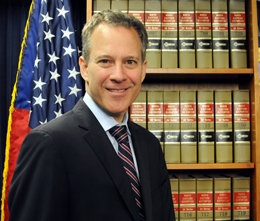
Attorny_General_Eric_T_Schneiderman

Eric Schneiderman is the latest example of someone who could have used the pause more judiciously, though the excellent reporting by Jane Mayer and Ronan Farrow for the New Yorker published last night revealing the courageous details of accounts from women New York’s top law officer abused would have likely led to his resignation anyway.

A pause is not a panacea. A pause would not indicate guilt or innocence. The point of the pause is not to be in service to truth or fiction, but rather to give the accused a moment to think very hard about whether this is the one time he (it is usually a man) can divest himself of his e

ntitlement and privilege for long enough to garner empathy within himself.

You don’t need to take a lot of time. What you should not do is immediately — as Schneiderman seemed to do, as Al Franken did, as others have done — categorically dismiss allegations that are corroborated and published in vetted, legacy institutions by award-winning journalists (one of whom just won a Pulitzer for taking down dudes just like you) in a statement.

You don’t need to pause for a very long time. Just…take long enough to consider what contesting facts or allegations will look like from you in the moment and beyond. Just enough time to consider if it’s worth it to dig in one’s powerful heels, to say one knows the actual truth and those people are liars.

I can’t think of a single instance when moving forward without considering the message first worked. It didn’t work for Al Franken or Charlie Rose. We know now that it most certainly did not work for Harvey Weinstein, who, right before the bombshell New York Times piece that led to his downfall was published, was still so smug that he said he would option the movie rights to whatever information the Times thought it had on him.

We can’t go back to a time before hot takes, obviously. The appetite for a quick distillation, for quick justice, for swift social punditry is as great and voracious as our addiction to our phones and to the external validation of one another. Pausing becomes a kind of abstinence in the midst of an orgy of information.

It is almost never better to say nothing. But it is extremely important that powerful people accused of preying on others exhibit some aspect of self-control for once. If for no other reason than it prolongs any hope they have for self-preservation.

Reflections on Austin for The New York Times

When the bombings started in Austin, I was distracted by other things like a lot of other folks. I saw 17-year-old Draylen Mason’s name and that he had been attacked, but I didn’t register a connection between him and the other people who were being harmed in Austin until too late, until Governor Abbott decided it was time to offer a reward for information for the bomber who was then later described as a nice young man with challenges.

Writing for the Times is something I’ve always wanted to do. I have dreamed of publishing on the Opinion pages there since I was a college student. On Thursday, that became a reality with this piece, What It’s Like to Be Black in Austin.

By now, because the bomber is dead, and there are other things to think about and be outraged about — Stephon Clark’s murder among them — these reflections might seem to be a forgone conclusion, but because we live in a time of increasing racial terror, perhaps they are not. We are just in a different moment than when I wrote at length about leaving Austin in 2013. So I worry that failing to look at some of these thoughts or ideas will mean that fewer things get resolved, fewer conversations are aired.

Whenever I write about race or have conversations about my experience, I inevitably get questions like, “What should we do?” I feel very strongly that my work in the world is to be a witness and to write. My work is not to solve refusal to see biases at play or anything else.

I’ve been amazed by reconnecting with my friends and colleagues across the country in the wake of the piece’s publication. Most of the responses have been positive. Because this is a piece that is about race and racial critiques of well-meaning people tend to bring out defensiveness (underscored in the piece), it won’t surprise you to hear there’s been some of that as well.

In any event, writing this piece made me appreciate even more the wonderful people we meet wherever life takes us who become our community. Our truths are not other people’s truths and they don’t have to be. I hope that folks will take what is useful here and leave the rest.

In Austin, I felt a loneliness that was hard to explain. I wasn’t just a New Yorker in Texas. I was a tall, dark-skinned black woman with natural hair. I was an outsider in a place that is supposed to value weirdness, but I never felt like the right kind of weird.

I did the things everyone does in Austin. I went for runs around Lady Bird Lake. I went to hear live music. But whenever I looked around, I would always notice that there was no one else who looked like me. I tried to talk to some of my well-meaning white friends about this. They would try to “Well, actually …” me. “Well, actually, Austin is better than the rest of Texas.” What else could they say?

So I moved back to the East Coast, but I kept my home in East Austin and still visit when I can. It’s my home away from home.

I learned about the bombings on Twitter, and it was surreal to read these familiar names in the middle of the horror. These were people I wrote about, people I knew, people I shared laughs with: Nelson Linder, the head of the Austin N.A.A.C.P., and Freddie Dixon, a pillar of the community, discussing the deaths of 17-year-old Draylen Mason and 39-year-old Anthony Stephan House.

I worried for the people I knew, and then I felt, again, that deep, lonely sadness. I wasn’t the only one made to feel that I didn’t belong. Someone was targeting black people, but once the bombs appeared in other neighborhoods, the authorities no longer seemed willing to consider the possibility that hate crimes had been committed.

I don’t know what else to call them. When the bombings started, I had been writing about the 50th anniversary of the Rev. Dr. Martin Luther King Jr.’s assassination, so I knew the faces of martyrs of the civil rights movement. Whenever I hear about bombs and black people, I think of the four little girls murdered in Birmingham, Ala. I have family ties to Philadelphia, too, so I think of the Move bombings. Are there any black people who can separate news of bombs from notions of terror?

We are in an unusual cultural moment. There has been so much truth-telling over the past few months, so much affirmation about speaking truth to power. I hoped that this time, the authorities might acknowledge that, yes, black people were targeted. I thought someone might make the connection — East Austin is the only place in the city where black and brown people still live in large numbers, and they remain vocal. There are people who are afraid of that, and are threatened by that, and that makes East Austin a target. Instead, there was silence, as these concerns disappeared into the broader panic about where a bomb might strike next.

The Kerner Report at 50: Dame Magazine

I haven’t been blogging that regularly since the holidays because I’ve been working on some longer form essays and works in progress, along with working on work work and doing other things. But I wanted to take a bit of time to reflect on the 50th anniversary of The Kerner Report and its meaning for Dame Magazine.

The Kerner Report marked the first time in modern U.S. history that government officials acknowledged media bias that favored white narratives and disadvantaged blacks to the detriment of all of American society by underscoring how lazy, biased journalists in unrepresentative newsrooms took the word of “beleaguered” officials in American cities to publish inaccurate figures that gave distorted impressions about the impact of riots on cities, leading to more damage.

There are, unfortunately, too many examples in modern media to provide a comprehensive account of the ways that we have devolved since the Kerner Report. One example is the failure of media to accurately contextualize the rise in domestic extremist terrorism at the hands of white supremacist mass shooters like Dylann Roof, who in 2015 murdered nine at Mother Emanuel Church in South Carolina, as a serious threat to national security on the same scale as an external threat posed by foreign nationals, Black or Brown people. In a January 2018 report, the Anti-Defamation League reported that between 2008 and 2017, white supremacists were responsible for 71 percent of all domestic terrorism-linked deaths.

Another example of this lack of progress is the way that Black victims of police-involved shootings are often criminalized in death. Immediately after Michael Brown’s death, the New York Times inserted a line in a story about him high in the story saying that “he was no angel,” as if that would explain why police left the boy’s body uncovered in the street after he’d been shot to traumatize the city of Ferguson, Missouri, even further.

The secondary finding of the Kerner Report was more far-reaching and resonant, and is the finding that all media still have not appropriately dealt with.

By and large, news organizations have failed to communicate to both their black and white audiences a sense of the problems America faces and the sources of potential solutions. The media report and write from the standpoint of a white man’s world. The ills of the ghetto, the difficulties of life there, the Negro’s burning sense of grievance, are seldom conveyed. Slights and indignities are part of the Negro’s daily life, and many of them come from what he now calls ‘the white press’—a press that repeatedly, if unconsciously, reflects the biases, the paternalism, the indifference of white America. This may be understandable, but it is not excusable in an institution that has the mission to inform and educate the whole of our society.

This rings true today in what stories make front page news and what stories are completely ignored or never break through.

You can read the whole piece here.

Book Update and DC Author Festival, October 24th

DC Author Festival GraphicSince How Racism and Sexism Killed Traditional Media: Why the Future of Journalism Depends on Women and People of Color was published at the end of August, life has been a bit hectic, but in the best way. After three years of working, moving, working, writing and researching the book, working, moving again, editing the book, I was too tired to plan a book party.

If this seems convenient, well, it was sort of. I decided to do something I haven’t done in 12 years. I took a vacation. It was glorious.

Thankfully, my colleagues with the Journalism and Women Symposium (JAWS) group in DC was kind enough to let me talk about the book and what I discovered while writing it at the National Press Club a few weeks ago. It was an honor to meet such an esteemed and lovely group of women and to match names with faces.

That said, while responses to my book have been overwhelmingly positive, there have been a few folks who 1. Question the premise of the title despite overwhelming evidence of the fact that media diversity has not been a priority and has led to a significant decline in relevant audiences caring about traditional news or paying for news consumption and 2. Are not hesitant about disagreeing with the sentiment, research or facts behind my argument. The defensiveness surprises me, given what we know about the sexism and racism that unfolds throughout our social media networks on a regular basis. But the fact that there is still resistance is all the more reason to continue to have discussions about how women and people of color can leverage social media to their advantage and how the few media conglomerates that are doing a better job with diverse coverage (The New York Times, for example) can set a good example for the digital and legacy outlets that still think it’s OK to remain predominantly white and male.

I was overjoyed that for a little while my book was one of the top new releases on Amazon within the first month that it was published. I’m sure my friends and family did that. I’ll be selling copies on Saturday, October 24th at the DC Author Festival at the Martin Luther King Jr. Memorial Library at 901 G Street NW from 10 until 5. There’s a great lineup of speakers and workshops – you can download the program booklet here.  Please come by, buy a copy and I’ll sign it for you. Or if you have a copy and you’d like me to sign it for you, that’ll work too.