Highlighting Unsung Heroes: The Women of the 6888th Postal Battalion

It’s hard to believe it is has been almost two full years since the publication of Women of the Post. It feels like the characters in the book are with me all the time, even as I work on my next book.

A large part of that has been the warm reception, the kind words and notes others have shared about the book. It was nice to see, just the other day, that Women of the Post was included in this Book Riot roundup of books about the 6888th Central Postal Battalion. I also loved seeing every member of the battalion listed at the end of Six Triple Eight, Tyler Perry’s Netflix movie — that kind of recognition is long overdue. It’s exciting to see all the different ways creators, storytellers and historians are amplifying the story of the Women’s Army Corps, and the 855 Black women who served as part of the Six Triple Eight.

In the broader world, there is an aggressive push to proclaim the end of diversity, equity and inclusion. That war is separate but related to a false sense of competition between my version of the 6888th history and other versions. First, those of us who embody the histories central to Black History Month and Women’s History Month know that the work of pulling important, erased narratives from the margins to the center of discourse is not done. If it were, I would not get regular emails from readers sharing their dismay that they never learned about these Black women veterans. I would not hear from women veterans all over the country that each year during Veterans’ Day, their husbands are thanked for their service but they continue to be overlooked, even when they are the veterans and their spouses are not.

But second, history has been generous to non-Black and male veterans in this country, to put it mildly. There are many millions of stories, movies, books, plays and other archives brimming with descriptions of service to this country that do not include Black women at all. So there is much more to be written, told and shared about Black women veterans, and Black women, period. There is more than enough room for all of our stories.

It’s encouraging to me, always, to be in the virtual literary community that continues to lift up Women’s History all year long. This year, I’m also delighted to note that Women of the Post is included in great company as part of author Janis R. Daly’s 2025 list of 31 Titles about Women in History that educate and inspire. I’m looking forward to picking up some of these titles myself, and I hope you’ll spread the word about them, too.

Juneteenth: Reflections on Freedom and Writing

Jonathan Soren Davidson for Disabled And HereDisabled And Here project page

I’ve been thinking a lot about Juneteenth and a common response that I have when anyone asks me how I deal with writer’s block. I know more people became familiar with Juneteenth during the pandemic, but I learned about the holiday in the state where it was born, Texas. (I highly recommend reading Annette Gordon-Reed’s slim, enlightening book, On Juneteenth, which I like to return to once in awhile.) I was in my 30s, working in Austin, when I first learned about it. Before that moment, I had never considered the quantum emotional leap that had to be required for enslaved people to transition to full, legal (on paper, at least) autonomy.

And, as a native New Yorker, I had mixed feelings about the holiday, which on its surface felt to me like the celebration of delayed freedom. And understanding what little I do about the Reconstruction Era, thanks to Bryan Stevenson and Kidada Williams especially, the holiday seems to have been observed, always, in an environment of extreme animosity for former dehumanized engines of labor resting up, relaxing and otherwise trying to see what this nation and its attraction to a simple freedom narrative really meant for them. After all, the end of slavery really reached a chilling crescendo in the twelve-year period immediately following the Civil War, when there were so many promising laws meant to offer Black folks a path to full citizenship.

But as part of a system of racial hierarchy, the caste system built here to justify slavery in the first place, the first tool of dehumanization was to cut Black people off from educating themselves. Because without reading or writing, you are chained to ignorance. Reading as a practice is what lead me to writing. Writing is what became the catalyst for personal expression that built the architecture of this amazing life.

Anti-Black literacy laws in this country were meant to strip us of any chance at navigating the world around us. And, as a kind of shorthand whenever anyone asks me about writer’s block and how I deal with it, I say that given that my ancestors were forbidden by law to read or write, I do not have the luxury that the phrase writer’s block insinuates.

The Harvard library talks about the barriers to education for Black people this way:  

 
Between 1740 and 1867, anti-literacy laws in the United States prohibited enslaved, and sometimes free, Black Americans from learning to read or write. White elites viewed Black literacy as a threat to the institution of slavery – it facilitated escape, uprisings, and the sharing of information and ideas among enslaved people. Indeed, literacy undermined the false foundation slavery was built on: the intellectual inferiority and inhumanity of African-descended people.

The small percentage of enslaved people who became literate did so at great risk – those who were caught were often violently punished, sold, or even killed. Because of the danger, enslaved people had to be strategic and resourceful in learning to read and write. They attended secret informal schools taught by free Blacks at night, covertly learned from white enslavers’ children, or found opportunities when enslavers were away.
 

So, what does this have to do with Juneteenth? For me, when I consider the struggle of being truly freed after being conditioned to believe you were unworthy, I also wonder about what it must have felt like to realize that the promise of freedom is not the same as being truly liberated. And the true liberation of Black people in this country has always been and will always be contested, and greeted with hostility. 

Freedom to read and write does not equal liberation from work — in fact, the more you read and write, the more work is ahead of you. You have to understand the context: Once the slaves were free, they had nothing of their own; everything they touched with their hands belonged to white people — Land, clothing, books. There was hunger and drought especially in the South. The last thing anyone probably cared about was writing about it, but this is a reminder to me to read W.E.B. Du Bois’s Black Reconstruction.

The hardest thing about writing is how often you fail, no matter how often you try. Much like the paradox my ancestors found themselves living at the end of the Civil War, writing is not a 1:1 scenario. What you put in is not what you get out. Everything about writing is complex, and it resists platitudes and reason.

But these complexities also make writing beautiful, just like the ongoing freedom struggle. They have made me pledge my undying devotion to sitting in quiet places trying to put my thoughts into the right order to share them with you. 

Writers and those who profit from our weirdness make up so many romantic stories about writer’s block and fatigue and distraction. And those ideas are not entirely without merit. But what Black writers have that others do not is the haunting reality of a legacy truncated by racism and racist practices in this country.

Black people who looked like us, who had dreams for their lives and their families like us, also had to go to school in secret and risk their lives to learn what is so abundantly available to us. How many millions of stories have not been written and therefore remain unread that our ancestors did not have the luxury of writing down? Understanding this past, it feels impossible to believe in writer’s block. Whenever I run out of things that feel new to write, I imagine what got buried in the Atlantic Ocean during the Middle Passage. I try to imagine all the other possible futures for those gone too soon.

I think of this when I have to make much smaller sacrifices to make room for what I am here to write, like getting up early before most of the world (on the East Coast, anyway) is up or writing on the rare quiet weekend morning. I think of this whenever anyone asks me a question about how it is I manage to write so much with all the things that I always have going on. And I especially think of these things when I remember that it was not long ago that my ancestors were enslaved, when this country dragged its feet to do what was morally sound, even though we were the ones everyone said were morally corrupt, dangerous and inferior. 

My offering this Juneteenth/Freedom Day is just the reminder that while our freedoms as Black writers may be fraught, contested and resented, they are, nonetheless, freedoms that our ancestors endured much for us to have. May we continue to revel in this abundance, and write to our heart’s content, in their honor. 

My new novel, Women of the Post

It is with great joy and pride that I share the exciting news that my debut novel, Women of the Post, will be published this summer, in July.

Women of the Post follows Judy Washington from the demeaning work of the Bronx Slave Market to the Women’s Army Corps’ 6888th Central Postal Battalion.

The novel is about Black women’s unvalued labor in the workforce that enabled us to overcome fascism and build morale in order to win one of the most significant wars in American history. It is about how Black women’s love for one another and for our country has been both sanctuary and salvation. It is my love letter to the courage it takes to be unique and also be in sisterhood as you evolve.

I will have much more to say about the book and the process of writing it in the weeks and months and years to come. in the meantime, I hope that you’ll pre-order the book — pre-orders are really important for the success of a book! — which is available everywhere books are sold, including Bookshop or directly from your favorite independent bookstore.

From the Dodo: Me and Bendito on the podcast An Animal Saved My Life

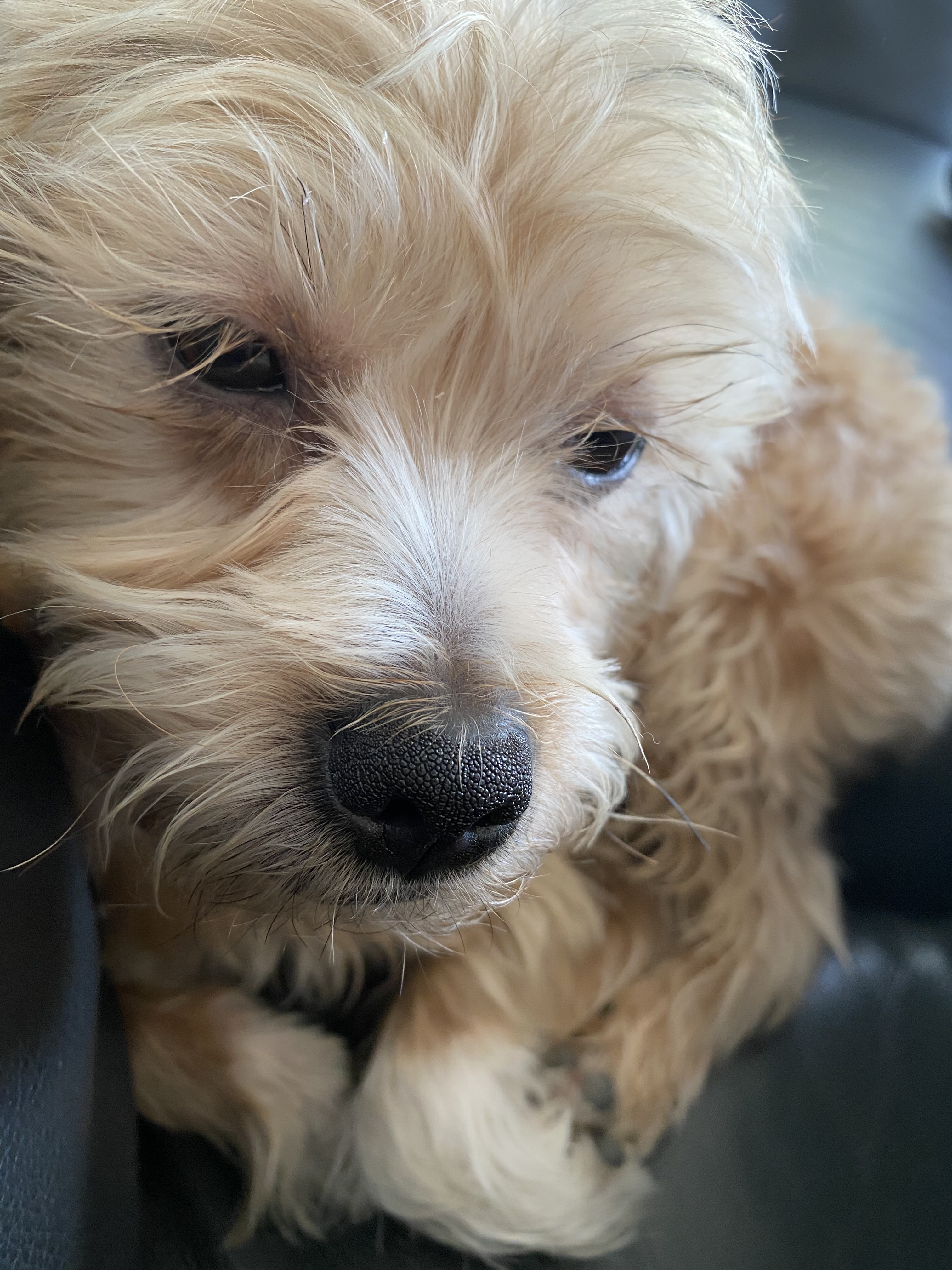
Yes, he is *this* cute every single day.

I wrote about Bendito arriving in my life around the time that it seemed a number of people discovered a 2014 Bark article I wrote about Cleo and the fraught relationship some Black folks have with dogs. The folks at the podcast An Animal Saved My Life over at The Dodo were kind enough to interview me about my sweet Bendito, who very soon will be 1 year old. I hope you enjoy it, especially if podcasts are your jam.

Black Book Stacks on Substack

Before I was a journalist, my favorite non-fiction writing and non-journaling activity was to attend readings or lectures featuring Black authors and take copious notes. So it is a kind of coming full circle that I’ve started a Substack newsletter focused on book reviews related to books for and by Black people, Black Book Stacks. (About a year ago, I started a YouTube channel of the same name, which you can view here and if I have a Bookshop store you can find here.)

I always had the innate sense that being a writer was not just about putting words to paper and hoping that others would read those words. I was always searching to put the words I wrote into a tradition. Writing was another way of trying to belong and to solidify a place for myself in a world that seemed bent on my erasure or destruction.

I have vivid memories of a small royal blue Mead notebook that was thick as a brick. I carried it with me to the old Barnes & Noble on Astor Place, through Washington Square Park, up to Emma Willard and Vassar. I had the privilege of listening and trying to absorb the wisdom of Jamaica Kincaid, Gloria Naylor, Janet McDonald, Elaine Brown and so many others. I was a careful collector of Black women writers’ quotes, usually because I couldn’t afford to purchase books of my own and I didn’t not want to vandalize library books. Quotes were the happy compromise; they were short enough for me to carry wherever I went. These were the breadcrumbs and manna they left for me in a trail to who-knew-where but I gobbled them up. Every nugget was a jewel in my crown.

As I made my way in journalism, it became harder and harder for me to give myself permission to keep up this witnessing practice in the same way. Mostly because of time, but also because I realized that such forums and opportunities to hear Black writers and share space with them were fewer in other states and cities. It just so happened that reading the work of Black women in particular was my self-paced MFA program. Sometimes, I had the opportunity to profile, interview and write about them, as was the case with Octavia Butler in 2004 and Alice Walker around the same time. But mostly, I was just glad to have their work to sit with and revel in.

Over the years, I’ve continued to focus my attention on the work of Black writers because, as more of the world knows now, we live in a world where white supremacist capitalism means that what is considered valuable is everything but Blackness or real intimate discussions of all its flourishing contours in spite of and beyond the gaze of the consumption of white people. What I mean to say, I think, is that Black literature has always been a miracle to behold. In part because it comes from a people who have a shorter lineage in the Americas of thriving in literature because of the legal restrictions that forbade them to read and write. Our resilience and perseverance and faith, all bound up in the Word, continued both in an oral tradition and on paper.

The overcorrection here, I’ve found, is that when it comes to fair critique or evaluation of the work of Black writers, is that our books are either ignored, as if they never happened, especially beyond the date or week of their publication, or they are elevated as neutral objects for sale without a real analysis of them and their context. That’s what my new newsletter is aiming to help create in the world. I hope that if that sounds of interest to you, that you’ll subscribe. Looking forward to seeing you on the list.

Book Review: Caste by Isabel Wilkerson

Happy summer, as happy as it can be, I suppose. I wanted to drop by to rave a little about Isabel Wilkerson’s masterpiece, Caste, publishing soon and definitely one for you to pick up. Here’s my full review from the Sunday Boston Globe and an excerpt:

“With an old house, the work is never done, and you don’t expect it to be,” writes Isabel Wilkerson in her new book, “Caste: The Origins of Our Discontents.” “America is an old house.” It is a simple analogy that is classic Wilkerson, whose previous book, “The Warmth of Other Suns,” chronicled the Great Migration through the masterful weaving of thousands of narratives within the United States. In her new book, which should be required reading for generations to come and is as propulsive a reading experience as her debut, she turns her attention to India, Germany, and what their histories have in common with America’s.

A significant work of social science, journalism, and history, “Caste” removes the tenuous language of racial animus and replaces it with a sturdier lexicon based on power relationships. “Caste is the infrastructure of our divisions,” Wilkerson explains, “an artificial construction, a fixed and embedded ranking of human value that sets the presumed supremacy of one group against the presumed inferiority of other groups on the basis of ancestry.” Using examples from around the world, she goes on to demonstrate how the codification of caste throughout the world has hardened economic and political inequality into seemingly permanent markers of difference.

How We Show Up: A Q&A with Mia Birdsong

My friend and radical visionary Mia Birdsong has written the new necessary and inspiring new book, How We Show Up: Reclaiming Family, Friendship, and Community (Hachette Go, June 2, 2020) I contacted Mia about her book a few weeks ago, hoping to share her words in a broader forum. My humble blog is as broad a forum as I have, so I hope you find her words about alternative forms of care, especially community care, as  therapeutic as I did. I was struck by examples of how Mia, who is partnered and has children, shows up for her single friends like Mariah, which is what frames the first question.

I love the attentiveness and care you mention in the book related to Mariah and her managing diabetes as a single person. The model of attending to her needs outside of coupledom feels like one we need to adopt, especially now. What did you learn about attending to your friend in this way that might be helpful for others as we try to connect virtually now?

Being in Mariah’s life in this way meant that both of us had to push back against some deep American socialization. For me, it was claiming the truth that my loved ones are my business. That means I can butt in if I see a need, gap, place that needs tending to. I was definitely worried about being intrusive, sticking my nose in where it didn’t belong, overstepping, but I also knew that if I pissed her off with unwelcome meddling, we could talk about it. I also thought about how hard it is for people to ask for help, especially when, in this case, the support I was thinking of wasn’t about addressing an immediate need or a crisis, but establishing a long-term, committed kind of support. Ultimately I decided that all the worse-case scenarios of me not butting in were worse than the possibility of pissing her off.

On her end, she had to wrestle with the way we, especially as Black women, are taught to handle shit ourselves, to be super women, and, frankly, to not be dependent on anyone because they might fail you. When you’ve lived your whole life being extraordinarily competent, independent, and excelling at everything you do the way Mariah has—all while managing a condition that could totally kill you and the racism and sexism of America—it’s super hard to allow yourself to lean on someone in such an intimate way.

It’s not like she couldn’t survive without me or the other folks who have become part of her care circle—she has been for her whole life– but she shouldn’t have to. I think that is a critical realization that a lot of us need to come to terms with—just because we can, doesn’t mean we should.

Our practice opened a new way for us to think about care and she’s built more around that that I’m learning from. Having a handful of people instead of one is really powerful. One night when her blood sugar not adjusting, two of us were in touch with her and then in touch with each other. We get to build relationships with each other too.

Now that Covid Times are here, she has actively reached out to the circle of folks that she’s gathered up around her to talk about how to get food, to vent about people not physically distancing properly, to share the latest info, to freak out, to laugh. It’s been a gift to all of us.

Having this practice with Mariah meant that when Covid Times hit us, I was more comfortable with the idea of inserting myself into the lives of my people who live alone, especially if they are high risk. I have a handful of folks that I check in on a few times a week, I bring them food or whatever. And I check in with our friends in common about them to see if I’m missing anything and to encourage others to insert themselves as well. I have a friend with whom I talk about what he wants to happen if he dies, what of his stuff he wants various people to have, where his documents are, etc. That’s a totally new conversation for us.

I guess all of that is to say, I think we need to be brave right now about thoughtfully pushing ourselves into the lives of our loved ones and asking for our loved ones to tend to our wellbeing in ways that might be uncomfortable. We ought not assume that our folks who have lots of friends, or our folks who present as strong and having all their shit together, or our folks who seem ok on their own don’t need our presence and support.

It feels more evident to more people that our racialized capitalistic society and healthcare system has failed us and COVID-19 response (or in some cases, lack thereof) underscores this. What practices, processes or alternative frameworks inspired by and/or explored in How We Show Up: Reclaiming Family, Friendship and Community do you think can help us to respond to this disappointment and collective trauma — individually and collectively? 

I’ve been so heartened by the way folks have shown up for each other as soon as it became clear that we are all we have when our systems (which function as they were designed) are failing to care for us in the ways they should. And I worry about our ability to sustain our mutual aid networks and also hold our government accountable for not doing the work we are now doing. Right now we are trying to fill in for failed systems and we can’t just be cool with that.

One of the things government can’t and shouldn’t do that I see folks doing for each other is creating space to process, to grieve, to connect, and to celebrate. My women’s circles—Tough & Jolly and Black Women’s Freedom Circle—are meeting twice as often now to hold space for ourselves. Having those opportunities to be in our feelings and hear from each other has been life giving. My friend Mac started what is essentially Sunday church. We check in, and every week a different person leads us in song or reflection or meditation.

The other thing I’m loving is the dance parties. I interviewed my therapist a couple of weeks ago because I wanted to understand trauma more. It was clear to me that everyone of us is experiencing trauma. It may hit differently, but it’s universal. She explained fear cycles and what happens when they get interrupted and where people are getting stuck. She also talked about how we can hack our system to make sure we reset it regularly. One of the things she’s recommending to her clients is that they dance every evening. Celebration lets our system know that we are OK—if we’re dancing, we aren’t in immediate danger. So all those DJs on Instagram are helping us reset our system so we release some of the trauma.

How do you imagine reclamation of our communities, family and friendship in the after times – what some call the new normal – will shift in light of the global pandemic, if at all?

This is such a hard question. I’ve been sitting with the fact that while the arc of the moral universe may bend toward justice, the arc of the material universe doesn’t care about whose fault it is that we have a global pandemic or that our systems were designed to disadvantage Black and Indigenous people, people with disabilities, queer folks, unhoused people, etc. The virus is not out here trying to eliminate the polluters and oppressors. It is going to kill the people with the least power, the weaker immune systems, the least money and access to health care.

So I’m horrified by the thought of what that means for who is getting care now, who will get access to a vaccine when we finally have one and who will be left in a few years when this comes to some kind of conclusion. It feels inadequate to say “we’ve got us,” or “build community” when the forces in power conspire to exploit this moment for profit and continue to leverage their power for their own gain.

This is all on top of the fact that even after they “open up the country,” we are still not going to be able to hug each other, to hold hands, to share meals in each other’s homes, to gather to worship, celebrate, plan, protest, and just be together for a painfully long time. It’s demoralizing and heartbreaking. And at the same time, it’s still absolutely true that we’ve got us. We are already figuring out how to be with each other, support each other, celebrate with each other, feed and nurture each other. And I imagine we will figure out ways to be together that are safe and support our emotional wellbeing—like maybe we’ll have to plan dates, dinner parties, and small gatherings far enough in advance that everyone can quarantine for a few weeks before getting together. (That is not a recommendation.) Maybe we will have to really do the work of dealing with our own wounds and damage and building grown-ass relationships with excellent boundaries and explicit communication and expressed desires and needs so we can cultivate the kind of trust that would be necessary to gather like that.

Get your copy of How We Show Up here. You can book Mia Birdsong to speak by way of my amazing friends at FRESH Speakers

A Black History Month Reading List, Part 2

DSC_0015


So you may have already seen my other list of recommendations, but if not, here’s Part I. Part 2 is not meant to be exhaustive or comprehensive, because there are many lists of books about Black history and culture that you can check out for even more recommendations, including the Zora Canon of 100 best books here, this Penguin Random House list of 25 contemporary fiction and nonfiction  or this Electric Literature list of 10 books about Black Appalachia and then there’s Goodreads and Twitter and a dozen other places.

I realized when I was thinking about some of my favorite works of history or of historical significance about Blackness that they were across genres.

For instance, for colored girls who have considered suicide when the rainbow is enuf by Ntozake Shange was actually the second or third book of hers I read. Before that, I was in love with Liliane, Sassafrass, Cypress & Indigo, her poetry collection, The Love Space Demands. But what I loved most about for colored girls — which was recently a sold out production in all of its glory at The Public Theater — was that it showed Black women in our multicultural context. As being in relationship to Latinx, Caribbean and African spiritualities, dreams and aspirations. It showed our love and joy and pain as being Diasporic like a lot of Ms. Shange’s work.

In this way she was definitely a part of the literary tradition of recovering the wholeness of Black womanhood in the way that Zora Neale Hurston did in Their Eyes Were Watching God, one of my favorite novels of all time.

Much has been said about the beauty and timelessness of Their Eyes Were Watching God; to understand more about the life of Zora, however, an essential text is Valerie Boyd’s Wrapped in Rainbows. It is a classic example of the ways Black women’s lives are cherished in unique ways when we have Black women biographers to attend to the beautiful and brutal details of our lives.

Speaking of the unique beauty of having a Black woman author reflecting the details of Black women writers, bell hooks’ work has been foundational in helping me decode and externalize internalized biases that get in the way of my work. This includes everything from Sisters of the Yam, Writing About Race (a book in which I was surprised to find myself cited!!) to one of her most important books to me, Remembered Rapture: The  Writer at Work. I often talk about this book because it was the first time I read a respected black woman author say that no Black woman could write too much; that we are always writing against time because of the illnesses that take us out, because our ancestors were silenced and we don’t have to be and much more.

I have not mentioned one of the most important writers in my development and understanding of the myriad possibilities for Black writers and intellectuals on a global scale yet, James Baldwin, in part because the book by which I was introduced to him is no longer in print. I had the great fortune to pick up a thick book, The Price of the Ticket, a collection of Baldwin’s essays in the early 1990s. Published in 1985, it represents some of his most powerful writing from 1948 to 1985. I read it in seventh grade and kept the book with me, somehow, across a lot of moves to a lot of different places. It reads to me like sacred text, and its beautiful cadences and nuances, the confidence and fear, the anger and disappointment, all elegant and alive, helped me really see America for the country that it is instead of the country I believe most of us want it to be.

A Black History Month Reading List, Part 1

Some of you have been kind enough to follow my musings about individual books on my new YouTube channel, Black Book Stacks. This is a natural endeavor for me, to find, devour and support books by and about Black people, who I define as people from throughout the African Diaspora. This is an evolving definition, I guess; I was reading David Yoon’s Frankly In Love, which is an addictive YA book that delves into interracial dating and intraracial friendship, including with his Black friend Q. Frankly In Love is a good, recent example of the kind of book that blends a lot of different kinds of diversity and that was part of what thrilled me about it.

I forget who I was talking to who said this, but it stuck with me: Black people in this country do not have the luxury of having as long a literary tradition as any other group in America because of the legacy of slavery. Because of being forbidden to read or write. To me, that makes it that much more important to lift up books that recover and restore us to ourselves; that expand what we know of ourselves and our lineage, real and imagined. Anyway, here is the beginning of a list of some essentials of Black history, to me, anyway, that can be a good resource and are some of my favorite books that filled in important gaps for me along my reading journey:

  1. (New) Daughters of Africa: An International Anthology of Writing by Women of African Descent, edited by Margaret Busby | I have the great fortune of having both a copy of the original Daughters of Africa, and the newest addition, which just expands the important, vast collection of significant work to include 200 writers. A classic.
  2. Sister Outsider by Audre Lorde | “Poetry is Not A Luxury,” “Uses of the Erotic,” and many other seminal works by Audre Lorde were first written or delivered as lectures in the 1970s. Like the Combahee River Collective as a whole, she was integral to giving us language to describe and express the interlocking oppressions we know now as an intersectionality framework.
  3. How We Get Free: Black Feminism and the Combahee River Collective by Keanga Yamahtta-Taylor | I was not familiar with Dr. Yamahtta-Taylor’s work until I taught it at the New School, and hearing first hand from the likes of Barbara Smith, Barbara Ransby and Alicia Garza helped contextualize not only a lot of what we’re seeing now in terms of how Black women are dismissed or lifted up, depending on the community, but also how much has happened behind the scenes along the way.
  4. At the Dark End of the Street: Black Women, Rape, and Resistance — a New History of the Civil Rights Movement from Rosa Parks to the Rise of Black Power by Danielle L. McGuire | No disrespect to Rosa Parks, but I did not know the name of Claudette Colvin until I read McGuire’s book, of my own volition, long after undergrad, where I had Africana Studies as a minor and learned a good deal, just not enough.
  5. The Warmth of Other Suns: The Epic Story of America’s Great Migration by Isabel Wilkerson | It’s hard to believe that 2020 is the 10th anniversary of this book’s publication (!) but what an incredible work of scholarship, recovery and re-membering from Wilkerson, who, if memory serves, interviewed thousands for this book, including a young pre-presidential hopeful named Barack Obama. No list of important Black historical texts is complete without this one.

Words of Fire is another underrated anthology of Black Feminist thought; Black Skin, White Masks has always haunted me, and Sisters of the Yam, by bell hooks, was the beginning of my understanding of wellness and self-care.

I’d love to hear what your thoughts are on these books if you’ve read them, or what books you consider essential to learning about Black history are.

School Library Connection Author of the Month Interview

SLC Author of the Month

I’m delighted to share a Q&A with School Library Connection as its December Author of the Month. I got to share my love of The Bronx, the story behind Ava Murray’s name in the I Can Write the World series and more about faith, solitude and writing across genres. I hope you’ll check it out. You can read the whole thing here, but I’ve included an excerpt below:


I love the way Ava’s mother uses the window frame to explain how journalists “frame” stories. It seems like so much of our news these days is framed to fit a particular narrative, rather than to express the truth. Why do you think this started to happen, and what can be done to fix it?

Thank you; it wasn’t until I had the great honor of sitting on a panel at the 2019 Bologna Children’s Book Fair with Rudine Sims Bishop, whose beautiful description of books as windows preceded Kim’s description in the book, that I thought more about the significance of how we talk to children (or don’t talk to them) about how stories are framed, or shaped.

I think that it’s fairly recent in society—adjacent and aligned with the rise of social media—that everyone sort of considers themselves a journalist. When you think about it, journalists are witnesses, people who report what they see. So in a way, everybody’s right. What everyone doesn’t necessarily have, though, are the ethics that go along with what professional news gatherers have—this inclination to shine a light on injustice and unfairness. Most news reporters get into the business (and it is increasingly considered mainly a business) with the aims of comforting the afflicted and afflicting the comfortable. But I think the reason why news more often resembles propaganda now has to do with a kind of commodification of truth and certainly of news. Integrity or nobility are less emphasized than they used to be because most media moguls are looking for revenue to survive in an environment where no one thinks they need an intermediary for news.

One thing I think all of us could do more of is to consider how powerful our platforms are, whether you think you have one or not. All of us who write, for example, have presences online. How can we use that to help others share their opinions or their stories more mindfully? Sometimes it’s as simple as asking these questions, which I love and did not originate with me: “Does it need to be said? Does it need to be said now? Does it need to be said by me?” The other thing is if we are all journalists, now, it shouldn’t just be when it’s comfortable or cute, but all the time. Ask more difficult questions. Who is the source of this information? Are they lying to me about their objectivity? Why do I believe them? Why should I believe them? When in doubt, find your own credible sources and go with that.