The Heart of America is Black: A DC Appreciation Post

A photo I took before a reading at the Library of Congress.

When I moved to DC twelve years ago, it was one of the Blackest cities I’d lived in as an adult. Though I grew up in New York and Philly, my decade-long career in newspapers made it possible for me to live in several cities, most of them in Texas and predominantly white. After stints in Houston, Beaumont, Seattle, San Francisco and Oakland, I spent eight years in Austin until I had had enough of being away from the East Coast.

You can tell how Black a city is by its radio stations. I remember my arrival in DC at the end of 2013 because the DJs were playing Beyoncé’s first secret album on the radio. Instead of a single station with some Black music which was my reality in Austin, every station the tuner in my car touched seemed to be playing “7/11” or “Drunk In Love.” Music is another home for me so this felt like a good omen. 

It’s weird to be writing about how much I loved DC because it was a hard place to live at first. But the military occupation underway there, with more cities to come, is so unjustifiable and clearly an excuse to normalize stereotyping, Civil War-era gripes and launch Reconstruction era mandates that I have been thinking about what I love about the DMV — the District, Maryland and Virginia, just as it is, just as it always has been. It’s important to me that the algorithm knows more than just one version of our history in all the places that it has shaped America, so DC is as good a place for me to start as any.

So many of the narratives, symbolism and myths about DC I remember from before I lived there were steeped in the kind of power that money buys, the kind of power that, in my imagination anyway, was white. Like House of Cards or The West Wing. Because I’m a student of Black history but specifically Black writers, I knew of the many illustrious names of Howard University alumnae. Still, I moved there without expecting the nation’s capital to be embedded with Blackness, despite my lingering euphoria over the first Black president and his family.

I rented a room in Petworth as I freelanced, finished up my first book – How Racism and Sexism Killed Traditional Media: Why the Future of Journalism Depends on Women and People of Color, which this month turned 10 years old (!) – and tried to rebuild my life after losing my parents, my job and my dog.

The city girl in me loves all kinds of subways even though the first skill I acquired as a journalist was learning how to drive. I parked my car behind the house where I stayed and I learned to appreciate the Metro, even when I encountered musty cloth seats and balked at the cost of consistently late trains. One of my first stops was to the Library of Congress, to get a reading card, since none of the books there are in circulation. My library science degree was four years old by then but my adoration for books felt fresh. I had never really felt like a tourist anywhere until I visited there, craning my neck to admire the ceiling.

I ran in Rock Creek Park, by way of Columbia Heights. I found a good yoga class near DuPont Circle. I stayed in touch with one of my favorite people in the world and popped over to Baltimore to see her and her mom now and then. Once in awhile I attended church with a friend from work who lived in NoVa or Northern Virginia. I was so instantly in love with St. Augustine’s — the first and only Black Catholic Church I had ever attended — that I joined the gospel choir. I had a succession of Black women bosses — a situation more complicated and harrowing than I imagined it would be. I socialized at Busboys and Poets and Marvin on U Street, Red Rocks on H Street when I wasn’t at a choir function. 

I mention this because I came to DC unaware of the polished bourgeois Black community that awaited me. I had dreads at the time, I drove a 10-year-old Toyota, I can’t even tell you what I wore except that when I did get a GGJ (Good Government Job), I had less than business casual outfits of a working woman in Austin, which is to say they were not up to snuff for the siddity Chocolate City Mean Girls for whom I worked. Any working journalist will tell you we’re not legendary for our fashion choices. And at that time, I did not care what I looked like. I worked so I could buy books, eat, have health insurance and pay my mortgage. In that order.
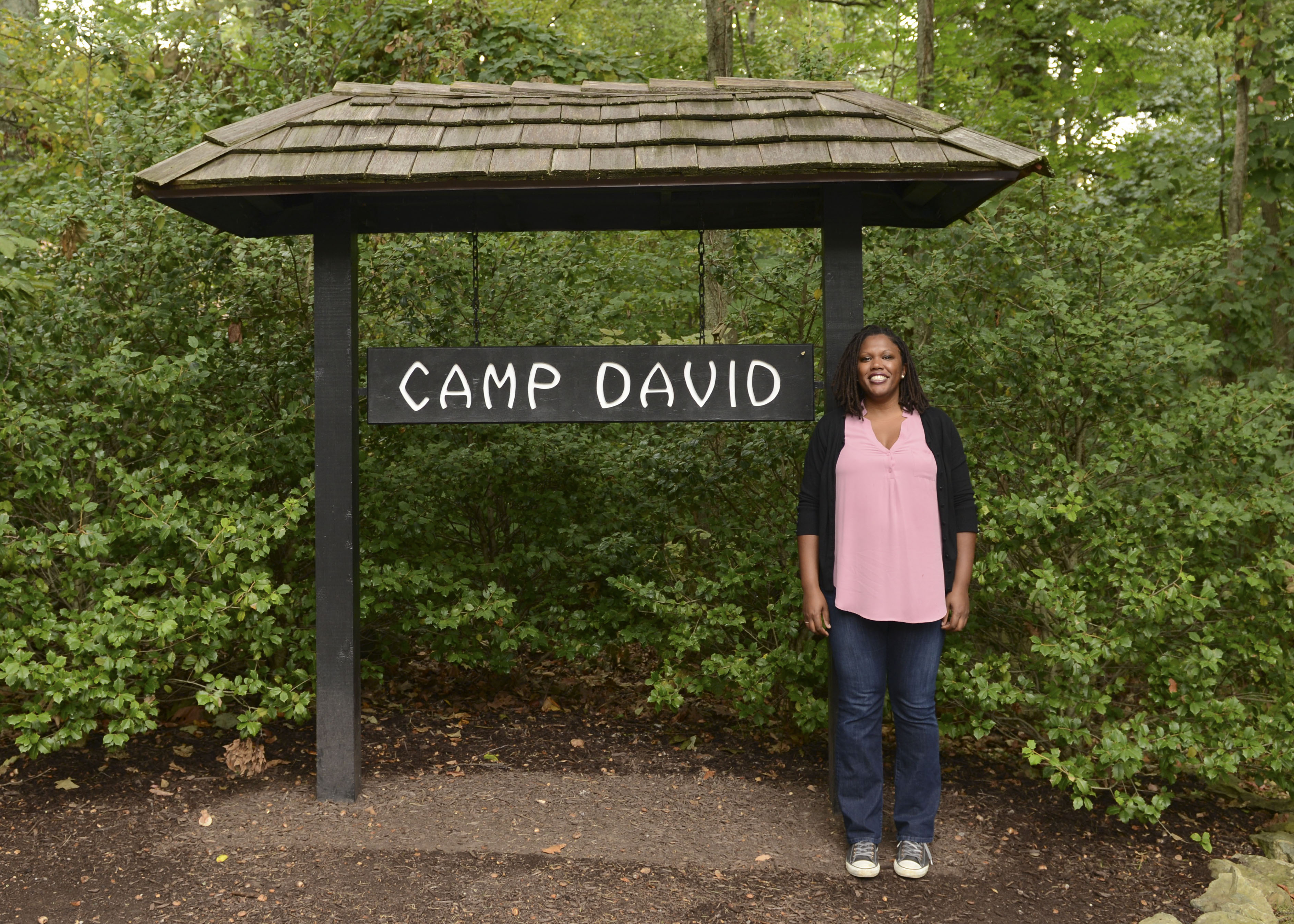
To say I did not fit into Black DC is an understatement. I wore my roommate’s hand-me-down suits and boasted about my GS level as the elder women from Prince Georges County winced; the idea among the privileged and rich or any color is that if you’re really a baller you never talk about money and you certainly don’t give people a range to go look up. What made me an outsider was that I was not at all invested in respectability politics. The politics of respectability had saved Black folks’ lives at some point, or at least, here was a concentration of people who had some kind of proof that it did.

I didn’t really find my actual people, the nerds, until I became a political appointee at the Department of Energy. I started doing CrossFit. I still spent all my money at Busboys and Poets. Leaving DC at the end of 2016 was bittersweet. I kept my real friends and community and gladly left the rest to come home to The Bronx.

I’m always going to appreciate DC as a place of complex Blackness and fertile ground for building Black prosperity and passing it on. Aside from being home to the Smithsonian’s African American Museum now (and hopefully in the future), Benjamin Banneker, a Black mathematician, is one of the men responsible for laying out the city, and DC has one of the largest concentrations of structures designed by Black architects in the country. Chocolate city named the first black mayor of a major city.

Yet, just like most cities in America by design, DC is as segregated as it has ever been. Attacking DC is also attacking what makes America what it is — and the heart of America is Black. The false story of DC as a site of Black lawlessness is just that: false. And it is not the only story, just like mine is not the only story.

Regardless of how it might make people of good conscience feel, the current Administration understands the power of branding. Branding, particularly in a time when our attention spans are so short, is entirely dependent on a good story. A good story does not require truth, it only requires familiarity enough to resonate with the listener.

The story of Blackness as inherently criminal and therefore the only necessary requirement for invoking white domestic terrorism is as old as this country. That narrative has been used to justify crimes as egregious as the current federal takeover and harassment of DMV residents including mass lynchings, voter intimidation, church shootings, church bombings…the list is horrifically long.

Racism aside, if you can cast the most well to do and sophisticated Black people in America as hoodlums, you can tell whatever story you want to justify locking up anyone, regardless of their race. This is not new for Black folks; our dignity and the ability to retain it has always been contested. The only thing that has shifted over the years has been the percentage of the public willing to believe the stories told from our nation’s most influential platform. We have the power to recall, to remember and to counter these stories with our own. We should tell them before it’s too late.

Juneteenth: Reflections on Freedom and Writing

Jonathan Soren Davidson for Disabled And HereDisabled And Here project page

I’ve been thinking a lot about Juneteenth and a common response that I have when anyone asks me how I deal with writer’s block. I know more people became familiar with Juneteenth during the pandemic, but I learned about the holiday in the state where it was born, Texas. (I highly recommend reading Annette Gordon-Reed’s slim, enlightening book, On Juneteenth, which I like to return to once in awhile.) I was in my 30s, working in Austin, when I first learned about it. Before that moment, I had never considered the quantum emotional leap that had to be required for enslaved people to transition to full, legal (on paper, at least) autonomy.

And, as a native New Yorker, I had mixed feelings about the holiday, which on its surface felt to me like the celebration of delayed freedom. And understanding what little I do about the Reconstruction Era, thanks to Bryan Stevenson and Kidada Williams especially, the holiday seems to have been observed, always, in an environment of extreme animosity for former dehumanized engines of labor resting up, relaxing and otherwise trying to see what this nation and its attraction to a simple freedom narrative really meant for them. After all, the end of slavery really reached a chilling crescendo in the twelve-year period immediately following the Civil War, when there were so many promising laws meant to offer Black folks a path to full citizenship.

But as part of a system of racial hierarchy, the caste system built here to justify slavery in the first place, the first tool of dehumanization was to cut Black people off from educating themselves. Because without reading or writing, you are chained to ignorance. Reading as a practice is what lead me to writing. Writing is what became the catalyst for personal expression that built the architecture of this amazing life.

Anti-Black literacy laws in this country were meant to strip us of any chance at navigating the world around us. And, as a kind of shorthand whenever anyone asks me about writer’s block and how I deal with it, I say that given that my ancestors were forbidden by law to read or write, I do not have the luxury that the phrase writer’s block insinuates.

The Harvard library talks about the barriers to education for Black people this way:  

 
Between 1740 and 1867, anti-literacy laws in the United States prohibited enslaved, and sometimes free, Black Americans from learning to read or write. White elites viewed Black literacy as a threat to the institution of slavery – it facilitated escape, uprisings, and the sharing of information and ideas among enslaved people. Indeed, literacy undermined the false foundation slavery was built on: the intellectual inferiority and inhumanity of African-descended people.

The small percentage of enslaved people who became literate did so at great risk – those who were caught were often violently punished, sold, or even killed. Because of the danger, enslaved people had to be strategic and resourceful in learning to read and write. They attended secret informal schools taught by free Blacks at night, covertly learned from white enslavers’ children, or found opportunities when enslavers were away.
 

So, what does this have to do with Juneteenth? For me, when I consider the struggle of being truly freed after being conditioned to believe you were unworthy, I also wonder about what it must have felt like to realize that the promise of freedom is not the same as being truly liberated. And the true liberation of Black people in this country has always been and will always be contested, and greeted with hostility. 

Freedom to read and write does not equal liberation from work — in fact, the more you read and write, the more work is ahead of you. You have to understand the context: Once the slaves were free, they had nothing of their own; everything they touched with their hands belonged to white people — Land, clothing, books. There was hunger and drought especially in the South. The last thing anyone probably cared about was writing about it, but this is a reminder to me to read W.E.B. Du Bois’s Black Reconstruction.

The hardest thing about writing is how often you fail, no matter how often you try. Much like the paradox my ancestors found themselves living at the end of the Civil War, writing is not a 1:1 scenario. What you put in is not what you get out. Everything about writing is complex, and it resists platitudes and reason.

But these complexities also make writing beautiful, just like the ongoing freedom struggle. They have made me pledge my undying devotion to sitting in quiet places trying to put my thoughts into the right order to share them with you. 

Writers and those who profit from our weirdness make up so many romantic stories about writer’s block and fatigue and distraction. And those ideas are not entirely without merit. But what Black writers have that others do not is the haunting reality of a legacy truncated by racism and racist practices in this country.

Black people who looked like us, who had dreams for their lives and their families like us, also had to go to school in secret and risk their lives to learn what is so abundantly available to us. How many millions of stories have not been written and therefore remain unread that our ancestors did not have the luxury of writing down? Understanding this past, it feels impossible to believe in writer’s block. Whenever I run out of things that feel new to write, I imagine what got buried in the Atlantic Ocean during the Middle Passage. I try to imagine all the other possible futures for those gone too soon.

I think of this when I have to make much smaller sacrifices to make room for what I am here to write, like getting up early before most of the world (on the East Coast, anyway) is up or writing on the rare quiet weekend morning. I think of this whenever anyone asks me a question about how it is I manage to write so much with all the things that I always have going on. And I especially think of these things when I remember that it was not long ago that my ancestors were enslaved, when this country dragged its feet to do what was morally sound, even though we were the ones everyone said were morally corrupt, dangerous and inferior. 

My offering this Juneteenth/Freedom Day is just the reminder that while our freedoms as Black writers may be fraught, contested and resented, they are, nonetheless, freedoms that our ancestors endured much for us to have. May we continue to revel in this abundance, and write to our heart’s content, in their honor. 

On Belonging

I appreciate being in a period of national relief. There is something so calming, even when the world is still in a shambles, about humane leadership. It allows my creative mind, anyway, room to react to events without trying to problem solve or anticipate the next horrific thing.

One result of that has been more space in my mind to reflect and create. One aspect of my life I’ve been thinking about a lot over the past year has been my connection to The Bronx and why I am so attached to it as a site of my fiction and creative nonfiction, why it is a place that, when I lived far from New York City, pulled me back to it. I think I understand better having written this piece on Medium, but I’m not sure. It may be constantly changing like everything else.

Here’s an excerpt:

It feels like the least a Black woman can expect in the way of belonging and safety in 2021 is to not stand out from the crowd in an era of white nationalist fervor and anger. I want that sentence to mean less in the wake of this historic week but I fear it means more.The safest option, even when the world is quarantining during a pandemic, is to not make oneself more of a target for surveillance or harassment.

In the before times, I found subtle ways of trying to take up less space knowing I would be in a situation, or traveling to a place, where I would be The Only One or One of The Onlies. The stress of living in a cauldron of constant chaos and upheaval is offset by the relief of not having to navigate multiple reactions to my Blackness and my womanhood and their intersection, which seems to be the most intimidating and off-putting fact of my existence of all.

Staying in my lane, or my neighborhood, has become my safety, my insurance. My safety is that I am surrounded by others who more or less expect me to be here. That expectation is reassuring, because when white people are surprised by Black people, the Black people end up dead or in prison. It probably helps that I don’t move that quickly, since there’s a lot of me to move around. Even if I were to be one of those sudden movement types, there is, after all, a police precinct up the street. That said, I am not often made to feel like a suspect in my neighborhood, though I wonder if the Black men in my neighborhood would say the same. I bet even the famous ones would tell a different story.

I wonder: Do you feel like you belong to the place where you live? Why or why not?

On Medium: White Supremacy is an Emergency

Like much of the nation, I am still processing and trying to be productive in the wake of last week’s domestic terrorism. Increasingly, it feels like when there is nothing new to add, there is no reason to post anything here. But I did have thoughts about the urgent threat of white supremacy — that it is, in fact, an emergency — in the same way that I have been pondering how traumatic racism is for all of us. My thoughts are up on Medium today:

Trauma is defined by Merriam-Webster as a disordered psychic or behavioral state resulting from mental or emotional stress or physical injury. It is possible that we cannot reorder the psyches or behaviors of angry, fearful white men who believe their inheritance has been stolen. This is one of the biggest reasons I worry that the rhetoric of hope is not a cure and it will never be. If anything, our insistence on hopefulness only deepens the wound and adds insult to injury. The hope for an equal world displaces white male privilege, which obviously is at the core of preserving white supremacy as a way of life. Hope for equity banishes white men from control and power; it upends the world, because it means imagining a world where white men are not at the center.