I’ve been looking forward to the 2nd Annual Bronx Book Festival now for several months, and I can’t believe June is almost here. VIBE Magazine announced the line up last week & I’ll be speaking on a panel & reading from my new love, I Can Write the World, which publishes June 15th. (Have you pre-ordered? No? You’re in luck because here’s a link…)
Panel: Publishing Debunked
Time: 11:00 AM – 11:45 AM
Location: Fordham Plaza Main Stage
Panelists: Norma Perez-Hernandez (Assistant Editor at Kensington), Joshunda Sanders (I Can Write The World), Queressa Robinson (Literary Agent at Nelson Literary Agency), Alexis Daria (Take the Lead)
Moderator: Saraciea J. Fennell, founder of The Bronx is Reading
Description: Join editors, agents, and authors from the Bronx as they debunk the publishing industry for Bronxites.
Signing: 11:45 AM – 12:15 PM
Panel: Indie Power Hour
Time: 12:00 PM – 12:45 PM
Location: Fordham Plaza Main Stage
Description: Join three Bronx-based indie authors as they read from their current works. Readers include Joshunda Sanders (I Can Write The World), Josue Caceres (Bronx Stories & Heartbreak), Yajaira Eduardo (If at First You Don’t Succeed)
And it’s special to me that I’ll be there for a dozen reasons, including that just last year I was writing about the significance of the festival for the Village Voice, fellow Vassar alum and Tight author Torrey Maldonado will also be participating & I’m so proud of Saraceia for reinforcing her vision of creating a literary community that thrives in the Bronx. I hope you see you there — organizers ask that you register for this free event at this link.
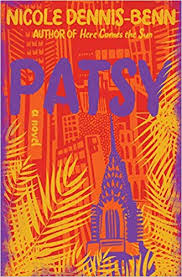
I loved Patsy so much that I got the beautiful book hangover that one gets when you miss the 400+ pages that took you on an epic journey. I’m really proud of this TIME Magazine review:
There have been few narrative epics that effectively tally the emotional, logistical, physical, psychological and financial trials of the black female immigrant and mother or, likewise, the impact on the family of a black woman who dares transform herself. Dennis-Benn maps the internal terrain of black women yearning to be free — without romanticizing or ignoring their flaws. Yes, her central characters are persistent, but they can also be naive. Yes, these are strong black women, but they’re also human, and they’re nearly broken by loneliness, despair and a sense that they’ll never belong. Showing us the triumphs and pitfalls of these two parallel rites of passage, Patsy fills a literary void with compassion, complexity and tenderness.
Last year, when I was just starting to freelance for the Village Voice (R.I.P.), I was starting to gather notes about Harlem Eat Up, the annual two-day festival of Harlem’s food scene co-founded by celebrity chef Marcus Samuelsson. When I attended in 2018, my intention was to focus on some graduates of the NYC Food Business Pathways program, one of New York’s food incubators for working class and low-income entrepreneurs with a passion for the food business.
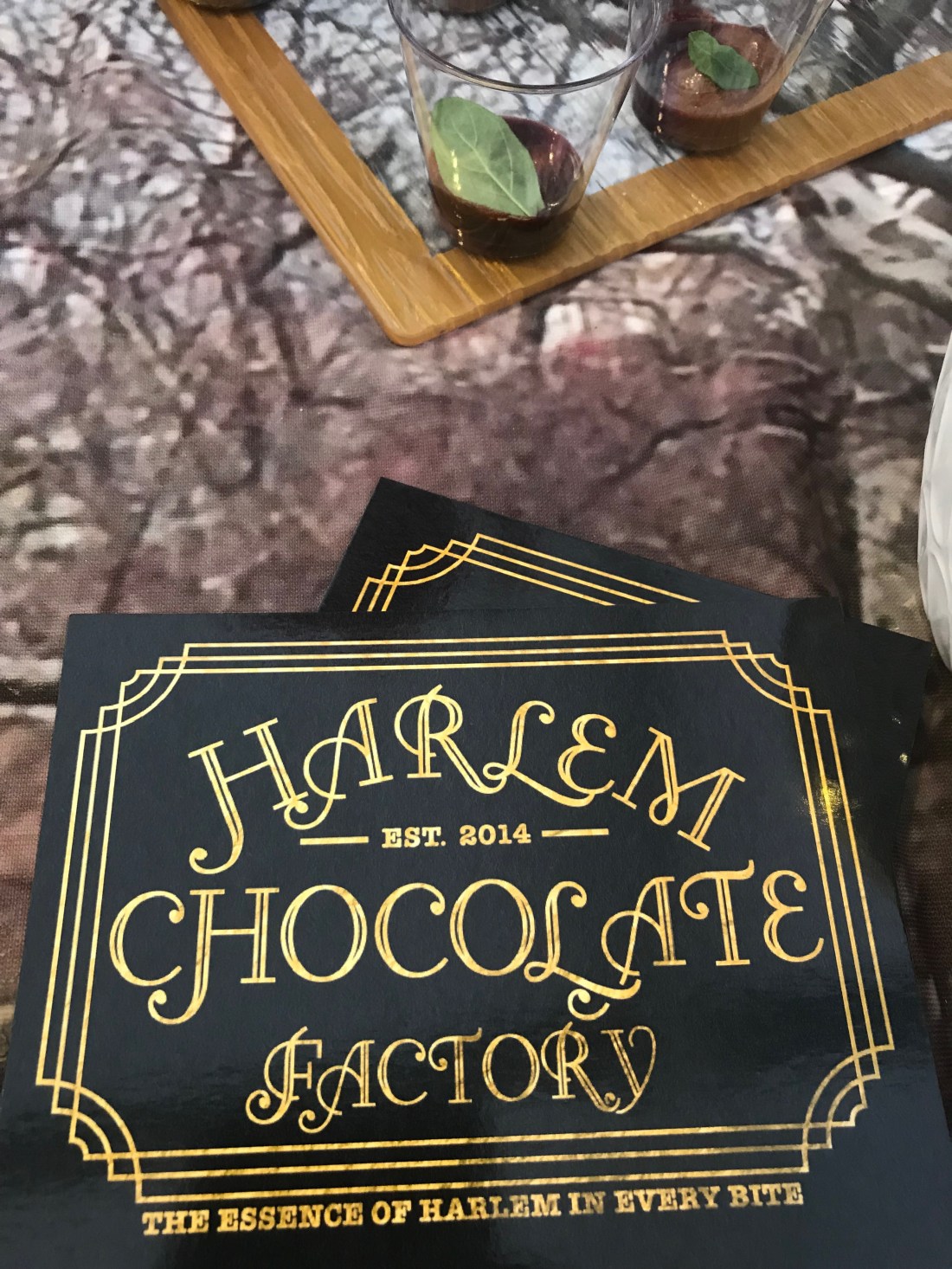
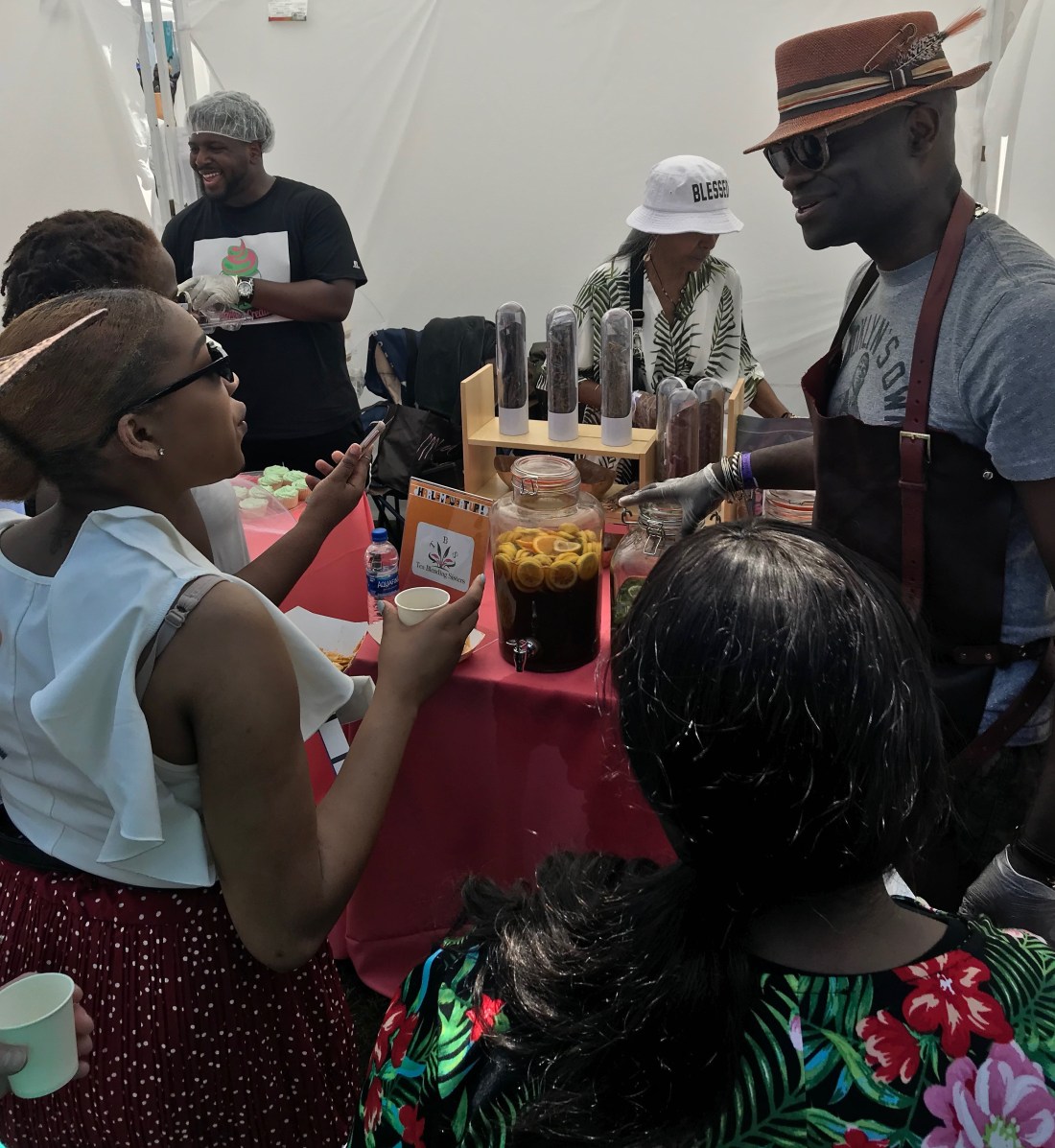
I met the inspiring Jessica Spaulding, who runs the Harlem Chocolate Factory. Spaulding is a Harlem native who expressed some worry about how to keep her business sustainable as money flows to her neighborhood, but doesn’t always find its way to Black entrepreneurs. It was encouraging, then, to see her at the fifth annual Harlem EatUp, which is a true multicultural display of creativity and the expansion of food entrepreneurship as a multi-sensory experience. It’s delightful to sample dishes, cocktails and desserts from local businesses as well as to get the opportunity to learn more about the many gifted chefs and entrepreneurs around us.
Harlem, like the South Bronx, has been reduced in recent years to conversations around gentrification, which is unfortunate. The women I spoke to at Harlem Eat Up, Spaulding included, think that a mix of old and new in Harlem can only be good.
After a few hours in the sun, taking in the sights and familiar faces of proud New Yorkers from last year, it was easy to see what they mean — change is often complicated, but it doesn’t have to be bad. This year it felt like growth had been good not just for Samuelsson and his restaurant, Red Rooster, but also for people who know, love and live in Harlem.
Created by chef Kevin Thai with Dear Mama, the Cardi B-urrito is a delicious breakfast burrito with housemade green chorizo, salsa verde, soft-scrambled eggs, mozzarella, sweet potato hash + Mexican spicy corn chips (or takis). It’s as delicious as it looks.
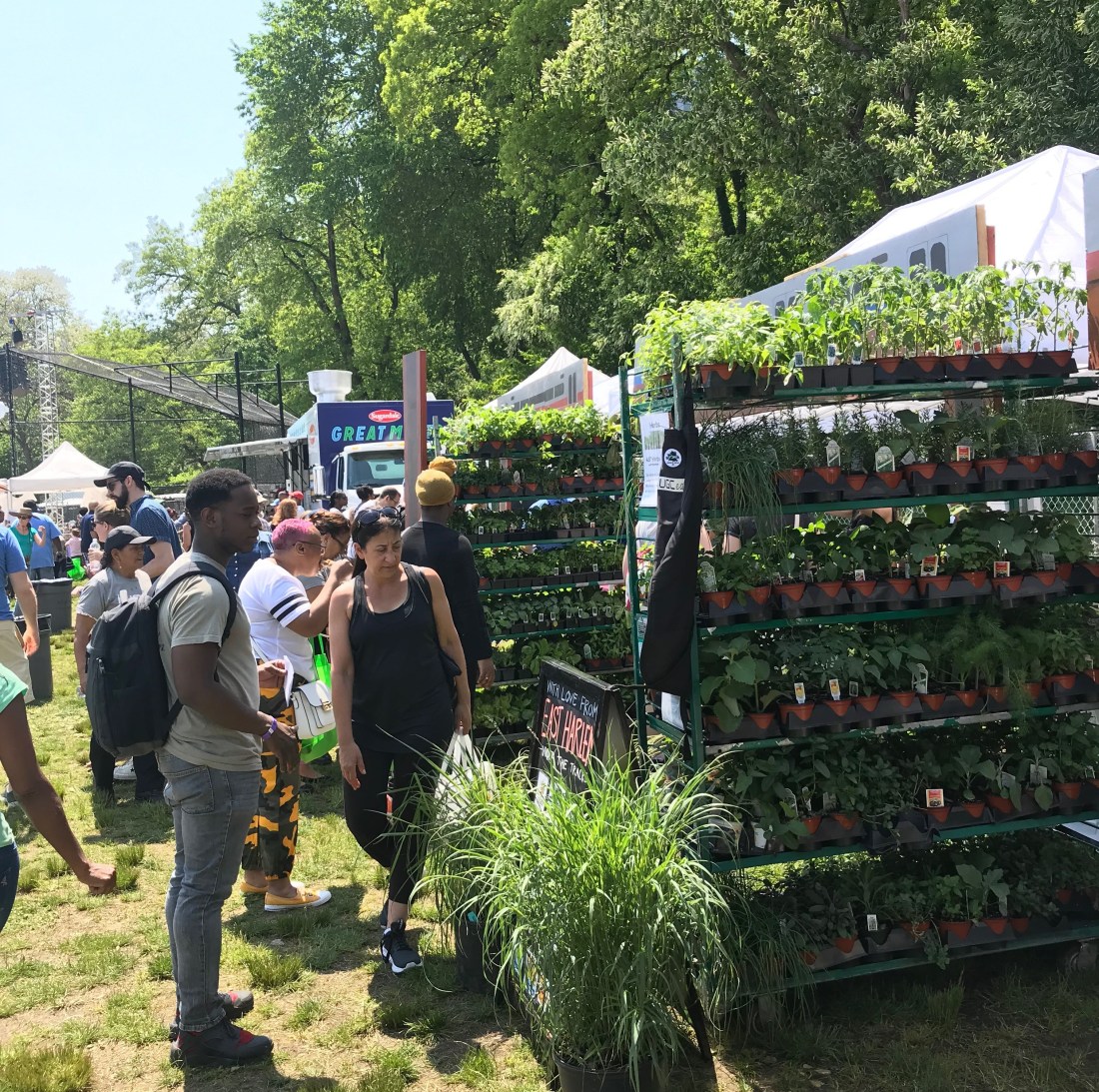
I miss having a garden so much that sometimes I just take pictures of plants for no reason when they’re all gathered this way.
This Mushroom Orecchiette doesn’t look nearly as delicious as it tastes.Thanks, Barilla, for sharing the recipe – I’m definitely going to try this one!
I loved this retro display in front of the Red Rooster booth. They had delicious savory tacos, which were really popular this year; in the first ten minutes of walking around the Harlem Stroll and the Ultimate Taster’s test, I had five different tacos. Chef, Actor and Author of the hosting book, Life is a Party, David Burtka with Chef Marcus Samuelsson
This gentleman was the mad scientist & this contraption was very cool
When I heard Elizabeth Acevedo read at last year’s inaugural Bronx Book Festival, I understood exactly why The Poet X was as important and astounding as the author herself. It wasn’t just an authentic narrative for authenticity’s sake, but a work of beauty particularly for women of color meant to inspire them to find their voices and paths. It took my breath away.
With The Fire on High was similar – a beautiful page-turner. I couldn’t wait to share with y’all that I got the assignment of a lifetime to write about it for the New York Times Book Review. Below is an excerpt, but if you read the whole thing, I’d love to hear your feedback — especially if you’ve read the book, which you should definitely get a copy of.
Xiomara is like the more subdued fictive kin of Emoni Santiago, the self-possessed heroine of Acevedo’s second novel, WITH THE FIRE ON HIGH (HarperTeen, 400 pp., $17.99; ages 13 and up). A talented aspiring chef and unapologetic teenage mother, Emoni is as stubbornly committed to following her dreams as Xiomara is, but she cares less about other people’s perceptions. Anchored by her baby girl, Emma, and her grandmother Gloria (whom she calls ‘Buela), Emoni is sure of everything except whom she can trust as she chases her dream of running her own kitchen.
The nomenclature theme nods to Emoni’s maturity and integrity, and her attention to detail. She knows her own name is a signifier of her Afro-Latinx identity; “Emma,” on the other hand, “is the kind of name that didn’t tell you too much before you met her, the way mine does,” Emoni tells us. “Because nobody ever met a white girl named Emoni, and as soon as they see my name on a résumé or college application they think they know exactly what kind of girl they getting.”
What a wrong assumption. “Information ain’t free, so my daughter’s name wasn’t going to tell anybody any information they didn’t earn.”
Last night, I was watching Brene Brown’s The Call to Courage and so much of it resonated with me because what writers do, all the time, is meet risk and vulnerability with courage. We have this in common, of course, with other artists: Actors, visual artists, musicians. I spend a lot of time wondering about the paradoxical nature of how our culture both obsesses over creation and art and devalues it, simultaneously. It has become part of my personal and spiritual practice to do what Maya Angelou is quoted saying in Beyonce’s film, “Homecoming” which I’ve seen three times now (and is definitely another Netflix film for you to watch, which is “Tell the truth. To yourself first.”
To that end, I wrote about a trend I’ve watched emerge in recent years online for Topic about Black spirituality particularly among young black women. The TL; DR version of this is that traditional church institutions (not unlike government, I might add) have tried to suppress and belittle women’s sexuality, personhood and desires for centuries. I think that seeing the perverse ways in which the negation of people’s true selves manifests — in pedophilia in the Catholic Church, in homophobia and transphobia that warps relationships in similar ways in the Black Church — has led thousands of Black women and many others to choose a different way. In some ways, creating individualized spiritual practices for oneself is nothing new. But I believe it’s become more popular because we are seeking more control over our worlds and our lives. And it’s just too painful to hand over our personal power to patriarchal systems that fundamentally ask us to remain faithful to systems that make us feel shame for wanting to be free.
TO UNDERSTAND WHAT nontraditional Christianity looks like for many black millennials, we have to, perhaps unsurprisingly, turn to the internet. There, one can find a robust community of black and Afro Latina women leveraging social media to gain followers and clients—the majority of them also black women—while offering free guidance about how to use the energy of the cosmos to their benefit.
Over the past seven years, I have noted, with some delight, a growing and powerful group of young people, primarily women, preaching messages of self-empowerment, intuitive guidance, and ancestral reverence. They are everywhere, from Twitter and Instagram to YouTube and the crowdfunding platform Patreon.
It makes sense: in a world where young people’s attachment to smartphones has become one of their most intimate relationships, it would follow that divinely inspired messages of empowerment would reach us via our devices, like everything else we think has meaning. (No judgment—I used to sleep with my phone, too.) And because most social media is used predominantly by women and people of color, there’s a natural synchronicity to digital interactions that allows for seemingly disparate groups to connect to alternative forms of faith.
So that piece was the most vulnerable I’ve been about my faith journey pretty much ever and it gave me a gigantic vulnerability hangover of the sort that is probably tiny compared to what Brene Brown describes in her special. Nevertheless, it was with so much joy that I watched “Homecoming” again and again and got back all of the energy that was expended over ten revisions of the Topic piece, which I kind of loved every minute of. I was tweeting about the fact that Beyonce is the best entertainer of all time and thankfully one of my former colleagues (thank you, Omar!!) suggested me as a writer who could attempt to slay writing about “Homecoming” for Book Plus Film.
Beyoncé is the greatest entertainer of our era and one of the quietest, most silent workers in the game. But she’s a lot of other things, including a scholar. She doesn’t talk about it; she is about it. Her references make evident her awareness and respect for history. She wields silence strategically, working behind the scenes until she’s ready for you to see what she’s been doing. This, along with other methods evident in Homecoming, connects her to a tradition of Black women guarding our sacred inner lives–what historian Darlene Clark Hine calls a “culture of dissemblance.”
In the Reconstruction Era, the Historically Black Colleges and Universities to which Beyoncé pays homage directly in Homecoming offered alternatives to Black people in the South who had no other outlet for edifying themselves spiritually and intellectually. Black women perfected the art of protecting their inner lives through performing personae of intimacy and vulnerability. The damage slavery wrought to our spirits, bodies and position in American popular culture meant the broader world considered us worthless.
But we reclaimed our value and worth through the important, necessary alchemy of consorting with and among ourselves to transform ugly stereotypes. We would never be protected like white women, or valued in the same way, but we had ourselves. We had one another.
“Without community, there is no liberation,” Audre Lorde said.
“The most disrespected woman in America is the Black woman,” Malcolm X said.
A Modern-Day Nefertiti
A little Black Girl Magic in Beyoncé’s Homecoming.
The truths that unfurl in “Homecoming” flip what most people thought they knew about Black Girl Magic into a two-hour spectacle of reunion pageantry, Black Boy Joy intersecting with a Texas Bamma steeped in the glory of her abundant, glorious Black womanness.
Throughout the athletic and awe-inspiring performances that make up Homecoming, Beyoncé as always, does multiple things at once. She channels a spiritual clinic on how to birth one’s singular vision while also allowing us, as viewers, to project our dreams onto her everywoman canvas. She signifies with subversive and overt joy, refracting and projecting light that’s illuminated by a pulsing, alive darkness.
Beyoncé summons us in Homecoming to witness an intimate-looking, vulnerable and considered return to herself. This, she tells us, is her homecoming, too. We feel that without her having to say a word as the show begins. A Black woman drummer commands the camera’s attention with a ferocity that every living being on the stage will soon match. A modern-day Nefertiti saunters her way to her pyramid of vibrantly clad dancers, singers and a Black orchestra, a swelling, uproarious band that aptly represents the pinnacle of swag.
I am just settling back into being home after a quick, amazing trip to the Bologna Children’s Book Fair – one of the world’s largest international fairs for children’s books – where I discussed the children’s book series I’ve been working on over the past year, I Can Write the World. I was in Bologna as part of a “Black Books Matter” panel meant to commemorate the 50th anniversary of the Coretta Scott King Awards.
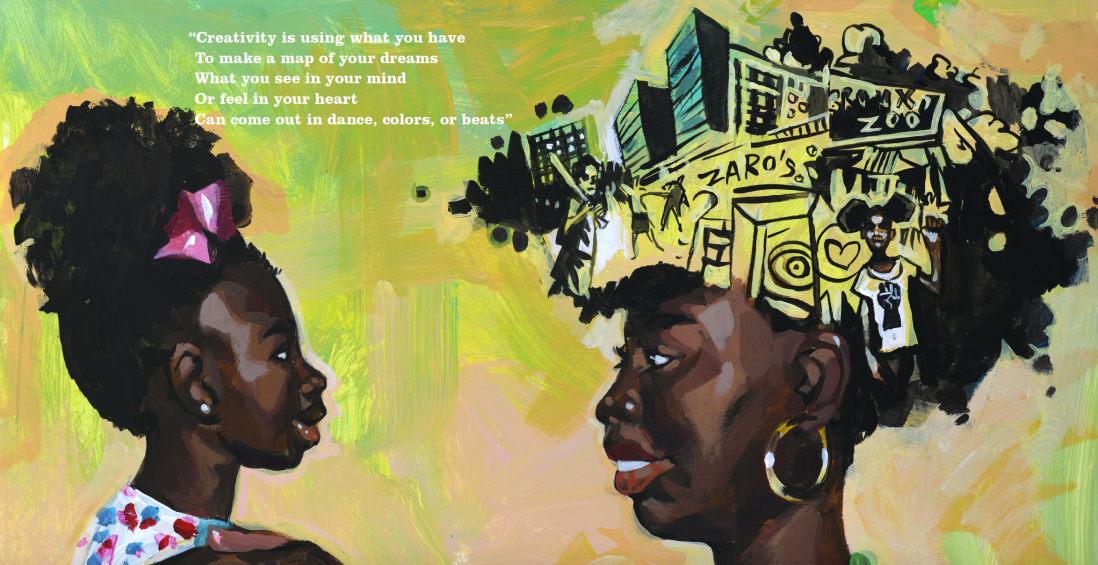
I’m delighted to share the cover and one of my favorite images from award-winning artist Charly Palmer from the book, which is the first publication of Six Foot Press, coming June 15th. It’s available for pre-order on Amazon .
I Can Write the World is the story of an 8-year-old Bronx girl named Ava Murray, named for the trailblazers Ava DuVernay and Rev. Pauli Murray (two women who have changed the course of history by uncovering stories with beauty that might otherwise remain lost, hidden or forgotten) who decides to become a journalist after seeing a different version of her neighborhood on television than the one she normally experiences.
I originally wrote a book that was for older kids without knowing it — my default is always to write more complex stories because even the lives of our children are, unfortunately, more nuanced than we might prefer. Carla Precht, the Executive Director of the Bronx Children’s Museum, and her team were instrumental in offering me feedback of child development experts who liked the narrative but thought it might be geared toward older readers in its previous iteration. So inspired by the likes of Jacqueline Woodson and Elizabeth Acevedo, I revisited my original writing love, poetry and wrote it as a picture book in verse. I felt like the result was much closer to my heart. I hope you will sense that too.
I recently went to a workshop for storytellers and educators at the Caribbean Cultural Center and African Diaspora Institute where Juliet Gray, a phenomenal educator and storyteller, shared with us that the average Black six year old child enters elementary school with around 3,000 words, which her white peer is likely to have 20,000. That astounding figure has stuck with me, because it only reinforces how important a book like I Can Write the World is — to give young readers access to a world that looks like them, sounds like them and makes them feel like they can do and be anything they want.
For several months last year, I worked diligently to write a longer piece on potential solutions to the chronic stress that impacts Black women — most notably discussed in the context of Black maternal morbidity and mortality. I was astounded to learn that Black mothers in New York City are six times as likely to die from complications from childbirth as their white counterparts and that throughout the U.S. that number is three to four times as likely.
I read a lot of literature and journalism that pointed to the impact of something called allostatic load — for U.S. born Black women and even African immigrants new to this country — which is essentially our bodies breaking down from the wear and tear of racism and sexism. Basically our bodies can’t handle the onslaught of microaggressions, aggressions-aggressions and being in a state of hypervigilance all the time before the protective aspects of our immune system begin to fall apart or contribute to weathering.
If you are a Black woman or you know and love a Black woman, I think these are things that are evident but they’re still tough to know how to handle, or process. I wrote a piece with that in mind that’s up at In These Times now. I’d love to hear your thoughts and/or experiences with some of what’s raised in the piece, particularly around repressing anger.
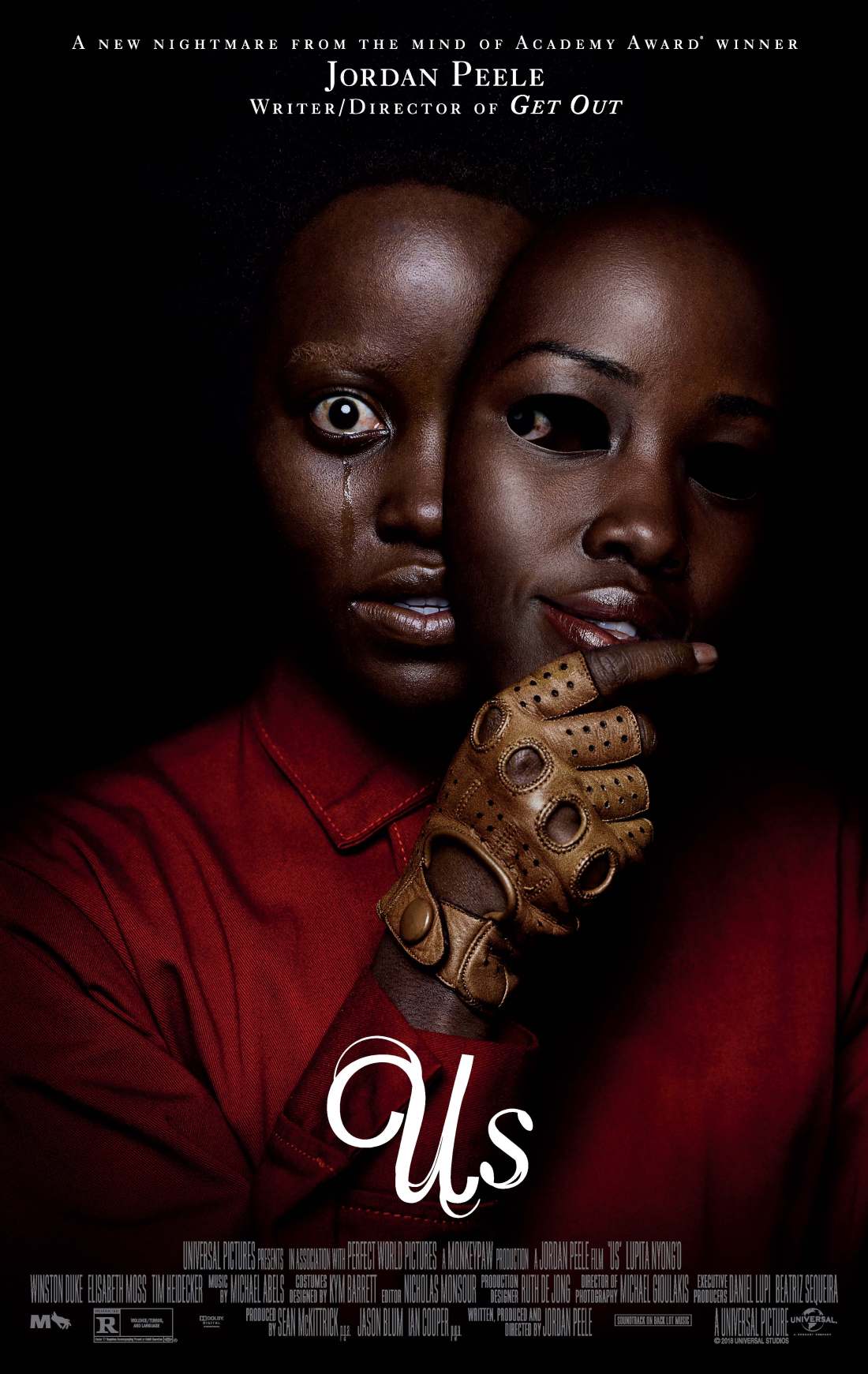
I wish I knew how to talk about Us in a way that makes it clear that I love the aspiration but the execution was both confusing and intriguing. I tried to do that here, but I’m not sure it worked. If you’ve seen the film, I’m curious to hear what you think.
Horror is not really my jam — I believe being a Black woman in America is scary enough, TYSVM — but when I saw “Get Out” in Harlem, the folks on either side of me were screaming at the main characters and cracking up in the right parts and groaning when the white father mentions his liberal bonafides a little too pointedly. The feeling in the theater was, “This is so good this is so good this is a movie for us.” And the cheering that commenced at the end was phenomenal, unforgettable. We felt not just that we had been vindicated, vicariously, of course, through the main character, but that we all knew a woman or a story about a woman, about a family, like “Get Out”’s chief villain and the side pieces too.
OK, back to “Us.”
A young Adelaide Wilson wanders off from her parents into a house of mirrors off the Santa Cruz boardwalk in 1986. What she discovers in this creepy place is a reflection of herself that turns out to be a hostile doppelganger, which will turn out to be not just her own problem as we find her, present day, returning to a summer home with her husband, the adorably clueless Gabe (Winston Duke), and their two children, a boy, Jason, and a girl, Zora.
They seem to have everything — they are beautiful, they are talented, and they are just regular Americans. The biggest challenge the Wilson family seems to have at first is that Gabe gets a new boat (true story: it’s like, a dinghy) and he can’t seem to figure out the engine situation. Things get weird again when they end up back on the same beach in Santa Cruz where Adelaide first encountered her evil look-a-like.
The word content has always bothered me, even though I recognize its utility as a shorthand across platforms, brands and markets.
It turns out that the gig economy, which is only making up more and more of the work in the global marketplace, loves this word, content. Some of that may have to do with the fact that according to a 2018 survey by Prudential, Sales, Art & Design are the top two contributions that millennials make to the gig economy — and said millennials are most likely to believe that 75% of all available employment in the future will be in the gig economy as independent contractors. This matters because across generations, more and more people are becoming self-employed and contract out their services without the benefits of full-time employment, including retirement, health insurance or any semblance of financial security. Especially in this context, being told that what you create is content instead of positioning it as work that has unique value, work that takes time to create, refine — quality over quantity, in other words — is particularly damaging.
On Friday, March 8th & Sunday, March 10th, I’ll present a few ideas on how creatives can position themselves for greater success in this swiftly changing marketplace that devalues unique work that (regardless of how often you hear people drone on about content) has tremendous value that not just anybody can make, or make well.
In the ’80s, my mom took night classes at Bronx Community College. She wanted to be a paralegal, and sometimes she could focus on it, but mostly her mania made it hard for her to pick one thing and see it through. But when she was present for her career ambitions, I went with her to class because she couldn’t afford child care.
Night classes at the college level were pretty boring, even as a nerdy kid. After being in school all day, by the time evening came, I’d have finished my homework. I was gifted, but my brain wasn’t that interested in case-law in second grade. It was obvious to everyone, including one of Mom’s classmates, who must have been a mom. She opened up a page in her loose leaf notebook after watching my eyes glaze over for about 20 minutes and said, “Wanna learn how to draw a doll?”
Now, in this era, I was obsessed with Rainbow Brite and Cabbage Patch dolls. Of course I wanted to learn! I nodded eagerly, quietly and sat, rapt with attention, as she drew a simple figure with a blouse and a skirt with a blue Bic ballpoint pen. She had a fashion magazine, too, and she let me borrow it so I could practice drawing what I saw.
It was the most fun I’d had in my life, drawing what I saw. Until then, I had only taken in the fast-moving world around me. I had not tried to interpret it in any way. This was my beginning as an artist, though I didn’t have language or confidence to claim that title. It felt distant. It felt white. Not mine.
In the years to come, I sketched on the margins of paper and of my life. When I came of age, the fashion designer Byron Lars was hot and the Village Voice was a plump pulp product I flipped through every Wednesday as soon as it was folded neatly and flat in the red plastic bins that seemed to appear on every Manhattan street corner. One week, I saw that Lars would be greeting people at Bloomingdale’s. It was my first real life meeting with someone Black who was living one of my dreams. I hopped the turnstiles from the Bronx and made the sojourn to shake his hand, to laugh shyly when he greeted me and encouraged me to keep drawing.
Sometimes, all our creativity needs is a cracked door. The door doesn’t need to open all the way, we don’t need to be flooded with light. You just need a sliver, like a plant. More light is better, usually, but really you just need to not be completely shrouded in your own darkness. Some part of the real you that needs feeding and nurturing — that needs the light.
I was thinking about this when I started drawing again at the end of last year with intention and sharing my work online, because I simply love it. I’ve always had a meditation practice (when I am disciplined) and a writing practice/discipline, which I center my life around. But taken together, these are all creative practices, like singing and dancing.
It took me decades to get back to that second-grade-self, the one who drew like no one was watching. I’ve spent the first couple of months of this year sorting out how to convey the importance, to myself and others, of holding on to that light energy, the feeling of creating something beautiful for the sake of creating it. Not to win fans or followers. Not to augment your brand, though these things are nice. But creating for the sake of feeding your soul, letting the light in: This is my wish for myself this year — and for those of you who make things, beautiful or in progress, or rough drafts or things that feel hard to get right — this is also my creative wish for you.
A drawing of my beautiful sister. I haven’t seen a lot of art featuring people with Vitiligo, but hope to see more!I draw regularly in a book called “Draw Every Day Draw Every Way: Sketch Paint & Doodle Through One Creative Year” by Jennifer Orkin Lewis. It’s so freeing.








 In the years to come, I sketched on the margins of paper and of my life. When I came of age, the fashion designer Byron Lars was hot and the Village Voice was a plump pulp product I flipped through every Wednesday as soon as it was folded neatly and flat in the red plastic bins that seemed to appear on every Manhattan street corner. One week, I saw that Lars would be greeting people at Bloomingdale’s. It was my first real life meeting with someone Black who was living one of my dreams. I hopped the turnstiles from the Bronx and made the sojourn to shake his hand, to laugh shyly when he greeted me and encouraged me to keep drawing.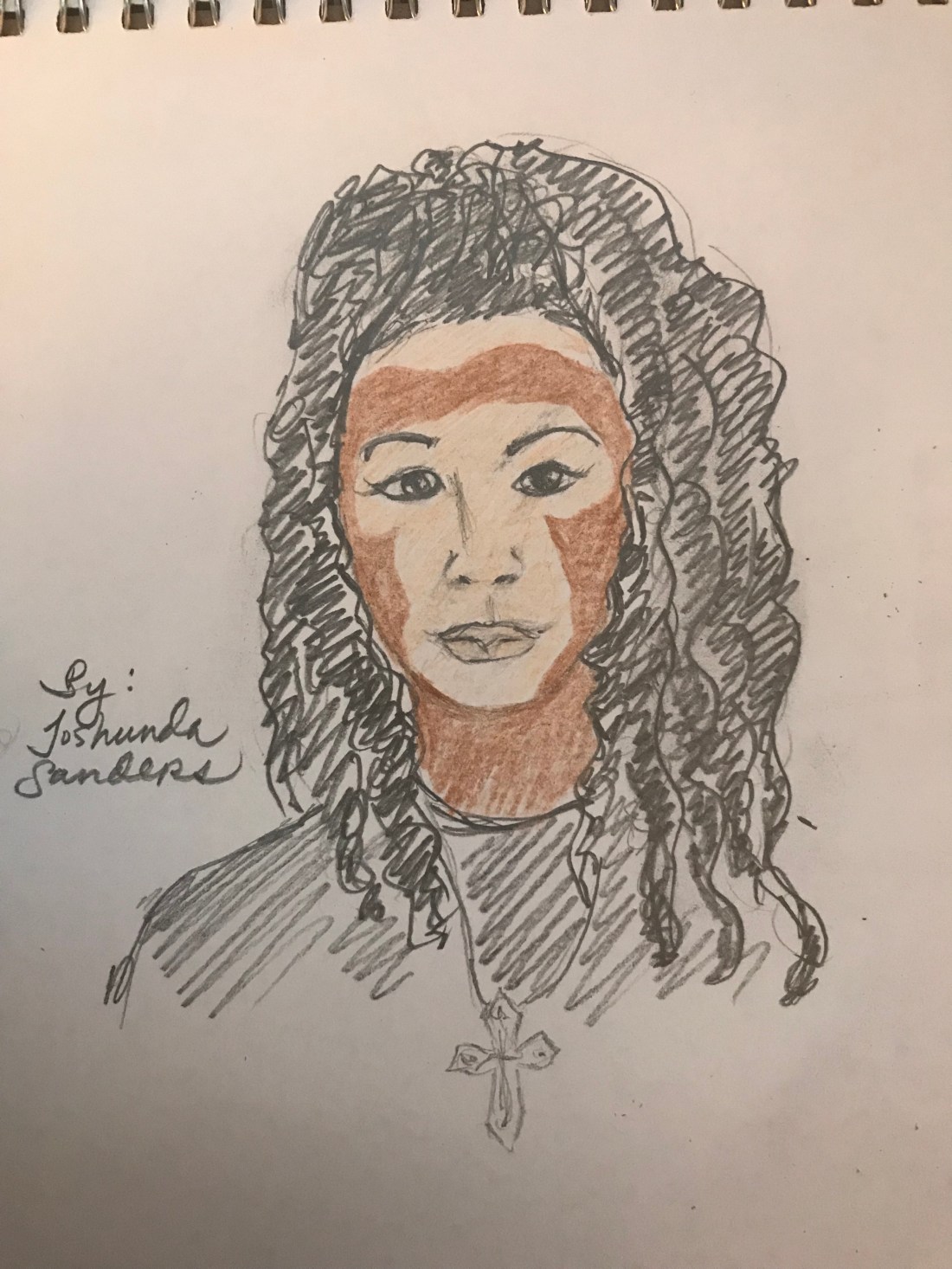
 Joshunda Sanders