I self-published my memoir The Beautiful Darkness: A Handbook for Orphans in October 2016 after spending more than 20 years working on one version of the story or another. The book’s name comes from two sources.
The concept of being an orphan, particular in the Black community, may seem jarring. We are, after all, known for taking care of one another even when we’re messy.
But even before my parents died – my father by suicide in 2010, my mother from cervical cancer in 2012 – I had been orphaned by them in many ways, largely because of untreated mental illness.
The Sami call the period from mid-November to mid-January the Dark Time, or Skabma Dalvi — the Beautiful Darkness. Most of the day, the sky is a deep indigo blue, even in the morning. It is so hard to know when to wake up, when to work, when to eat a meal.
The phrase the Beautiful Darkness stayed with me for a number of reasons: I’m a winter baby; I prefer cold weather to warm; I last saw my mother alive and forgave her for our hard times together during this time and it was the season in which she also made her transition.
The Beautiful Darkness, for me, is also a way of thinking about grief that has been helpful. It’s a time that can be disorienting in the way that Bartok describes, so that you feel lost. This can also be a gift, a way of learning new way.
These days, this season reminds me that we learn these things in order to share them.
In case you wondered if we were making any progress on media diversity in entertainment criticism as storytellers, directors and actors of color in Hollywood start investing in a wider range of stories, the answer is no, according to a new USC Annenberg Inclusion Initiative report.
White critics authored 82% of reviews whereas critics from underrepresented racial/ethnic groups authored 18%. This point statistic is substantially below (-20.7 percentage points) U.S. Census, where individuals from underrepresented groups clock in at 38.7% of the population.
Looking at reviews through an intersectional lens, White male critics wrote substantially more reviews (63.9%) than their White female (18.1%) or underrepresented male (13.8%) peers. Underrepresented female critics only wrote 4.1% of the sample. The ratio of White women’s reviews to those of their underrepresented female counterparts was 4.4 to 1.
I wrote about this in my book in 2015, but it bears repeating: Diversity is a business imperative, not a moral imperative. It’s not just “nice to have,” it’s important to keep your business profitable.
I seek out the work of Wesley Morris and Hilton Als and Doreen St. Felix because they are talented writers and reporters and because I know they understand my worldview as well as the aesthetics and aspirations of the world builders who are working to center Black narratives. Bless Anthony Lane’s heart, I love to read his thoughts on anything else, but I give a damn what he thinks about Black Panther or Girls Trip or even Get Out.
The companies that hire and retain a diverse cadre of writers are the ones that will be around for the long haul. If most of the world doesn’t look like the critics who are supposed to be the experts on cultural products they don’t really get, how long do you think you’ll keep your audience?
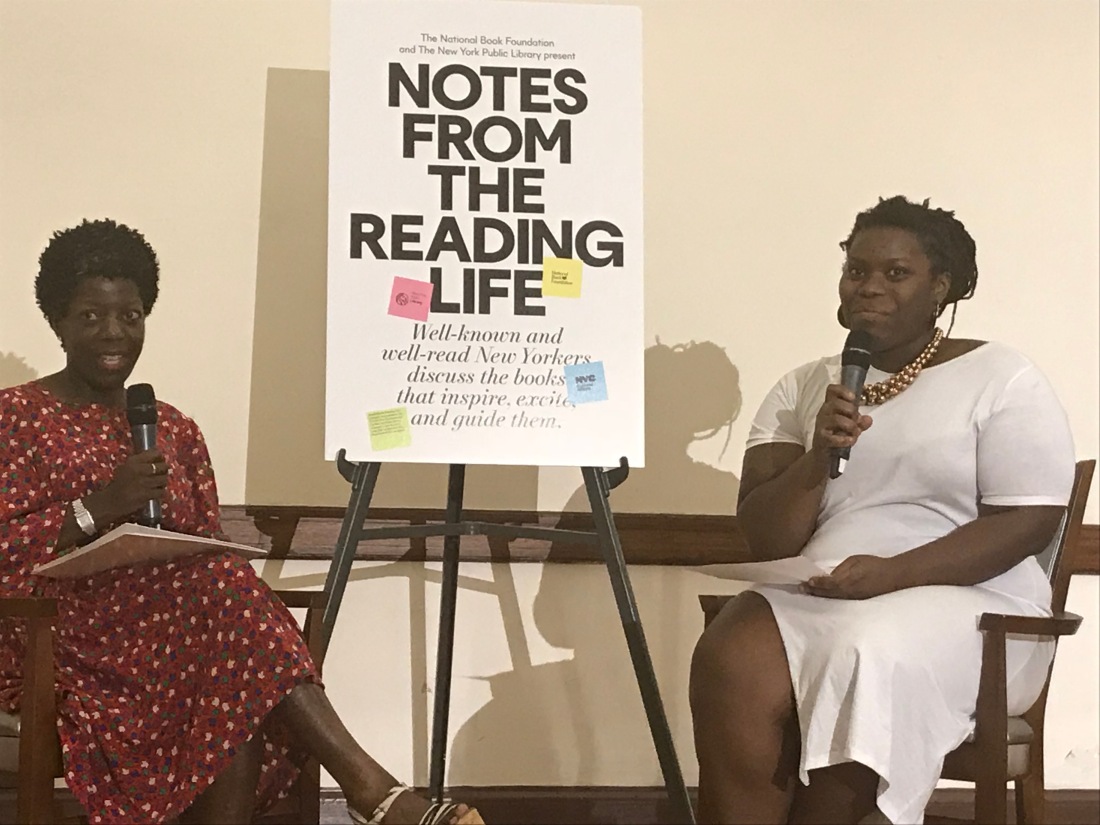
Last Friday evening, I was first in line at the Harry Belafonte Library in Harlem to listen to the first in a series of talks co-presented by the National Book Foundation and the New York Public Library called Notes from the Reading Life featuring two Black women I admire: Thelma Golden and Kaitlyn Greenidge.
Golden has been at the helm of The Studio Museum in Harlem for 17 years, and she is currently serving as Director and Chief Curator. Greenidge is the author of We Love You, Charlie Freeman (and, it must be said, has one of the best Twitter TLs in the game.)
It’s rare that I get to hear two Black women engage in a loving and wide-ranging conversation that centers a Black woman’s engagement with books and reading merely for fun. So of course, I took notes.
The value of attending talks like this is to remember how rejuvenating it is when Black women frame conversation and also how we view story versus how story is framed for us — and frankly, against us. Often, when others are charged with framing aesthetic conversation, in particular, they center themselves and put us at the margins.
For an artist, this makes it hard to invoke the imagination because you never spend any time in a rich, creative or fertile environment. But being in the audience for Golden and Greenidge was one such experience for me.
Golden started by saying she was excited about the renaming of the NYPL branch on 115th street where the talk was held on behalf of Harry Belafonte, and, “to walk in and see the photo of Langston Hughes, to be here in the Alvin Ailey community room — all cultural giants.” And then she underscored that it’s the work of the Studio Museum of Harlem to elevate such giants in ways that often aren’t.
Greenidge started by asking Golden who made her a reader. And Golden mentioned her father, who was born in Harlem, and worked in the building, actually, where the Studio Museum, now is, when it was a bank.
“Arthur Golden was a reader who loved literature. My mother was from Brooklyn. New Yorkers will understand this; when they got married, they compromised and moved to Queens,” she said, to my delight. (It’s hard enough trying to date someone from a different borough I can’t even imagine trying to marry one. Different blog for a different day.)
She described growing up in Queens in a house with what was then known as a den full of books from her father’s library, but no television. He was deeply interested in literature and encouraged her to read.
Her theory is that because she was born in 1965, when he was 40 — considered old for a parent in those days — he let her read anything. Or as she puts it, “We had a relationship to books that was very wide.”
She read both A Tree Grows in Brooklyn and Paule Marshall’s Brown Girl, Brownstones when she was as young as 11, noting with laughter that her mother was very early trying to recruit her to view Brooklyn as the best borough. She read the latter again when she was 16 and again when she was older.
Her mother was from Barbados and grew up in Brooklyn with her siblings in a house purchased by her family in 1926 where some of her relatives still live.
“It wasn’t until I re-read Brown Girl, Brownstones that I really understood my mother and her journey and her quirks,” Golden said. You can think you know about the life of your mother, that it may resemble something that you read in a work of fiction that feels real.
But by reading Marshall’s work, Golden said, “They were all of a sudden actual facts. I asked her later in life, ‘Why did you give me that book?’ She said, ‘I wanted you to understand me better.'”
I don’t imagine I’ll have children of my own, but if that ends up being the path, I imagine this would be such a profound experience…to learn more about the inner life of your mother this way, both in person but also via a book that she loves and gifts to you.
Greenidge said, “I think what you’re describing is the magic of reading for kids. Children can be kind of narcissistic. We think the first time we feel something is the first time its happened.” Golden agreed and expounded on the idea of thinking her experiences were singular and the power of learning they were connected to history.
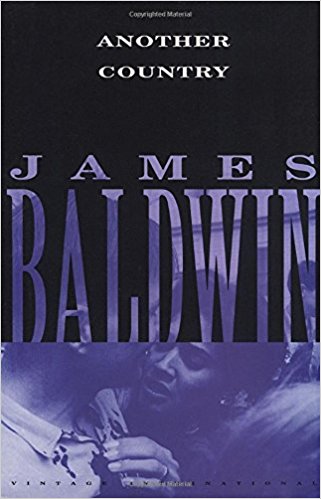
Which brought us to James Baldwin’s Another Country. (At this point, I admittedly got distracted from the bane of my existence and my lifeline to the world, my smartphone, but I believe I heard Golden said she took a seminar at Smith with James Baldwin when she was student) and he asked her who her favorite character in the novel was. And she said Ida, Rufus’ sister.
Baldwin’s 1962 novel explores the complex life and sexuality of Rufus Scott.
I came to quickly enough to hear this gem, “My father went to the same middle school as James Baldwin, and Countee Cullen was their teacher.” (!!)
I was so enamored of this because I have such generational envy for what Harlem was like during the time when Baldwin lived. I know I’m romanticizing it and it was probably as problematic and complex for Black women to navigate emotionally and artistically as every other space is today. But the richness, the products of the period, suggest that the magic had a power that provided at least some possibilities for transcendence. And that’s the part I love and very selfishly wish was still present/actively cultivated for Black writers, at least.
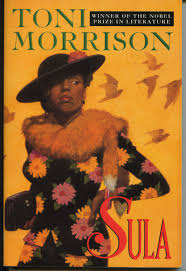
Walker is an example of what it means to be an exceptional living Black woman writer, much like Toni Morrison, the author of another Golden favorite, Sula.
Of all the luscious Morrison books I’ve had the privilege of savoring, Sula falls, for me, just slightly below the Scriptural supremacy and spiritual force in Song of Solomon. But Golden described Sula so poetically, noting that she loved reading it because it was “layered with all the things I know about the world.”
“I don’t want to make somebody else. I want to make myself.” Amen, Sula.
Golden said she never read The Bluest Eye, which is a statement I actually love. Although I did read it, and found that Pecola Breedlove’s envy of blond hair and blue eyes was actually quite resonant for me, I love a contrarian and this assertion (among others) gave me a sense of that streak in Golden. The spectacle of little black girls who hate themselves because they are not white is actually also not the healthiest or most edifying experience for young black girls, so I was happy for Golden, and envious, too, wanting to experience this vicarious liberation from thinking of my beauty in relationship to whiteness and having that praised even from the very beginning — of a life or of a career.
Still, Morrison is not only America’s greatest living novelist, but she is the originator of our current Black literary renaissance, insofar as writers like myself, readers like Golden and almost every Black woman writer I’ve ever known or met who perseveres through self-doubt and the other perils of the writing life have uttered and taken to heart Morrison’s words, “If there’s a book you want to read, but it hasn’t been written yet, then you must write it.”
“That informs my work as a curator, to provide room for so many artists of African descent, to make art to allow us into space,” Golden said. “Toni Morrison is, to me, a rigorous example of Black genius.”
The last of Golden’s favorite books she discussed with Greenidge were The Collected Autobiographies by Maya Angelou and Americanah by Chimamanda Ngozi Adichie.
It was nice to be reminded of Maya’s habit of keeping a hotel room in any city in which she visited, so that she could write without interruption, accompanied only with “two books, a bottle of sloe gin and a deck of cards,” Greenidge informed us.
Angelou’s work in memoir was the first instance of showing Golden, she said, “the stories we create of ourselves…the importance of the creation of our artistic selves. We get to make for ourselves a world that doesn’t make space for us.”
As for Americanah, Golden’s husband is Nigerian and lives in London. Along with the work that she leads and is invested in, she’s tied to Africa, then, “not just in the past, but also art, culture and ideas in the present.”
As a result, she said that she “felt profoundly seen,” by Americanah, in the same way she did by Zadie Smith’s On Beauty. “It’s what happens when outsiders look at your culture.”
Other notable aspects of the talk included the following:
When Greenidge asked Golden which book she would give to a small child if she had to, she mentioned Whistle for Willie by Ezra Jack Keats.
She recalled someone giving her a copy of Invisible Man and finding it formative. She mentioned that someone should write a biography of Ralph Ellison’s wife, Fannie Ellison — do your thing, Internet!
Since we were in Harlem, and Golden had made note of the pictures of Langston Hughes and other cultural giants of the neighborhood earlier, Greenidge mentioned the I, Too Arts Collective the literary nonprofit helmed by author Renee Watson that has continued to do God’s work preserving Langston Hughes’ brownstone and has transformed it into a site of community for writers of color. “I wish it had not been so hard. I wish it had been a natural act. So much of history is not in buildings. It’s in the neighborhood. I hope that while we continue to move toward our future, that we can continue to honor our past. This is a community with a deep and rich history. This wasn’t just a setting for great work. This neighborhood created opportunity for artists. I hope we can preserve that in ways that people will be able to touch and feel in the future.”
You should go to some of the future Notes from the Reading Life events if you’re in New York or if you’ll be in town for one that’s upcoming. Tonight, it’s a conversation between Tim Gunn & Min Lee. I’m so sad to say I’ll miss the conversation (in the Bronx!) between Desus Nice & Rebecca Carroll at the Bronx Library Center on June 15th — but you shouldn’t.
Transitioning back into writing full-time has also meant getting used to learning how to manage my time — or, I guess, reclaiming it (thank you, Auntie Maxine) — but it also means that as my friend Jennifer has remarked, you realize that “Linear time is a trip.”
Anyway, I worked on this piece for the Village Voice on how erasing black LGBTQ women from Pride almost 50 years after Stonewall defeats the point of what Pride is supposed to mean. I hope you dig it.
While I was working on it, I thought about the piece I reference toward the end, the Questioning Continuum, which I wrote for Bitch back in July 2014. This week, I met someone who said that someone told her that coming out is not really a one time process but something you’re always doing. That, to me, feels kind of exhausting, so I’m not entirely sure about that — and back then, I wasn’t even convinced that I needed to come out at all.
But there are a lot of people who feel, like I do, that they’re not quite heterosexual and they’re not in another category either. And maybe queer doesn’t fit them. But they know that they could fall in love with another kindred spirit and that’s the thing that matters. This blog is for them, or if it’s you, it’s for you. Happy Pride.
I wrote about the Bronx Book Festival for the Village Voice and how the Bronx is having a resurgence of the book scene with the work and leadership of Saraceia J. Fennell and Noelle Santos, but there were a couple of quotes from one of the panels that I wanted to add in the spirit of Throwback Thursday that didn’t fit in the context of the story that I wanted to put here.
“In this nation, the women’s movement was started by Black women. If we’re going to create a movement in this country that’s inclusive, we have to acknowledge indigenous women who get erased, and Black women specifically. That’s still not understood, which is why we struggle with solidarity. If your movement doesn’t lift all boats, we’re not going to win.” — Sofia Quintero
“A large part of resistance is rejecting rejection…Part of the feminist project, especially in the arts, is a more liberating masculinity. It’s not that they don’t have privilege. Our feminism has to be one that heals and liberates everyone. We have to inform the brothers, but the brothers gotta do their own labor.” — Roya Marsh is one of the poets in the beautiful Black Girl Magic anthology, which you can buy here.
I went a little overboard, but it was the first Bronx Book Festival, so what can I say? These are all Bronx authors, some books I bought from The Lit. Bar tent and a few that were given to attendees, plus my press pass which I will cherish for life.
It feels like it’s been months since I’ve been home, but it’s only been a couple of weeks. The proximity of Mother’s Day to my return home from Italy, combined with jet lag, meant I needed a little bit of time to collect my thoughts.
I shared a little bit in a few essays on Medium. I realize that walls of text are not everyone’s thing so I broke them up:
And soon, I’ll finish writing about Naples and the end of the trip, which I’ll update here. Maybe before the Royal Wedding and the Bronx Book Festival this weekend, (which are happening on the same day?!)
What introverts know that predators or people — mostly men — could stand to learn in the midst of the reckoning #MeToo has wrought is the art of the pause.
Pausing is free. It is tremendously underrated & yet, invaluable.
A pause is not a panacea. A pause would not indicate guilt or innocence. The point of the pause is not to be in service to truth or fiction, but rather to give the accused a moment to think very hard about whether this is the one time he (it is usually a man) can divest himself of his e
ntitlement and privilege for long enough to garner empathy within himself.
You don’t need to take a lot of time. What you should not do is immediately — as Schneiderman seemed to do, as Al Franken did, as others have done — categorically dismiss allegations that are corroborated and published in vetted, legacy institutions by award-winning journalists (one of whom just won a Pulitzer for taking down dudes just like you) in a statement.
You don’t need to pause for a very long time. Just…take long enough to consider what contesting facts or allegations will look like from you in the moment and beyond. Just enough time to consider if it’s worth it to dig in one’s powerful heels, to say one knows the actual truth and those people are liars.
I can’t think of a single instance when moving forward without considering the message first worked. It didn’t work for Al Franken or Charlie Rose. We know now that it most certainly did not work for Harvey Weinstein, who, right before the bombshell New York Times piece that led to his downfall was published, was still so smug that he said he would option the movie rights to whatever information the Times thought it had on him.
We can’t go back to a time before hot takes, obviously. The appetite for a quick distillation, for quick justice, for swift social punditry is as great and voracious as our addiction to our phones and to the external validation of one another. Pausing becomes a kind of abstinence in the midst of an orgy of information.
It is almost never better to say nothing. But it is extremely important that powerful people accused of preying on others exhibit some aspect of self-control for once. If for no other reason than it prolongs any hope they have for self-preservation.
When the bombings started in Austin, I was distracted by other things like a lot of other folks. I saw 17-year-old Draylen Mason’s name and that he had been attacked, but I didn’t register a connection between him and the other people who were being harmed in Austin until too late, until Governor Abbott decided it was time to offer a reward for information for the bomber who was then later described as a nice young man with challenges.
Writing for the Times is something I’ve always wanted to do. I have dreamed of publishing on the Opinion pages there since I was a college student. On Thursday, that became a reality with this piece, What It’s Like to Be Black in Austin.
By now, because the bomber is dead, and there are other things to think about and be outraged about — Stephon Clark’s murder among them — these reflections might seem to be a forgone conclusion, but because we live in a time of increasing racial terror, perhaps they are not. We are just in a different moment than when I wrote at length about leaving Austin in 2013. So I worry that failing to look at some of these thoughts or ideas will mean that fewer things get resolved, fewer conversations are aired.
Whenever I write about race or have conversations about my experience, I inevitably get questions like, “What should we do?” I feel very strongly that my work in the world is to be a witness and to write. My work is not to solve refusal to see biases at play or anything else.
I’ve been amazed by reconnecting with my friends and colleagues across the country in the wake of the piece’s publication. Most of the responses have been positive. Because this is a piece that is about race and racial critiques of well-meaning people tend to bring out defensiveness (underscored in the piece), it won’t surprise you to hear there’s been some of that as well.
In any event, writing this piece made me appreciate even more the wonderful people we meet wherever life takes us who become our community. Our truths are not other people’s truths and they don’t have to be. I hope that folks will take what is useful here and leave the rest.
In Austin, I felt a loneliness that was hard to explain. I wasn’t just a New Yorker in Texas. I was a tall, dark-skinned black woman with natural hair. I was an outsider in a place that is supposed to value weirdness, but I never felt like the right kind of weird.
I did the things everyone does in Austin. I went for runs around Lady Bird Lake. I went to hear live music. But whenever I looked around, I would always notice that there was no one else who looked like me. I tried to talk to some of my well-meaning white friends about this. They would try to “Well, actually …” me. “Well, actually, Austin is better than the rest of Texas.” What else could they say?
So I moved back to the East Coast, but I kept my home in East Austin and still visit when I can. It’s my home away from home.
I learned about the bombings on Twitter, and it was surreal to read these familiar names in the middle of the horror. These were people I wrote about, people I knew, people I shared laughs with: Nelson Linder, the head of the Austin N.A.A.C.P., and Freddie Dixon, a pillar of the community, discussing the deaths of 17-year-old Draylen Mason and 39-year-old Anthony Stephan House.
I worried for the people I knew, and then I felt, again, that deep, lonely sadness. I wasn’t the only one made to feel that I didn’t belong. Someone was targeting black people, but once the bombs appeared in other neighborhoods, the authorities no longer seemed willing to consider the possibility that hate crimes had been committed.
I don’t know what else to call them. When the bombings started, I had been writing about the 50th anniversary of the Rev. Dr. Martin Luther King Jr.’s assassination, so I knew the faces of martyrs of the civil rights movement. Whenever I hear about bombs and black people, I think of the four little girls murdered in Birmingham, Ala. I have family ties to Philadelphia, too, so I think of the Move bombings. Are there any black people who can separate news of bombs from notions of terror?
We are in an unusual cultural moment. There has been so much truth-telling over the past few months, so much affirmation about speaking truth to power. I hoped that this time, the authorities might acknowledge that, yes, black people were targeted. I thought someone might make the connection — East Austin is the only place in the city where black and brown people still live in large numbers, and they remain vocal. There are people who are afraid of that, and are threatened by that, and that makes East Austin a target. Instead, there was silence, as these concerns disappeared into the broader panic about where a bomb might strike next.
“Fly,” a short story that I’ve been nurturing for some time now, has been published in the Winter 2017 edition of Sixfold Journal. These Bronx girls remind me so much of the girls I grew up with. They are, in a lot of ways, those girls.
This is how it begins:
Everything in the world makes you feel like you are fly or you can fly when you’re a kid. With the right doorknocker earrings and Reebok classics, jeans fitting to your curves like buses speeding down Webster Ave, you feel like gravity is for punks.
But time tells you the truth. And life, I guess.
My best friend Trudy reads everything. Her hair is a black cotton ball forever reaching for the clouds. We are both the youngest in our families, which are like trees with tangled branches: Older siblings, different daddies, irritated mothers. She wears boys’ clothes from the Goodwill—trousers that her skinny legs peek out of at the ankle, white button-down shirts with suit vests. My mother says she’s odd. I figure she’s just creative. I asked her once why she dressed that way and first she said I like doing things different from everybody else. I nodded and looked in her face. She was staring at a distant plane overhead when she added I can’t really afford anything else.
That’s why we’re friends. Trudy tells the truth, even when it makes her feel bad. Only poor people spend all their money trying not to look poor, I told her. She pulled her eyes from the sky then and smiled at me like we had the juiciest secret ever.
Anyway, it was Trudy who said Toni Morrison wrote that if you want to fly you got to give up the shit that weighs you down.
How you figure out what that is, I asked her.
Practice letting go of shit, probably.
But we ain’t got shit. What’s to let go of?
She didn’t answer at first. We sat on the cracked cement steps outside the cafeteria after lunch during thirty-minute recess.
Trigger warning for the trauma of homelessness and mental illness
This beautiful New York Times profile of Nakesha Williams, a Williams College graduate who died homeless on the street at the age of 46, was the first thing I read yesterday. My friend Amy sent it to me, saying it reminded her of the story I tell in my memoir, The Beautiful Darkness. Maybe I should have waited, knowing that, but I’m glad I didn’t.
I have written about the poverty and homelessness I experienced as a child — mostly as a result of my mother’s untreated bipolar and borderline personality disorders — mainly because for much of my life, and much of my mother’s, no one else wrote these stories. I imagined that I was alone in my experience. That made it all the more painful, lonely and difficult.
I had books, and writing, and education. I have been lucky, I have worked extremely hard, I have been writing my heart out for so many years. And yet, it feels like reading this story was reading my story, or the possibility of a future to my story yet to come. That is the legacy of experiencing the trauma of homelessness or being exposed to these adverse childhood experiences as a kid. They never leave you.
There are so many parallels between Nakesha and I, but more between her and my mother. We both love books and reading, we both sang in gospel choirs. I nearly went to Williams instead of Vassar.
I chose the latter because when my mother was still alive, I decided on college the way I decided on everything else: Based on its proximity to her. Attending Vassar meant I could get to Grand Central more quickly (and for less money) in case Marguerite had a manic episode. In case she ended up in a psych ward. In case she got evicted again, as she did my sophomore year, and I needed to drop everything and go to where she was and try to fix things that were beyond my years to fix.
Nakesha’s story is my worst fear for my life, though I am far from the little girl who had to watch my mother refuse medication, or fail to pay the water bill or negotiate not having enough money to buy food for days any more. Grace has kept me — along with writing — sane. But the kind of trauma that mental illness and then homelessness can inflict will never leave my body. It is a battle scar. A deep wound I am learning to befriend.
When I read Nakesha’s story, I was reading about my mother again. I kept, and still have, the lipstick imprinted letters of my mother, along with the emails that she sent me (like Nakesha) from libraries in New York and Philly. Because her life had so much potential, had so much life and joy and darkness that also taught me about beauty, I included some of these emails in my book.
At the core of this story about Nakesha, though, is the mystery of how the love, attention, resources poured out from others somehow failed to reach her. This is the part that resonated with me about the unknowables on the journey with someone who is mentally ill. This was my greatest heartbreak, the title of this blog, a line from the story about the realities of there not being a simple solution to the complex realities of homelessness and in particular, not a simple answer to the question of what happened to Nakesha.
There is no accounting for the demons, the silences, that can overtake us. All we can do is try to avoid them, try to keep going, try not to let them take us under. But maybe this story was so deeply moving for me and disturbing because this means there will continue to be many people like her and many women like my mother, and not as many people like me, who can profess, with not just a little bit of remaining survivor’s guilt, that we were spared somehow.



 Anyway, I worked on

 Maybe I should have waited, knowing that, but I’m glad I didn’t.
 Joshunda Sanders