

I had the somewhat frightening (intimidating?) experience of receiving Toni Morrison’s collection of essays and lectures, The Source of Self-Regard before its publication in 2019. [Here is the review I wrote for the smart folks at Bitch Media].
Unlike Ms. Morrison’s fiction, which I sometimes just did not understand (A Mercy, Paradise) or which I loved without really being able to explain why (Song of Solomon, Beloved) or which humored me the way a good friend does (Sula !), her nonfiction was a true education. It educated me by her example, in terms of her biography, and it educated me the way all reading does — through its structure, the way it had been nurtured and considered and through what was not there.
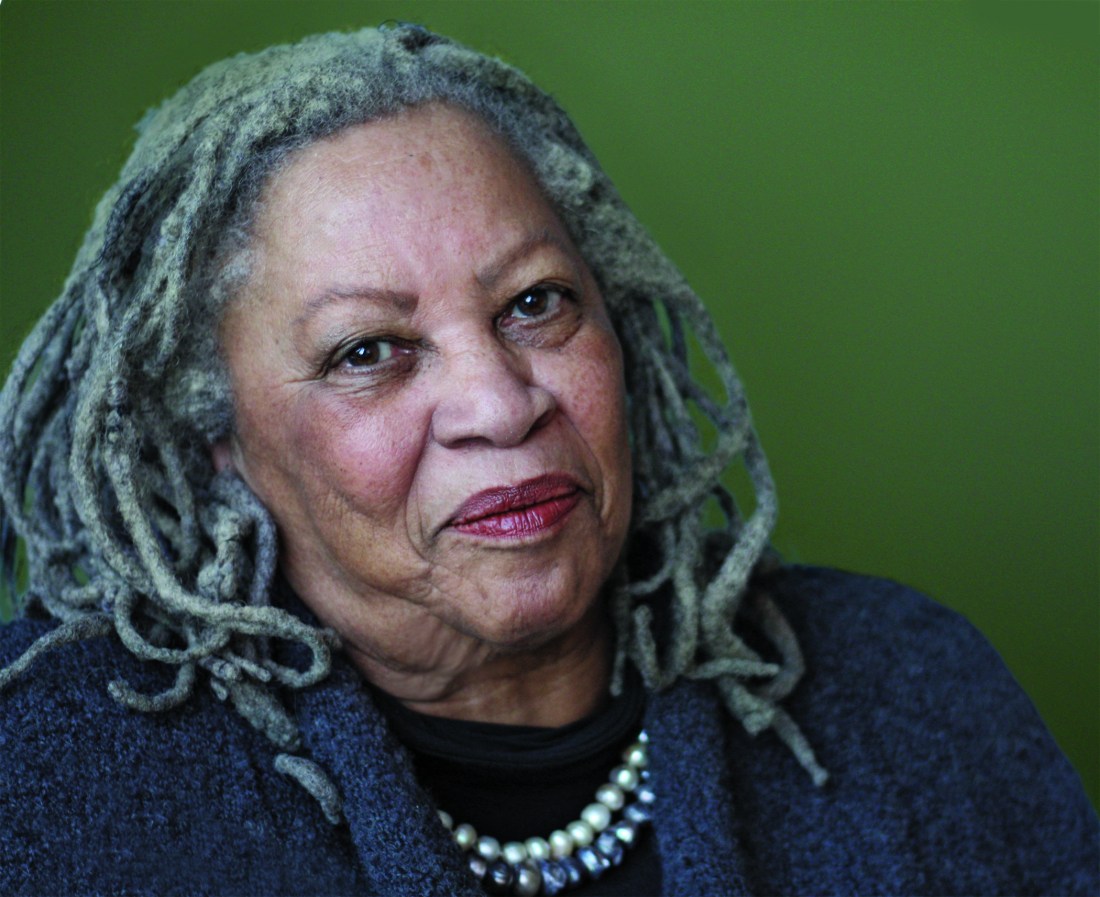
February 18th would have been Toni Morrison’s 90th birthday, and I’ve been thinking about her a lot, celebrating and commemorating her gifts to me and to all of us through her rigorous writing and creativity. For many Black writers, it is not only her discipline and vision that we admire, it is how she earned the nickname Mother Toni, which is a nod to her guidance to each of us as we have sought to make our way on the perilous journey that is writing and editing and revising and publishing.
Her wisdom is so much a part of my practice that I don’t even remember when I started telling others. Whenever I speak to young writers, I use her example. I remind them that Mother Toni had a day job into her 40s, that she woke up at 4 a.m. before said day job to write while her babies were asleep. I have admired this level of discipline all my life, and while I have different reasons for engaging it, it has been essential to my writing practice all the same. And at the same time, she let us know that we are the people that we are, we are not the work we do, which is essential.
She is also known for giving entire generations of Black writers permission to write the stories that do not yet exist, saying if there is a book you want to read that does not yet exist, you must be the one to write it (this is a paraphrase). I can’t imagine how many books we would not have were it not for this advice, for her presence, for her work and her inspiration.
I rarely have occasion to do such deep research when I plan to write about a writer anymore, but I sensed that Ms. Morrison would not be with us much longer. So, in the before times, I took the liberty of luxuriating in the reference room at the Schomburg. I’ve aggregated below my notes on Ms. Morrison’s life, because these were the thoughts I had that didn’t make it into publication anywhere, and didn’t really fit in any kind of linear place; they also sum up why, aside from her talent, discipline and brilliance, I never felt anything I wrote about Ms. Morrison could really do her justice. I think it was important for me to put this here in celebration of her birthday in part because of how valuable looking at the contours of her life has been for my confidence as a writer. In a collection of her quotes, The Measure of Our Lives, she is quoted as having said: “If writing is thinking and discovery and selection and order and meaning, it is also awe and reverence and mystery and magic.” One of her many talents was showing us all that writing could do and be if we were brave and persistent enough to meet it.

Writing African American Women: An Encyclopedia of Literature by and About Women of Color, Toni Morrison entry, pages 636 – 640
Born 1931 in Lorain, Ohio
Chloe Anthony Wofford
Shortened her name to an abbreviation of her middle name purportedly (and with regret) because no one could pronounce Chloe. The theme of claiming one’s name emerged –noted in entry – in her fiction – from third novel, Song of Solomon (1977) to Tar Baby, her fourth ( 1981)
Graduated from Howard in 1953, English Major, classics minor
Master’s from Cornell in 1955 – her thesis was on suicide in the work of William Faulkner and Virginia Woolf.
She taught for two years at Texas Southern University in Houston, then returned to Howard as a faculty member.
She married Jamaican architect Harold Morrison in 1958
They had two sons together, Harold Ford and Slade Kevin. They divorced in 1964.
She moved w/sons to Syracuse where she worked as Random House textbook editor. Began writing at night as therapy for her loneliness when her sons were in bed.
Transferred to NYC in 1967 to headquarters for Random House editing acclaimed black women writers like Gayl Jones and Toni Cade Bambara.
She kept teaching – at SUNY Purchase 1971-72, Yale, 1976-77. She left Random House in 1983; Appointed Albert Schweitzer chair at SUNY Albany in 1984. Stayed until 1989, when Princeton appointed her Robert F. Goheen Professor of the Council of the Humanities at Princeton University. (Note from me: That means 2019 marked the 30th anniversary of Toni Morrison becoming the first Black woman to hold a chair at an ivy league university.)
She’s taught at a number of prestigious colleges and universities including Bard, Rutgers & Princeton, she delivered the Clark Lectures at Trinity College, Cambridge, and the Massey Lectures at Harvard University. She’s also received a number of honorary degrees including from Brown, Columbia, Dartmouth, Georgetown, Harvard, and Yale. “Although Morrison is perhaps best known for her fiction, she has written successfully in several other genres as well, including drama, children’s and YA, short stories and criticism.”
Won the Pulitzer in 1988, the Nobel in 1993 – the first African American and only the 8th woman to ever receive the prize. Her body of work began with the short story that grew into the novel that became The Bluest Eye, work that “established her recurrent concern with the meaning and place of black female identity.”
Playing in the Dark: Whiteness in the Literary Imagination (1992)
Two collections of critical essays (this would now be three, with the Origins of others, I think)
Race-ing Justice, Engendering Power: Essays on Anita Hill, Clarence Thomas, and the Construction of Social Reality (1992)
Birth of a Nation’hood: Gaze, Script and Spectacle in the O.J. Simpson Case (1997)
Icons of African American Literature
266-298
“The search for love and identity runs through almost everything I write,” (Taylor-Guthrie 96) Page 269
Page 273
“For Morrison, narrative is necessary. It is a psychic process that enables humanity to conceive and satisfy its fundamental need for coherence and understanding. The model of psychoanalysis throws light on the progress of characters looking for themselves as well as on the peculiar link the narrative creates between them. Such a relationship, reflected in the reciprocal link between narrator and reader, finds its model in the relationship shared by the analyst and its patient. The narrative of the one is stimulated by the patient listening of the other. Wisdom, if it emerges from such relation, is the work of the past, thanks to the traces left by memory or dream. In both cases, the aim is to discover the power of the desire that fuels the story, its origins, in order to master the process that, by elucidating the past, will lead to maturity. For the American black community, whose past is more easily read on the mutilated bodies or in the unfathomable eyes than in libraries, whose present is most often synonymous with alienation, telling stories is above all the way to refigure and to understand, to accept and to master a dismembered history made of holes and omissions.”
Toni Morrison: An Annotated Bibliography, David L. Middleton, 1987
From “Good, Bad, Neutral Black,” NYT Mag, 2 May, 1971, Vol. 7, p. 3 ff
“TM assesses books designed for black children…That which is truly good becomes universal: “Like so much that is meant for black folks, like so much that black people do for themselves, it ends up in the marrow of the culture at large.”
Page 26
“In time, writing became a way to ‘order my experience.’
“It’s always seemed to me that black people’s grace has been with what they do with language.”
 Joshunda Sanders