Considering Toni Morrison at 90

A photograph of author Toni Morrison by Michael Lionstar
Photo Credit: Michael Lionstar

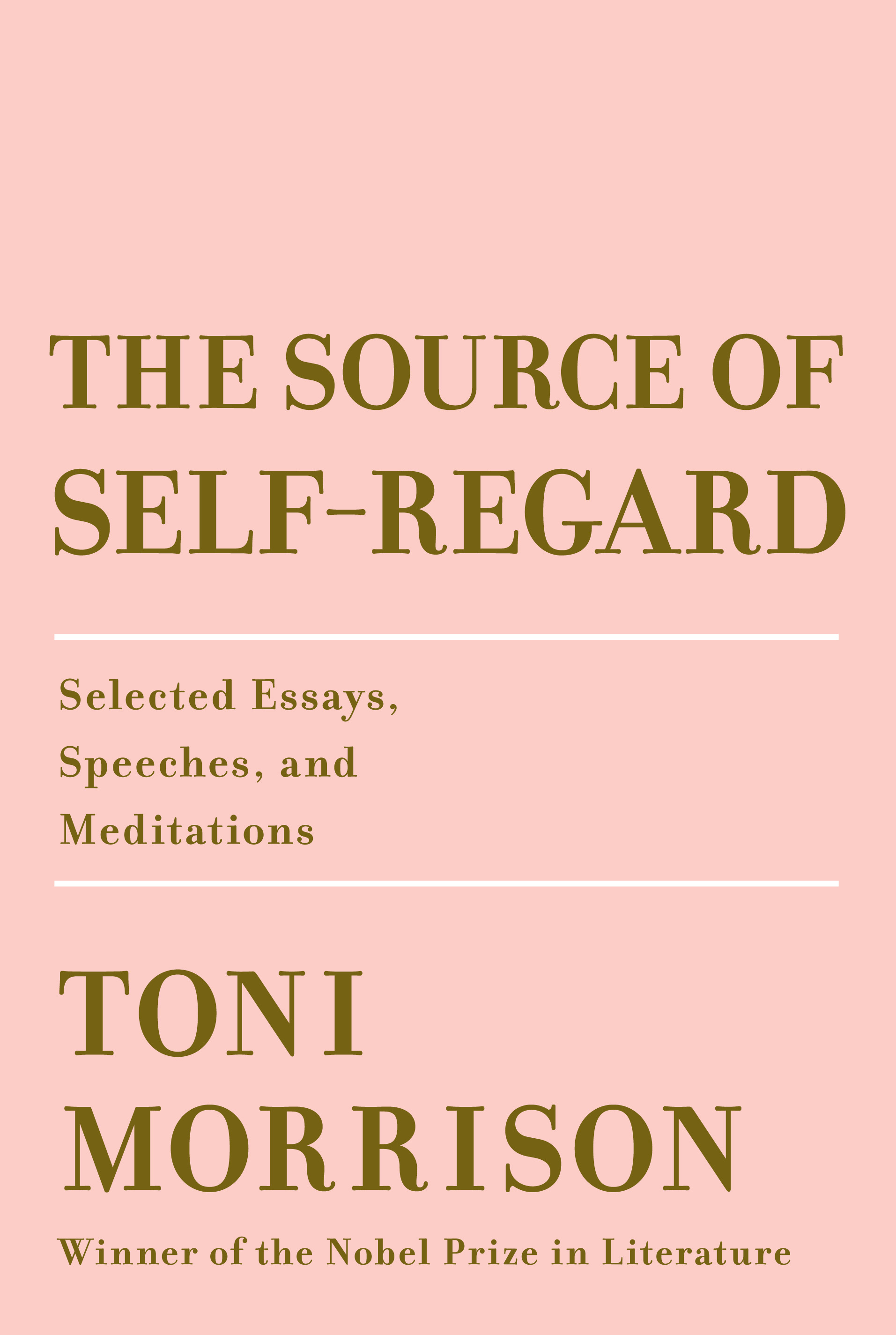
I had the somewhat frightening (intimidating?) experience of receiving Toni Morrison’s collection of essays and lectures, The Source of Self-Regard before its publication in 2019. [Here is the review I wrote for the smart folks at Bitch Media].

Unlike Ms. Morrison’s fiction, which I sometimes just did not understand (A Mercy, Paradise) or which I loved without really being able to explain why (Song of Solomon, Beloved) or which humored me the way a good friend does (Sula !), her nonfiction was a true education. It educated me by her example, in terms of her biography, and it educated me the way all reading does — through its structure, the way it had been nurtured and considered and through what was not there. 

February 18th would have been Toni Morrison’s 90th birthday, and I’ve been thinking about her a lot, celebrating and commemorating her gifts to me and to all of us through her rigorous writing and creativity. For many Black writers, it is not only her discipline and vision that we admire, it is how she earned the nickname Mother Toni, which is a nod to her guidance to each of us as we have sought to make our way on the perilous journey that is writing and editing and revising and publishing.

Her wisdom is so much a part of my practice that I don’t even remember when I started telling others. Whenever I speak to young writers, I use her example. I remind them that Mother Toni had a day job into her 40s, that she woke up at 4 a.m. before said day job to write while her babies were asleep. I have admired this level of discipline all my life, and while I have different reasons for engaging it, it has been essential to my writing practice all the same. And at the same time, she let us know that we are the people that we are, we are not the work we do, which is essential.

She is also known for giving entire generations of Black writers permission to write the stories that do not yet exist, saying if there is a book you want to read that does not yet exist, you must be the one to write it (this is a paraphrase). I can’t imagine how many books we would not have were it not for this advice, for her presence, for her work and her inspiration.

I rarely have occasion to do such deep research when I plan to write about a writer anymore, but I sensed that Ms. Morrison would not be with us much longer. So, in the before times, I took the liberty of luxuriating in the reference room at the Schomburg. I’ve aggregated below my notes on Ms. Morrison’s life, because these were the thoughts I had that didn’t make it into publication anywhere, and didn’t really fit in any kind of linear place; they also sum up why, aside from her talent, discipline and brilliance, I never felt anything I wrote about Ms. Morrison could really do her justice. I think it was important for me to put this here in celebration of her birthday in part because of how valuable looking at the contours of her life has been for my confidence as a writer. In a collection of her quotes, The Measure of Our Lives, she is quoted as having said: “If writing is thinking and discovery and selection and order and meaning, it is also awe and reverence and mystery and magic.” One of her many talents was showing us all that writing could do and be if we were brave and persistent enough to meet it.

Writing African American Women: An Encyclopedia of Literature by and About Women of Color, Toni Morrison entry, pages 636 – 640

Born 1931 in Lorain, Ohio

Chloe Anthony Wofford

Shortened her name to an abbreviation of her middle name purportedly (and with regret) because no one could pronounce Chloe. The theme of claiming one’s name emerged –noted in entry – in her fiction – from third novel, Song of Solomon (1977) to Tar Baby, her fourth ( 1981)

Graduated from Howard in 1953, English Major, classics minor

Master’s from Cornell in 1955 – her thesis was on suicide in the work of William Faulkner and Virginia Woolf.

She taught for two years at Texas Southern University in Houston, then returned to Howard as a faculty member.

She married Jamaican architect Harold Morrison in 1958

They had two sons together, Harold Ford and Slade Kevin. They divorced in 1964.

She moved w/sons to Syracuse where she worked as Random House textbook editor. Began writing at night as therapy for her loneliness when her sons were in bed.

Transferred to NYC in 1967 to headquarters for Random House editing acclaimed black women writers like Gayl Jones and Toni Cade Bambara.

She kept teaching – at SUNY Purchase 1971-72, Yale, 1976-77. She left Random House in 1983; Appointed Albert Schweitzer chair at SUNY Albany in 1984. Stayed until 1989, when Princeton appointed her Robert F. Goheen Professor of the Council of the Humanities at Princeton University.  (Note from me: That means 2019 marked the 30th anniversary of Toni Morrison becoming the first Black woman to hold a chair at an ivy league university.)

She’s taught at a number of  prestigious colleges and universities including Bard, Rutgers & Princeton, she delivered the Clark Lectures at Trinity College, Cambridge, and the Massey Lectures at Harvard University. She’s also received a number of honorary degrees including from Brown, Columbia, Dartmouth, Georgetown, Harvard, and Yale. “Although Morrison is perhaps best known for her fiction, she has written successfully in several other genres as well, including drama, children’s and YA, short stories and criticism.”

Won the Pulitzer in 1988, the Nobel in 1993 – the first African American and only the 8th woman to ever receive the prize. Her body of work began with the short story that grew into the novel that became The Bluest Eye, work that “established her recurrent concern with the meaning and place of black female identity.”

Playing in the Dark: Whiteness in the Literary Imagination (1992)

Two collections of critical essays (this would now be three, with the Origins of others, I think)

Race-ing Justice, Engendering Power: Essays on Anita Hill, Clarence Thomas, and the Construction of Social Reality (1992)

Birth of a Nation’hood: Gaze, Script and Spectacle in the O.J. Simpson Case (1997)

Icons of African American Literature

266-298

“The search for love and identity runs through almost everything I write,” (Taylor-Guthrie 96) Page 269

Page 273

“For Morrison, narrative is necessary. It is a psychic process that enables humanity to conceive and satisfy its fundamental need for coherence and understanding. The model of psychoanalysis throws light on the progress of characters looking for themselves as well as on the peculiar link the narrative creates between them. Such a relationship, reflected in the reciprocal link between narrator and reader, finds its model in the relationship shared by the analyst and its patient. The narrative of the one is stimulated by the patient listening of the other. Wisdom, if it emerges from such relation, is the work of the past, thanks to the traces left by memory or dream. In both cases, the aim is to discover the power of the desire that fuels the story, its origins, in order to master the process that, by elucidating the past, will lead to maturity. For the American black community, whose past is more easily read on the mutilated bodies or in the unfathomable eyes than in libraries, whose present is most often synonymous with alienation, telling stories is above all the way to refigure and to understand, to accept and to master a dismembered history made of holes and omissions.”

Toni Morrison: An Annotated Bibliography, David L. Middleton, 1987

From “Good, Bad, Neutral Black,” NYT Mag, 2 May, 1971, Vol. 7, p. 3 ff

“TM assesses books designed for black children…That which is truly good becomes universal: “Like so much that is meant for black folks, like so much that black people do for themselves, it ends up in the marrow of the culture at large.”

Page 26

“In time, writing became a way to ‘order my experience.’

“It’s always seemed to me that black people’s grace has been with what they do with language.”

Review: The Source of Self-Regard by Toni Morrison

I am ecstatic to share my review for Bitch Media on Toni Morrison’s stunning collection of speeches, essays and meditations, out today, The Source of Self-Regard. I inhaled it and underlined entire paragraphs over the last two months. I went to the Schomburg for something else entirely and found an annotated bibliography that informed a lot of this piece. These glimpses and pieces of her are the nation’s greatest living novelist at the top of her form and the most intimate look we are likely to get at her most closely guarded feelings and emotions — especially as it relates to the writing process.

The third section of the book, “God’s Language,” begins with the most beautiful piece of writing I have ever read—the eulogy Morrison delivered at James Baldwin’s funeral on December 8, 1987. It is also the closest glimpse we’ve had into Morrison’s personal relationships. Morrison lays her heart bare for a friend in a short poetic jubilee that’s reminiscent of Smokey Robinson’s recent speech at his childhood friend Aretha Franklin’s homegoing service.

“Jimmy, there is too much to think about you, and much too much to feel,” she begins. “The difficulty is your life refuses summation—it always did—and invites contemplation instead. Like many of us left here, I thought I knew you. Now I discover that, in your company, it is myself I know. That is the astonishing gift of your art and your friendship: You gave us ourselves to think about, to cherish.” Morrison might as well be speaking about herself. For me and many other writers, Morrison demonstrates how to be in a world that’s committed to your destruction. “You gave me a language to dwell in—a gift so perfect it seems my own invention,” she continues.

Throughout the book, Morrison reveals herself to be a teacher-student who is not just giving readers information that they’re expected to take in and regurgitate. Instead, she’s a “literary homegirl” (a phrase that she actually uses in the text). Referring to a friend as a “homegirl” implies a sense of ease in the presence of someone who knows and loves us, who evokes in us the joy, relaxation, comfort, and depth we typically only associate with home. Home is where we learn who we are, if not who we will become. Home is the starting point. In the title essay, delivered in Portland in 1992, Morrison explains how she viewed self-regard while writing her Pulitzer Prize-winning novel Beloved. Morrison’s lecture deeply resonates with me because it gives context for arguably her most famous work, which at its heart, offers Black women an artistic vision of our liberation.

9780525521037

Lane Moore’s How to Be Alone

“Your commitment to survival is more than a notion; it’s a balm, an affirmation, an eternal love note, and a sacred love manifestation that starts as a whisper and rises into the atmosphere. How to be Alone gave me closure. What a gift it is to know that there’s another person in the world who’s so brave and true to her spirit that she survived the hardest parts of being alive. Instead of sinking into despair or madness; being waylaid by bitterness or tragedy; or turning the grueling and terrifying dark of isolation against yourself, you’ve transmuted it into a fire so bright that it blazes brilliantly, with a classic, universal humanity. James Baldwin said, “You think your heartbreak is unprecedented in the world, and then you read.” How To Be Alone is like that.”

— In which I write a very vulnerable open letter-review for Bitch Media to the beautiful bad ass Lane Moore, whose tremendous and lovely book, How To Be Alone, really helped me sort some things out in the best, most heartbreaking way. Shout out to those of you who remember my Single & Happy blog & eBook days. Feels like a lifetime ago now.

P.S. New Yorkers: Lane will be in convo with the HQ host (!!) at The Strand tonight at 7 p.m.

how-to-be-alone-9781501178832_hr.jpg

Summer Music & Magic

I’ve been more quiet than usual because I’ve been dusting off my photography/summer counselor skills at Jewish surf camp (!) [more on that later, obviously] interviewing my share of incredible writers for Kirkus Reviews, reading and watching and reporting all of kinds of other things for other stories, finishing up my work in progress draft, for which I am in the final stages (last push! OMG!) and trying to find the essence of this thing they call the “summer slow down” (Have you seen it? Is it really real?)

Anyway, when the rest of the world is back to school and on a more regular schedule, I suppose I will be, too. In the meantime, I wrote this piece about the dynamic poet JP Howard, a Harlem native in Brooklyn and fellow VONA/Voice Workshop alum for Literary Hub, which posted today. I also spent some time writing this other piece for Bitch Magazine about my favorite albums from 1998, which I can’t even believe was 20 years ago!

I hope you’re enjoying your summer. How are you spending it out there?

A full week into Pride Month, but nevertheless…

Transitioning back into writing full-time has also meant getting used to learning how to manage my time — or, I guess, reclaiming it (thank you, Auntie Maxine) — but it also means that as my friend Jennifer has remarked, you realize that “Linear time is a trip.”

h_14472295.jpgAnyway, I worked on this piece for the Village Voice on how erasing black LGBTQ women from Pride almost 50 years after Stonewall defeats the point of what Pride is supposed to mean. I hope you dig it.

While I was working on it, I thought about the piece I reference toward the end, the Questioning Continuum, which I wrote for Bitch back in July 2014. This week, I met someone who said that someone told her that coming out is not really a one time process but something you’re always doing. That, to me, feels kind of exhausting, so I’m not entirely sure about that — and back then, I wasn’t even convinced that I needed to come out at all.

But there are a lot of people who feel, like I do, that they’re not quite heterosexual and they’re not in another category either. And maybe queer doesn’t fit them. But they know that they could fall in love with another kindred spirit and that’s the thing that matters. This blog is for them, or if it’s you, it’s for you. Happy Pride.

Another Season

I love the hibernation of winter and the renewal of spring. The only thing I really enjoy about summer is that fall is what follows – a season of harvest and brilliant color. So it seems fitting to consider that I’m moving into another season in my life that seems parallel to the promises of fall.

“The First-Person Industrial Complex” was the first essay I read that confirmed a shift in the nature of personal writing online that got me thinking about the frequency with which I used to write and publish more or less since the late 1990s:

First-person writing has long been the Internet’s native voice. As long as there have been bloggers, there have been young people scraping their interior lives in order to convert the rawest bits into copy. But we are currently in the midst of an unprecedented moment in the online first-person boom. The rise of the unreported hot take, that much-maligned instant spin on the news of the day, has meant that editors are constantly searching for writers with any claim to expertise on a topic to elevate their pieces above the swarm. First-person essays have become the easiest way for editors to stake out some small corner of a news story and assert an on-the-ground primacy without paying for reporting.

Laura Bennett goes on to write about the absence of self-awareness in the latest crop of personal essays and the marketing/commodification of sensational stories without regard for the impact such self-exposure has on mainly white women writers. It was once true, at least, that there was potential for an interesting, well-written story to become visible, find its audience and perhaps secure the interest of an agent. At the very least, writers and editors once said that the other side of one’s brand — the beloved platform — could expand with persistence, high quality work and consistency. But as my friend Stacia wrote in her excellent essay, “The Personal Essay Economy Offers Fewer Rewards for Black Women” at The New Republic:

Easy, daily access to writers’ most devastating experiences is decreasing the demand for full-length memoirs from the online personal essayist. But even when the stakes are lower and a writer is simply looking to raise her professional profile or earn extra money, personal essays aren’t always an advisable route. After a few days, discussion about those pieces wanes and after one bill payment, the money is a memory.

Taken together, these pieces were a codification of a season of transition for me that has stretched out over months and if I’m honest with myself, probably for more than a year. I love connecting with my audience, but I don’t want to do so in a way that feels compartmentalized or wedged into a news cycle.

There was a time when I needed to write about being a happy single woman in the face of an onslaught of media portrayals that made it seem like successful Black women would be #foreveralone, or to exclusively, daily, write and tell the stories of other people on deadline in order to inure myself to the discipline of getting to the page no matter what. And there was a time when I needed to dive deep into looking at the conversation or lack thereof of a diversity conversation  in the most important organ of democracy we have — the media — in order to place a coda on the profession that I so adored and loved. I have been incredibly blessed to make a living as a writer and to complete and publish two books on my own terms, without selling myself or anyone else out in the process.

After the media book was published, I found myself in desperate need of time to do anything but write. I had only experienced that a couple of times before, after a loss that wounded me so deeply I was afraid to write about it. Writing has been the main organizing principle in my universe for my entire life.

But I slipped into a different season partially from fatigue and partly out of choice. I wanted to catch up with my friends and attend to the parts of my life that I had long left in limbo. I wanted to read everything in sight that I had zero to do with journalism.

As a writer in these times, I feel often as though I am the awkward sixth grader I was in the Bronx when the girls got out the double dutch rope and I could hear the skipping of the hard plastic against the concrete ticking on a rhythm like a clock. I would make motions with my arm like I was about to jump in at any moment, but I was always out of sync with the rhythm. It was too fast for me, or it was too slow. Ultimately, the pace didn’t matter so much as the reality that I never found an easy way to glide between the ropes.

For as long as I can remember, I have followed James Baldwin’s advice about writing what I knew. It began with an essay to A Better Chance when I was in high school. I won an award for that essay which offered me affirmation to keep writing and aspiring to publication that I didn’t even know I needed. For more than 20 years, I have mined my personal experiences in order to bring more resonance to universal truths. Now it’s time for me to do a different kind of work.

This is not a goodbye post so much as it is my way of explaining the stretches of silence ahead. I will never stop being a writer or thinking like a writer, even though I no longer write for public consumption every day. Blogging and writing have been anchors for me as I continue to grieve my parents and heal from life’s adversities. I have benefited so much from knowing that my experiences are not as unusual or uncommon as I first thought and it has been my privilege to help make life a little easier for those who said they were inspired by my example.

I know I’ll be back to blog and write more at some point. During this season of my life, though, my intention is to read more, to devote myself to completely to my new job and to rediscover the joy of writing and connection that brought me to the page in the first place. I intend to speak at college campuses through my partnership with Bitch Media and offer writing/communications workshops, so you can connect with my work with Bitch on Campus here.

I’ve been told if you don’t have a Facebook Author Page, you don’t really exist, so please like my page. I’m also on Instagram. &  Pinterest. &, of course, Twitter.

Thank you for reading and responding to my work, to my presence, and for knowing my heart and sharing so much of this rich journey with me already. There will be more to come eventually. Until then, take good care of your heart. Enjoy all the seasons life offers you.