
Celebrating a Profound Literary Inheritance: Glory Edim on the Well-Read Black Girl Anthology
Celebrating a Profound Literary Inheritance: Glory Edim on the Well-Read Black Girl Anthology
— Read on longreads.com/2018/11/06/glory-edim-on-the-well-read-black-girl-anthology/
Tag: black women
Serena & The Humanity of Black Women

It was a gift, especially as I teach the Combahee River Collective statement from 1977 and remind folks that we have been fighting for a long time on behalf of our own freedom not just for the sake of ourselves but so that everyone else can be free, too, to write this for Mic.
It’s more convenient for white sports fans, of course, to turn the healthy, justified rage of black bodies gazed upon for money-making sport into a weapon formed against us. But like Colin Kaepernick, Serena is a generosity. She won’t let anyone or anything make her flat or less complex. Like Shirley Chisholm, she is unbought and unbossed. She contains multitudes. She can be both livid and kind, distraught and sweet, within the same hour.
What audacity, what nerve, that black girl with the big hair and the strong legs and amazing body has, showing up, demanding to be seen as human. What a gift, in this time, in this void of regal reckoning for black or brown bodies anywhere but fictitious worlds, that we get to witness Serena’s humanity unfurl, unedited.
My 2004 interview with Octavia Butler

“I’m black. I’m solitary. I’ve always been an outsider.”
This is how Octavia Butler described herself, the first self-possessed Black woman writer introvert, I had the honor of writing about for publication. Actually interviewing her was one of the great honors of my life, two years before her death in 2006. I wonder what she would have made of this beautiful Google Doodle, which I was delightfully surprised to see this morning before I went to sleep.

I was 26 when I interviewed her and Octavia Butler was the first person of consequence who was meaningful to the culture that I would interview. That year, I would also meet my mentor, and interview other influential Black women writers and scholars who inspired me to keep writing, even if they may not have been aware that’s what they were doing in the moment.
What I found most delightful about Octavia Butler was how unimpressed she was with herself and her habits. She had so many gifts that she shared with us, and so much wisdom. Our elders can see ahead on the path, can keep us from making mistakes we don’t need to.
I’ll always be so grateful for how generously kind she was with me, even though I was so clearly new at interviewing writers. I greatly respected how she wove stories even when she was talking about the most mundane things – we were discussing her first visit to New York, for instance, when she described the stamina you need to do something physical as akin to the writing life: “I think climbing mountains or buildings or whatever has been a really good metaphor for finishing my work. Because no matter how tired you get, no matter how you feel like you can’t possibly do this, somehow you do.”
Even if our culture only values what we can see at this moment, what they offer us is information about coping with the hard things in life – in the past, in what they imagined the future to be – that can tell us much more than any anxiety might be able to.
Here’s the whole interview, as republished by In Motion Magazine from Africana.com:
Interview with Octavia Butler
“… one of the few African American women writing
in the male-dominated science fiction genre”
by Joshunda Sanders
Oakland, California
Octavia Butler is one of the few African American women writing in the male-dominated science fiction genre. The worlds she creates with her pen are groundbreaking, powerful multicultural revisions of history; sometimes frightening and complex visions of the future. The author of twelve books and an award-winning collection of short stories, Butler was also the recipient of an esteemed MacArthur Fellowship grant in 1995 — the only science fiction writer on a list of more than 600 names in the last 20 years. She’s also won the most esteemed awards in the genre: the Hugo and Nebula wards for her books and short stories.
While she has referred to herself simply by saying, “I’m black. I’m solitary. I’ve always been an outsider,” Butler, 56, manages to render the emotional lives of her characters like an insider. It is a talent that she attributes to her life’s journey — she challenges her readers to confront themselves in spite of their circumstances and often, because of them.
The only living child of a shoeshine man and a maid who grew up a bookworm and loner in Pasadena, California has crafted the universe according to Octavia Estelle Butler since she was four; though she didn’t start making a living at it until she was older. Before she embarked on a professional writing career, she took writing classes, did odd jobs — from telemarketing to sorting potato chips — before she sold her first novel, Patternmaster

Joshunda Sanders: You grew up in Pasadena, California? What made you want to move to Seattle?
Octavia Butler: I went to Seattle for the first time in 1976. My first novel was published then, and that meant that I could take my first vacation. I got on a Greyhound bus and took a Greyhound Ameripass tour, which means that for a month I could go wherever I wanted to on Greyhound. There were a lot more buses then, so it was nice. Now I’m not sure it would be, because they get into so many places in the middle of the night and they leave in the middle of the night. So, it’s kind of inconvenient. But anyway, I went to Seattle, among other places. I went first to New York, because I’d never been there and I wanted to go.
Joshunda Sanders: What’d you think of New York?
Octavia Butler: I had a great time there. I met this West Indian woman, we were both going to the Statue of Liberty. She was wearing these thick-soled sandals, really uncomfortable shoes. We were both going to go to the top of the Empire State Building. Now, with me, my only excuse is that I’m not in shape, and wasn’t then. And with her, it was her feet. We’d encourage each other back and forth going to the top. And finally made it.
I think climbing mountains or buildings or whatever has been a really good metaphor for finishing my work. Because no matter how tired you get, no matter how you feel like you can’t possibly do this, somehow you do.
I hiked down not quite to the bottom of the Grand Canyon because I only had that one day, it was part of the same trip. I discovered that I didn’t really like going to cities, so I went to National Parks. And I hiked almost to the bottom and I realized that the bus was going to leave me if I didn’t get myself back up. Now it’s easy going down, but coming back up…and I did it c ompletely unprepared. So, I didn’t have any water… this is not sensible and I don’t think anyone should do it. I didn’t have anything except maybe some candies like this [she holds up a peppermint candy] because they tend to live at the bottom of my bag. And I kept thinking, “How embarrassing, and how humiliating it would be if somebody had to come get me.” I mean, it really hurts to walk that much if you’re out of shape and not used to it.
Joshunda Sanders: Why did you think you could do it?
Octavia Butler: It never occurred to me. I didn’t know what I was doing. I mean, it was a totally silly thing to do. And I kept trying and I would push myself. Part way down and part way back the only water was when it began to rain. And then it began to rain sideways and it plastered mud all down the front of my body. But I got back up on my on two feet, which really hurt by the time I got back up. And it’s sort of like writing.
When I went to Peru, I climbed Huayna Picchu, the taller of the two peaks you see when you see Machu Picchu. It’s an easy climb for anyone who is okay, you know. I mean, even if you’re not in very good shape. But I managed to hurt my knee hiking. I kept saying, this is high enough, this is high enough, why don’t I go back down? I got all the way to the top, crawled through the little cave and got to the top of the mountain and came back down. That’s what I mean. It’s a good metaphor for writing, because there will always come a time in writing a novel for instance, a long undertaking like that, when you don’t think you can do it. Or, you think it’s so bad you want to throw it away. I tell the students that there comes a time when you want to either burn it or flush it. But if you keep going, you know, that’s what makes you a writer instead of an “I wish I was a writer.”
I had a dentist when I was down in Pasadena and he knew I wrote and I had given him a couple of my books. And his attitude then was, “Well, writing is so easy even she can do it, so I’ll do some writing.” And he wrote the most appalling piece of…well. Truly bad. And he gave it to me to read. And I should have said, well, for legal reasons I don’t want to read your work, but I did him a favor and read his work. But what I had to say about it, as gently as I could say it, was, “Let this be an exercise, go take a class, here are some of the problems you might want to work on.” Very gently. But I never really wanted to let him at me with a drill again after that. So it cost me a dentist. But that was his attitude, you know, if I was doing it, it must be easy and anybody could do it.
Joshunda Sanders: A lot of people have that attitude about writing, but one of the things that strikes me about your work in particular is that it’s so complex that I don’t understand how people could come to you with that sort of cavalier attitude.
Octavia Butler: I don’t think they see it that way. I think their attitude has more to do with me than with the work. Just me, as a black, as a woman, or as a woman who doesn’t look as though she could do anything terribly complex.
Joshunda Sanders: That doesn’t frustrate you?
Octavia Butler: Oh, I’m doing okay.
Joshunda Sanders: What is it that fascinates you about books?
Octavia Butler: My big problem is my mother gave me this gene — there must be a gene for it, or several perhaps. It’s the pack rat gene, you know, where you just don’t throw things out. I haven’t thrown books out since I was a kid. I gave some books away when I was a little girl. My mother said I could give some to the Salvation Army. I gave some to a friend, and her brothers and sisters tore them bits. That was the last time I gave books away in large amounts. I just keep stuff. I still have books from childhood.
Joshunda Sanders: That’s a blessing.
Octavia Butler: It comforts me. I imagine when I’m dead someone will have a huge yard sale or estate sale and I don’t care! Some of them are worth something. Even my comic books — I have first editions of this and that, the first issue of the Fantastic Four. I used to collect them, not in the way that people collect things now. I didn’t put them in plastic bags and never touch them. I read them and they looked pretty bad, some of them. But they’re still worth something just because they are what they are.
Joshunda Sanders: How has your childhood affected your work?
Octavia Butler: I think writers use absolutely everything that happens to us, and surely if I had had a different sort of childhood and still come out a writer, I’d be a different kind of writer. It’s on a par with, but different from, the fact that I had four brothers who were born and died before I was born. Some of them didn’t come to term, some of them did come to term and then died. But my mother couldn’t carry a child to term, for the most part something went wrong. If they had lived, I would be a very different person. So, anything that happens in your life that is important, if it didn’t happen you would be someone different.
Joshunda Sanders: People attach a lot of titles to you –
Octavia Butler: Please don’t call me the grand dame. Someone said it in Essence and it stuck.
Joshunda Sanders: You’re annoyed by it?
Octavia Butler: Well, it’s another word for grandmother! I’m certainly old enough to be someone’s grandmother, but I’m not.
Joshunda Sanders: What about the science fiction or speculative fiction titles attached to your work?
Octavia Butler: Really, it doesn’t matter. A good story is a good story. If what I’m writing reaches you, then it reaches you no matter what title is stuck on it. The titles are mainly so that you’ll know where to look in the library, or as a marketing title, know where to put it in the bookstore so booksellers know how to sell it. It has very little to do with actual writing.
Joshunda Sanders: Have you found that it intimidates African Americans, in particular?
Octavia Butler: No. I think people have made up their minds that they don’t like science fiction because they’ve made up their minds that they know what science fiction is. And they have a very limited notion of what it is. I used to say science fiction and black people are judged by their worst elements. And it’s sadly enough still true. People think, “Oh, science fiction, Star Wars. I don’t like that.” And they don’t want to read what I’ve written because they don’t like Star Wars. Then again, you get the other kind who do want to read what I’ve written because they like Star Wars and they think that must be what I’m doing. In both cases they’re going to be disappointed. That’s the worst thing about verbal shorthand. All too often, it’s an excuse not to do something, more often than it’s a reason for doing something.
There isn’t any subject you can’t tackle by way of science fiction. And probably there isn’t any subject that somebody hasn’t tackled at one time or another. You don’t have the formulas that you might have for a mystery, or even a romance. It’s completely wide open. If you’re going to write science fiction, that means you’re using science and you’ll need to use it accurately. At least speculate in ways that make sense, you know. If you’re not using science, what you’re probably writing is fantasy, I mean if it’s still odd. Some species of fantasy…people tend to think fantasy, oh Tolkien, but Kindred is fantasy because there’s no science. With fantasy, all you have to do is follow the rules that you’ve created.
Joshunda Sanders: There are so many parts of the Parables, for instance, that seem to echo what’s happening in the world right now.
Octavia Butler: Keep in mind that when I wrote them, Bush wasn’t president. Clinton had yet to be reelected. When I wrote them the time was very different. I was trying not to prophesize. Matter of fact, I was trying to give warning.
One of the kinds of research I did was to read a lot of stuff about World War II. Not the war itself, but I wanted to know in particular how a country goes fascist. So, I have this country, in Parable of the Sower

Joshunda Sanders: Is it jarring to you, with the new mission to Mars and such?
Octavia Butler: Oh, no, I don’t see any reason to pay attention to that. I don’t think Bush is any more serious about Mars than he was about getting rid of some of our emissions in the atmosphere. It’s just something he said and probably forgot it a moment later. Or will eventually. Because, after all, it’s not something that’s supposed to happen while he’s still in office. It can’t. So I don’t think we need to really pay any attention to that.
Joshunda Sanders: You came of age when there was an actual space race, but my generation is a little removed from that.
Octavia Butler: I think of the space race as a way of having a nuclear war without having one. I mean that literally. We had a competition with the USSR and from that competition came a lot of good technical fallout. We learned a lot of things we hadn’t know before, even things that apply to weapons systems and yet we didn’t wipe each other out. I mean, there were people who thought a nuclear war would be a cool idea. During the early part of the Reagan era, there were people who thought we could win a nuclear war and rid ourselves of the Soviet Empire. I thought they were nuts, but they were there. And Reagan got into office in spite of the fact that he thought a nuclear war was winnable.
Joshunda Sanders: That’s heavy stuff.
Octavia Butler: I got my idea for the Xenogenesis
It has a greater consequence if you combine it with intelligence. If what you have is two elk fighting over who’s going to make the food, I mean, the consequences to them…but if you’re going to have somebody sending people off to war for egotistical or economic reasons, both hierarchal sorts of reasons, you end up with a lot more dead people. When you’re throwing nuclear weapons in the pie, which is what we were doing back then, you end up with more dead people than any war before. It could have been very bad.
Joshunda Sanders: Do some of your ideas disturb you or keep you up at night?
Octavia Butler: A lot of the ones in the Parables, of course, did. Like I said, they weren’t things that I wanted to happen. Kindred was a difficult book to write because of the research I had to do. The slave narratives, the histories in general — I read books written by the wives of plantation owners, at the LA Public Library. Unfortunately, a few years after that, somebody torched it. Some of the books I used to write Wild Seed and Kindred, they would have been one copy in the library and now they’re gone.
Joshunda Sanders: Why do you think Kindred has been one of your more popular works?
Octavia Butler: Because it’s accessible to a number of audience: black studies, oh, I guess I have to modify my vocabulary here — African American studies, women’s studies and science fiction. It sometimes reaches people who might not otherwise read that kind of book, who might not read a history, a historical novel even about that period unless it was a Gone With the Wind type.
[With Kindred] I chose the time I was living in. I thought it was interesting to start at the bicentennial and the country’s 200 years old and the country’s still dealing with racial problems, and here’s my character having to deal with slavery all of a sudden. If I had written the book now, it probably wouldn’t be very different. What I was trying to do is make the time real, I wanted to take them back into it. The idea was always to make that time emotionally real to people. And that’s still what it’s about. The nice thing is that it is read in schools. Every now and then I hear about younger kids reading it and I wonder how they relate to it. All too often, especially young men, will feel, “Oh, if it was me, I would just…” and they have some simple solution that wouldn’t work at all and would probably get them killed. Because they don’t really understand how serious it is when the whole society is literally arrayed against you and arrayed to really keep you in your place. If you get seriously out of line, they will kill you because they fear you.
Kindred was kind of draining and depressing, especially the research for writing it. I now have a talk that begins with the question, “How long does it take to write a novel?” and the answer is, as long as you’ve lived up to the time you sit down to write the novel and then some. I got the idea for it in college. But a lot of my reason for writing it came when I was in preschool, when my mother used to take me to work with her.
I got to see her not hearing insults and going in back doors, and even though I was a little kid, I realized it was humiliating. I knew something was wrong, it was unpleasant, it was bad. I remember saying to her a little later, at seven or eight, “I’ll never do what you do, what you do is terrible.” And she just got this sad look on her face and didn’t say anything. I think it was the look and the memory of the indignities she endured. I just remembered that and wanted to convey that people who underwent all this were not cowards, were not people who were just too pathetic to protect themselves, but were heroes because they were using what they had to help their kids get a little further. She knew what it was to be hungry, she was a young woman during the Depression; she was taken out of school when she was ten. There were times when there was no food, there were times when they were scrambling to put a roof over their heads. I never had to worry about any of that. We never went hungry, we never went homeless. I got to go to college and she didn’t even get to finish elementary school. All that because she was willing to put up with this nonsense and try to help me. I wanted to convey some of that and not have it look as though these people were deficient because they weren’t fighting. They were fighting, they just weren’t fighting with fists, which is sometimes easy and pointless. The quick and dirty solution is often the one that’s most admired until you have to live with the results.
Joshunda Sanders: So I hear you’re working on a book about a vampire?
Octavia Butler: It’s sort of like my Wild Seed
Joshunda Sanders: Where do you get your ideas?
Octavia Butler: When I got the idea for Patternmaster, I was twelve, but I had no idea how to write a novel. I tried, but it was quite a few years before I was able to write it. When I got the idea for Mind of My Mind

Sometimes I hear from people who want to write and [they ask] what should they do? The first thing I want to know from them is, are they writing? Are they writing every day? And a remarkable number of them are not. Do they read omnivorously, because that’s not only a source of ideas, but a way to learn to write, to see what other people have been up to. I recommend that they take classes because it’s a great way to rent an audience and make sure you’re communicating what you think you’re communicating, which is not always the case, and I recommend that they forget a couple of things. Forget about talent. I recommend that they go to the bestselling lists and see who else doesn’t have talent and it hasn’t stopped them, so don’t worry. Forget about inspiration, because it’s more likely to be a reason not to write, as in, “I can’t write today because I’m not inspired.” I tell them I used to live next to my landlady and I told everybody she inspired me. And the most valuable characteristic any would-be writer can possibly have is persistence. Just keep at it, keep learning your craft and keep trying.
Published in In Motion Magazine March 14, 2004
First published in Africana.com ( February 24, 2004. Africana content © Copyright 1999-2003 Microsoft Corporation. All rights reserved to media owners. Re-published with permission.
A full week into Pride Month, but nevertheless…
Transitioning back into writing full-time has also meant getting used to learning how to manage my time — or, I guess, reclaiming it (thank you, Auntie Maxine) — but it also means that as my friend Jennifer has remarked, you realize that “Linear time is a trip.”
 Anyway, I worked on this piece for the Village Voice on how erasing black LGBTQ women from Pride almost 50 years after Stonewall defeats the point of what Pride is supposed to mean. I hope you dig it.
While I was working on it, I thought about the piece I reference toward the end, the Questioning Continuum, which I wrote for Bitch back in July 2014. This week, I met someone who said that someone told her that coming out is not really a one time process but something you’re always doing. That, to me, feels kind of exhausting, so I’m not entirely sure about that — and back then, I wasn’t even convinced that I needed to come out at all.
But there are a lot of people who feel, like I do, that they’re not quite heterosexual and they’re not in another category either. And maybe queer doesn’t fit them. But they know that they could fall in love with another kindred spirit and that’s the thing that matters. This blog is for them, or if it’s you, it’s for you. Happy Pride.
Notes from the Bronx Book Festival
I wrote about the Bronx Book Festival for the Village Voice and how the Bronx is having a resurgence of the book scene with the work and leadership of Saraceia J. Fennell and Noelle Santos, but there were a couple of quotes from one of the panels that I wanted to add in the spirit of Throwback Thursday that didn’t fit in the context of the story that I wanted to put here.
- “In this nation, the women’s movement was started by Black women. If we’re going to create a movement in this country that’s inclusive, we have to acknowledge indigenous women who get erased, and Black women specifically. That’s still not understood, which is why we struggle with solidarity. If your movement doesn’t lift all boats, we’re not going to win.” — Sofia Quintero
- “A large part of resistance is rejecting rejection…Part of the feminist project, especially in the arts, is a more liberating masculinity. It’s not that they don’t have privilege. Our feminism has to be one that heals and liberates everyone. We have to inform the brothers, but the brothers gotta do their own labor.” — Roya Marsh is one of the poets in the beautiful Black Girl Magic anthology, which you can buy here.

Reflections on Austin for The New York Times
When the bombings started in Austin, I was distracted by other things like a lot of other folks. I saw 17-year-old Draylen Mason’s name and that he had been attacked, but I didn’t register a connection between him and the other people who were being harmed in Austin until too late, until Governor Abbott decided it was time to offer a reward for information for the bomber who was then later described as a nice young man with challenges.
Writing for the Times is something I’ve always wanted to do. I have dreamed of publishing on the Opinion pages there since I was a college student. On Thursday, that became a reality with this piece, What It’s Like to Be Black in Austin.
By now, because the bomber is dead, and there are other things to think about and be outraged about — Stephon Clark’s murder among them — these reflections might seem to be a forgone conclusion, but because we live in a time of increasing racial terror, perhaps they are not. We are just in a different moment than when I wrote at length about leaving Austin in 2013. So I worry that failing to look at some of these thoughts or ideas will mean that fewer things get resolved, fewer conversations are aired.
Whenever I write about race or have conversations about my experience, I inevitably get questions like, “What should we do?” I feel very strongly that my work in the world is to be a witness and to write. My work is not to solve refusal to see biases at play or anything else.
I’ve been amazed by reconnecting with my friends and colleagues across the country in the wake of the piece’s publication. Most of the responses have been positive. Because this is a piece that is about race and racial critiques of well-meaning people tend to bring out defensiveness (underscored in the piece), it won’t surprise you to hear there’s been some of that as well.
In any event, writing this piece made me appreciate even more the wonderful people we meet wherever life takes us who become our community. Our truths are not other people’s truths and they don’t have to be. I hope that folks will take what is useful here and leave the rest.
In Austin, I felt a loneliness that was hard to explain. I wasn’t just a New Yorker in Texas. I was a tall, dark-skinned black woman with natural hair. I was an outsider in a place that is supposed to value weirdness, but I never felt like the right kind of weird.
I did the things everyone does in Austin. I went for runs around Lady Bird Lake. I went to hear live music. But whenever I looked around, I would always notice that there was no one else who looked like me. I tried to talk to some of my well-meaning white friends about this. They would try to “Well, actually …” me. “Well, actually, Austin is better than the rest of Texas.” What else could they say?
So I moved back to the East Coast, but I kept my home in East Austin and still visit when I can. It’s my home away from home.
I learned about the bombings on Twitter, and it was surreal to read these familiar names in the middle of the horror. These were people I wrote about, people I knew, people I shared laughs with: Nelson Linder, the head of the Austin N.A.A.C.P., and Freddie Dixon, a pillar of the community, discussing the deaths of 17-year-old Draylen Mason and 39-year-old Anthony Stephan House.
I worried for the people I knew, and then I felt, again, that deep, lonely sadness. I wasn’t the only one made to feel that I didn’t belong. Someone was targeting black people, but once the bombs appeared in other neighborhoods, the authorities no longer seemed willing to consider the possibility that hate crimes had been committed.
I don’t know what else to call them. When the bombings started, I had been writing about the 50th anniversary of the Rev. Dr. Martin Luther King Jr.’s assassination, so I knew the faces of martyrs of the civil rights movement. Whenever I hear about bombs and black people, I think of the four little girls murdered in Birmingham, Ala. I have family ties to Philadelphia, too, so I think of the Move bombings. Are there any black people who can separate news of bombs from notions of terror?
We are in an unusual cultural moment. There has been so much truth-telling over the past few months, so much affirmation about speaking truth to power. I hoped that this time, the authorities might acknowledge that, yes, black people were targeted. I thought someone might make the connection — East Austin is the only place in the city where black and brown people still live in large numbers, and they remain vocal. There are people who are afraid of that, and are threatened by that, and that makes East Austin a target. Instead, there was silence, as these concerns disappeared into the broader panic about where a bomb might strike next.
You can read the rest of the piece here.
Roses for the Living

Roses for the living.
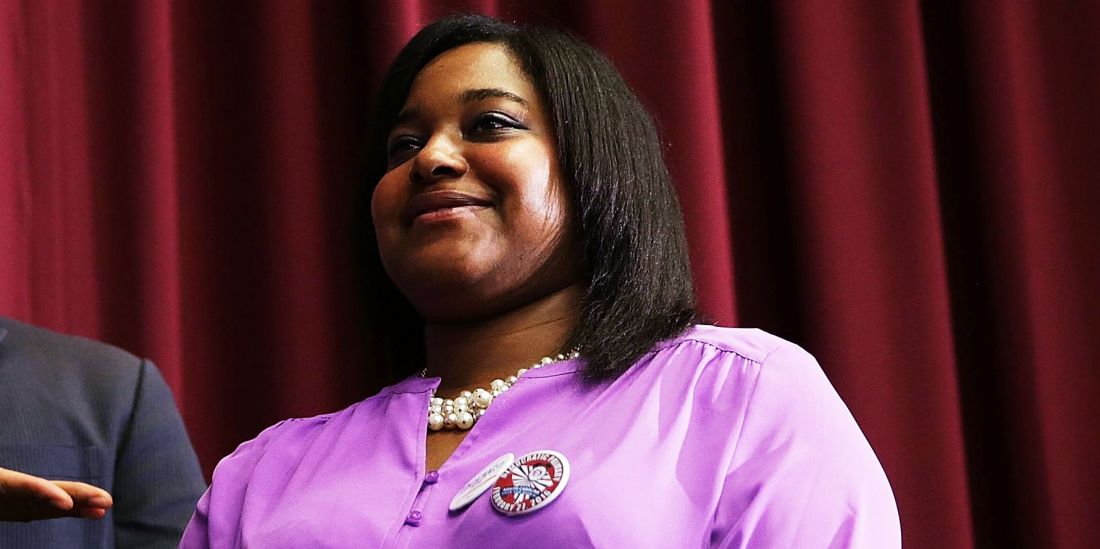
I was thinking of this saying when I first heard that Erica Garner had a heart attack and we were all hopeful for recovery. I was surrounded by my family, and my sweet nephew led us in prayer for her, and my thoughts were consumed with her and her family, what they had been through and the burden black women are asked to constantly carry.
When I was first starting my newspaper career, I wrote for a time almost exclusively about black death and black pain, whether it was killing in Oakland or incarcerated mothers with families trying to sort through how to live without their needed matriarchs. I didn’t fully appreciate then, because no one had ever told me to, the notion of taking care of myself. I did not think that I was sensitive in any particular way to the harrowing and depressing work of being a witness, of being an advocate and especially of straddling the worlds between corporate journalism, where I had to translate the working class and middle class black experience, and the worlds of black folk.
I’m sure it was someone during this time who first used this phrase, to remind me and to remind others that we should give roses and praises to the ones that we love, the ones that are doing the work, while they are still here.
I was also thinking of another ProPublica piece, this one about black-serving hospitals where black mothers have been dying because of substandard care, a reality that could easily be corrected by improving care for them and making it equal to that which white women receive.
My answer to grief and fear and rage, to emotions I can’t name and want to understand or run away from at the same time, is always the same: I pray. I meditate. I read. Then, I try to write.
I looked to Dorothy Roberts’ Killing the Black Body and The Gloria Anzaldua Reader and Evelyn C. White’s The Black Women’s Health Book and Audre Lorde’s Sister Outsider and even bell hooks’ Sisters of the Yam: Black Women and Self-Recovery. I wanted to lean on the words of someone wiser than myself, someone who has lived this harrowing closeness to death and daily destruction, who understands the weariness of spirit that emerges when you just feel like you don’t know how else to ask the world to stop being willfully reckless with black women’s lives and hearts.
I found some passages that were connected. Some statistics, though we are more than numbers and metrics. Maybe I didn’t find the right words because I am supposed to write them, because they were stuck in my throat.
The only housewarming gift I gave to myself in 2017 was a Molly Crabapple print which is a painting of Audre Lorde with a quote, “Your silence will not protect you.” I put it up in a prominent place in my apartment so that I always have to consider it, so that I never forget. What I most respect and love and admire about women who step forward to fight the battles of their lives as Erica Garner did is that they understand this in a visceral, frontline way. It is not theoretical.
It is easy to feel that if we say nothing, that we are protected. That the suffering of the world, the tyrannies that obstruct justice will forget us. But reading from the full lecture that the quote is derived from, delivered a little more than exactly 40 years ago from a paper published as “The Transformation of Silence into Language and Action” helped me to remember why it is important to remember to continue to resist the temptation to clam up:
I was going to die, if not sooner then later, whether or not I had ever spoken myself. My silences had not protected me. Your silence will not protect you. But for every real word spoken, for every attempt I had ever made to speak those truths for which I am still seeking, I had made contact with other women while we examined the words to fit a world in which we all believed, bridging our differences. And it was the concern and caring of all those women which gave me strength and enabled me to scrutinize the essentials of my living.”
I had forgotten that this quote talked about how breaking silence gave Audre community, how it gives me, gives us, gave Erica, community even if community is not always enough to save us. Audre wrote this, too:
In the cause of silence, each of us draws the face of her own fear – fear of contempt, of censure, or some judgment, or recognition, of challenge, of annihilation. But most of all, I think, we fear the visibility without which we cannot truly live. Within this country where racial difference creates a constant, if unspoken, distortion of vision, Black women have on one hand always been highly visible, and so, on the other hand, have been rendered invisible through the depersonalization of racism. Even within the women’s movement, we have had to fight, and still do, for that very visibility which also renders us most vulnerable, our Blackness. For to survive in the mouth of this dragon we call America, we have had to learn this first and most vital lesson – that we were never meant to survive. Not as human beings. And neither were most of you here today, Black or not. And that visibility which makes us most vulnerable is also the source of our greatest strength. Because the machine will try to grind you to dust anyway, whether or not we speak.”
That visibility which makes us most vulnerable is also the source of our greatest strength.
This resonates, and feels true, but also we know from the death of Kalief Browder’s mother, Venida, and now Erica, that the vulnerabilities that come with being visible while fighting the good fight often don’t make us feel strong at all. People praise us with their mouths, but outside of public view is where the real war is – with keeping a life together, with staying healthy, remembering to rest, remembering to grieve, remembering that if there are no roses given to you that you can seek your own — but that too comes at a cost.
As Erica’s mother, Esaw Snipes said, “The only thing I can say is that she was a warrior. She fought the good fight. This is just the first fight in 27 years she lost.”
I tried to not write this at all. I had some down time. I was doing other work and I made myself stop being productive to take care of myself, so that I wasn’t spending an entire day during the last hours of the longest year in modern memory thinking of how many broken hearted black women have died while a complicit nation apologized and watched and then proceeded to kill another one.
I took a friend’s beautiful book of poetry with me to the great continent of Brooklyn for a birthday party, had a couple of drinks, met some great folks, had a good meal and came home, haunted, exhausted, near tears in the wee hours of the last day of 2017. I will not be defeated, not while I’m living, not by racism, not by sexism, not by silences or complicity. Or, at least, I can say I will keep trying not to be.
I do not know how to give myself the luxury of looking away when the world is too much, though, and it is often too much. Zora said there are years that ask questions and years that answer. I hope that 2018 has answers for us.
Who Will Help Black Women Win?

“won’t you celebrate with me
what I have shaped into
a kind of life?
I had no model
Born in Babylon
Both nonwhite and woman
What did I see to be except myself?
I made it up
Here on this bridge between starshine and clay,
My one hand holding tight
My other hand; come celebrate
With me that everyday
Something has tried to kill me
And has failed.” ~ Lucille Clifton
Being a black woman always means having to offer context for your humanity.
It has always meant this. Before Doug Jones’ win. Before this administration. Before hip hop. Before the Black Power movement, the civil rights movement, the Harlem Renaissance.
You get my point.
Being a black woman means that even though you are hypervisible, the intersection of racism and sexism renders you invisible.
As we march toward 2018, it means that unless black women continue to do the important work of contextualizing and elevating our own stories of how we survive, how we win, in the face of continued aggressions and microaggressions, no one will know anything about what we have faced from our perspective.
Earlier this year, the National Domestic Workers Alliance published the State of Black Women in America to zero fan fare at all: “Black women consistently work for a better country, but our country is not working for them,” the report says in part. It details facts that you might suspect but are still tiring to see in the aggregate:
- More than 80 percent of black women are the primary breadwinners in their families
- Over 60 percent of black women participate in the labor force — among the highest of any ethnic group, despite the fact that our earnings lag behind that of most everyone else, male or female
- Nearly 17 percent of non-elderly Black women lack health insurance, though we suffer from higher maternal mortality rates and a host of other health disparities exacerbated by the stress brought on by racial discrimination. (If you missed it or want to know more about the extent to which health disparities are killing black women in particular, this piece co-published by ProPublica and NPR is important and astounding.)
I think about these statistics and many others that aren’t listed above but I just know from my lived experience and from working for much of my life and I wonder how to reconcile this with the continual dismissal of black women’s lived realities. Because even when there has been a legacy for hundreds of years of black women fighting for the survival of each other and everyone else, the work of centuries can be reduced to relevance only for a single moment, a single victory in service of a single man of any race from anywhere in the world.
And then that becomes the narrative that is the most important about what black women are, and what we are good for. That the presiding narrative of being a black woman at the end of 2017 is that we are good at being of service and helping other people win is discouraging. It also begs the question: Who will help us win?
The day that Doug Jones won over Roy Moore in Alabama was a busy one for a lot of reasons, but that’s not why I wasn’t celebrating as hard as everyone else. I was still stunned by news footage of Roy Moore on a horse at the polls, almost certain that the imagery was meant to be as racially intimidating as the underreported voter suppression, and that image stayed on my mind all day.
I turned on my television for approximately two minutes to look at the exit poll data before polls closed. Moore was ahead at that point, so I turned the television off.
Of the effusive love poured on black women in the aftermath, 98 percent of whom voted for Senator-elect Doug Jones, Marcia Chatelain sums it up best writing for Dissent Magazine:
Those who are concerned about black women’s votes may want to study the incredible history of black women’s political organizing in the South, as well as the current odds that are stacked against them across the country. The post-2016 election narrative about red and blue America fixated on the gulf between conservative and liberal whites. This narrative also mourned the loss of a robust, left-leaning white electorate that has shifted rightward because of the incompetence and indifference of the Democratic Party. This analysis, which often elides the importance of racism and xenophobia in predicting white voting patterns regionally, also ignores the complexity of black voters and their motivations. In this moment, perhaps observers should take a few moments to consider how black women in Alabama and Virginia are not that different from black women in California and New York — all are contending with the forces of racism, sexism, and class immobility. Yet local challenges and regional differences dictate both the strategies and the resources black women have to fight these forces. Therefore, appreciating, or simply noting, black women’s voting patterns cannot provide reliable information on ideological divides across region or class, nor can expressions of gratitude make up for the need to organize whites to do anti-racist work.
I want to underscore the very last point: “…Nor can expressions of gratitude make up for the need to organize whites to do anti-racist work.”
In the past year, this has been my main point to anyone who asks me anything about what it is like to be a black woman right now. I am in search of true allies. I am exhausted by the notion that I have to keep repeating that this is not the work of the marginalized to do and to continue doing. I am not sure why media narratives opt instead to focus on more trendy forgotten demographics and yet, it makes perfect sense.
Black women know the work that is ours to do, so we do it. It is now up to other people, people with privileges that we do not have, to work to divest themselves of the comforts that come with their privilege in order to experience even an iota of what it is like to be us by committing to doing the hard work of anti-racist, anti-sexist work. (My friends Courtney and John model what this looks like. Courtney just posted a great piece on organizations led by black women you should support.)
Privilege, of course, is the elephant in all of these organizing spaces that remains unchecked and unchallenged. It is the economic engine that allows for progress. But it is not without its drawbacks if privileged progressives cannot be confronted about their blindspots.
Privilege means not having to confront the uncomfortable truths that black women have to live with, have to breathe in and don’t get to exhale, every moment of every day.
Privilege means knowing that significant swaths of women across economic classes have internalized misogyny and, often, problematic, racist views that allow them to justify it but instead of interrogating them or this trend as it relates to specific candidates, looking on the bright side, and thanking black women for saving you once again.
Privilege is understanding full well that words have power and meaning; remembering that the U.S. Holocaust Museum in November 2016 reminded the world that “the Holocaust did not start with killing but with words” — and still deciding to be complicit in the use of the vague, soft language of bigotry, coddling profiles of hate-mongers and homegrown Lone Wolf terrorists of the like who murder Christian patriots in their own churches simply because they are black, by supporting institutions and people who do not call racism by its true name and are not explicit about the very real, imminent dangers of racism to our democracy.
For our part, it is clear to black women that outside of standing in (surprisingly, occasionally) as a kind of avatar for the moral conscience of state and national electorates, if only because the narrative above feels so distasteful, generally we are the only ones who come to the defense of one another. I’m thinking specifically here of Rep. Maxine Waters, April Ryan, Jemele Hill, Rep. Frederica Johnson and Myeshia Johnson but they are not the only ones, unfortunately.
In one way or another, an attempt was made to silence or bully each of these black women this year — from the President of the United States, no less, or members of his administration — simply because she was a black woman in possession of herself and her voice and for nothing more.
The first and loudest voices coming to their defense, every time, were other black women. For a culture and society so polarized, it is understandable, though it is one of the more troubling ongoing paradoxes of our democracy that we have reached a moment of reckoning against some sexual predators and institutions under the banner of a movement started by Tarana Burke, a black woman, made more visible by well-known white actresses and erasure of working class people who continue to face the fall out and repercussions of unchecked power and manipulation because they cannot afford to come forward without the protections that privilege affords.
Like icons Ida B. Wells and Mary Church Terrell, who aggressively, actively and strategically organized against antilynching laws, and the many unsung women of the civil rights movement, of feminist movements of yesteryear and present day, I vote in my best interests. I continue to organize, write, read and amplify voices that are in my best interests and therefore, in the best interests of other black women in our nation, because we are the only ones, apparently, who are invested in us winning.
There’s a lot wrong with that, but the biggest tragedy in that to me is that whatever happens to black women ultimately happens to other women. Being both black and woman, at the bottom of the skin and gender hierarchies, our trajectories are bellwethers for everyone else.
I don’t mind being part of a tribe trying save everyone else. It would be nice, though, if other folks would actively decide to take on some of the responsibility for doing some of the saving. If 2017 taught us anything, it is that there is more than enough work to go around.
She’s Gotta Have It
In 2004, when She Hate Me came out, I was assigned to write a story about Spike Lee for the San Francisco Chronicle, where I was a young features reporter at the time. The movie’s tagline was: “One heterosexual male. 18 lesbians. His fee…$10,000 each.”
Like a lot of Spike Lee’s work, I thought the concept was interesting, but I was worried about the execution. I missed one screening of the film, possibly two, and felt like my spirit was subconsciously trying to protect me from seeing the thing all the way through. (Roger Ebert, bless his soul, was probably the only person who wrote anything nice about the movie, which included animated sperm. )
The best thing about the movie was that it provided an opportunity for me to interview Spike Lee in person. His Malcolm X biopic is one of my favorite movies of all time. I wouldn’t see them until later, but When the Levees Broke and 4 Little Girls are two of the most important and beautiful documentaries ever made about black people in our country.
I respect Spike Lee because he has fought for and maintained against all odds complete and utter control of his artistic vision. He is not afraid to take risks, which makes me love him loyally and even more, because there is perhaps no bigger challenge for black artists in America than to take risks.
In the realm of creativity and imagination, black art is always cast as political, created in response to or because of oppression. Black art, like black genius, that is beautiful on its own merit, absent of political sensibilities, is not a concept that is understood, which is why most critiques of black cultural products that are not composed by people of color miss the mark. They cannot conceive of a blackness that is not self-conscious, reactive and that exists for its own sake or to encourage more of the same.
Anyway, even though I was intimidated by Spike, it was still an honor to speak to him and a very young Kerry Washington (also a Bronx girl). I rambled and he was patient but I had two burning questions:
- Would he one day find the discipline to end a movie properly? (I was thinking of the basketball launch from prison out into the world at the end of He Got Game; the montage at the end of X; Bamboozled, Clockers…I mean, there are 30 years of movies here to assess at this point, so you get the point. But it doesn’t matter because I never got the courage to actually ask this.)
- What did he think about criticisms that he only wrote one-dimensional female characters? (I did ask this: “Some people say that one of your flaws as a director is writing realistic female characters.” It could have been my imagination, but I remember him rolling his eyes at the first part of that question.)
There are likely some exceptions in Spike Lee’s work — of mothers, or sisters or women who are based on real-life characters — but by and large, women in Spike Lee’s films are rendered as caricatures instead of complex characters like male protagonists. It is always the men who have full and complete narrative arcs in his films, motivations that make sense, pragmatic drive and passion. Maybe because he is closer to them, he understands what motivates them, what they desire.
The women, though, tend to be caricatures. Troubled beauties. Whiny plot devices with a good line or two, amazing bone structure. This is them as love objects, as wives and lovers. As with all cultural products that are not meant to be humorous, maternal respect protects black motherhood from the same kind of flat rendering. But all other women are mysterious and odd.
When I asked Spike Lee about critiques of one-dimensional female characters in his films, he said that his wife and some time collaborator Tonya Lewis Lee helped him flesh out the women in his films. He didn’t say it but the look behind his thick framed glasses after suggested his answer should quell any critiques.
I thought about that again when I watched the She’s Gotta Have It Netflix series this weekend, for whom Tonya Lewis Lee is the show runner and for which there was reportedly a robust women’s writers room. This is the part you shouldn’t read if you haven’t watched it yet. SPOILERS BELOW.
- The best thing about She’s Gotta Have It on the small screen is that it is beautiful to see. The actors are lovely. The soundtrack is amazing. The art is also lovely. (I loved so much of the influence of Art Consultant and Artist Tatyana Fazlalizadeh). The homage to black musicians and artists and blackness in Brooklyn is incredible.
- The second best thing about this is that Spike Lee is brilliant on the small screen. I think this has something to do with giving his ideas a container in which to work. Sometimes the best writing is short because it requires economy and discipline; I think television and documentary work help him refine his vision and rein it in in a way that is only positive in the end.
- In the span of 10 episodes, it’s clear that we are in a Brooklyn that is very different from the Brooklyn that Spike Lee has loved and grew up in his whole life. That informs the backdrop of the series in a way that isn’t distracting so much as it reminds you, regularly, that even though this a remix, it is very much a Spike Lee Joint. I’m not sure that’s a good thing. Is this about Nola Darling or is it about the male experience of Nola Darling?
- To that point about who this Nola Darling/series is for, maybe I should have expected there to be a moment about Trump and the 2016 Election, but 1. I didn’t and 2. I wasn’t sure why it was wedged in here. It felt like Spike couldn’t wait for his next project to get it out — much like his feelings on gentrification in Brooklyn — so he amplified them here.
- DeWanda Wise is wonderful as Nola Darling. She is beautiful and perfect and has great chemistry, especially with Anthony Ramos, who plays Mars, but really with each of her lovers. I appreciated the update for her as someone with a fluid sexuality. This is something that could have been a little more fleshed out.
- There is an odd heavy-handed series of comments on her black dress that needed to be condensed, and a scene in front of her art with Me’Shell N’degeochello playing while she’s spinning around that goes on for too long.
- Much has already been made and will be made about how delightful She’s Gotta Have It is for representation of black women and the complexity of it. I would argue that it is a good start (and even that is debatable because…it has been 30 years! Can you call yourself woke if you got up late?) but there are some pretty wacky missteps. The whole Shamekka/butt injection side plot and scenario leads to a narrative arc for that character that is obvious and literally messy on all kinds of levels. The whole time it was happening, it felt like a flashback, like a montage from another movie.
- At some point Nola makes the point, paraphrasing another woman, that she’s found the man of her dreams and it is her. It creates a bit of cognitive dissonance for someone who is essentially queer — is this the language she would use, then, to declare her freedom? Besides, in the end, it doesn’t seem that it’s even true — but maybe that’s just a set up for the next season.
In the end, I enjoyed She’s Gotta Have It more than I expected, and I’m curious to see where it will go from here. If you’ve seen it, what did you think?
On Zadie Smith & The Missing Black American Woman Expert

It is easy to be smitten with Zadie Smith, as I think I am. She has freckles and I love freckles. She can sing. She has a lovely accent. She is witty. She writes well.
Actually, she’s brilliant. I’m a fan of her nonfiction, and I was smitten more with Changing My Mind, her book of essays, than with On Beauty, which was fine but not my fave. Same with Swing Time, which I just finished before I happened upon this complicated essay, “Who Owns Black Pain?” in Harper’s Magazine.
It starts with a very interesting look and assessment of “Get Out”, which I have seen three times. I have yet to read (not saying it doesn’t exist but I’m busy and read a lot but also miss things) the take from a black woman that I want to read which is: That is exactly what black men who dismiss black women and our beauty GET. What is? Get Out is. Rose is.
Erika Alexander brought me all of the joy in the world in that movie. All of it. (The only other movie I have seen three times, by the way, is the Ten Commandments, but that’s because my mother had both tapes when I was a kid and I couldn’t help myself. [Charlton Heston was kind of fine as Moses.])
I’m burying the lede, here. My point is not to catch up on the critiques I didn’t share the first three times I watched “Get Out” but to elaborate on something I’ve said before. Something I deeply believe and am troubled by: We live in a culture that prefers to hear about the lived experience of black women from everyone but black American women.
I will not name check them all. But I will say from personal experience and observation that there seems to be a vested interest in hearing from well-known British, African and other “Exotic” women of the African Diaspora about the pain experienced by Black American women. The only thing our culture loves more is to hear from Black men about the ways in which we are undeserving of their love, affection, desire or attention.
The problem is that none of these people are experts in the black American experience because they cannot clearly, definitively or expertly explain the purview or perspective of Black American women. Let’s look at some data.
Years of Census data show that black women are a little over half of the black population in the U.S. and have been for a long time. A recent report released by the National Domestic Workers Alliance explains that 80 percent of us are the breadwinners in our families. We are the majority perspective in our communities, even though people would prefer that it was otherwise. We are the bellwether for what is experienced by our sisters — yes, especially our white sisters — even when folks would rather not hear it.
So it is understandable that some of us — and for the purposes of this blog, I mean me — had a visceral reaction to reading these words from Zadie Smith (italics mine):
“To be clear, the life of the black citizen in America is no more envied or desired today than it was back in 1963. Her schools are still avoided and her housing still substandard and her neighborhood still feared and her personal and professional outcomes disproportionately linked to her zip code. But her physical self is no longer reviled. If she is a child and comes up for adoption, many a white family will be delighted to have her, and if she is in your social class and social circle, she is very welcome to come to the party; indeed, it’s not really a party unless she does come. No one will call her the n-word on national television, least of all a black intellectual. (The Baldwin quote is from a television interview.) For liberals the word is interdicted and unsayable.”
To me, this paragraph simply means that Zadie has not been paying attention.
Yes to the lack of progress for the most part since 1963.
No to the fact that the physical bodies of black woman citizens are not reviled.
Hello, Serena Williams — apparently a naked black pregnant body means that the celebrity pregnancy photo shoot has jumped the shark. Hey, Kodak Black: This dark skinned black woman doesn’t want you, either. I could go on and on for days and days: Black women are most likely to be victimized by Intimate Partner Violence. In Seattle, a mentally ill black mother was shot by police in front of her children. Twitter has been ablaze with the justification of infidelity because Jay Z and Beyonce have wisely monetized the challenges of black love.
In any event, this is not what love looks like.
Also, a college professor who defended Black Lives Matter on Fox News was fired from her job simply because she expressed her personal opinion during her free time. This is not the same as someone calling her a nigger on air. But it is today’s equivalent. Let us not forget the government employees who called First Lady Michelle Obama an ape before she and Barack were even out of the White House yet.
So I thought these things, or I felt them and let them sit with me. Then I read some more of Zadie’s piece:
(On Dana Schutz’ painting of Emmett Till): “Neither of us is American, but the author appears to speak confidently in defense of the African-American experience, so I, like her, will assume a transnational unity. I will assume that Emmett Till, if I could paint, could be my subject too….Now I want to inch a step further. I turn from the painting to my children. Their beloved father is white, I am biracial, so, by the old racial classifications of America, they are “quadroons.” Could they take black suffering as a subject of their art, should they ever make any? Their grandmother is as black as the ace of spades, as the British used to say; their mother is what the French still call café au lait. They themselves are sort of yellowy. When exactly does black suffering cease to be their concern?”
Listen. The definition of blackness in America is like everything else: It persists from slavery times. The persistence of hypodescent, better known as the “one drop rule”, means that actually whatever you are in America, whether you are pledging transnational unity to us or anything else, if you have a drop of black blood in you you are considered black. I don’t have kids. I don’t give parents parenting advice because who am I do to that? However, honey, blackness is not about complexion, it is about blood. Black suffering will always be the concern of your kids, at least on this side of the Atlantic. If you think this is a philosophical question, I invite you to actually talk to some Black American mothers about that.
Speaking of Black mothers:
“I stood in front of the painting and thought how cathartic it would be if this picture filled me with rage. But it never got that deep into me, as either representation or appropriation.”
It must be very nice to gaze upon an artistic representation of Emmett Till without experiencing rage or connection, especially in these times. Here is some data and anecdotal evidence compiled by African American women and scholars on the very real experience of Black women who exhibit symptoms associated with PTSD as a result of their exposure to the violence that has been waged against black children since before and after Emmett Till’s lynching. What is missing here, in this passage and in this piece overall, is a confrontation with the privilege that comes with viewing black pain from a cultural remove informed by geographical framing if not racial difference.
They might as well be the same.
“…I found I resented the implication that black pain is so raw and unprocessed—and black art practice so vulnerable and invisible—that a single painting by a white woman can radically influence it one way or another. Nor did I need to convince myself of my own authenticity by drawing a line between somebody else’s supposed fraudulence and the fears I have concerning my own (thus evincing an unfortunate tendency toward overcompensation that, it must be admitted, is not unknown among us biracial folks). No. The viewer is not a fraud. Neither is the painter. The truth is that this painting and I are simply not in profound communication.”
Again, this is a privilege that Zadie does not recognize in herself. The issue of Dana Schutz’ painting was covered with far more nuance in the New Yorker perhaps because Calvin Tompkins did not have the same penchant for overcompensation. Zadie is allowed to resent whatever she wants about black pain, but if she’s not in communication with a painting about a seminal Black American moment — politically, psychologically and emotionally — that is because it is not a moment that has any meaning for her. That moment or cultural reference point does not require her to feel authentically black. But it also doesn’t mean that she has expertise in how black pain should or should not be processed or how to define it.
Finally, let us discuss this:
“But in this moment of resurgent black consciousness, God knows it feels good—therapeutic!—to mark a clear separation from white America, the better to speak in a collective voice. We will not be moved. We can’t breathe. We will not be executed for traffic violations or for the wearing of hoodies. We will no longer tolerate substandard schools, housing, health care. Get Out—as evidenced by its huge box office—is the right movie for this moment. It is the opposite of post-black or postracial. It reveals race as the fundamental American lens through which everything is seen.”
Which collective voice is this, exactly? From where does it speak? Who agreed? Is this meant to be satirical, or is it real?
We have been moved. We are being moved. We are being suffocated. Not only are we being executed, but the police who are doing so are being acquitted. They walk and we continue to mourn, our black pain exposed and unprocessed. Over and over and over again.
I agree with Zadie on one thing: “Get Out” was cathartic, but not because it is the opposite of post-black or post-racial. Both terms were always fictive. It was cathartic because without its alternate ending, it provides relief from the reality in which we live. Its horrors were amusing to me because they are totally plausible and not at all inconceivable. I was reminded that black bodies, even black women’s bodies, are wanted for what they can offer in terms of plots or potential solutions, but they are never considered the meat of the story. In “Get Out,” as in Dana Shutz’ Emmett Till painting, as in Zadie’s assessment of black pain, there is a distance from the reality of black American women who are the beating heart of what it is to be a black American. That means that an entire core of expertise and authority go missing. Their absence is the real horror.
The answer to who owns black pain is always black women. It lives in us. We sing from it. We die from it. Our identities, our bodies are shaped by it. No one ever asks us what it feels like to never be free of this historical torment and heartbreak, but it might just be that that’s part of being an authority in your own agony.
 Joshunda Sanders