It makes total sense that Book Lovers Day would fall right in the middle of the hottest days of summer, when there really isn’t anything better than sitting in front of the air conditioning (or some other cooling device) and reading. As it happens, as I’ve been in the homestretch of finishing a work in progress for young adults, I’ve also been immersed in reading books for young readers of color by writers of color — like a message of love from the universe. Here are some of the books I’ve read & been reading lately that have won my heart:
Fresh Ink: An Anthology: I got a sneak peek at this one (Oh, the rewards of being a book nerd are few, but feel so enormous sometimes…) since the pub date is next week, on August 14th. I love the color, and adore the mission of We Need Diverse Books, cofounded by the anthology’s editor, novelist Lamar Giles. Here, he’s compiled fresh, and beautiful short stories by a constellation of YA’s strongest voices. I’m not all the way through, but stand-outs so far are “Why I Learned to Cook” by Sara Farizan, (whose third novel, Here to Stay, is incredibly timely and comes out this fall) Walter Dean Myers’ “Tags,” a one-act play that’s previously never been published and Melinda Lo’s (adorable) “Meet Cute.” I can’t wait to dig into the rest of the collection, especially stories from Daniel Jose Older & Melissa de la Cruz and Nicola Yoon. This is a collection that isn’t to be missed — it fully represents the world in which our youth live, which is what makes it so fresh. There are parts of Eric Gansworth’s “Don’t Pass Me By,” that are laugh out loud funny, and other moments of regular ‘ol teen angst that show that stories in own voices are also universal stories of kids who are just kids. The book is a relief.
Courage: One of the things that’s inspiring about talking to writers who write for a young audience and particularly for children of color (who often don’t see themselves reflected in literature, so get turned away from books at a young age) is that they often have such an interesting path to get to the page. Barbara Binns is one such author — and I interviewed her for Kirkus about her first middle-grade novel to be published by a large press, Courage. After other careers, Binns took a brief foray into romance writing for adults before she learned that the Black boys, in particular, are often resistant or struggling readers because no one really writes for them. She’s written to try and fill the gap for years, and Courage is another, larger step in that effort. It’s the story of 12-year-old T’Shawn, who is navigating the loss of a parent, the homecoming of a formerly incarcerated older brother, a crush and being the newest addition to his swimming team.
Proud: Young Reader’s Edition: “People think that there are limitations to what women and people of color can achieve,” Muhammad said when I interviewed her for Kirkus Reviews. She made history in spite of a number of odds as the first woman to compete in hijab, and more adversities that she describes in both the adult and young adult versions of her memoir. “It’s part of my life’s work to break through that box people try to put you in.”
I’m reading some other books, of course, but I’ll save all that for another time. What are you reading this summer? How are you liking it? What’s your favorite?
I’ve been reading some of the beautiful and important memoirs of the Movement for Black Lives that are forthcoming from Black feminists like Barbara Ransby & Charlene Carruthers as well as screening Rest in Power: The Trayvon Martin story, which begins airing tonight on the Paramount Network, since the end of June. I wrote about the docuseries, as well as the books, for the Village Voice:
“They say that time heals all wounds. It does not,” observes Sybrina Fulton, Trayvon Martin’s mother, in Rest in Power: The Trayvon Martin Story. “Had the tragedy not been so public, I probably would have taken more time to grieve, but I wasn’t given that type of privilege.”
The six-part documentary series, produced by Jay-Z and the Cinemart, begins and ends as it should, with the murdered seventeen-year-old’s parents. Over the course of subsequent episodes, the audience hears a series of 911 calls from Martin’s killer, George Zimmerman, the aspiring police officer who became neighborhood watch captain in his previously exclusive gated community in part to live out a racist vigilante fantasy.
Rest in Power establishes a pattern of behavior from Zimmerman: He calls the cops so frequently on Black children who moved to his neighborhood after the 2008 economic crisis that dispatchers know his voice and refer to him by his first name. Yet, as the series documents, it still took more than forty days, not to mention the intervention of media-savvy civil rights attorney Benjamin Crump, for Zimmerman to be arrested and charged with Martin’s fatal shooting, and to get the killing reported in context by the media.
Martin’s death was the first real major convergence of race and policing in President Barack Obama’s presidency after the euphoria of post-racial liberalism had worn off. In Rest in Power, we see Obama graying at a rapid pace, weary, saying that if he had a son, his son “would look like Trayvon.” He doubles down and says that, put another way, he could have been Trayvon Martin when he was younger. As author Mychal Denzel Smith puts it in an interview, it becomes clear that there will always be more Trayvon Martins than Barack Obamas.
Rest in Power captures this monumental moment in American resistance with moving detail, showing scenes from protests around the country. And forthcoming soon are some additional invaluable histories of this period that provide a broader picture of the modern articulation of Black protest and mobilization in response to racist and vigilante violence.
These books are particularly remarkable because all too often, the narratives of resistance that do exist are positioned as though cisgender heterosexual men have always been at the forefront. As these works demonstrate, Black women have been the unsung architects of many of these protest movements — and they have only recently started to get their due.
Indeed, as we see the signs of hate rising all around us today, it becomes clear that Black women tried to warn us. Khan-Cullors notes this in When They Call You a Terrorist, writing on how she and her co-founders of Black Lives Matter as a movement were nearly erased from early reporting: “Despite it being a part of the historical record that it is always women who do the work, even as men get the praise — it takes a long time for us to occur to most reporters in the mainstream. Living in patriarchy means that the default inclination is to center men and their voices, not women and their work.”
That is true both for how she situates the BLM founders in relation to Martin’s case and for how she writes about the uprising in Ferguson, Missouri, after unarmed teen Michael Brown’s shooting by police officer Darren Wilson. In a chapter dedicated to activism in Ferguson, Ransby profiles Black feminist organizers, including Darnell Moore, Kayla Reed, Brittany Ferrell, Alexis Templeton, and Jamala Rogers.
“When I suggest that the movement is a Black feminist-led movement, I am not asserting that there was no opposition and contestation over leadership, or that everyone involved subscribed to feminist views,” Ransby writes. “Nevertheless, when we listen carefully, we realize that the most coherent, consistent, and resolute political voices to emerge over the years since 2012 have been Black feminist voices, or Black feminist-influenced voices.”
The spring before I left the Bronx to go to boarding school, to accept a scholarship that would change the entire trajectory of my life, I had an abortion. I was 15.
I was raised a devout Catholic; I’ve always been a deeply spiritual person. But I also had been so desperately lonely for such a long time. My high school boyfriend was a dumb ass and so was I. But he was lonely, too, in a different way. Poverty, violence, rage: They make you want the instant gratification it seems that sex can provide when you’re young.
I got pregnant not long after my mother had a manic episode during which she threatened to kill me. I’d run away from home to my best friend’s apartment in the projects as a temporary solution, to gather my thoughts. That was the weekend, when I was 14, that I first had sex. Looking for safety, a home, somewhere, with someone.
I had been keeping a journal daily for at least six months up to that point. When I told social workers I’d applied to boarding school, that I didn’t want to go home because it wasn’t safe, but I just needed a few more months to figure something out, they told me I could go to a group home, but it was unlikely that I could go to boarding school from any group home.
Reluctantly, I returned home. When she tried to hit me again, I held her wrists. “The next time you hit me, I will hit you back.”
It was a small win compared to what came next, which was that she found my journal, which, because I was an idiot, detailed how ambivalent I was about a future I didn’t know I could believe in. On one hand, I believed that if I had a baby, my boyfriend would always have to love me, and it would mean on some level that at least two people — he and the child — would have to love me. Right?
On the other, I have never wanted to be a mother. I have seen what this world does to Black babies. I am named for one who was killed at 12. A day does not pass when one is not harassed, though these days, it feels lucky that they are not murdered.
My mother’s discovery of my journal triggered our visit to Planned Parenthood, where she recited her rosary, loudly, while we waited to see the doctor. This was, for the doctors, a red flag, that she would be so bold. They saw us separately — in retrospect, I don’t know if this was legal or not. Is it safe, they wondered, to tell her that you’re pregnant?
“Absolutely not,” I said, shaking my head.
When they called her in, they lied to her. I lied to her on the day that I went to have the abortion with one of my Catholic school classmates. I have never cried so much or so hard in my life as I did as I mourned my deepest shame.
By then, the packet of summer reading for my first year at the new elite school had arrived in the mail. I had stopped writing things down. I was going to read my way to my future.
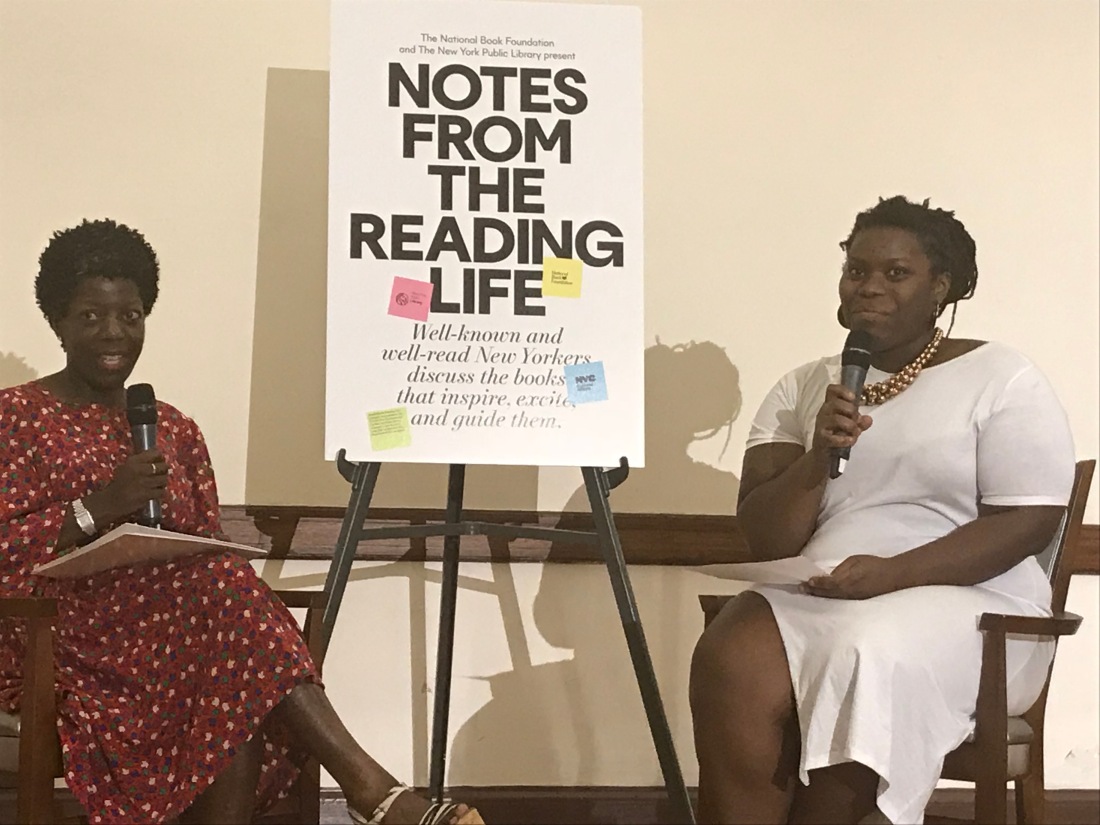
Last Friday evening, I was first in line at the Harry Belafonte Library in Harlem to listen to the first in a series of talks co-presented by the National Book Foundation and the New York Public Library called Notes from the Reading Life featuring two Black women I admire: Thelma Golden and Kaitlyn Greenidge.
Golden has been at the helm of The Studio Museum in Harlem for 17 years, and she is currently serving as Director and Chief Curator. Greenidge is the author of We Love You, Charlie Freeman (and, it must be said, has one of the best Twitter TLs in the game.)
It’s rare that I get to hear two Black women engage in a loving and wide-ranging conversation that centers a Black woman’s engagement with books and reading merely for fun. So of course, I took notes.
The value of attending talks like this is to remember how rejuvenating it is when Black women frame conversation and also how we view story versus how story is framed for us — and frankly, against us. Often, when others are charged with framing aesthetic conversation, in particular, they center themselves and put us at the margins.
For an artist, this makes it hard to invoke the imagination because you never spend any time in a rich, creative or fertile environment. But being in the audience for Golden and Greenidge was one such experience for me.
Golden started by saying she was excited about the renaming of the NYPL branch on 115th street where the talk was held on behalf of Harry Belafonte, and, “to walk in and see the photo of Langston Hughes, to be here in the Alvin Ailey community room — all cultural giants.” And then she underscored that it’s the work of the Studio Museum of Harlem to elevate such giants in ways that often aren’t.
Greenidge started by asking Golden who made her a reader. And Golden mentioned her father, who was born in Harlem, and worked in the building, actually, where the Studio Museum, now is, when it was a bank.
“Arthur Golden was a reader who loved literature. My mother was from Brooklyn. New Yorkers will understand this; when they got married, they compromised and moved to Queens,” she said, to my delight. (It’s hard enough trying to date someone from a different borough I can’t even imagine trying to marry one. Different blog for a different day.)
She described growing up in Queens in a house with what was then known as a den full of books from her father’s library, but no television. He was deeply interested in literature and encouraged her to read.
Her theory is that because she was born in 1965, when he was 40 — considered old for a parent in those days — he let her read anything. Or as she puts it, “We had a relationship to books that was very wide.”
She read both A Tree Grows in Brooklyn and Paule Marshall’s Brown Girl, Brownstones when she was as young as 11, noting with laughter that her mother was very early trying to recruit her to view Brooklyn as the best borough. She read the latter again when she was 16 and again when she was older.
Her mother was from Barbados and grew up in Brooklyn with her siblings in a house purchased by her family in 1926 where some of her relatives still live.
“It wasn’t until I re-read Brown Girl, Brownstones that I really understood my mother and her journey and her quirks,” Golden said. You can think you know about the life of your mother, that it may resemble something that you read in a work of fiction that feels real.
But by reading Marshall’s work, Golden said, “They were all of a sudden actual facts. I asked her later in life, ‘Why did you give me that book?’ She said, ‘I wanted you to understand me better.'”
I don’t imagine I’ll have children of my own, but if that ends up being the path, I imagine this would be such a profound experience…to learn more about the inner life of your mother this way, both in person but also via a book that she loves and gifts to you.
Greenidge said, “I think what you’re describing is the magic of reading for kids. Children can be kind of narcissistic. We think the first time we feel something is the first time its happened.” Golden agreed and expounded on the idea of thinking her experiences were singular and the power of learning they were connected to history.
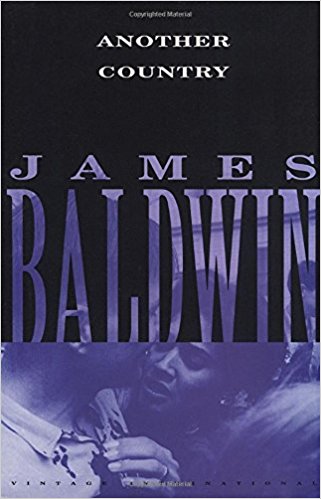
Which brought us to James Baldwin’s Another Country. (At this point, I admittedly got distracted from the bane of my existence and my lifeline to the world, my smartphone, but I believe I heard Golden said she took a seminar at Smith with James Baldwin when she was student) and he asked her who her favorite character in the novel was. And she said Ida, Rufus’ sister.
Baldwin’s 1962 novel explores the complex life and sexuality of Rufus Scott.
I came to quickly enough to hear this gem, “My father went to the same middle school as James Baldwin, and Countee Cullen was their teacher.” (!!)
I was so enamored of this because I have such generational envy for what Harlem was like during the time when Baldwin lived. I know I’m romanticizing it and it was probably as problematic and complex for Black women to navigate emotionally and artistically as every other space is today. But the richness, the products of the period, suggest that the magic had a power that provided at least some possibilities for transcendence. And that’s the part I love and very selfishly wish was still present/actively cultivated for Black writers, at least.
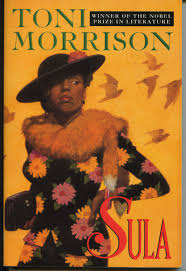
Walker is an example of what it means to be an exceptional living Black woman writer, much like Toni Morrison, the author of another Golden favorite, Sula.
Of all the luscious Morrison books I’ve had the privilege of savoring, Sula falls, for me, just slightly below the Scriptural supremacy and spiritual force in Song of Solomon. But Golden described Sula so poetically, noting that she loved reading it because it was “layered with all the things I know about the world.”
“I don’t want to make somebody else. I want to make myself.” Amen, Sula.
Golden said she never read The Bluest Eye, which is a statement I actually love. Although I did read it, and found that Pecola Breedlove’s envy of blond hair and blue eyes was actually quite resonant for me, I love a contrarian and this assertion (among others) gave me a sense of that streak in Golden. The spectacle of little black girls who hate themselves because they are not white is actually also not the healthiest or most edifying experience for young black girls, so I was happy for Golden, and envious, too, wanting to experience this vicarious liberation from thinking of my beauty in relationship to whiteness and having that praised even from the very beginning — of a life or of a career.
Still, Morrison is not only America’s greatest living novelist, but she is the originator of our current Black literary renaissance, insofar as writers like myself, readers like Golden and almost every Black woman writer I’ve ever known or met who perseveres through self-doubt and the other perils of the writing life have uttered and taken to heart Morrison’s words, “If there’s a book you want to read, but it hasn’t been written yet, then you must write it.”
“That informs my work as a curator, to provide room for so many artists of African descent, to make art to allow us into space,” Golden said. “Toni Morrison is, to me, a rigorous example of Black genius.”
The last of Golden’s favorite books she discussed with Greenidge were The Collected Autobiographies by Maya Angelou and Americanah by Chimamanda Ngozi Adichie.
It was nice to be reminded of Maya’s habit of keeping a hotel room in any city in which she visited, so that she could write without interruption, accompanied only with “two books, a bottle of sloe gin and a deck of cards,” Greenidge informed us.
Angelou’s work in memoir was the first instance of showing Golden, she said, “the stories we create of ourselves…the importance of the creation of our artistic selves. We get to make for ourselves a world that doesn’t make space for us.”
As for Americanah, Golden’s husband is Nigerian and lives in London. Along with the work that she leads and is invested in, she’s tied to Africa, then, “not just in the past, but also art, culture and ideas in the present.”
As a result, she said that she “felt profoundly seen,” by Americanah, in the same way she did by Zadie Smith’s On Beauty. “It’s what happens when outsiders look at your culture.”
Other notable aspects of the talk included the following:
When Greenidge asked Golden which book she would give to a small child if she had to, she mentioned Whistle for Willie by Ezra Jack Keats.
She recalled someone giving her a copy of Invisible Man and finding it formative. She mentioned that someone should write a biography of Ralph Ellison’s wife, Fannie Ellison — do your thing, Internet!
Since we were in Harlem, and Golden had made note of the pictures of Langston Hughes and other cultural giants of the neighborhood earlier, Greenidge mentioned the I, Too Arts Collective the literary nonprofit helmed by author Renee Watson that has continued to do God’s work preserving Langston Hughes’ brownstone and has transformed it into a site of community for writers of color. “I wish it had not been so hard. I wish it had been a natural act. So much of history is not in buildings. It’s in the neighborhood. I hope that while we continue to move toward our future, that we can continue to honor our past. This is a community with a deep and rich history. This wasn’t just a setting for great work. This neighborhood created opportunity for artists. I hope we can preserve that in ways that people will be able to touch and feel in the future.”
You should go to some of the future Notes from the Reading Life events if you’re in New York or if you’ll be in town for one that’s upcoming. Tonight, it’s a conversation between Tim Gunn & Min Lee. I’m so sad to say I’ll miss the conversation (in the Bronx!) between Desus Nice & Rebecca Carroll at the Bronx Library Center on June 15th — but you shouldn’t.
I wrote about the Bronx Book Festival for the Village Voice and how the Bronx is having a resurgence of the book scene with the work and leadership of Saraceia J. Fennell and Noelle Santos, but there were a couple of quotes from one of the panels that I wanted to add in the spirit of Throwback Thursday that didn’t fit in the context of the story that I wanted to put here.
“In this nation, the women’s movement was started by Black women. If we’re going to create a movement in this country that’s inclusive, we have to acknowledge indigenous women who get erased, and Black women specifically. That’s still not understood, which is why we struggle with solidarity. If your movement doesn’t lift all boats, we’re not going to win.” — Sofia Quintero
“A large part of resistance is rejecting rejection…Part of the feminist project, especially in the arts, is a more liberating masculinity. It’s not that they don’t have privilege. Our feminism has to be one that heals and liberates everyone. We have to inform the brothers, but the brothers gotta do their own labor.” — Roya Marsh is one of the poets in the beautiful Black Girl Magic anthology, which you can buy here.
I went a little overboard, but it was the first Bronx Book Festival, so what can I say? These are all Bronx authors, some books I bought from The Lit. Bar tent and a few that were given to attendees, plus my press pass which I will cherish for life.
Trigger warning for the trauma of homelessness and mental illness
This beautiful New York Times profile of Nakesha Williams, a Williams College graduate who died homeless on the street at the age of 46, was the first thing I read yesterday. My friend Amy sent it to me, saying it reminded her of the story I tell in my memoir, The Beautiful Darkness. Maybe I should have waited, knowing that, but I’m glad I didn’t.
I have written about the poverty and homelessness I experienced as a child — mostly as a result of my mother’s untreated bipolar and borderline personality disorders — mainly because for much of my life, and much of my mother’s, no one else wrote these stories. I imagined that I was alone in my experience. That made it all the more painful, lonely and difficult.
I had books, and writing, and education. I have been lucky, I have worked extremely hard, I have been writing my heart out for so many years. And yet, it feels like reading this story was reading my story, or the possibility of a future to my story yet to come. That is the legacy of experiencing the trauma of homelessness or being exposed to these adverse childhood experiences as a kid. They never leave you.
There are so many parallels between Nakesha and I, but more between her and my mother. We both love books and reading, we both sang in gospel choirs. I nearly went to Williams instead of Vassar.
I chose the latter because when my mother was still alive, I decided on college the way I decided on everything else: Based on its proximity to her. Attending Vassar meant I could get to Grand Central more quickly (and for less money) in case Marguerite had a manic episode. In case she ended up in a psych ward. In case she got evicted again, as she did my sophomore year, and I needed to drop everything and go to where she was and try to fix things that were beyond my years to fix.
Nakesha’s story is my worst fear for my life, though I am far from the little girl who had to watch my mother refuse medication, or fail to pay the water bill or negotiate not having enough money to buy food for days any more. Grace has kept me — along with writing — sane. But the kind of trauma that mental illness and then homelessness can inflict will never leave my body. It is a battle scar. A deep wound I am learning to befriend.
When I read Nakesha’s story, I was reading about my mother again. I kept, and still have, the lipstick imprinted letters of my mother, along with the emails that she sent me (like Nakesha) from libraries in New York and Philly. Because her life had so much potential, had so much life and joy and darkness that also taught me about beauty, I included some of these emails in my book.
At the core of this story about Nakesha, though, is the mystery of how the love, attention, resources poured out from others somehow failed to reach her. This is the part that resonated with me about the unknowables on the journey with someone who is mentally ill. This was my greatest heartbreak, the title of this blog, a line from the story about the realities of there not being a simple solution to the complex realities of homelessness and in particular, not a simple answer to the question of what happened to Nakesha.
There is no accounting for the demons, the silences, that can overtake us. All we can do is try to avoid them, try to keep going, try not to let them take us under. But maybe this story was so deeply moving for me and disturbing because this means there will continue to be many people like her and many women like my mother, and not as many people like me, who can profess, with not just a little bit of remaining survivor’s guilt, that we were spared somehow.
Until recently, my relationship to rejection has always been extreme. The first time I received a long, thoughtful rejection letter from an agent, I stopped writing anything creative for years. I have always been good at giving over the power of affirmation to other people, which is certainly not the kind of thing you want to be good at.
Some time in 2007, my friend and mentor Evelyn C. White mentioned Hedgebrook to me. She called it the gold standard of writing residencies. My heart yearned for a place where I could be with my writing that was a gold standard by Evelyn’s description — she is not prone to hyperbole.
So I went after the residency the way I go after everything: With my whole heart. I applied more than five times. I applied so much that when I first applied back in 2008, it was before Hedgebrook went to an online application system. I vividly remember printing and copying multiple double-sided copies, sending the thick envelope along with my hopes and dreams tucked inside.
I should mention that every time I applied, I was in the middle of doing all the things that make up a life: I was working full-time at a local newspaper, writing/editing/revising/printing/sending queries to agents for my memoir, A Beautiful Darkness: A Handbook for Orphans, enrolled in library school, freelancing, not sleeping, falling in love, falling out of love, running marathons, planting gardens, adopting a rescue dog.
The first note I received from Hedgebrook was a letter that arrived by snail mail, informing me that I wasn’t selected this time. In the immediate, I remember grunting and thinking, “There won’t be a next time, but oh, well.”
I was disappointed, but ready to move on and never apply again. Thankfully, Evelyn had other plans.
“I can’t think of one woman I know who was accepted the first time,” Evelyn wrote to me when I bemoaned facing rejection again. I soak up the wisdom of others like a sponge, and Evelyn is excellent and generous at sharing it. “The sooner you understand any and all ‘rejections’ as blessings, the better off you’ll be.”
She went on to share with me that when you ask for something, you have to be ready to receive it. And for all the reasons I mentioned above – from my insecurities as a writer to the chaotic overwork that I used to love to be at the center of – I was not ready for a good long while to receive what it would mean to be at a place like Hedgebrook. Which is why each time I applied and the rejection came, as the years passed, a sense of inevitability began to sink in until I forgot about what I thought I should feel and truly began to feel like I wanted a place to just be with my work for a good stretch of time to find out what I could make if I could only focus.
Almost nine years after my first application to Hedgebrook, when I got news I had been accepted — one of 40 women writers out of an applicant pool of more than 1700 — I was unable to contain my joy. Of course, I told Evelyn, who was thrilled that I had not given up. I also shared the news with stacia l. brown, who had encouraged me to try one last time.
If not for their encouragement, for their reminders of rejection as a blessing, I would have missed out on what greeted me at Hedgebrook. The women who organize, manage and nurture both the farm itself and the women writers who visit have every reason to pride themselves on what they call their radical hospitality. The goal of our Hedgebrook residency was centered around doing what we needed to do for ourselves for the time we were there.
Not surprisingly, for me, that meant sleeping in. Resetting my relationship with my phone, because I didn’t have reliable service in my cottage or elsewhere on the island, really. And writing — longhand, in notebooks that I’ve hoarded during back-to-school sales and on my laptop when I just didn’t have the patience, or my characters didn’t, to take my time.
Deer Lagoon.
I learned to get a wood fire going. I realized that I didn’t need to check my email every 10 minutes or watch my Twitter timeline relentlessly – that, in fact, not doing these things could lead to a lot of productivity that I may have previously been afraid of. After all, if you don’t write something, you don’t have to worry about what happens to it next.
Maybe because producing was the only goal, I wrote more than I could have imagined. I almost finished the sequel to my novella, All City. I wrote a handful of essays about the dismissal of black American women writers, reflections on being an Obama appointee, thoughts on writing. I finished the draft of a multigenerational story of Bronx girls and women who each try to live out the dreams of their foremothers, with varying degrees of success. And then, out of nowhere, a novel that I started back in 2011, popped up with a notion of what it wanted to become, so I wrote that.
Every other day, in the afternoon, I walked or jogged to Deer Lagoon. To marvel at the trees. To admire the beautiful birds. To see if Mount Rainier was visible that day. To watch the water: still or rippling in brutal waves, the ducks just riding with all of it.
Useless Bay.
I’d sit on a gray plastic bench and look out at what I called the ocean. Technically, it’s a bay. But it was exquisite. I thought of Isak Dinesen’s quote: “The cure for anything is salt water: tears, sweat or the sea.”
Not only did I write dispatches to Evelyn from Hedgebrook, I also got to meet and share work with other amazing women writers who I came to love and respect. We had incredibly affirming discussions about how to keep ourselves and our work safe in a world that remains hostile to us and does not seem to be getting more loving. We read each others’ work, astounded and appreciative of the talent in the room.
We played Scrabble. We ate our fill of delicious, lovingly prepared meals. We walked in the dark night, glancing at the stars in wonder, our flashlights lighting a path for us back to our temporary homes.
Nine years, five, even two years ago, I would not have known how to settle into a place like Hedgebrook. It was true: Rejection had been a blessing; it had delayed my trip there until I was ready for it. I won’t go so far as to say that I’m looking forward to hearing “no” more often, but now when I do, I am aware that it doesn’t mean no forever. It just means not yet, not now.
I recently moved back to New York after being away for a little while, and as I get reacquainted with home, I’ve also been looking through the archives to assess how much has changed and how much remains the same.
When I search my memory for a time and space in which I felt completely at ease, utterly loved, comfortable and surrounded by serenity, I cannot conjure a single moment or geographical location. When people talk about home to me, a single woman, it is as if they are talking about marital love. They are talking about a space I have always yearned for but never found. They might as well be talking about their common experience in outer space.
But I think I know because of how I feel when I write, or when I run, or when I’m reading. These are things that keep my nervous heart from beating out of my chest when I’m afraid and anxious and I have insomnia. Or when I’m making myself dinner, and chopping garlic just so, and cutting up onions or slicing mushrooms. Or when I hear a song that reaffirms God’s love for me, or reminds me that my love really had chosen me just for me and we would be together forever until we weren’t. Home to me is something I still don’t quite understand except when I feel close to it. — From the Tierra/Home issue of Aster(ix Journal
I love the hibernation of winter and the renewal of spring. The only thing I really enjoy about summer is that fall is what follows – a season of harvest and brilliant color. So it seems fitting to consider that I’m moving into another season in my life that seems parallel to the promises of fall.
“The First-Person Industrial Complex” was the first essay I read that confirmed a shift in the nature of personal writing online that got me thinking about the frequency with which I used to write and publish more or less since the late 1990s:
First-person writing has long been the Internet’s native voice. As long as there have been bloggers, there have been young people scraping their interior lives in order to convert the rawest bits into copy. But we are currently in the midst of an unprecedented moment in the online first-person boom. The rise of the unreported hot take, that much-maligned instant spin on the news of the day, has meant that editors are constantly searching for writers with any claim to expertise on a topic to elevate their pieces above the swarm. First-person essays have become the easiest way for editors to stake out some small corner of a news story and assert an on-the-ground primacy without paying for reporting.
Laura Bennett goes on to write about the absence of self-awareness in the latest crop of personal essays and the marketing/commodification of sensational stories without regard for the impact such self-exposure has on mainly white women writers. It was once true, at least, that there was potential for an interesting, well-written story to become visible, find its audience and perhaps secure the interest of an agent. At the very least, writers and editors once said that the other side of one’s brand — the beloved platform — could expand with persistence, high quality work and consistency. But as my friend Stacia wrote in her excellent essay, “The Personal Essay Economy Offers Fewer Rewards for Black Women” at The New Republic:
Easy, daily access to writers’ most devastating experiences is decreasing the demand for full-length memoirs from the online personal essayist. But even when the stakes are lower and a writer is simply looking to raise her professional profile or earn extra money, personal essays aren’t always an advisable route. After a few days, discussion about those pieces wanes and after one bill payment, the money is a memory.
Taken together, these pieces were a codification of a season of transition for me that has stretched out over months and if I’m honest with myself, probably for more than a year. I love connecting with my audience, but I don’t want to do so in a way that feels compartmentalized or wedged into a news cycle.
There was a time when I needed to write about being a happy single woman in the face of an onslaught of media portrayals that made it seem like successful Black women would be #foreveralone, or to exclusively, daily, write and tell the stories of other people on deadline in order to inure myself to the discipline of getting to the page no matter what. And there was a time when I needed to dive deep into looking at the conversation or lack thereof of a diversity conversation in the most important organ of democracy we have — the media — in order to place a coda on the profession that I so adored and loved. I have been incredibly blessed to make a living as a writer and to complete and publish two books on my own terms, without selling myself or anyone else out in the process.
After the media book was published, I found myself in desperate need of time to do anything but write. I had only experienced that a couple of times before, after a loss that wounded me so deeply I was afraid to write about it. Writing has been the main organizing principle in my universe for my entire life.
But I slipped into a different season partially from fatigue and partly out of choice. I wanted to catch up with my friends and attend to the parts of my life that I had long left in limbo. I wanted to read everything in sight that I had zero to do with journalism.
As a writer in these times, I feel often as though I am the awkward sixth grader I was in the Bronx when the girls got out the double dutch rope and I could hear the skipping of the hard plastic against the concrete ticking on a rhythm like a clock. I would make motions with my arm like I was about to jump in at any moment, but I was always out of sync with the rhythm. It was too fast for me, or it was too slow. Ultimately, the pace didn’t matter so much as the reality that I never found an easy way to glide between the ropes.
For as long as I can remember, I have followed James Baldwin’s advice about writing what I knew. It began with an essay to A Better Chance when I was in high school. I won an award for that essay which offered me affirmation to keep writing and aspiring to publication that I didn’t even know I needed. For more than 20 years, I have mined my personal experiences in order to bring more resonance to universal truths. Now it’s time for me to do a different kind of work.
This is not a goodbye post so much as it is my way of explaining the stretches of silence ahead. I will never stop being a writer or thinking like a writer, even though I no longer write for public consumption every day. Blogging and writing have been anchors for me as I continue to grieve my parents and heal from life’s adversities. I have benefited so much from knowing that my experiences are not as unusual or uncommon as I first thought and it has been my privilege to help make life a little easier for those who said they were inspired by my example.
I know I’ll be back to blog and write more at some point. During this season of my life, though, my intention is to read more, to devote myself to completely to my new job and to rediscover the joy of writing and connection that brought me to the page in the first place. I intend to speak at college campuses through my partnership with Bitch Media and offer writing/communications workshops, so you can connect with my work with Bitch on Campus here.
Thank you for reading and responding to my work, to my presence, and for knowing my heart and sharing so much of this rich journey with me already. There will be more to come eventually. Until then, take good care of your heart. Enjoy all the seasons life offers you.


: I got a sneak peek at this one (Oh, the rewards of being a book nerd are few, but feel so enormous sometimes…) since the pub date is next week, on August 14th. I love the color, and adore the mission of We Need Diverse Books, cofounded by the anthology’s editor, novelist Lamar Giles. Here, he’s compiled fresh, and beautiful short stories by a constellation of YA’s strongest voices. I’m not all the way through, but stand-outs so far are “Why I Learned to Cook” by Sara Farizan, (whose third novel, Here to Stay
, is incredibly timely and comes out this fall) Walter Dean Myers’ “Tags,” a one-act play that’s previously never been published and Melinda Lo’s (adorable) “Meet Cute.” I can’t wait to dig into the rest of the collection, especially stories from Daniel Jose Older & Melissa de la Cruz and Nicola Yoon. This is a collection that isn’t to be missed — it fully represents the world in which our youth live, which is what makes it so fresh. There are parts of Eric Gansworth’s “Don’t Pass Me By,” that are laugh out loud funny, and other moments of regular ‘ol teen angst that show that stories in own voices are also universal stories of kids who are just kids. The book is a relief.


: One of the things that’s inspiring about talking to writers who write for a young audience and particularly for children of color (who often don’t see themselves reflected in literature, so get turned away from books at a young age) is that they often have such an interesting path to get to the page. Barbara Binns is one such author — and I interviewed her for Kirkus about her first middle-grade novel to be published by a large press, Courage. After other careers, Binns took a brief foray into romance writing for adults before she learned that the Black boys, in particular, are often resistant or struggling readers because no one really writes for them. She’s written to try and fill the gap for years, and Courage is another, larger step in that effort. It’s the story of 12-year-old T’Shawn, who is navigating the loss of a parent, the homecoming of a formerly incarcerated older brother, a crush and being the newest addition to his swimming team.





 Maybe I should have waited, knowing that, but I’m glad I didn’t.


 Joshunda Sanders