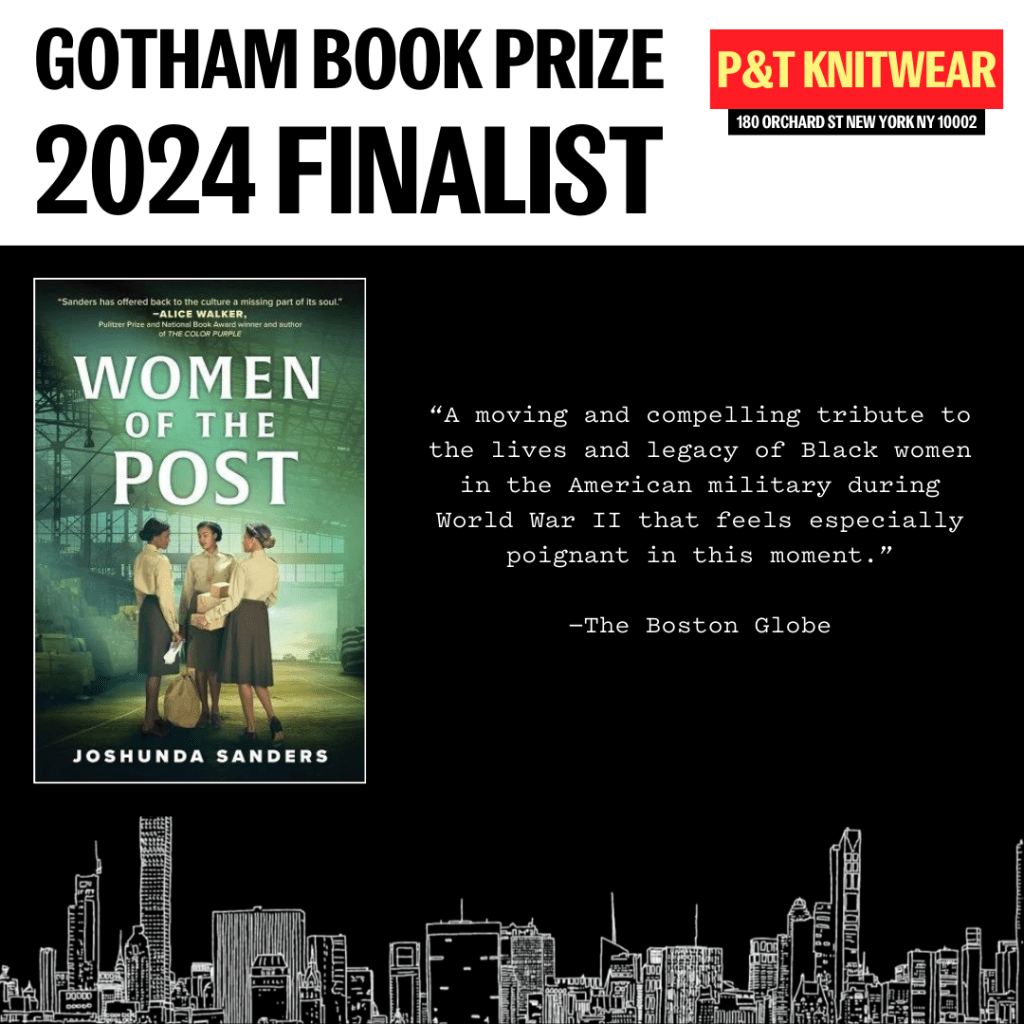
Thank you for your ongoing patience with me as I navigate a full and busy life. I’ve been gushing all over social media about the news that Women of the Postis a 2024 Gotham Book Prize finalist. The winner will be publicly announced next week, but in the meantime, here’s a little history about the prize, and why it’s such an honor to even be nominated.
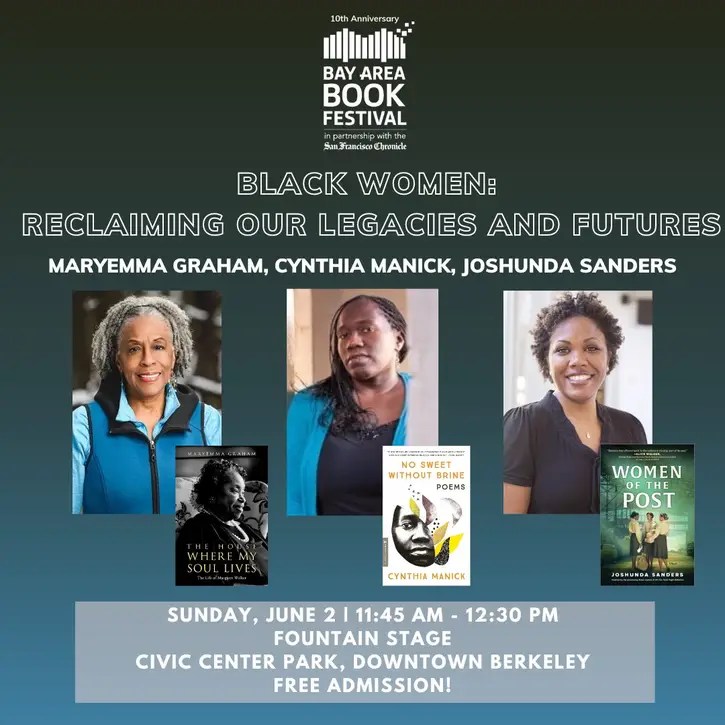
And I would be remiss not to mention that I’m headed back to the Bay Area for the 10th Anniversary of the Bay Area Book Festival to speak on a panel with some brilliant Black women, which is basically my favorite thing to do in life. Come visit if you’re at the festival!
Finally, in case I haven’t mentioned it enough, I spend most of any imagined free time I have writing reviews and other things at my Substack, Black Book Stacks. Here’s what I thought about Great Expectations by Vinson Cunningham, and what I’m reading now.
I had the somewhat frightening (intimidating?) experience of receiving Toni Morrison’s collection of essays and lectures, The Source of Self-Regard before its publication in 2019. [Here is the review I wrote for the smart folks at Bitch Media].
Unlike Ms. Morrison’s fiction, which I sometimes just did not understand (A Mercy, Paradise) or which I loved without really being able to explain why (Song of Solomon, Beloved) or which humored me the way a good friend does (Sula !), her nonfiction was a true education. It educated me by her example, in terms of her biography, and it educated me the way all reading does — through its structure, the way it had been nurtured and considered and through what was not there.
February 18th would have been Toni Morrison’s 90th birthday, and I’ve been thinking about her a lot, celebrating and commemorating her gifts to me and to all of us through her rigorous writing and creativity. For many Black writers, it is not only her discipline and vision that we admire, it is how she earned the nickname Mother Toni, which is a nod to her guidance to each of us as we have sought to make our way on the perilous journey that is writing and editing and revising and publishing.
Her wisdom is so much a part of my practice that I don’t even remember when I started telling others. Whenever I speak to young writers, I use her example. I remind them that Mother Toni had a day job into her 40s, that she woke up at 4 a.m. before said day job to write while her babies were asleep. I have admired this level of discipline all my life, and while I have different reasons for engaging it, it has been essential to my writing practice all the same. And at the same time, she let us know that we are the people that we are, we are not the work we do, which is essential.
She is also known for giving entire generations of Black writers permission to write the stories that do not yet exist, saying if there is a book you want to read that does not yet exist, you must be the one to write it (this is a paraphrase). I can’t imagine how many books we would not have were it not for this advice, for her presence, for her work and her inspiration.
I rarely have occasion to do such deep research when I plan to write about a writer anymore, but I sensed that Ms. Morrison would not be with us much longer. So, in the before times, I took the liberty of luxuriating in the reference room at the Schomburg. I’ve aggregated below my notes on Ms. Morrison’s life, because these were the thoughts I had that didn’t make it into publication anywhere, and didn’t really fit in any kind of linear place; they also sum up why, aside from her talent, discipline and brilliance, I never felt anything I wrote about Ms. Morrison could really do her justice. I think it was important for me to put this here in celebration of her birthday in part because of how valuable looking at the contours of her life has been for my confidence as a writer. In a collection of her quotes, The Measure of Our Lives, she is quoted as having said: “If writing is thinking and discovery and selection and order and meaning, it is also awe and reverence and mystery and magic.” One of her many talents was showing us all that writing could do and be if we were brave and persistent enough to meet it.
Writing African American Women: An Encyclopedia of Literature by and About Women of Color, Toni Morrison entry, pages 636 – 640
Born 1931 in Lorain, Ohio
Chloe Anthony Wofford
Shortened her name to an abbreviation of her middle name purportedly (and with regret) because no one could pronounce Chloe. The theme of claiming one’s name emerged –noted in entry – in her fiction – from third novel, Song of Solomon (1977) to Tar Baby, her fourth ( 1981)
Graduated from Howard in 1953, English Major, classics minor
Master’s from Cornell in 1955 – her thesis was on suicide in the work of William Faulkner and Virginia Woolf.
She taught for two years at Texas Southern University in Houston, then returned to Howard as a faculty member.
She married Jamaican architect Harold Morrison in 1958
They had two sons together, Harold Ford and Slade Kevin. They divorced in 1964.
She moved w/sons to Syracuse where she worked as Random House textbook editor. Began writing at night as therapy for her loneliness when her sons were in bed.
Transferred to NYC in 1967 to headquarters for Random House editing acclaimed black women writers like Gayl Jones and Toni Cade Bambara.
She kept teaching – at SUNY Purchase 1971-72, Yale, 1976-77. She left Random House in 1983; Appointed Albert Schweitzer chair at SUNY Albany in 1984. Stayed until 1989, when Princeton appointed her Robert F. Goheen Professor of the Council of the Humanities at Princeton University. (Note from me: That means 2019 marked the 30th anniversary of Toni Morrison becoming the first Black woman to hold a chair at an ivy league university.)
She’s taught at a number of prestigious colleges and universities including Bard, Rutgers & Princeton, she delivered the Clark Lectures at Trinity College, Cambridge, and the Massey Lectures at Harvard University. She’s also received a number of honorary degrees including from Brown, Columbia, Dartmouth, Georgetown, Harvard, and Yale. “Although Morrison is perhaps best known for her fiction, she has written successfully in several other genres as well, including drama, children’s and YA, short stories and criticism.”
Won the Pulitzer in 1988, the Nobel in 1993 – the first African American and only the 8th woman to ever receive the prize. Her body of work began with the short story that grew into the novel that became The Bluest Eye, work that “established her recurrent concern with the meaning and place of black female identity.”
Playing in the Dark: Whiteness in the Literary Imagination (1992)
Two collections of critical essays (this would now be three, with the Origins of others, I think)
Race-ing Justice, Engendering Power: Essays on Anita Hill, Clarence Thomas, and the Construction of Social Reality (1992)
Birth of a Nation’hood: Gaze, Script and Spectacle in the O.J. Simpson Case (1997)
Icons of African American Literature
266-298
“The search for love and identity runs through almost everything I write,” (Taylor-Guthrie 96) Page 269
Page 273
“For Morrison, narrative is necessary. It is a psychic process that enables humanity to conceive and satisfy its fundamental need for coherence and understanding. The model of psychoanalysis throws light on the progress of characters looking for themselves as well as on the peculiar link the narrative creates between them. Such a relationship, reflected in the reciprocal link between narrator and reader, finds its model in the relationship shared by the analyst and its patient. The narrative of the one is stimulated by the patient listening of the other. Wisdom, if it emerges from such relation, is the work of the past, thanks to the traces left by memory or dream. In both cases, the aim is to discover the power of the desire that fuels the story, its origins, in order to master the process that, by elucidating the past, will lead to maturity. For the American black community, whose past is more easily read on the mutilated bodies or in the unfathomable eyes than in libraries, whose present is most often synonymous with alienation, telling stories is above all the way to refigure and to understand, to accept and to master a dismembered history made of holes and omissions.”
Toni Morrison: An Annotated Bibliography, David L. Middleton, 1987
From “Good, Bad, Neutral Black,” NYT Mag, 2 May, 1971, Vol. 7, p. 3 ff
“TM assesses books designed for black children…That which is truly good becomes universal: “Like so much that is meant for black folks, like so much that black people do for themselves, it ends up in the marrow of the culture at large.”
Page 26
“In time, writing became a way to ‘order my experience.’
“It’s always seemed to me that black people’s grace has been with what they do with language.”
I’m delighted to share a Q&A with School Library Connection as its December Author of the Month. I got to share my love of The Bronx, the story behind Ava Murray’s name in the I Can Write the World series and more about faith, solitude and writing across genres. I hope you’ll check it out. You can read the whole thing here, but I’ve included an excerpt below:
I love the way Ava’s mother uses the window frame to explain how journalists “frame” stories. It seems like so much of our news these days is framed to fit a particular narrative, rather than to express the truth. Why do you think this started to happen, and what can be done to fix it?
Thank you; it wasn’t until I had the great honor of sitting on a panel at the 2019 Bologna Children’s Book Fair with Rudine Sims Bishop, whose beautiful description of books as windows preceded Kim’s description in the book, that I thought more about the significance of how we talk to children (or don’t talk to them) about how stories are framed, or shaped.
I think that it’s fairly recent in society—adjacent and aligned with the rise of social media—that everyone sort of considers themselves a journalist. When you think about it, journalists are witnesses, people who report what they see. So in a way, everybody’s right. What everyone doesn’t necessarily have, though, are the ethics that go along with what professional news gatherers have—this inclination to shine a light on injustice and unfairness. Most news reporters get into the business (and it is increasingly considered mainly a business) with the aims of comforting the afflicted and afflicting the comfortable. But I think the reason why news more often resembles propaganda now has to do with a kind of commodification of truth and certainly of news. Integrity or nobility are less emphasized than they used to be because most media moguls are looking for revenue to survive in an environment where no one thinks they need an intermediary for news.
One thing I think all of us could do more of is to consider how powerful our platforms are, whether you think you have one or not. All of us who write, for example, have presences online. How can we use that to help others share their opinions or their stories more mindfully? Sometimes it’s as simple as asking these questions, which I love and did not originate with me: “Does it need to be said? Does it need to be said now? Does it need to be said by me?” The other thing is if we are all journalists, now, it shouldn’t just be when it’s comfortable or cute, but all the time. Ask more difficult questions. Who is the source of this information? Are they lying to me about their objectivity? Why do I believe them? Why should I believe them? When in doubt, find your own credible sources and go with that.
Little Ray knows the Bronx better than anyone. He has been a proud train operator for many years. But while the Bronx has always held memories of his mother, Gloria, and his daughter, Lorraine, it also reminds him of the pain of losing the love of his life.
Jasmine Castro was the woman of Little Ray’s dreams. Beautiful and brilliant, she wouldn’t let anyone define or control her. But Jasmine does end up being controlled by something: her addiction. Now the vibrant woman Little Ray fell in love with is hardly more than a ghost. Little Ray is determined to raise their daughter on his own.
When Lorraine meets the impulsive street artist Jason, who’s determined to go “all city” with his work, she has to make her own decisions about life and love.
In this ode to the romantics and artists of the world, Joshunda Sanders has crafted a beautiful testament to the power of family. You can buy it here.
My life is now complete with the possibility that Junot Diaz actually may have possibly read my work to come up with this blurb. But even if not, I’m thrilled to have my short story, Sirens, included in this amazing anthology. (You can hear an excerpt at my friend Stacia’s great Bellow series link.)
Here’s more info about the collection, and the amazing company I get to be in:
All about Skin features twenty-seven stories by women writers of color whose short fiction has earned them a range of honors, including John Simon Guggenheim Fellowships, the New York Public Library Young Lions Fiction Award, the Flannery O’Connor Award, and inclusion in the Best American Short Stories and O. Henry anthologies. The prose in this multicultural anthology addresses such themes as racial prejudice, media portrayal of beauty, and family relationships and spans genres from the comic and the surreal to startling realism. It demonstrates the power and range of some of the most exciting women writing short fiction today.
The stories are by American writers Aracelis González Asendorf, Jacqueline Bishop, Glendaliz Camacho, Learkana Chong, Jennine Capó Crucet, Ramola D., Patricia Engel, Amina Gautier, Manjula Menon, ZZ Packer, Princess Joy L. Perry, Toni Margarita Plummer, Emily Raboteau, Ivelisse Rodriguez, Metta Sáma, Joshunda Sanders, Renee Simms, Mecca Jamilah Sullivan, Hope Wabuke, and Ashley Young; Nigerian writers Unoma Azuah and Chinelo Okparanta; and Chinese writer Xu Xi.





 Joshunda Sanders