It was a gift, especially as I teach the Combahee River Collective statement from 1977 and remind folks that we have been fighting for a long time on behalf of our own freedom not just for the sake of ourselves but so that everyone else can be free, too, to write this for Mic.
It’s more convenient for white sports fans, of course, to turn the healthy, justified rage of black bodies gazed upon for money-making sport into a weapon formed against us. But like Colin Kaepernick, Serena is a generosity. She won’t let anyone or anything make her flat or less complex. Like Shirley Chisholm, she is unbought and unbossed. She contains multitudes. She can be both livid and kind, distraught and sweet, within the same hour.
What audacity, what nerve, that black girl with the big hair and the strong legs and amazing body has, showing up, demanding to be seen as human. What a gift, in this time, in this void of regal reckoning for black or brown bodies anywhere but fictitious worlds, that we get to witness Serena’s humanity unfurl, unedited.
This summer was the second in a row I got to teach writing with one of my favorite groups on earth, Young Women Empowered. Y-WE Write has educated me about what it means to foster brave space with young people, how to be vulnerable as a creator and writer and teacher, how to find my process through explaining it, which parts of my story are most beneficial to share with this generation of young writers now. It has been held at Whidbey Institute, on Whidbey Island, which is also home to the writer’s residency Hedgebrook. For this reason, the Pacific Northwest has become my healing sanctuary, place where I have been shielded from hard things in recent years.
So it was with a heavy, heaving heart that I peeked at the news to take note of Aretha Franklin dying while I was there. I got there almost two weeks ago Sunday, and spent the full week waking in the morning to some of my favorite songs, trying to articulate what she meant to my life. Before she died that Thursday, one of my students asked a question about how you keep from feeling like so many people are writing about something or someone that anything you write might be inferior — and I could hear their voice in my head as I read and bookmarked long articles and obituaries for Aretha, wondering what, if anything there was left to say.
When I was done showing up for the young women I came there to teach, as we mourned and celebrated Aretha together; after I cried leaving them and they offered me such sweet, adoring words of affirmation and I flew to Newark on a red-eye, landed, drove 2.5 hours to the middle of Pennsylvania for a two-day workshop to discover a really significant shift to my work in progress that will make it soar in a way that I could have never found on my own (Thank you Highlights Foundation!!) drove 2.5 hours back to New York City after being away from home 10 days, attended an all-day faculty orientation the following day that left me with just enough mental energy to finish writing what I needed to, I was able to write this piece about Aretha Franklin and what she means to me, and what I believe she means for Black women, in particular. It was important to write not because I felt like I needed to write about Aretha because other people were writing about Aretha, but because I wanted to read work about Aretha that centered what I know other Black women would want to read and see lifted up about the Queen of Soul as we prepare for her homegoing.
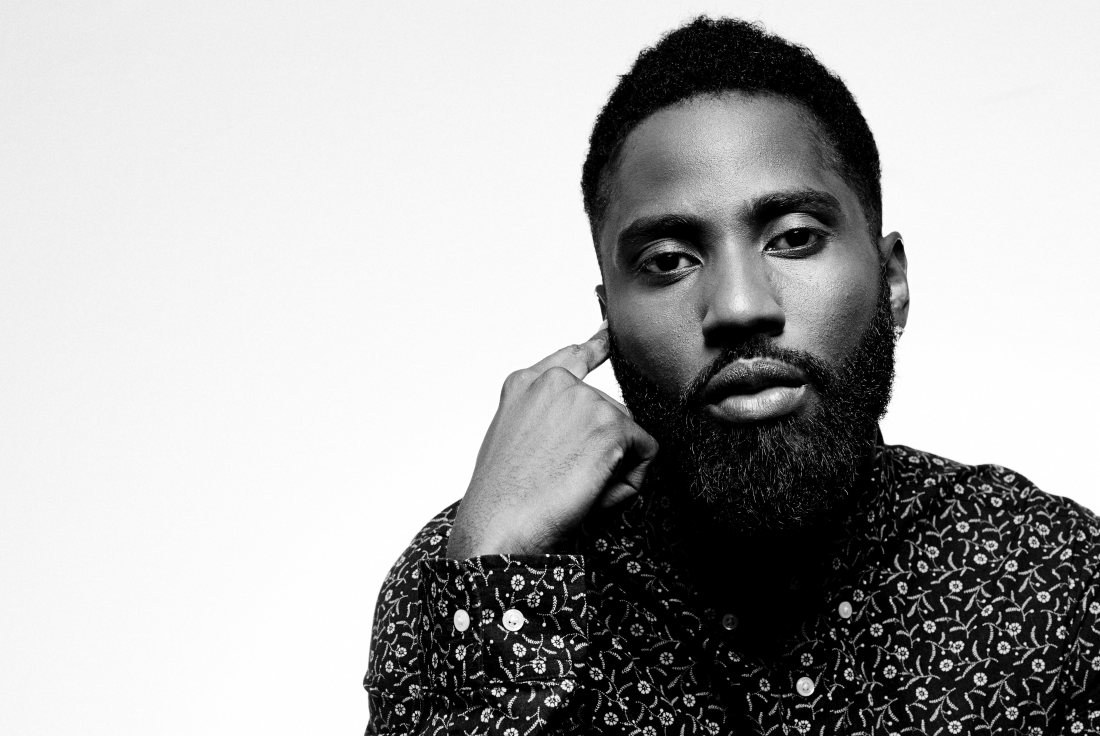
I loved talking about acting and craft with John David Washington for Backstage magazine in what I hope will be the first of many cover stories. He’s humble and wise, and I especially appreciate how thoughtful he is regarding process — how important it is to honor yours as an artist. It’s true for actors and true for writers. He’s also excellent as the leading man coming into his own in Black KkKlansman which is one of Spike Lee’s best.
John David Washington has been eyeing the big leagues for years.
First, it was the NFL. At Morehouse College, he received a full athletic scholarship and set records as a running back. Later, he would play for the United Football League and excel as an undrafted free agent for the then–St. Louis Rams. But even after two years of training with the pros, come Sunday game time, he’d still never touched the field. He had the chops, but never managed to move off the practice squad to reach the star-making level of a pro.
To be clear, Washington is not the kind of person who craves undue credit. He’s humble, driven, and, above all, enjoys doing the work. So when an Achilles tendon injury during a New York Giants tryout put an end to his football career—after a number of already ego-crushing rejections from the NFL—Washington decided to take his work ethic elsewhere. Surgery was an option, but the time out of commission had him on the brink of depression, and he had already cleared space in his mind for another industry: Hollywood. After this summer, it seems the switch will have paid off; Washington is on the path to being a bona fide star.
I’ve been reading some of the beautiful and important memoirs of the Movement for Black Lives that are forthcoming from Black feminists like Barbara Ransby & Charlene Carruthers as well as screening Rest in Power: The Trayvon Martin story, which begins airing tonight on the Paramount Network, since the end of June. I wrote about the docuseries, as well as the books, for the Village Voice:
“They say that time heals all wounds. It does not,” observes Sybrina Fulton, Trayvon Martin’s mother, in Rest in Power: The Trayvon Martin Story. “Had the tragedy not been so public, I probably would have taken more time to grieve, but I wasn’t given that type of privilege.”
The six-part documentary series, produced by Jay-Z and the Cinemart, begins and ends as it should, with the murdered seventeen-year-old’s parents. Over the course of subsequent episodes, the audience hears a series of 911 calls from Martin’s killer, George Zimmerman, the aspiring police officer who became neighborhood watch captain in his previously exclusive gated community in part to live out a racist vigilante fantasy.
Rest in Power establishes a pattern of behavior from Zimmerman: He calls the cops so frequently on Black children who moved to his neighborhood after the 2008 economic crisis that dispatchers know his voice and refer to him by his first name. Yet, as the series documents, it still took more than forty days, not to mention the intervention of media-savvy civil rights attorney Benjamin Crump, for Zimmerman to be arrested and charged with Martin’s fatal shooting, and to get the killing reported in context by the media.
Martin’s death was the first real major convergence of race and policing in President Barack Obama’s presidency after the euphoria of post-racial liberalism had worn off. In Rest in Power, we see Obama graying at a rapid pace, weary, saying that if he had a son, his son “would look like Trayvon.” He doubles down and says that, put another way, he could have been Trayvon Martin when he was younger. As author Mychal Denzel Smith puts it in an interview, it becomes clear that there will always be more Trayvon Martins than Barack Obamas.
Rest in Power captures this monumental moment in American resistance with moving detail, showing scenes from protests around the country. And forthcoming soon are some additional invaluable histories of this period that provide a broader picture of the modern articulation of Black protest and mobilization in response to racist and vigilante violence.
These books are particularly remarkable because all too often, the narratives of resistance that do exist are positioned as though cisgender heterosexual men have always been at the forefront. As these works demonstrate, Black women have been the unsung architects of many of these protest movements — and they have only recently started to get their due.
Indeed, as we see the signs of hate rising all around us today, it becomes clear that Black women tried to warn us. Khan-Cullors notes this in When They Call You a Terrorist, writing on how she and her co-founders of Black Lives Matter as a movement were nearly erased from early reporting: “Despite it being a part of the historical record that it is always women who do the work, even as men get the praise — it takes a long time for us to occur to most reporters in the mainstream. Living in patriarchy means that the default inclination is to center men and their voices, not women and their work.”
That is true both for how she situates the BLM founders in relation to Martin’s case and for how she writes about the uprising in Ferguson, Missouri, after unarmed teen Michael Brown’s shooting by police officer Darren Wilson. In a chapter dedicated to activism in Ferguson, Ransby profiles Black feminist organizers, including Darnell Moore, Kayla Reed, Brittany Ferrell, Alexis Templeton, and Jamala Rogers.
“When I suggest that the movement is a Black feminist-led movement, I am not asserting that there was no opposition and contestation over leadership, or that everyone involved subscribed to feminist views,” Ransby writes. “Nevertheless, when we listen carefully, we realize that the most coherent, consistent, and resolute political voices to emerge over the years since 2012 have been Black feminist voices, or Black feminist-influenced voices.”
I’ve been more quiet than usual because I’ve been dusting off my photography/summer counselor skills at Jewish surf camp (!) [more on that later, obviously] interviewing my share of incredible writers for Kirkus Reviews, reading and watching and reporting all of kinds of other things for other stories, finishing up my work in progress draft, for which I am in the final stages (last push! OMG!) and trying to find the essence of this thing they call the “summer slow down” (Have you seen it? Is it really real?)
Anyway, when the rest of the world is back to school and on a more regular schedule, I suppose I will be, too. In the meantime, I wrote this piece about the dynamic poet JP Howard, a Harlem native in Brooklyn and fellow VONA/Voice Workshop alum for Literary Hub, which posted today. I also spent some time writing this other piece for Bitch Magazine about my favorite albums from 1998, which I can’t even believe was 20 years ago!
I hope you’re enjoying your summer. How are you spending it out there?
Black folks call Juneteenth the Black Fourth of July because it was the birth of our nation, a fact that King Beyoncé — the force of nature and Black woman genius I have admired as she has continued to evolve over the years — had to have known when her collaboration with Jay-Z, “Everything is Love” dropped just days before this celebration of Black freedom.
After scrambling for no good reason to get Tidal because it was quickly released on Apple Music (grrrrr) I wrote about it for Harper’s Bazaar, though because of all of the other things happening in the news cycle, the Juneteenth context fell away.
Juneteenth is the day the rest of American slaves in Texas learned about their freedom in Galveston, more than 2 years after Lincoln signed the Emancipation Proclamation, in 1865. When I was younger, I wondered why Southerners, and increasingly, others, would celebrate a late coming into one’s freedom.
As Black bodies — children included — are literally policed by white women and others whose fragility and backwards politics have become the presiding expression of patriotism as led by our president, this year, especially, it feels important to reiterate how important images and reminders of Black freedom are. It does not always feel true, because black people keep dying. We keep turning into hashtags. We continue to have to fight from being erased from stories about what America is, what it has been and what it will become.
Juneteenth, this year, reminded me that even liberation postponed is worthy of celebration. Even if America sometimes confuses me, feels hostile toward me and people who look like me, I never tire of the Fourth of July. The universal promise of independence and freedom is infectious. Even nightmarish people can’t snatch the dream of America from me — that you can shape a life in community, even if meritocracy is not the whole truth of how one can do that, always.
The Fourth of July is one of my favorite holidays even though I detest the heat of summer (I’m a winter baby, can’t help it.) Juneteenth, and what it must have meant for our ancestors, is quickly becoming another favorite. Because in times like these, it’s harder to take freedom for granted. It’s easy to see how one day the greedy, heartless power mongers might try to just snatch that from any of us.
Here’s some of what I wrote for Harper’s. If you have some time during what I hope will be a luxurious vacation or some slow down time, I hope you’ll have a read and tell me what you think. Happy Fourth of July!
In her biography of Sojourner Truth, Nell Painter writes about the slave mentality and how it didn’t occur in a vacuum:
“Its characteristics—a lack of self-confidence, personal autonomy; and independent thought; a sense of one’s own insignificance in comparison to the importance of others; a desire to please the powerful at any cost; and finally, a ferocious anger that is often turned inward but can surge into frightening outbursts—are precisely the rants of vulnerable people who have been battered.”
Everything Is Love celebrates the hard-won absence of these qualities 153 years after the Emancipation Proclamation declared all enslaved persons free. One way of gauging how free The Carters are on Everything is Love is comparing them to Painter’s definition.
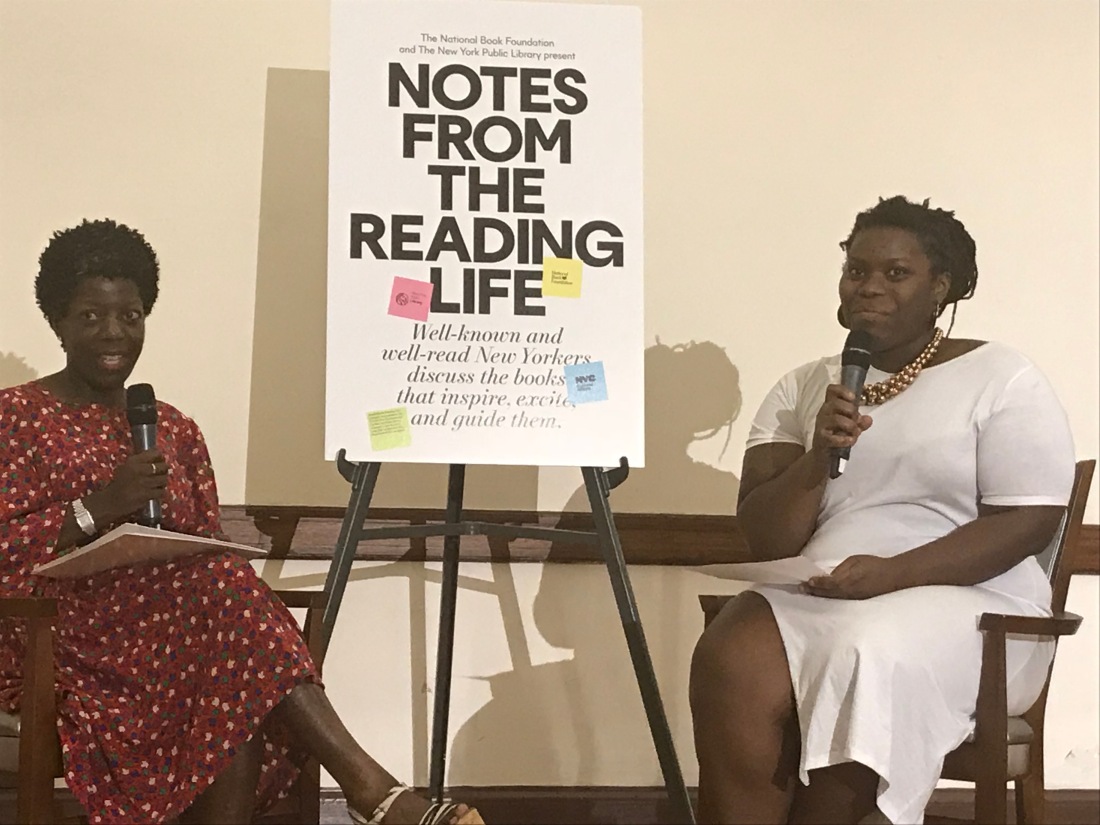
Last Friday evening, I was first in line at the Harry Belafonte Library in Harlem to listen to the first in a series of talks co-presented by the National Book Foundation and the New York Public Library called Notes from the Reading Life featuring two Black women I admire: Thelma Golden and Kaitlyn Greenidge.
Golden has been at the helm of The Studio Museum in Harlem for 17 years, and she is currently serving as Director and Chief Curator. Greenidge is the author of We Love You, Charlie Freeman (and, it must be said, has one of the best Twitter TLs in the game.)
It’s rare that I get to hear two Black women engage in a loving and wide-ranging conversation that centers a Black woman’s engagement with books and reading merely for fun. So of course, I took notes.
The value of attending talks like this is to remember how rejuvenating it is when Black women frame conversation and also how we view story versus how story is framed for us — and frankly, against us. Often, when others are charged with framing aesthetic conversation, in particular, they center themselves and put us at the margins.
For an artist, this makes it hard to invoke the imagination because you never spend any time in a rich, creative or fertile environment. But being in the audience for Golden and Greenidge was one such experience for me.
Golden started by saying she was excited about the renaming of the NYPL branch on 115th street where the talk was held on behalf of Harry Belafonte, and, “to walk in and see the photo of Langston Hughes, to be here in the Alvin Ailey community room — all cultural giants.” And then she underscored that it’s the work of the Studio Museum of Harlem to elevate such giants in ways that often aren’t.
Greenidge started by asking Golden who made her a reader. And Golden mentioned her father, who was born in Harlem, and worked in the building, actually, where the Studio Museum, now is, when it was a bank.
“Arthur Golden was a reader who loved literature. My mother was from Brooklyn. New Yorkers will understand this; when they got married, they compromised and moved to Queens,” she said, to my delight. (It’s hard enough trying to date someone from a different borough I can’t even imagine trying to marry one. Different blog for a different day.)
She described growing up in Queens in a house with what was then known as a den full of books from her father’s library, but no television. He was deeply interested in literature and encouraged her to read.
Her theory is that because she was born in 1965, when he was 40 — considered old for a parent in those days — he let her read anything. Or as she puts it, “We had a relationship to books that was very wide.”
She read both A Tree Grows in Brooklyn and Paule Marshall’s Brown Girl, Brownstones when she was as young as 11, noting with laughter that her mother was very early trying to recruit her to view Brooklyn as the best borough. She read the latter again when she was 16 and again when she was older.
Her mother was from Barbados and grew up in Brooklyn with her siblings in a house purchased by her family in 1926 where some of her relatives still live.
“It wasn’t until I re-read Brown Girl, Brownstones that I really understood my mother and her journey and her quirks,” Golden said. You can think you know about the life of your mother, that it may resemble something that you read in a work of fiction that feels real.
But by reading Marshall’s work, Golden said, “They were all of a sudden actual facts. I asked her later in life, ‘Why did you give me that book?’ She said, ‘I wanted you to understand me better.'”
I don’t imagine I’ll have children of my own, but if that ends up being the path, I imagine this would be such a profound experience…to learn more about the inner life of your mother this way, both in person but also via a book that she loves and gifts to you.
Greenidge said, “I think what you’re describing is the magic of reading for kids. Children can be kind of narcissistic. We think the first time we feel something is the first time its happened.” Golden agreed and expounded on the idea of thinking her experiences were singular and the power of learning they were connected to history.
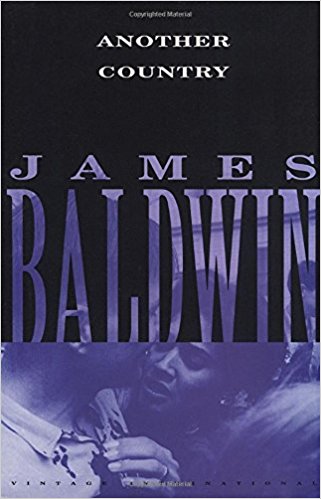
Which brought us to James Baldwin’s Another Country. (At this point, I admittedly got distracted from the bane of my existence and my lifeline to the world, my smartphone, but I believe I heard Golden said she took a seminar at Smith with James Baldwin when she was student) and he asked her who her favorite character in the novel was. And she said Ida, Rufus’ sister.
Baldwin’s 1962 novel explores the complex life and sexuality of Rufus Scott.
I came to quickly enough to hear this gem, “My father went to the same middle school as James Baldwin, and Countee Cullen was their teacher.” (!!)
I was so enamored of this because I have such generational envy for what Harlem was like during the time when Baldwin lived. I know I’m romanticizing it and it was probably as problematic and complex for Black women to navigate emotionally and artistically as every other space is today. But the richness, the products of the period, suggest that the magic had a power that provided at least some possibilities for transcendence. And that’s the part I love and very selfishly wish was still present/actively cultivated for Black writers, at least.
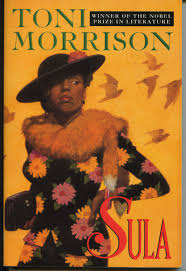
Walker is an example of what it means to be an exceptional living Black woman writer, much like Toni Morrison, the author of another Golden favorite, Sula.
Of all the luscious Morrison books I’ve had the privilege of savoring, Sula falls, for me, just slightly below the Scriptural supremacy and spiritual force in Song of Solomon. But Golden described Sula so poetically, noting that she loved reading it because it was “layered with all the things I know about the world.”
“I don’t want to make somebody else. I want to make myself.” Amen, Sula.
Golden said she never read The Bluest Eye, which is a statement I actually love. Although I did read it, and found that Pecola Breedlove’s envy of blond hair and blue eyes was actually quite resonant for me, I love a contrarian and this assertion (among others) gave me a sense of that streak in Golden. The spectacle of little black girls who hate themselves because they are not white is actually also not the healthiest or most edifying experience for young black girls, so I was happy for Golden, and envious, too, wanting to experience this vicarious liberation from thinking of my beauty in relationship to whiteness and having that praised even from the very beginning — of a life or of a career.
Still, Morrison is not only America’s greatest living novelist, but she is the originator of our current Black literary renaissance, insofar as writers like myself, readers like Golden and almost every Black woman writer I’ve ever known or met who perseveres through self-doubt and the other perils of the writing life have uttered and taken to heart Morrison’s words, “If there’s a book you want to read, but it hasn’t been written yet, then you must write it.”
“That informs my work as a curator, to provide room for so many artists of African descent, to make art to allow us into space,” Golden said. “Toni Morrison is, to me, a rigorous example of Black genius.”
The last of Golden’s favorite books she discussed with Greenidge were The Collected Autobiographies by Maya Angelou and Americanah by Chimamanda Ngozi Adichie.
It was nice to be reminded of Maya’s habit of keeping a hotel room in any city in which she visited, so that she could write without interruption, accompanied only with “two books, a bottle of sloe gin and a deck of cards,” Greenidge informed us.
Angelou’s work in memoir was the first instance of showing Golden, she said, “the stories we create of ourselves…the importance of the creation of our artistic selves. We get to make for ourselves a world that doesn’t make space for us.”
As for Americanah, Golden’s husband is Nigerian and lives in London. Along with the work that she leads and is invested in, she’s tied to Africa, then, “not just in the past, but also art, culture and ideas in the present.”
As a result, she said that she “felt profoundly seen,” by Americanah, in the same way she did by Zadie Smith’s On Beauty. “It’s what happens when outsiders look at your culture.”
Other notable aspects of the talk included the following:
When Greenidge asked Golden which book she would give to a small child if she had to, she mentioned Whistle for Willie by Ezra Jack Keats.
She recalled someone giving her a copy of Invisible Man and finding it formative. She mentioned that someone should write a biography of Ralph Ellison’s wife, Fannie Ellison — do your thing, Internet!
Since we were in Harlem, and Golden had made note of the pictures of Langston Hughes and other cultural giants of the neighborhood earlier, Greenidge mentioned the I, Too Arts Collective the literary nonprofit helmed by author Renee Watson that has continued to do God’s work preserving Langston Hughes’ brownstone and has transformed it into a site of community for writers of color. “I wish it had not been so hard. I wish it had been a natural act. So much of history is not in buildings. It’s in the neighborhood. I hope that while we continue to move toward our future, that we can continue to honor our past. This is a community with a deep and rich history. This wasn’t just a setting for great work. This neighborhood created opportunity for artists. I hope we can preserve that in ways that people will be able to touch and feel in the future.”
You should go to some of the future Notes from the Reading Life events if you’re in New York or if you’ll be in town for one that’s upcoming. Tonight, it’s a conversation between Tim Gunn & Min Lee. I’m so sad to say I’ll miss the conversation (in the Bronx!) between Desus Nice & Rebecca Carroll at the Bronx Library Center on June 15th — but you shouldn’t.
In 2004, when She Hate Me came out, I was assigned to write a story about Spike Lee for the San Francisco Chronicle, where I was a young features reporter at the time. The movie’s tagline was: “One heterosexual male. 18 lesbians. His fee…$10,000 each.”
Like a lot of Spike Lee’s work, I thought the concept was interesting, but I was worried about the execution. I missed one screening of the film, possibly two, and felt like my spirit was subconsciously trying to protect me from seeing the thing all the way through. (Roger Ebert, bless his soul, was probably the only person who wrote anything nice about the movie, which included animated sperm. )
The best thing about the movie was that it provided an opportunity for me to interview Spike Lee in person. His Malcolm X biopic is one of my favorite movies of all time. I wouldn’t see them until later, but When the Levees Broke and 4 Little Girls are two of the most important and beautiful documentaries ever made about black people in our country.
I respect Spike Lee because he has fought for and maintained against all odds complete and utter control of his artistic vision. He is not afraid to take risks, which makes me love him loyally and even more, because there is perhaps no bigger challenge for black artists in America than to take risks.
In the realm of creativity and imagination, black art is always cast as political, created in response to or because of oppression. Black art, like black genius, that is beautiful on its own merit, absent of political sensibilities, is not a concept that is understood, which is why most critiques of black cultural products that are not composed by people of color miss the mark. They cannot conceive of a blackness that is not self-conscious, reactive and that exists for its own sake or to encourage more of the same.
Anyway, even though I was intimidated by Spike, it was still an honor to speak to him and a very young Kerry Washington (also a Bronx girl). I rambled and he was patient but I had two burning questions:
Would he one day find the discipline to end a movie properly? (I was thinking of the basketball launch from prison out into the world at the end of He Got Game; the montage at the end of X; Bamboozled, Clockers…I mean, there are 30 years of movies here to assess at this point, so you get the point. But it doesn’t matter because I never got the courage to actually ask this.)
What did he think about criticisms that he only wrote one-dimensional female characters? (I did ask this: “Some people say that one of your flaws as a director is writing realistic female characters.” It could have been my imagination, but I remember him rolling his eyes at the first part of that question.)
There are likely some exceptions in Spike Lee’s work — of mothers, or sisters or women who are based on real-life characters — but by and large, women in Spike Lee’s films are rendered as caricatures instead of complex characters like male protagonists. It is always the men who have full and complete narrative arcs in his films, motivations that make sense, pragmatic drive and passion. Maybe because he is closer to them, he understands what motivates them, what they desire.
The women, though, tend to be caricatures. Troubled beauties. Whiny plot devices with a good line or two, amazing bone structure. This is them as love objects, as wives and lovers. As with all cultural products that are not meant to be humorous, maternal respect protects black motherhood from the same kind of flat rendering. But all other women are mysterious and odd.
When I asked Spike Lee about critiques of one-dimensional female characters in his films, he said that his wife and some time collaborator Tonya Lewis Lee helped him flesh out the women in his films. He didn’t say it but the look behind his thick framed glasses after suggested his answer should quell any critiques.
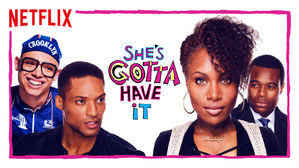
I thought about that again when I watched the She’s Gotta Have It Netflix series this weekend, for whom Tonya Lewis Lee is the show runner and for which there was reportedly a robust women’s writers room. This is the part you shouldn’t read if you haven’t watched it yet. SPOILERS BELOW.
The best thing about She’s Gotta Have It on the small screen is that it is beautiful to see. The actors are lovely. The soundtrack is amazing. The art is also lovely. (I loved so much of the influence of Art Consultant and Artist Tatyana Fazlalizadeh). The homage to black musicians and artists and blackness in Brooklyn is incredible.
The second best thing about this is that Spike Lee is brilliant on the small screen. I think this has something to do with giving his ideas a container in which to work. Sometimes the best writing is short because it requires economy and discipline; I think television and documentary work help him refine his vision and rein it in in a way that is only positive in the end.
In the span of 10 episodes, it’s clear that we are in a Brooklyn that is very different from the Brooklyn that Spike Lee has loved and grew up in his whole life. That informs the backdrop of the series in a way that isn’t distracting so much as it reminds you, regularly, that even though this a remix, it is very much a Spike Lee Joint. I’m not sure that’s a good thing. Is this about Nola Darling or is it about the male experience of Nola Darling?
To that point about who this Nola Darling/series is for, maybe I should have expected there to be a moment about Trump and the 2016 Election, but 1. I didn’t and 2. I wasn’t sure why it was wedged in here. It felt like Spike couldn’t wait for his next project to get it out — much like his feelings on gentrification in Brooklyn — so he amplified them here.
DeWanda Wise is wonderful as Nola Darling. She is beautiful and perfect and has great chemistry, especially with Anthony Ramos, who plays Mars, but really with each of her lovers. I appreciated the update for her as someone with a fluid sexuality. This is something that could have been a little more fleshed out.
There is an odd heavy-handed series of comments on her black dress that needed to be condensed, and a scene in front of her art with Me’Shell N’degeochello playing while she’s spinning around that goes on for too long.
Much has already been made and will be made about how delightful She’s Gotta Have It is for representation of black women and the complexity of it. I would argue that it is a good start (and even that is debatable because…it has been 30 years! Can you call yourself woke if you got up late?) but there are some pretty wacky missteps. The whole Shamekka/butt injection side plot and scenario leads to a narrative arc for that character that is obvious and literally messy on all kinds of levels. The whole time it was happening, it felt like a flashback, like a montage from another movie.
At some point Nola makes the point, paraphrasing another woman, that she’s found the man of her dreams and it is her. It creates a bit of cognitive dissonance for someone who is essentially queer — is this the language she would use, then, to declare her freedom? Besides, in the end, it doesn’t seem that it’s even true — but maybe that’s just a set up for the next season.
In the end, I enjoyed She’s Gotta Have It more than I expected, and I’m curious to see where it will go from here. If you’ve seen it, what did you think?
It is easy to be smitten with Zadie Smith, as I think I am. She has freckles and I love freckles. She can sing. She has a lovely accent. She is witty. She writes well.
Actually, she’s brilliant. I’m a fan of her nonfiction, and I was smitten more with Changing My Mind, her book of essays, than with On Beauty, which was fine but not my fave. Same with Swing Time, which I just finished before I happened upon this complicated essay, “Who Owns Black Pain?” in Harper’s Magazine.
It starts with a very interesting look and assessment of “Get Out”, which I have seen three times. I have yet to read (not saying it doesn’t exist but I’m busy and read a lot but also miss things) the take from a black woman that I want to read which is: That is exactly what black men who dismiss black women and our beauty GET. What is? Get Out is. Rose is.
Erika Alexander brought me all of the joy in the world in that movie. All of it. (The only other movie I have seen three times, by the way, is the Ten Commandments, but that’s because my mother had both tapes when I was a kid and I couldn’t help myself. [Charlton Heston was kind of fine as Moses.])
I’m burying the lede, here. My point is not to catch up on the critiques I didn’t share the first three times I watched “Get Out” but to elaborate on something I’ve said before. Something I deeply believe and am troubled by: We live in a culture that prefers to hear about the lived experience of black women from everyone but black American women.
I will not name check them all. But I will say from personal experience and observation that there seems to be a vested interest in hearing from well-known British, African and other “Exotic” women of the African Diaspora about the pain experienced by Black American women. The only thing our culture loves more is to hear from Black men about the ways in which we are undeserving of their love, affection, desire or attention.
The problem is that none of these people are experts in the black American experience because they cannot clearly, definitively or expertly explain the purview or perspective of Black American women. Let’s look at some data.
Years of Census data show that black women are a little over half of the black population in the U.S. and have been for a long time. A recent report released by the National Domestic Workers Alliance explains that 80 percent of us are the breadwinners in our families. We are the majority perspective in our communities, even though people would prefer that it was otherwise. We are the bellwether for what is experienced by our sisters — yes, especially our white sisters — even when folks would rather not hear it.
So it is understandable that some of us — and for the purposes of this blog, I mean me — had a visceral reaction to reading these words from Zadie Smith (italics mine):
“To be clear, the life of the black citizen in America is no more envied or desired today than it was back in 1963. Her schools are still avoided and her housing still substandard and her neighborhood still feared and her personal and professional outcomes disproportionately linked to her zip code. But her physical self is no longer reviled. If she is a child and comes up for adoption, many a white family will be delighted to have her, and if she is in your social class and social circle, she is very welcome to come to the party; indeed, it’s not really a party unless she does come. No one will call her the n-word on national television, least of all a black intellectual. (The Baldwin quote is from a television interview.) For liberals the word is interdicted and unsayable.”
To me, this paragraph simply means that Zadie has not been paying attention.
Yes to the lack of progress for the most part since 1963.
No to the fact that the physical bodies of black woman citizens are not reviled.
Hello, Serena Williams — apparently a naked black pregnant body means that the celebrity pregnancy photo shoot has jumped the shark. Hey, Kodak Black: This dark skinned black woman doesn’t want you, either. I could go on and on for days and days: Black women are most likely to be victimized by Intimate Partner Violence. In Seattle, a mentally ill black mother was shot by police in front of her children. Twitter has been ablaze with the justification of infidelity because Jay Z and Beyonce have wisely monetized the challenges of black love.
In any event, this is not what love looks like.
Also, a college professor who defended Black Lives Matter on Fox News was fired from her job simply because she expressed her personal opinion during her free time. This is not the same as someone calling her a nigger on air. But it is today’s equivalent. Let us not forget the government employees who called First Lady Michelle Obama an ape before she and Barack were even out of the White House yet.
So I thought these things, or I felt them and let them sit with me. Then I read some more of Zadie’s piece:
(On Dana Schutz’ painting of Emmett Till): “Neither of us is American, but the author appears to speak confidently in defense of the African-American experience, so I, like her, will assume a transnational unity. I will assume that Emmett Till, if I could paint, could be my subject too….Now I want to inch a step further. I turn from the painting to my children. Their beloved father is white, I am biracial, so, by the old racial classifications of America, they are “quadroons.” Could they take black suffering as a subject of their art, should they ever make any? Their grandmother is as black as the ace of spades, as the British used to say; their mother is what the French still call café au lait. They themselves are sort of yellowy. When exactly does black suffering cease to be their concern?”
Listen. The definition of blackness in America is like everything else: It persists from slavery times. The persistence of hypodescent, better known as the “one drop rule”, means that actually whatever you are in America, whether you are pledging transnational unity to us or anything else, if you have a drop of black blood in you you are considered black. I don’t have kids. I don’t give parents parenting advice because who am I do to that? However, honey, blackness is not about complexion, it is about blood. Black suffering will always be the concern of your kids, at least on this side of the Atlantic. If you think this is a philosophical question, I invite you to actually talk to some Black American mothers about that.
Speaking of Black mothers:
“I stood in front of the painting and thought how cathartic it would be if this picture filled me with rage. But it never got that deep into me, as either representation or appropriation.”
It must be very nice to gaze upon an artistic representation of Emmett Till without experiencing rage or connection, especially in these times. Here is some data and anecdotal evidence compiled by African American women and scholars on the very real experience of Black women who exhibit symptoms associated with PTSD as a result of their exposure to the violence that has been waged against black children since before and after Emmett Till’s lynching. What is missing here, in this passage and in this piece overall, is a confrontation with the privilege that comes with viewing black pain from a cultural remove informed by geographical framing if not racial difference.
They might as well be the same.
“…I found I resented the implication that black pain is so raw and unprocessed—and black art practice so vulnerable and invisible—that a single painting by a white woman can radically influence it one way or another. Nor did I need to convince myself of my own authenticity by drawing a line between somebody else’s supposed fraudulence and the fears I have concerning my own (thus evincing an unfortunate tendency toward overcompensation that, it must be admitted, is not unknown among us biracial folks). No. The viewer is not a fraud. Neither is the painter. The truth is that this painting and I are simply not in profound communication.”
Again, this is a privilege that Zadie does not recognize in herself. The issue of Dana Schutz’ painting was covered with far more nuance in the New Yorker perhaps because Calvin Tompkins did not have the same penchant for overcompensation. Zadie is allowed to resent whatever she wants about black pain, but if she’s not in communication with a painting about a seminal Black American moment — politically, psychologically and emotionally — that is because it is not a moment that has any meaning for her. That moment or cultural reference point does not require her to feel authentically black. But it also doesn’t mean that she has expertise in how black pain should or should not be processed or how to define it.
Finally, let us discuss this:
“But in this moment of resurgent black consciousness, God knows it feels good—therapeutic!—to mark a clear separation from white America, the better to speak in a collective voice. We will not be moved. We can’t breathe. We will not be executed for traffic violations or for the wearing of hoodies. We will no longer tolerate substandard schools, housing, health care. Get Out—as evidenced by its huge box office—is the right movie for this moment. It is the opposite of post-black or postracial. It reveals race as the fundamental American lens through which everything is seen.”
Which collective voice is this, exactly? From where does it speak? Who agreed? Is this meant to be satirical, or is it real?
We have been moved. We are being moved. We are being suffocated. Not only are we being executed, but the police who are doing so are being acquitted. They walk and we continue to mourn, our black pain exposed and unprocessed. Over and over and over again.
I agree with Zadie on one thing: “Get Out” was cathartic, but not because it is the opposite of post-black or post-racial. Both terms were always fictive. It was cathartic because without its alternate ending, it provides relief from the reality in which we live. Its horrors were amusing to me because they are totally plausible and not at all inconceivable. I was reminded that black bodies, even black women’s bodies, are wanted for what they can offer in terms of plots or potential solutions, but they are never considered the meat of the story. In “Get Out,” as in Dana Shutz’ Emmett Till painting, as in Zadie’s assessment of black pain, there is a distance from the reality of black American women who are the beating heart of what it is to be a black American. That means that an entire core of expertise and authority go missing. Their absence is the real horror.
The answer to who owns black pain is always black women. It lives in us. We sing from it. We die from it. Our identities, our bodies are shaped by it. No one ever asks us what it feels like to never be free of this historical torment and heartbreak, but it might just be that that’s part of being an authority in your own agony.
I live at the center of an odd emotional Venn diagram that falls around this time each spring. I learned of my father’s suicide on Earth Day in 2010. My mother died from cervical cancer in early 2012.
It is my mother who I miss most because insofar as I knew either of my parents, I knew her or tried to and she sometimes let me.
I am a word person but I increasingly love numbers as I get older. They are specific and neat. They offer a clarity words can obscure.
It has been five years since I commemorated Mother’s Day without my mother’s physical presence, without her outside voice shouting at me on the phone to wish her a happy mother’s day, or the arrival of a card she’d sent to me as if to say, “This is how you send a Mother’s Day card…see?”
It has been five months since I moved home to the Bronx, the place I left because my mother was here, insistent and ever-present and manic in a way that made it difficult to be close.
Before I returned, it had been 17 years since I had been a New Yorker. Every day that I was away, I missed being here: The noise, the dirt, the crowds. The possibility, the energy the light pollution that shames darkness and makes visible stars seem like survivors.
I left poor and afraid, following pragmatic versions of my dreams to Texas and the West. I came back successful by some measures, with enough experience to give back what the world had given to me, still battling survivor’s guilt and impostor syndrome, writing through it in this new, shiny life of freedom.







 Joshunda Sanders