Black Book Stacks on Substack

Before I was a journalist, my favorite non-fiction writing and non-journaling activity was to attend readings or lectures featuring Black authors and take copious notes. So it is a kind of coming full circle that I’ve started a Substack newsletter focused on book reviews related to books for and by Black people, Black Book Stacks. (About a year ago, I started a YouTube channel of the same name, which you can view here and if I have a Bookshop store you can find here.)

I always had the innate sense that being a writer was not just about putting words to paper and hoping that others would read those words. I was always searching to put the words I wrote into a tradition. Writing was another way of trying to belong and to solidify a place for myself in a world that seemed bent on my erasure or destruction.

I have vivid memories of a small royal blue Mead notebook that was thick as a brick. I carried it with me to the old Barnes & Noble on Astor Place, through Washington Square Park, up to Emma Willard and Vassar. I had the privilege of listening and trying to absorb the wisdom of Jamaica Kincaid, Gloria Naylor, Janet McDonald, Elaine Brown and so many others. I was a careful collector of Black women writers’ quotes, usually because I couldn’t afford to purchase books of my own and I didn’t not want to vandalize library books. Quotes were the happy compromise; they were short enough for me to carry wherever I went. These were the breadcrumbs and manna they left for me in a trail to who-knew-where but I gobbled them up. Every nugget was a jewel in my crown.

As I made my way in journalism, it became harder and harder for me to give myself permission to keep up this witnessing practice in the same way. Mostly because of time, but also because I realized that such forums and opportunities to hear Black writers and share space with them were fewer in other states and cities. It just so happened that reading the work of Black women in particular was my self-paced MFA program. Sometimes, I had the opportunity to profile, interview and write about them, as was the case with Octavia Butler in 2004 and Alice Walker around the same time. But mostly, I was just glad to have their work to sit with and revel in.

Over the years, I’ve continued to focus my attention on the work of Black writers because, as more of the world knows now, we live in a world where white supremacist capitalism means that what is considered valuable is everything but Blackness or real intimate discussions of all its flourishing contours in spite of and beyond the gaze of the consumption of white people. What I mean to say, I think, is that Black literature has always been a miracle to behold. In part because it comes from a people who have a shorter lineage in the Americas of thriving in literature because of the legal restrictions that forbade them to read and write. Our resilience and perseverance and faith, all bound up in the Word, continued both in an oral tradition and on paper.

The overcorrection here, I’ve found, is that when it comes to fair critique or evaluation of the work of Black writers, is that our books are either ignored, as if they never happened, especially beyond the date or week of their publication, or they are elevated as neutral objects for sale without a real analysis of them and their context. That’s what my new newsletter is aiming to help create in the world. I hope that if that sounds of interest to you, that you’ll subscribe. Looking forward to seeing you on the list.

Reading in the Time of Pandemics

If we have anything in common (and maybe we do, since you’re here), it’s difficult to pull yourself away from the surreal every day world into a book at this moment. This morning, news about some of the major independent booksellers that I love laying off hundreds of workers makes me feel small and powerless. There are still things in our control: Our attention, for starters. And, if we have enough to give, our support of authors and others whose book tours and gigs and opportunities have been gutted, canceled and rearranged due to our new world disorder and chaos.

We can also:

  • Read All The Things: I pulled Aja Monet’s My Mother Was a Freedom Fighter & Tanisha Ford’s Dressed in Dreams off a dusty bookshelf to get started after I finish a few of these books, mainly by people of color, about pandemics & surviving them for HuffPost. I am greatly enjoying Sharks In The Time of Saviors. I just finished the very readable & inspirational More Than Enough by Elaine Welteroth. What are you reading?
  • Pre-order: When I was still moving freely about in the world, last weekend, one of the first things I did was pre-order Elizabeth Acevedo’s two new projects: Write Yourself A Lantern & Clap When You Land. Because I could and I wanted to and she is one of the writers I adore. (It’s such an unusual thing for me to do from my phone that Apple called me to alert me to fradulent activity!! So much shade.) It also feels nice to believe in the future ahead of us and beyond the pandemic. We will flatten the curve and life will not be the same, but we can hope that all of us will still be here with good books.
  • Stop Reading & Go Outside: This is also book related. It is safe for you to take your book to a park or walk it around the block with you, for now, I guess. But also good for your brain and your retention of story for you to step away from the screens as much as possible and ground yourself.

You have other tips? Let me know in the comments. And be well. Thanks for stopping by.


Happy Pub Day to I Can Write the World

Happy publication day to us!
I’ve thought for months about how to best commemorate this day. I’ve been posting and talking and writing and talking about I Can Write the World since last year, so it’s hard to believe that the rest of the world will have access to my labor of love starting today. 
It might surprise you that I never thought I’d write a children’s book, let alone a series. Many of you know that I had a childhood that made me grown in many ways before my time, just like a lot of little Black girls who have our innocence taken or presumed to be a non-entity. But when Six Foot Press’ publisher, Chul R. Kim, asked if I had a children’s book to write, Ava Murray arrived fully formed — a curious girl with incredible storytellers and justice warriors as her namesake in the brilliant storyteller Ava DuVernay and Rev. Dr. Pauli Murray, the poet, scholar and legal pioneer who broken barriers even while Murray struggled with gender dysmorphia. 
I was raised in the Bronx, an underdog borough often defined — like Black women — by lack, poverty and everything that it is not. But just like I always sought out Black women role models and lighthouses of beauty and class, I have always seen the best of the Bronx even when I struggled within it because of poverty. Some people see a place that has been neglected because of the Latinx and Black people, largely immigrants, who are stuck or striving; people for whom success would mean being able to leave for a less abandoned, more expensive, whiter place. But I missed the Bronx every single time I left, even though I was in beautiful elite spaces that were supposed to be better for me, were supposed to be indicators I was moving up. 
This is what home is: It is the place where you are most yourself, where you can feel yourself becoming more of your dreams by the minute, regardless of what you or others may see right before you. 
This is what I loved about my girl Ava as soon as she arrived: She came asking questions about the media she absorbed. She is far less shy than I was, with a parent that is more present, more receptive, more attentive, as so many Black mothers and maternal figures are.
Why, she wonders, is a little girl getting arrested for tagging outside when the murals and graffiti around the poor neighborhoods — which, by the way, have become a global force and industry — actually feel like they make it easier to see the beauty there? As adults, we can say and observe that this is heavy for little kids to encounter, but my answer to that is that we already see that they are witnessing this world of criminalizing Black and Brown children. Not just in the Bronx, but everywhere where teachers tell me 7-year-olds have to report to court monthly to talk to strangers to justify their living here in the U.S. Of course, too, at our borders, where toddlers cry unattended, may have to sleep on warehouse floors, may not be allowed to bathe. 
I had the great privilege of being at Essence Festival this weekend and hearing Michelle Obama talk about the kind of world we want our children to inherit, to live in. I am not yet a parent, but I know that I want our babies to grow up in a world where they know that their voices are important. That they can write their stories. That they can write the world. Not only can they write their world; in order for the world to be the best it can be, for the world to be hold, they must. 
I say happy publication day to us because any book’s publication day is the representation of the work of dozens of people. Thank you for being in partnership with me as I seek to tell stories for young readers. This book is for you. Thank you to Charly Palmer, the gifted illustrator who so thoughtfully crafted the beauty of Ava’s world. Thank you to Six Foot Press and Serendipity Literary Agency for all of the support. Thank you to everyone at Ingram for your encouragement. To my librarian, teacher and writer friend communities — Thank you for understanding the vision and helping me share it widely. I hope this book is as meaningful to you as it has been to me. 
I shared this on social media, but during PrideFest/KidFest, a young girl around Ava’s age with barrettes in her hair held the book and lovingly gazed at it and even in the chaotic craziness around us, I could see that small flicker of recognition that you get when you see yourself. And she said, “She looks like me.” And that to me is everything. That is the inspiration for this book, and the next, and the next.

You can buy the book on Indie Bound, Barnes and Noble or Amazon. Please review this book on Amazon and Goodreads please!

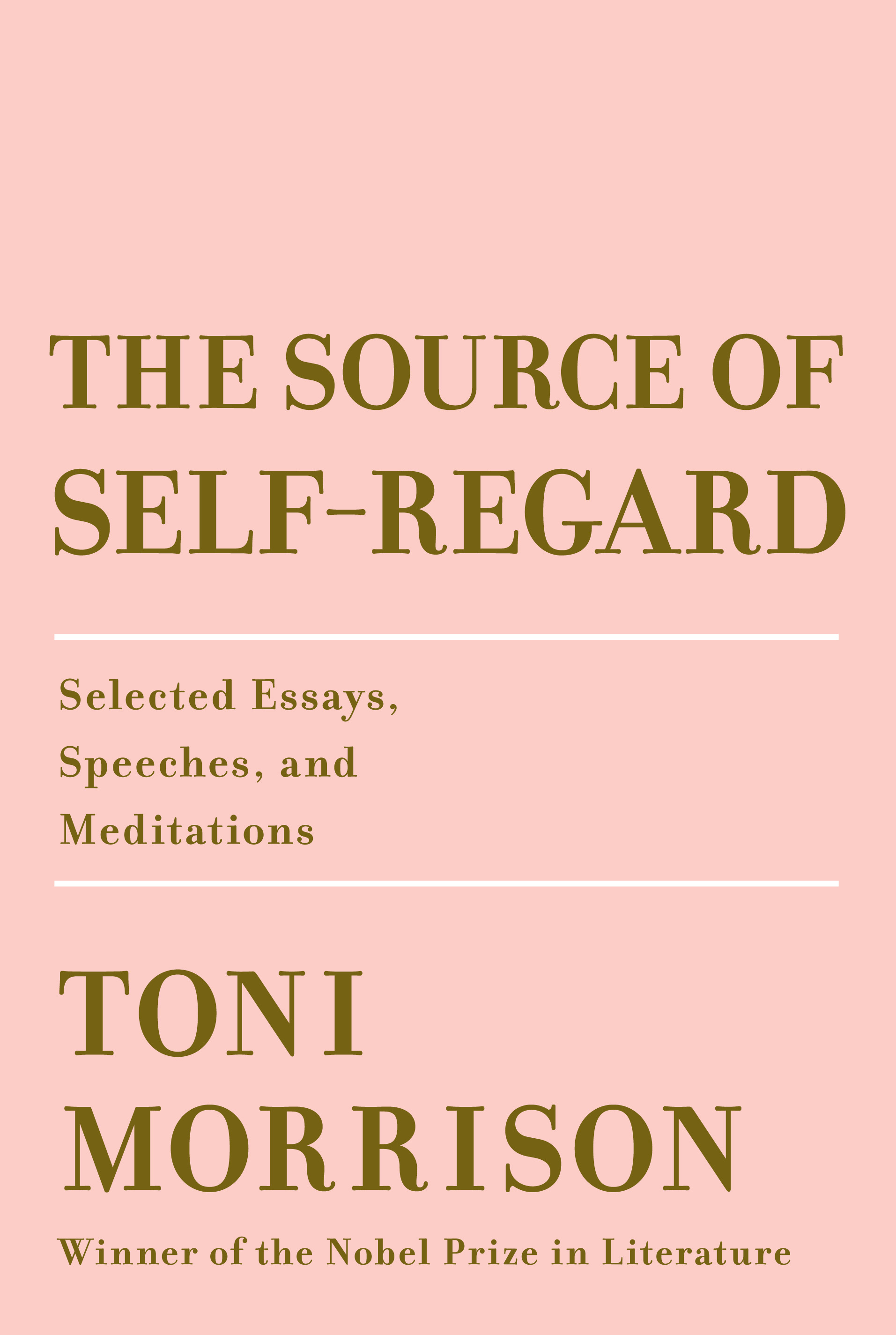
Review: The Source of Self-Regard by Toni Morrison

I am ecstatic to share my review for Bitch Media on Toni Morrison’s stunning collection of speeches, essays and meditations, out today, The Source of Self-Regard. I inhaled it and underlined entire paragraphs over the last two months. I went to the Schomburg for something else entirely and found an annotated bibliography that informed a lot of this piece. These glimpses and pieces of her are the nation’s greatest living novelist at the top of her form and the most intimate look we are likely to get at her most closely guarded feelings and emotions — especially as it relates to the writing process.

The third section of the book, “God’s Language,” begins with the most beautiful piece of writing I have ever read—the eulogy Morrison delivered at James Baldwin’s funeral on December 8, 1987. It is also the closest glimpse we’ve had into Morrison’s personal relationships. Morrison lays her heart bare for a friend in a short poetic jubilee that’s reminiscent of Smokey Robinson’s recent speech at his childhood friend Aretha Franklin’s homegoing service.

“Jimmy, there is too much to think about you, and much too much to feel,” she begins. “The difficulty is your life refuses summation—it always did—and invites contemplation instead. Like many of us left here, I thought I knew you. Now I discover that, in your company, it is myself I know. That is the astonishing gift of your art and your friendship: You gave us ourselves to think about, to cherish.” Morrison might as well be speaking about herself. For me and many other writers, Morrison demonstrates how to be in a world that’s committed to your destruction. “You gave me a language to dwell in—a gift so perfect it seems my own invention,” she continues.

Throughout the book, Morrison reveals herself to be a teacher-student who is not just giving readers information that they’re expected to take in and regurgitate. Instead, she’s a “literary homegirl” (a phrase that she actually uses in the text). Referring to a friend as a “homegirl” implies a sense of ease in the presence of someone who knows and loves us, who evokes in us the joy, relaxation, comfort, and depth we typically only associate with home. Home is where we learn who we are, if not who we will become. Home is the starting point. In the title essay, delivered in Portland in 1992, Morrison explains how she viewed self-regard while writing her Pulitzer Prize-winning novel Beloved. Morrison’s lecture deeply resonates with me because it gives context for arguably her most famous work, which at its heart, offers Black women an artistic vision of our liberation.

9780525521037

Did someone say Book Lovers Day?

It makes total sense that Book Lovers Day would fall right in the middle of the hottest days of summer, when there really isn’t anything better than sitting in front of the air conditioning (or some other cooling device) and reading. As it happens, as I’ve been in the homestretch of finishing a work in progress for young adults, I’ve also been immersed in reading books for young readers of color by writers of color — like a message of love from the universe. Here are some of the books I’ve read & been reading lately that have won my heart:

  • Fresh Ink: An Anthology: I got a sneak peek at this one (Oh, the rewards of being a book nerd are few, but feel so enormous sometimes…) since the pub date is next week, on August 14th. I love the color, and adore the mission of We Need Diverse Books, cofounded by the anthology’s editor, novelist Lamar Giles. Here, he’s compiled fresh, and beautiful short stories by a constellation of YA’s strongest voices. I’m not all the way through, but stand-outs so far are “Why I Learned to Cook” by Sara Farizan, (whose third novel, Here to Stay, is incredibly timely and comes out this fall) Walter Dean Myers’ “Tags,” a one-act play that’s previously never been published and Melinda Lo’s (adorable) “Meet Cute.” I can’t wait to dig into the rest of the collection, especially stories from Daniel Jose Older & Melissa de la Cruz and Nicola Yoon.  This is a collection that isn’t to be missed — it fully represents the world in which our youth live, which is what makes it so fresh. There are parts of Eric Gansworth’s “Don’t Pass Me By,” that are laugh out loud funny, and other moments of regular ‘ol teen angst that show that stories in own voices are also universal stories of kids who are just kids. The book is a relief.

  • Courage: One of the things that’s inspiring about talking to writers who write for a young audience and particularly for children of color (who often don’t see themselves reflected in literature, so get turned away from books at a young age) is that they often have such an interesting path to get to the page. Barbara Binns is one such author — and I interviewed her for Kirkus about her first middle-grade novel to be published by a large press, Courage. After other careers, Binns took a brief foray into romance writing for adults before she learned that the Black boys, in particular, are often resistant or struggling readers because no one really writes for them. She’s written to try and fill the gap for years, and Courage is another, larger step in that effort. It’s the story of 12-year-old T’Shawn, who is navigating the loss of a parent, the homecoming of a formerly incarcerated older brother, a crush and being the newest addition to his swimming team.


  • Proud: Young Reader’s Edition: “People think that there are limitations to what women and people of color can achieve,” Muhammad said when I interviewed her for Kirkus Reviews. She made history in spite of a number of odds as the first woman to compete in hijab, and more adversities that she describes in both the adult and young adult versions of her memoir. “It’s part of my life’s work to break through that box people try to put you in.”

I’m reading some other books, of course, but I’ll save all that for another time. What are you reading this summer? How are you liking it? What’s your favorite?

Another Season

I love the hibernation of winter and the renewal of spring. The only thing I really enjoy about summer is that fall is what follows – a season of harvest and brilliant color. So it seems fitting to consider that I’m moving into another season in my life that seems parallel to the promises of fall.

“The First-Person Industrial Complex” was the first essay I read that confirmed a shift in the nature of personal writing online that got me thinking about the frequency with which I used to write and publish more or less since the late 1990s:

First-person writing has long been the Internet’s native voice. As long as there have been bloggers, there have been young people scraping their interior lives in order to convert the rawest bits into copy. But we are currently in the midst of an unprecedented moment in the online first-person boom. The rise of the unreported hot take, that much-maligned instant spin on the news of the day, has meant that editors are constantly searching for writers with any claim to expertise on a topic to elevate their pieces above the swarm. First-person essays have become the easiest way for editors to stake out some small corner of a news story and assert an on-the-ground primacy without paying for reporting.

Laura Bennett goes on to write about the absence of self-awareness in the latest crop of personal essays and the marketing/commodification of sensational stories without regard for the impact such self-exposure has on mainly white women writers. It was once true, at least, that there was potential for an interesting, well-written story to become visible, find its audience and perhaps secure the interest of an agent. At the very least, writers and editors once said that the other side of one’s brand — the beloved platform — could expand with persistence, high quality work and consistency. But as my friend Stacia wrote in her excellent essay, “The Personal Essay Economy Offers Fewer Rewards for Black Women” at The New Republic:

Easy, daily access to writers’ most devastating experiences is decreasing the demand for full-length memoirs from the online personal essayist. But even when the stakes are lower and a writer is simply looking to raise her professional profile or earn extra money, personal essays aren’t always an advisable route. After a few days, discussion about those pieces wanes and after one bill payment, the money is a memory.

Taken together, these pieces were a codification of a season of transition for me that has stretched out over months and if I’m honest with myself, probably for more than a year. I love connecting with my audience, but I don’t want to do so in a way that feels compartmentalized or wedged into a news cycle.

There was a time when I needed to write about being a happy single woman in the face of an onslaught of media portrayals that made it seem like successful Black women would be #foreveralone, or to exclusively, daily, write and tell the stories of other people on deadline in order to inure myself to the discipline of getting to the page no matter what. And there was a time when I needed to dive deep into looking at the conversation or lack thereof of a diversity conversation  in the most important organ of democracy we have — the media — in order to place a coda on the profession that I so adored and loved. I have been incredibly blessed to make a living as a writer and to complete and publish two books on my own terms, without selling myself or anyone else out in the process.

After the media book was published, I found myself in desperate need of time to do anything but write. I had only experienced that a couple of times before, after a loss that wounded me so deeply I was afraid to write about it. Writing has been the main organizing principle in my universe for my entire life.

But I slipped into a different season partially from fatigue and partly out of choice. I wanted to catch up with my friends and attend to the parts of my life that I had long left in limbo. I wanted to read everything in sight that I had zero to do with journalism.

As a writer in these times, I feel often as though I am the awkward sixth grader I was in the Bronx when the girls got out the double dutch rope and I could hear the skipping of the hard plastic against the concrete ticking on a rhythm like a clock. I would make motions with my arm like I was about to jump in at any moment, but I was always out of sync with the rhythm. It was too fast for me, or it was too slow. Ultimately, the pace didn’t matter so much as the reality that I never found an easy way to glide between the ropes.

For as long as I can remember, I have followed James Baldwin’s advice about writing what I knew. It began with an essay to A Better Chance when I was in high school. I won an award for that essay which offered me affirmation to keep writing and aspiring to publication that I didn’t even know I needed. For more than 20 years, I have mined my personal experiences in order to bring more resonance to universal truths. Now it’s time for me to do a different kind of work.

This is not a goodbye post so much as it is my way of explaining the stretches of silence ahead. I will never stop being a writer or thinking like a writer, even though I no longer write for public consumption every day. Blogging and writing have been anchors for me as I continue to grieve my parents and heal from life’s adversities. I have benefited so much from knowing that my experiences are not as unusual or uncommon as I first thought and it has been my privilege to help make life a little easier for those who said they were inspired by my example.

I know I’ll be back to blog and write more at some point. During this season of my life, though, my intention is to read more, to devote myself to completely to my new job and to rediscover the joy of writing and connection that brought me to the page in the first place. I intend to speak at college campuses through my partnership with Bitch Media and offer writing/communications workshops, so you can connect with my work with Bitch on Campus here.

I’ve been told if you don’t have a Facebook Author Page, you don’t really exist, so please like my page. I’m also on Instagram. &  Pinterest. &, of course, Twitter.

Thank you for reading and responding to my work, to my presence, and for knowing my heart and sharing so much of this rich journey with me already. There will be more to come eventually. Until then, take good care of your heart. Enjoy all the seasons life offers you.