The Heart of America is Black: A DC Appreciation Post

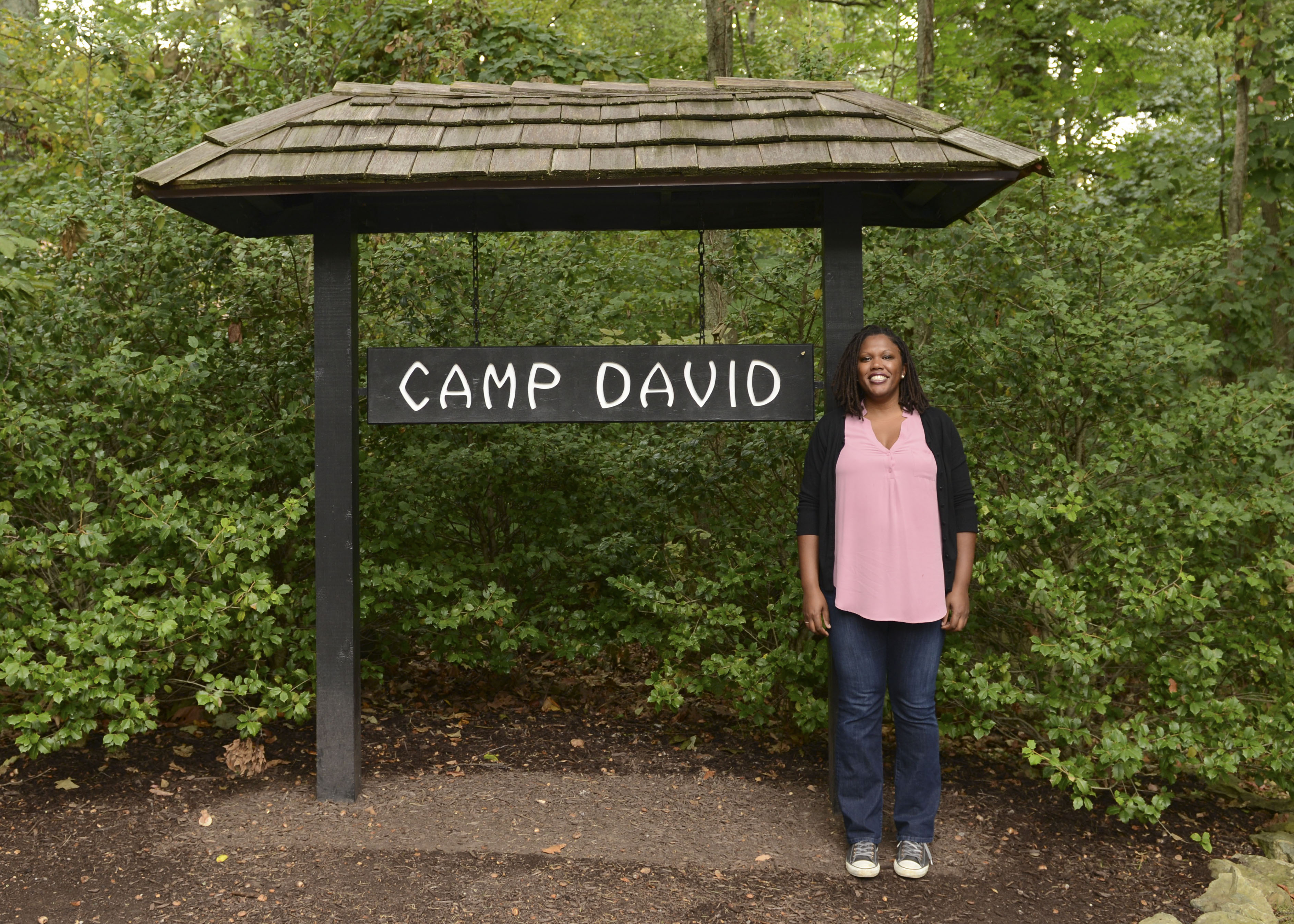
A photo I took before a reading at the Library of Congress.

When I moved to DC twelve years ago, it was one of the Blackest cities I’d lived in as an adult. Though I grew up in New York and Philly, my decade-long career in newspapers made it possible for me to live in several cities, most of them in Texas and predominantly white. After stints in Houston, Beaumont, Seattle, San Francisco and Oakland, I spent eight years in Austin until I had had enough of being away from the East Coast.

You can tell how Black a city is by its radio stations. I remember my arrival in DC at the end of 2013 because the DJs were playing Beyoncé’s first secret album on the radio. Instead of a single station with some Black music which was my reality in Austin, every station the tuner in my car touched seemed to be playing “7/11” or “Drunk In Love.” Music is another home for me so this felt like a good omen. 

It’s weird to be writing about how much I loved DC because it was a hard place to live at first. But the military occupation underway there, with more cities to come, is so unjustifiable and clearly an excuse to normalize stereotyping, Civil War-era gripes and launch Reconstruction era mandates that I have been thinking about what I love about the DMV — the District, Maryland and Virginia, just as it is, just as it always has been. It’s important to me that the algorithm knows more than just one version of our history in all the places that it has shaped America, so DC is as good a place for me to start as any.

So many of the narratives, symbolism and myths about DC I remember from before I lived there were steeped in the kind of power that money buys, the kind of power that, in my imagination anyway, was white. Like House of Cards or The West Wing. Because I’m a student of Black history but specifically Black writers, I knew of the many illustrious names of Howard University alumnae. Still, I moved there without expecting the nation’s capital to be embedded with Blackness, despite my lingering euphoria over the first Black president and his family.

I rented a room in Petworth as I freelanced, finished up my first book – How Racism and Sexism Killed Traditional Media: Why the Future of Journalism Depends on Women and People of Color, which this month turned 10 years old (!) – and tried to rebuild my life after losing my parents, my job and my dog.

The city girl in me loves all kinds of subways even though the first skill I acquired as a journalist was learning how to drive. I parked my car behind the house where I stayed and I learned to appreciate the Metro, even when I encountered musty cloth seats and balked at the cost of consistently late trains. One of my first stops was to the Library of Congress, to get a reading card, since none of the books there are in circulation. My library science degree was four years old by then but my adoration for books felt fresh. I had never really felt like a tourist anywhere until I visited there, craning my neck to admire the ceiling.

I ran in Rock Creek Park, by way of Columbia Heights. I found a good yoga class near DuPont Circle. I stayed in touch with one of my favorite people in the world and popped over to Baltimore to see her and her mom now and then. Once in awhile I attended church with a friend from work who lived in NoVa or Northern Virginia. I was so instantly in love with St. Augustine’s — the first and only Black Catholic Church I had ever attended — that I joined the gospel choir. I had a succession of Black women bosses — a situation more complicated and harrowing than I imagined it would be. I socialized at Busboys and Poets and Marvin on U Street, Red Rocks on H Street when I wasn’t at a choir function. 

I mention this because I came to DC unaware of the polished bourgeois Black community that awaited me. I had dreads at the time, I drove a 10-year-old Toyota, I can’t even tell you what I wore except that when I did get a GGJ (Good Government Job), I had less than business casual outfits of a working woman in Austin, which is to say they were not up to snuff for the siddity Chocolate City Mean Girls for whom I worked. Any working journalist will tell you we’re not legendary for our fashion choices. And at that time, I did not care what I looked like. I worked so I could buy books, eat, have health insurance and pay my mortgage. In that order.
To say I did not fit into Black DC is an understatement. I wore my roommate’s hand-me-down suits and boasted about my GS level as the elder women from Prince Georges County winced; the idea among the privileged and rich or any color is that if you’re really a baller you never talk about money and you certainly don’t give people a range to go look up. What made me an outsider was that I was not at all invested in respectability politics. The politics of respectability had saved Black folks’ lives at some point, or at least, here was a concentration of people who had some kind of proof that it did.

I didn’t really find my actual people, the nerds, until I became a political appointee at the Department of Energy. I started doing CrossFit. I still spent all my money at Busboys and Poets. Leaving DC at the end of 2016 was bittersweet. I kept my real friends and community and gladly left the rest to come home to The Bronx.

I’m always going to appreciate DC as a place of complex Blackness and fertile ground for building Black prosperity and passing it on. Aside from being home to the Smithsonian’s African American Museum now (and hopefully in the future), Benjamin Banneker, a Black mathematician, is one of the men responsible for laying out the city, and DC has one of the largest concentrations of structures designed by Black architects in the country. Chocolate city named the first black mayor of a major city.

Yet, just like most cities in America by design, DC is as segregated as it has ever been. Attacking DC is also attacking what makes America what it is — and the heart of America is Black. The false story of DC as a site of Black lawlessness is just that: false. And it is not the only story, just like mine is not the only story.

Regardless of how it might make people of good conscience feel, the current Administration understands the power of branding. Branding, particularly in a time when our attention spans are so short, is entirely dependent on a good story. A good story does not require truth, it only requires familiarity enough to resonate with the listener.

The story of Blackness as inherently criminal and therefore the only necessary requirement for invoking white domestic terrorism is as old as this country. That narrative has been used to justify crimes as egregious as the current federal takeover and harassment of DMV residents including mass lynchings, voter intimidation, church shootings, church bombings…the list is horrifically long.

Racism aside, if you can cast the most well to do and sophisticated Black people in America as hoodlums, you can tell whatever story you want to justify locking up anyone, regardless of their race. This is not new for Black folks; our dignity and the ability to retain it has always been contested. The only thing that has shifted over the years has been the percentage of the public willing to believe the stories told from our nation’s most influential platform. We have the power to recall, to remember and to counter these stories with our own. We should tell them before it’s too late.

On Medium: White Supremacy is an Emergency

Like much of the nation, I am still processing and trying to be productive in the wake of last week’s domestic terrorism. Increasingly, it feels like when there is nothing new to add, there is no reason to post anything here. But I did have thoughts about the urgent threat of white supremacy — that it is, in fact, an emergency — in the same way that I have been pondering how traumatic racism is for all of us. My thoughts are up on Medium today:

Trauma is defined by Merriam-Webster as a disordered psychic or behavioral state resulting from mental or emotional stress or physical injury. It is possible that we cannot reorder the psyches or behaviors of angry, fearful white men who believe their inheritance has been stolen. This is one of the biggest reasons I worry that the rhetoric of hope is not a cure and it will never be. If anything, our insistence on hopefulness only deepens the wound and adds insult to injury. The hope for an equal world displaces white male privilege, which obviously is at the core of preserving white supremacy as a way of life. Hope for equity banishes white men from control and power; it upends the world, because it means imagining a world where white men are not at the center.

On necessary anger & discomfort

It’s not easy reading, but it needed to be said. On Medium:

What will become of the white women who say they want the world to be better for all of us, but will not gather their white sisters or relatives at the dinner table when they say deeply racist things because they are all bound up in the comforts of the patriarchy that oppresses us all? How will we reconcile the addictive nature of comfort and how comfortable narratives keep us stuck in the lie of solidarity?

Are we willing to be angry with one another in the service of understanding that discomfort might be the thing that saves us?

Audre Lorde also said this back in 1981: “But the strength of women lies in recognizing differences between us as creative, and in standing to those distortions which we inherited without blame, but which are now ours to alter. The angers of women can transform difference through insight into power. For anger between peers births change, not destruction, and the discomfort and sense of loss it often causes is not fatal, but a sign of growth.”

The Kerner Report at 50: Dame Magazine

I haven’t been blogging that regularly since the holidays because I’ve been working on some longer form essays and works in progress, along with working on work work and doing other things. But I wanted to take a bit of time to reflect on the 50th anniversary of The Kerner Report and its meaning for Dame Magazine.

The Kerner Report marked the first time in modern U.S. history that government officials acknowledged media bias that favored white narratives and disadvantaged blacks to the detriment of all of American society by underscoring how lazy, biased journalists in unrepresentative newsrooms took the word of “beleaguered” officials in American cities to publish inaccurate figures that gave distorted impressions about the impact of riots on cities, leading to more damage.

There are, unfortunately, too many examples in modern media to provide a comprehensive account of the ways that we have devolved since the Kerner Report. One example is the failure of media to accurately contextualize the rise in domestic extremist terrorism at the hands of white supremacist mass shooters like Dylann Roof, who in 2015 murdered nine at Mother Emanuel Church in South Carolina, as a serious threat to national security on the same scale as an external threat posed by foreign nationals, Black or Brown people. In a January 2018 report, the Anti-Defamation League reported that between 2008 and 2017, white supremacists were responsible for 71 percent of all domestic terrorism-linked deaths.

Another example of this lack of progress is the way that Black victims of police-involved shootings are often criminalized in death. Immediately after Michael Brown’s death, the New York Times inserted a line in a story about him high in the story saying that “he was no angel,” as if that would explain why police left the boy’s body uncovered in the street after he’d been shot to traumatize the city of Ferguson, Missouri, even further.

The secondary finding of the Kerner Report was more far-reaching and resonant, and is the finding that all media still have not appropriately dealt with.

By and large, news organizations have failed to communicate to both their black and white audiences a sense of the problems America faces and the sources of potential solutions. The media report and write from the standpoint of a white man’s world. The ills of the ghetto, the difficulties of life there, the Negro’s burning sense of grievance, are seldom conveyed. Slights and indignities are part of the Negro’s daily life, and many of them come from what he now calls ‘the white press’—a press that repeatedly, if unconsciously, reflects the biases, the paternalism, the indifference of white America. This may be understandable, but it is not excusable in an institution that has the mission to inform and educate the whole of our society.

This rings true today in what stories make front page news and what stories are completely ignored or never break through.

You can read the whole piece here.

Book Update and DC Author Festival, October 24th

DC Author Festival GraphicSince How Racism and Sexism Killed Traditional Media: Why the Future of Journalism Depends on Women and People of Color was published at the end of August, life has been a bit hectic, but in the best way. After three years of working, moving, working, writing and researching the book, working, moving again, editing the book, I was too tired to plan a book party.

If this seems convenient, well, it was sort of. I decided to do something I haven’t done in 12 years. I took a vacation. It was glorious.

Thankfully, my colleagues with the Journalism and Women Symposium (JAWS) group in DC was kind enough to let me talk about the book and what I discovered while writing it at the National Press Club a few weeks ago. It was an honor to meet such an esteemed and lovely group of women and to match names with faces.

That said, while responses to my book have been overwhelmingly positive, there have been a few folks who 1. Question the premise of the title despite overwhelming evidence of the fact that media diversity has not been a priority and has led to a significant decline in relevant audiences caring about traditional news or paying for news consumption and 2. Are not hesitant about disagreeing with the sentiment, research or facts behind my argument. The defensiveness surprises me, given what we know about the sexism and racism that unfolds throughout our social media networks on a regular basis. But the fact that there is still resistance is all the more reason to continue to have discussions about how women and people of color can leverage social media to their advantage and how the few media conglomerates that are doing a better job with diverse coverage (The New York Times, for example) can set a good example for the digital and legacy outlets that still think it’s OK to remain predominantly white and male.

I was overjoyed that for a little while my book was one of the top new releases on Amazon within the first month that it was published. I’m sure my friends and family did that. I’ll be selling copies on Saturday, October 24th at the DC Author Festival at the Martin Luther King Jr. Memorial Library at 901 G Street NW from 10 until 5. There’s a great lineup of speakers and workshops – you can download the program booklet here.  Please come by, buy a copy and I’ll sign it for you. Or if you have a copy and you’d like me to sign it for you, that’ll work too.

Self-care in a time of racial terror

A friend and I were discussing the heroics of Bree Newsome this weekend when I ran out of things to say. Driving in the rain, attending to the life chores that are demanded of us, I was at a loss for how to describe the light that filled me when I saw the video of her climbing that flag pole, descending with Scripture on her lips, calmly informing the irritated men on the ground that she was prepared to be arrested.

The image of her holding on to that flag like a New Age Lady Liberty gave me chills. But it was something else. It felt like permission to breathe after a series of stories in the news that have left me breathless. It was not unlike President Obama’s eulogy for Rep. Clementa Pinckney in Charleston, which was not only one of the most beautiful speeches I’ve ever heard, but also a pointed affirmation of the power of black love to restore back to us our humanity.

In a world where black women are too often invisible, Bree Newsome was and is a symbol of renewal. She gave me life with her act of rebellion, a symbol of how the resilience of black womanhood sometimes eclipses detrimental symbols of hatred. The echo, was “She did it herself.” #WeHelpOurselves, indeed.

Has it been a year, or several months, or an eternity that these headlines have been assaulting us? In the aftermath of Charleston, Dylann Roof, Rachel Dolezal, McKinney, Michael Brown, Eric Garner, Marissa Alexander, Rekia Boyd, and the other names of the dead, dying, racially infused, racially polarized or racially symbolic, I have found myself more weary from the news than ever.

There was a time when I felt adrenaline coursing through my veins logging on to social media, to see what news the day or night had brought. Now, I feel a sense of dread and mourning on first glance and it only takes a few minutes for me to feel like I should crawl right back into bed and forget the day.

I have, for all of my adult life, been tethered to the news as a journalist and a writer. Newsrooms were my first sense of community, after the context of classrooms and schools. Even before I became a journalist officially fifteen years ago, I inhaled newspapers and sometimes local TV news in the Bronx. When I was just a consumer, I had the leisure of controlling my consumption. I could put down the paper or magazine; I could turn the TV off. I could create some distance.

I still have that choice but the game has changed. Writing is not just who I am and what I do but it is how I survive in the world. To be a writer, now, is to also be considered a journalist, especially if you are a black writer. These are not problems in and of themselves, but they present special challenges.

When I was researching my new book, I read a line from a journalist of color who said that she was expected to be both a witness to the struggles in her community and an interpreter for her white editors. Though I no longer work in a newsroom, I experience this same conundrum, along racial and political lines. Reaction is considered reporting.

My friend told me what she had read about the Confederate flag, about Dylann Roof, too, and she started to share. I appreciated getting the filtered version from her, I said, but I told her that I had stopped reading the glut of information that came in. Because it was painful. It was too much. I needed time to process and to feel and to see my own emotions, to grieve. To regain some sense of power. To breathe.

Research affirms that black women react differently to witnessing traumatic events than other groups and that includes experiencing the news. There is something about our double jeopardy, our doubly oppressed status that triggers a response in us that is similar to Post Traumatic Stress Disorder. We lose our appetites. Our sleep is disrupted. We feel anger, fear, despair.

I thought about this again when I watched What Happened, Miss Simone? which chronicles the life and demise of Nina Simone, the high priestess of soul who was not only undone by manic depression but also her political expressions of rage against racism and racial terrorism. In the film, you can see how systemic racism squelched not only her voice but her spirit.

What black women know, what we feel, at all times, is that there are multiple prices to pay for acknowledging our truth and speaking it. We have seen it over the decades. Strange fruit, swinging from the trees. Literally, figuratively.

As a black woman writer, I pay two tolls when news of racial terrorism breaks: the first is the impact it has on my body and spirit; the second is the weight of expectation that I perform my reaction, that at the very least, I publicly process the act of witness, making that more of a priority than reconciling a deluge of images, commentary and reporting over my internal, personal processing.

To be black in America is to know that few people care about your health or safety or well-being.

It is to live daily with the reality of a horrific, skyrocketing suicide rate among little black children who do not have the luxury of believing we care about a future that affirms their lives.

It is to be told outright or by silence that even when you have nothing to say, even when you are too tired to react or respond, you stand in the gap. But for grace, you might be dead now, so speak, in spite of weariness or fear or dread.

There is truth in that. It is also true that self-care is a political act. An assertion of worth. An assertion of the belief that you deserve silence and time. You deserve your love and attention as much as anything or anyone else.

Sometimes, when I am silent, it is not because of apathy, but an abundance of feeling. An acknowledgment that I need to step back before lashing out. To rediscover joy. To heal. To witness. To hold symbols of hate in my hands and work to dismantle them while praying the consequences that unfold will not destroy my life.