It’s hard to believe it is has been almost two full years since the publication of Women of the Post. It feels like the characters in the book are with me all the time, even as I work on my next book.
A large part of that has been the warm reception, the kind words and notes others have shared about the book. It was nice to see, just the other day, that Women of the Post was included in this Book Riot roundup of books about the 6888th Central Postal Battalion. I also loved seeing every member of the battalion listed at the end of Six Triple Eight, Tyler Perry’s Netflix movie — that kind of recognition is long overdue. It’s exciting to see all the different ways creators, storytellers and historians are amplifying the story of the Women’s Army Corps, and the 855 Black women who served as part of the Six Triple Eight.
In the broader world, there is an aggressive push to proclaim the end of diversity, equity and inclusion. That war is separate but related to a false sense of competition between my version of the 6888th history and other versions. First, those of us who embody the histories central to Black History Month and Women’s History Month know that the work of pulling important, erased narratives from the margins to the center of discourse is not done. If it were, I would not get regular emails from readers sharing their dismay that they never learned about these Black women veterans. I would not hear from women veterans all over the country that each year during Veterans’ Day, their husbands are thanked for their service but they continue to be overlooked, even when they are the veterans and their spouses are not.
But second, history has been generous to non-Black and male veterans in this country, to put it mildly. There are many millions of stories, movies, books, plays and other archives brimming with descriptions of service to this country that do not include Black women at all. So there is much more to be written, told and shared about Black women veterans, and Black women, period. There is more than enough room for all of our stories.
It’s encouraging to me, always, to be in the virtual literary community that continues to lift up Women’s History all year long. This year, I’m also delighted to note that Women of the Post is included in great company as part of author Janis R. Daly’s 2025 list of 31 Titles about Women in History that educate and inspire. I’m looking forward to picking up some of these titles myself, and I hope you’ll spread the word about them, too.
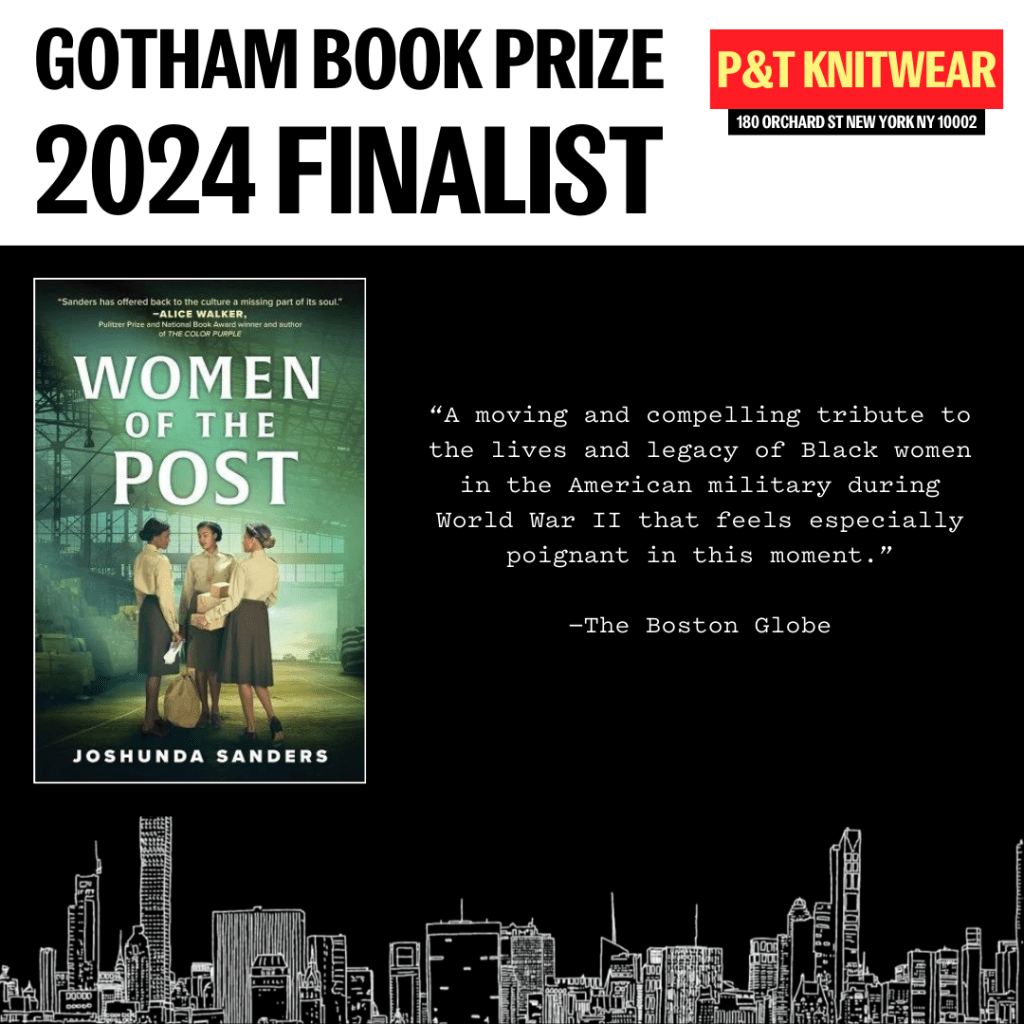
Thank you for your ongoing patience with me as I navigate a full and busy life. I’ve been gushing all over social media about the news that Women of the Postis a 2024 Gotham Book Prize finalist. The winner will be publicly announced next week, but in the meantime, here’s a little history about the prize, and why it’s such an honor to even be nominated.
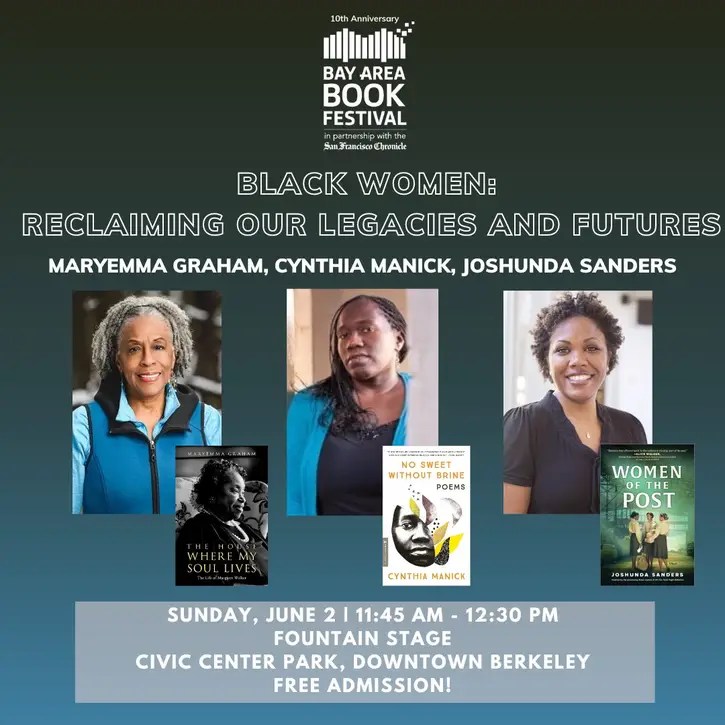
And I would be remiss not to mention that I’m headed back to the Bay Area for the 10th Anniversary of the Bay Area Book Festival to speak on a panel with some brilliant Black women, which is basically my favorite thing to do in life. Come visit if you’re at the festival!
Finally, in case I haven’t mentioned it enough, I spend most of any imagined free time I have writing reviews and other things at my Substack, Black Book Stacks. Here’s what I thought about Great Expectations by Vinson Cunningham, and what I’m reading now.
I realized when I was thinking about some of my favorite works of history or of historical significance about Blackness that they were across genres.
For instance, for colored girls who have considered suicide when the rainbow is enuf by Ntozake Shange was actually the second or third book of hers I read. Before that, I was in love with Liliane, Sassafrass, Cypress & Indigo, her poetry collection, The Love Space Demands. But what I loved most about for colored girls — which was recently a sold out production in all of its glory at The Public Theater — was that it showed Black women in our multicultural context. As being in relationship to Latinx, Caribbean and African spiritualities, dreams and aspirations. It showed our love and joy and pain as being Diasporic like a lot of Ms. Shange’s work.
In this way she was definitely a part of the literary tradition of recovering the wholeness of Black womanhood in the way that Zora Neale Hurston did in Their Eyes Were Watching God, one of my favorite novels of all time.
Much has been said about the beauty and timelessness of Their Eyes Were Watching God; to understand more about the life of Zora, however, an essential text is Valerie Boyd’s Wrapped in Rainbows. It is a classic example of the ways Black women’s lives are cherished in unique ways when we have Black women biographers to attend to the beautiful and brutal details of our lives.
Speaking of the unique beauty of having a Black woman author reflecting the details of Black women writers, bell hooks’ work has been foundational in helping me decode and externalize internalized biases that get in the way of my work. This includes everything from Sisters of the Yam, Writing About Race (a book in which I was surprised to find myself cited!!) to one of her most important books to me, Remembered Rapture: The Writer at Work. I often talk about this book because it was the first time I read a respected black woman author say that no Black woman could write too much; that we are always writing against time because of the illnesses that take us out, because our ancestors were silenced and we don’t have to be and much more.
I have not mentioned one of the most important writers in my development and understanding of the myriad possibilities for Black writers and intellectuals on a global scale yet, James Baldwin, in part because the book by which I was introduced to him is no longer in print. I had the great fortune to pick up a thick book, The Price of the Ticket, a collection of Baldwin’s essays in the early 1990s. Published in 1985, it represents some of his most powerful writing from 1948 to 1985. I read it in seventh grade and kept the book with me, somehow, across a lot of moves to a lot of different places. It reads to me like sacred text, and its beautiful cadences and nuances, the confidence and fear, the anger and disappointment, all elegant and alive, helped me really see America for the country that it is instead of the country I believe most of us want it to be.
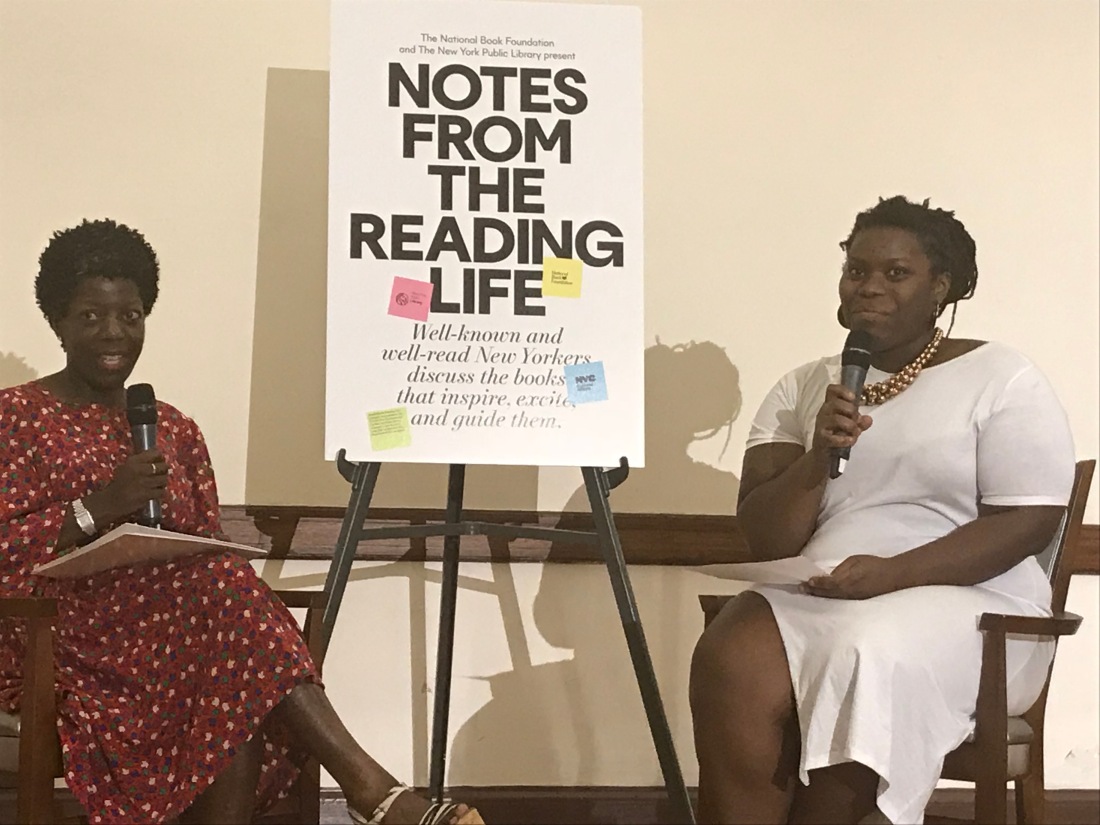
Last Friday evening, I was first in line at the Harry Belafonte Library in Harlem to listen to the first in a series of talks co-presented by the National Book Foundation and the New York Public Library called Notes from the Reading Life featuring two Black women I admire: Thelma Golden and Kaitlyn Greenidge.
Golden has been at the helm of The Studio Museum in Harlem for 17 years, and she is currently serving as Director and Chief Curator. Greenidge is the author of We Love You, Charlie Freeman (and, it must be said, has one of the best Twitter TLs in the game.)
It’s rare that I get to hear two Black women engage in a loving and wide-ranging conversation that centers a Black woman’s engagement with books and reading merely for fun. So of course, I took notes.
The value of attending talks like this is to remember how rejuvenating it is when Black women frame conversation and also how we view story versus how story is framed for us — and frankly, against us. Often, when others are charged with framing aesthetic conversation, in particular, they center themselves and put us at the margins.
For an artist, this makes it hard to invoke the imagination because you never spend any time in a rich, creative or fertile environment. But being in the audience for Golden and Greenidge was one such experience for me.
Golden started by saying she was excited about the renaming of the NYPL branch on 115th street where the talk was held on behalf of Harry Belafonte, and, “to walk in and see the photo of Langston Hughes, to be here in the Alvin Ailey community room — all cultural giants.” And then she underscored that it’s the work of the Studio Museum of Harlem to elevate such giants in ways that often aren’t.
Greenidge started by asking Golden who made her a reader. And Golden mentioned her father, who was born in Harlem, and worked in the building, actually, where the Studio Museum, now is, when it was a bank.
“Arthur Golden was a reader who loved literature. My mother was from Brooklyn. New Yorkers will understand this; when they got married, they compromised and moved to Queens,” she said, to my delight. (It’s hard enough trying to date someone from a different borough I can’t even imagine trying to marry one. Different blog for a different day.)
She described growing up in Queens in a house with what was then known as a den full of books from her father’s library, but no television. He was deeply interested in literature and encouraged her to read.
Her theory is that because she was born in 1965, when he was 40 — considered old for a parent in those days — he let her read anything. Or as she puts it, “We had a relationship to books that was very wide.”
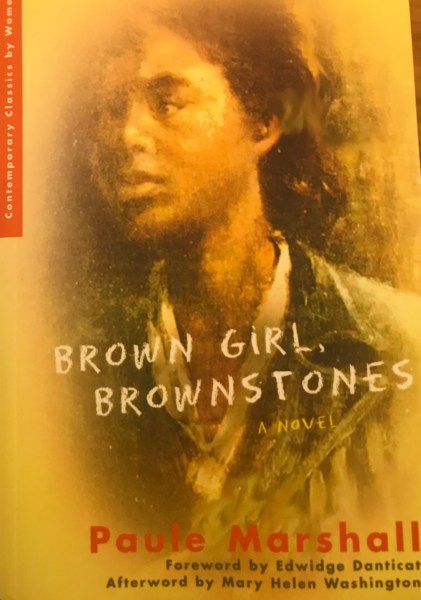
She read both A Tree Grows in Brooklyn and Paule Marshall’s Brown Girl, Brownstones when she was as young as 11, noting with laughter that her mother was very early trying to recruit her to view Brooklyn as the best borough. She read the latter again when she was 16 and again when she was older.
Her mother was from Barbados and grew up in Brooklyn with her siblings in a house purchased by her family in 1926 where some of her relatives still live.
“It wasn’t until I re-read Brown Girl, Brownstones that I really understood my mother and her journey and her quirks,” Golden said. You can think you know about the life of your mother, that it may resemble something that you read in a work of fiction that feels real.
But by reading Marshall’s work, Golden said, “They were all of a sudden actual facts. I asked her later in life, ‘Why did you give me that book?’ She said, ‘I wanted you to understand me better.'”
I don’t imagine I’ll have children of my own, but if that ends up being the path, I imagine this would be such a profound experience…to learn more about the inner life of your mother this way, both in person but also via a book that she loves and gifts to you.
Greenidge said, “I think what you’re describing is the magic of reading for kids. Children can be kind of narcissistic. We think the first time we feel something is the first time its happened.” Golden agreed and expounded on the idea of thinking her experiences were singular and the power of learning they were connected to history.
Which brought us to James Baldwin’s Another Country. (At this point, I admittedly got distracted from the bane of my existence and my lifeline to the world, my smartphone, but I believe I heard Golden said she took a seminar at Smith with James Baldwin when she was student) and he asked her who her favorite character in the novel was. And she said Ida, Rufus’ sister.
Baldwin’s 1962 novel explores the complex life and sexuality of Rufus Scott.
I came to quickly enough to hear this gem, “My father went to the same middle school as James Baldwin, and Countee Cullen was their teacher.” (!!)
I was so enamored of this because I have such generational envy for what Harlem was like during the time when Baldwin lived. I know I’m romanticizing it and it was probably as problematic and complex for Black women to navigate emotionally and artistically as every other space is today. But the richness, the products of the period, suggest that the magic had a power that provided at least some possibilities for transcendence. And that’s the part I love and very selfishly wish was still present/actively cultivated for Black writers, at least.
Walker is an example of what it means to be an exceptional living Black woman writer, much like Toni Morrison, the author of another Golden favorite, Sula.
Of all the luscious Morrison books I’ve had the privilege of savoring, Sula falls, for me, just slightly below the Scriptural supremacy and spiritual force in Song of Solomon. But Golden described Sula so poetically, noting that she loved reading it because it was “layered with all the things I know about the world.”
“I don’t want to make somebody else. I want to make myself.” Amen, Sula.
Golden said she never read The Bluest Eye, which is a statement I actually love. Although I did read it, and found that Pecola Breedlove’s envy of blond hair and blue eyes was actually quite resonant for me, I love a contrarian and this assertion (among others) gave me a sense of that streak in Golden. The spectacle of little black girls who hate themselves because they are not white is actually also not the healthiest or most edifying experience for young black girls, so I was happy for Golden, and envious, too, wanting to experience this vicarious liberation from thinking of my beauty in relationship to whiteness and having that praised even from the very beginning — of a life or of a career.
Still, Morrison is not only America’s greatest living novelist, but she is the originator of our current Black literary renaissance, insofar as writers like myself, readers like Golden and almost every Black woman writer I’ve ever known or met who perseveres through self-doubt and the other perils of the writing life have uttered and taken to heart Morrison’s words, “If there’s a book you want to read, but it hasn’t been written yet, then you must write it.”
“That informs my work as a curator, to provide room for so many artists of African descent, to make art to allow us into space,” Golden said. “Toni Morrison is, to me, a rigorous example of Black genius.”
The last of Golden’s favorite books she discussed with Greenidge were The Collected Autobiographies by Maya Angelou and Americanah by Chimamanda Ngozi Adichie.
It was nice to be reminded of Maya’s habit of keeping a hotel room in any city in which she visited, so that she could write without interruption, accompanied only with “two books, a bottle of sloe gin and a deck of cards,” Greenidge informed us.
Angelou’s work in memoir was the first instance of showing Golden, she said, “the stories we create of ourselves…the importance of the creation of our artistic selves. We get to make for ourselves a world that doesn’t make space for us.”
As for Americanah, Golden’s husband is Nigerian and lives in London. Along with the work that she leads and is invested in, she’s tied to Africa, then, “not just in the past, but also art, culture and ideas in the present.”
As a result, she said that she “felt profoundly seen,” by Americanah, in the same way she did by Zadie Smith’s On Beauty. “It’s what happens when outsiders look at your culture.”
Other notable aspects of the talk included the following:
When Greenidge asked Golden which book she would give to a small child if she had to, she mentioned Whistle for Willie by Ezra Jack Keats.
She recalled someone giving her a copy of Invisible Man and finding it formative. She mentioned that someone should write a biography of Ralph Ellison’s wife, Fannie Ellison — do your thing, Internet!
Since we were in Harlem, and Golden had made note of the pictures of Langston Hughes and other cultural giants of the neighborhood earlier, Greenidge mentioned the I, Too Arts Collective the literary nonprofit helmed by author Renee Watson that has continued to do God’s work preserving Langston Hughes’ brownstone and has transformed it into a site of community for writers of color. “I wish it had not been so hard. I wish it had been a natural act. So much of history is not in buildings. It’s in the neighborhood. I hope that while we continue to move toward our future, that we can continue to honor our past. This is a community with a deep and rich history. This wasn’t just a setting for great work. This neighborhood created opportunity for artists. I hope we can preserve that in ways that people will be able to touch and feel in the future.”
You should go to some of the future Notes from the Reading Life events if you’re in New York or if you’ll be in town for one that’s upcoming. Tonight, it’s a conversation between Tim Gunn & Min Lee. I’m so sad to say I’ll miss the conversation (in the Bronx!) between Desus Nice & Rebecca Carroll at the Bronx Library Center on June 15th — but you shouldn’t.





 Joshunda Sanders