Syllabus for Subversive Joy

My second semester as a Part-Time faculty person at The New School in the First Year Writing Program has officially started! I was tweeting about this course – the second I’ve designed — and there was a request to share it, so I thought I’d put it here and share with other scholars curious about pleasure politics and the overlaps/layers with regards to intersectional feminism. I can also post the Writing Toward Inclusion syllabus if that’s something of interest to y’all; let me know in the comments.

The essays/articles and scholarship that isn’t hyperlinked I accessed through the New York Public Library; I’m sure you can find copies through your local superheroes at your academic or public library institution as well. In future classes, I look forward to teaching adrienne maree brown’s Pleasure Activism which I just pre-ordered, and you should too!

I’ve adapted and erased some stuff below in order to streamline access to the best parts. Enjoy!

Course Description:

Subversive Joy: Writing the Senses As Resistance –In this first-year research seminar, we will examine literary works, theories and perspectives on the ways traditionally marginalized and/or oppressed communities have used humor, joy, spirituality and creativity to assert their humanity beyond constructs that only see some bodies as sites of trauma or for the uses of exploitation. After all, who doesn’t love an underdog, someone with so much faith and hope that they will make a way from no way? What does dedication to creating beauty and a legacy of art in a community that is rarely viewed in its full complexity truly mean, particularly for literature? Where and when has this resistance art flourished? Who has sought to de-legitimize it and have those efforts been successful? Is this simply an idealistic concept or is there scientific evidence that bears it out as necessary for survival? What is the impact on canon and individual work when trauma, pain and struggle are metabolized on the page into healing, connection and reconciliation? Readings may include Audre Lorde, Alice Walker, David Mura, Tommy Pico, Ross Gay, adrienne maree brown, Lucille Clifton, Gloria Anzaldua, bell hooks, Brittney Cooper and others.


Course Learning Objectives & Outcomes: Students who successfully complete this course will be able to conduct basic research and analyze text in order to write more comprehensive, relevant essays with inclusive audiences in mind. By the successful completion of this course, students will be able to:


  • Read texts critically for intersectional and inclusionary language and context
  • Contextualize feminist contemporary writing
  • Draft Annotated Bibliographies
  • Write effective and comprehensive narrative responses, analyses and critiques of work from a range of perspectives — especially intersectional feminist praxis –from an informed, historical perspective
  • Develop processes and strategies for identifying diverse and expansive primary and secondary sources of groundbreaking, visionary scholarship.


Required Texts

Most of the reading assignments are available online for free and will be posted to Canvas with the exception of

Rules for Writers by Diana Hacker and Nancy Sommers

Sister Outsider: Essays & Speeches, Audre Lorde

WEEK 1 Jan. 22

Jan. 24


Introduction & Overview of the Course


January 22: Introduction, Walk-Through of Syllabus, Course Policies & Procedures.

The Global Center for Advanced Studies: “The Subversive Act of Joy”

Reading Assignment for Next Class: David Mura, “On Race and Craft: Tradition and the Individual Talent Revisited” from David Mura’s book, A Stranger’s Journey: Race, Identity and Narrative Craft in Writing

January 24: Workshop with David Mura, author of A Stranger’s Journey: Race, Identity and Narrative Craft in Writing

WEEK 2 Jan. 29

Jan. 31

Research Methods for Writing Reading for January 29th: Rules for Writers, Chapter 50: Thinking like a researcher; gathering sources

Reading for January 31st: Sister Outsider, Audre Lorde: “Poetry is Not A Luxury”


WEEK 3 Feb. 5th

Feb. 7th

On Feelings, Power & Resistance Reading for February 5th: Sister Outsider, Audre Lorde: “Uses of the Erotic.”

Reading for February 7th: Rules for Writers, Chapter 51, Managing Information, Taking Notes Responsibly


WEEK 4 Feb. 12th

Feb. 14th


Preparing for Essay I


Introduction to Workshopping & Preparation for Essay I due February 28th

Reading for February 12th: Sister Outsider, Audre Lorde: “An Interview: Audre Lorde and Adrienne Rich.”

Reading for February 14th: “The History of Emotions: An Interview with William Reddy, Barbara Rosenwein, and Peter Stearns,” from History and Theory 49 (May 2010), 237-265


WEEK 5 Feb. 19th

Feb. 21

Drafting, Researching and Workshopping Reading for February 19th class: “The Meaning of Pleasure & The Pleasure of Meaning: Towards A Definition of Pleasure in ‘Reception Analysis,”” by Elisabeth Klaus & Barbara O’Connor 


WEEK 6 Feb. 26th

Feb. 28th


Writers on Joy and Happiness Reading for February 26th: Mary Pipher, January 2018, New York Times Op-Ed: The Joy of Being A Woman in Her 70s

Reading for February 28th : Zadie Smith on Joy

Essay I is DUE

WEEK 7 Mar. 5th

Mar. 7th

Joy & Struggle Outside of the U.S. Reading for March 5th: “The Joy of the Militancy: Happiness and the Pursuit of Revolutionary Struggle” by Yoana Fernanda Nieto-Valdivieso

Reading for March 7th: “‘I love myself when I am dancing and carrying on’: refiguring the agency of black women’s creative expression in Jamaican Dancehall culture,” by Bibi Bakare-Yusuf


WEEK 8  

Mar. 12th

Mar. 14th


Black Feminist Visions of a Politics of Pleasure  

Reading for March 12th: “Why We Get Off: Moving Towards a Black Feminist Politics of Pleasure,” by Joan Morgan, Winter 2015

Reading for March 14th: The Joys of Being A Black Woman, Crunk Feminist Collective 2011

Optional Revision of Essay I due (Part of In-Class/Online percentage)

NO CLASSES NEXT WEEK – HAVE A GREAT SPRING BREAK!

WEEK 9  

Mar. 26

Mar. 28

Rest & Resistance Reading for March 26th: “Resting in Gardens, Battling in Deserts: Black Women’s Activism” by Joy James, The Black Scholar, 1999

Reading for March 28th: Resistance as Happiness: David Blumenthal, CrossCurrents, March 2014


WEEK 10


Apr. 2nd

Apr. 4th


Drafting Essay 2 No Reading for April 2nd.

In-Class Writing: Draft Annotated Bibliography

Draft Thesis Statements and Outlines for Essay 2

Reading for April 4th: “Happiness (or not) after rape: hysterics and harpies in the media versus killjoys in black women’s fiction” by Zoë Brigley Thompson


WEEK 11  

Apr. 9th

Apr. 11th


Workshopping Essay 2 Drafts  

Reading for April 11th: Amber Rose & Black Women’s Sexuality, Bitch Magazine


WEEK 12  

Apr. 16th

Apr. 18th


Revolutionary Visions of Joy Reading for April 16th: “‘Learning to be Zen’: women travelers and the imperative to Happy” by Emily Falconer, Journal of Gender Studies, 2017

Reading for April 18th: Alice Walker, “In Search of Our Mothers’ Gardens: The Creativity of Black Women in the South. (1974)” from In Search of Our Mothers’ Gardens


WEEK 13  

Apr.23rd

Apr. 25th


Pleasure & Bliss in Writing & Activism Reading for April 23rd: Roland Barthes, The Pleasure of The Text

Reading for April 25th: “Five Tangible Tools of the Pleasure Activist” by adrienne maree brown  


WEEK 14  


Apr. 30th

May 2nd


Creative Resistance & Revision Draft Thesis Statements, Outlines & Workshopping

Reading for April 30th: “Tryin’ to Scrub that ‘Death Pussy’ Clean Again: The Pleasures of Domesticating HIV/AIDS in Pearl Cleage’s Fiction” by Timothy S. Lyle, African American Review, Summer 2017

Reading for May 2nd: Ross Gay on the connections between gardening and poetry, Wild Love.


WEEK 15  

May 7th

May 9th


  No Reading for May 7th, Final Workshop, Course Evaluations

 May 9th: ESSAY 3 DUE, Final Class


Celebrating a Profound Literary Inheritance: Glory Edim on the Well-Read Black Girl Anthology

Celebrating a Profound Literary Inheritance: Glory Edim on the Well-Read Black Girl Anthology

Celebrating a Profound Literary Inheritance: Glory Edim on the Well-Read Black Girl Anthology
— Read on longreads.com/2018/11/06/glory-edim-on-the-well-read-black-girl-anthology/

Writing Yourself Well

It makes sense to me that writers don’t agree on whether writing is therapeutic.

For me, it always has been, but for some, writing is just hard and grueling. Writing  has always been a site of pleasure even when I was writing about pain. It has offered me sanctuary and escape, transformation and beauty, solace, comfort and more.

As I’ve gotten older and grown in confidence and experience, writing has started to also offer me joy.

For Black women, especially, who are expected to do so much emotional labor and work in different contexts in this country, joy is a revolution. It is an act of resistance to decide to be well, and to choose joy.

This was hard to do this week, especially. I argued with myself about it, somewhat publicly on Twitter, briefly. I wrestled, privately, with whether I should be sharing. I have been writing, in no particular order, about the historical trauma and chronic stresses that Black women hold in our bodies due to racism; the long and ignored history of Black women’s political participation in this country since before the Nineteenth Amendment; fiction and poetry at the intersection of police violence, mental health, and Black Christian resistance to the full range and humanity of queer identities that literally kill Black women with silence — directly or indirectly.

When I finally stopped; when I realized I was triggered and needed to step away, there was more to be done but there was also a historic spectacle centered on the devaluation of women and patriarchal resentment — where a respectable woman was speaking bravely and an angry, livid, entitled white man was lashing out angrily and I just could not be a witness. I could not do the work of being a witness because I was tired.

I say this not because I want anyone to play any tiny violins for me — my life is wonderful and full and I have privileges that I have been both blessed with and I have worked my ass off for. I say this because I wish when I was younger I would have read, seen and heard more Black women say and model for me what to do when you are depleted.

We have seen with the very public suicides of celebrities what happens when people suffer privately with their demons; but there’s another choice to overwhelm. There’s a proactive answer to overwhelm, to fatigue, to the stress of burnout: Go some place quiet. Fill yourself up. Do what you want to do, for as long as you can, for as long as you can afford to. Do not die, literally or figuratively, at the mercy of what you think other people expect you to perform of your pain.

I’m thankful to have friends and loved ones to affirm me and to affirm this. They save my life. Every day. Every hour. Every moment — often without realizing it. They are constant reminders that I don’t have to expose myself constantly to things that are triggering and nor do you.

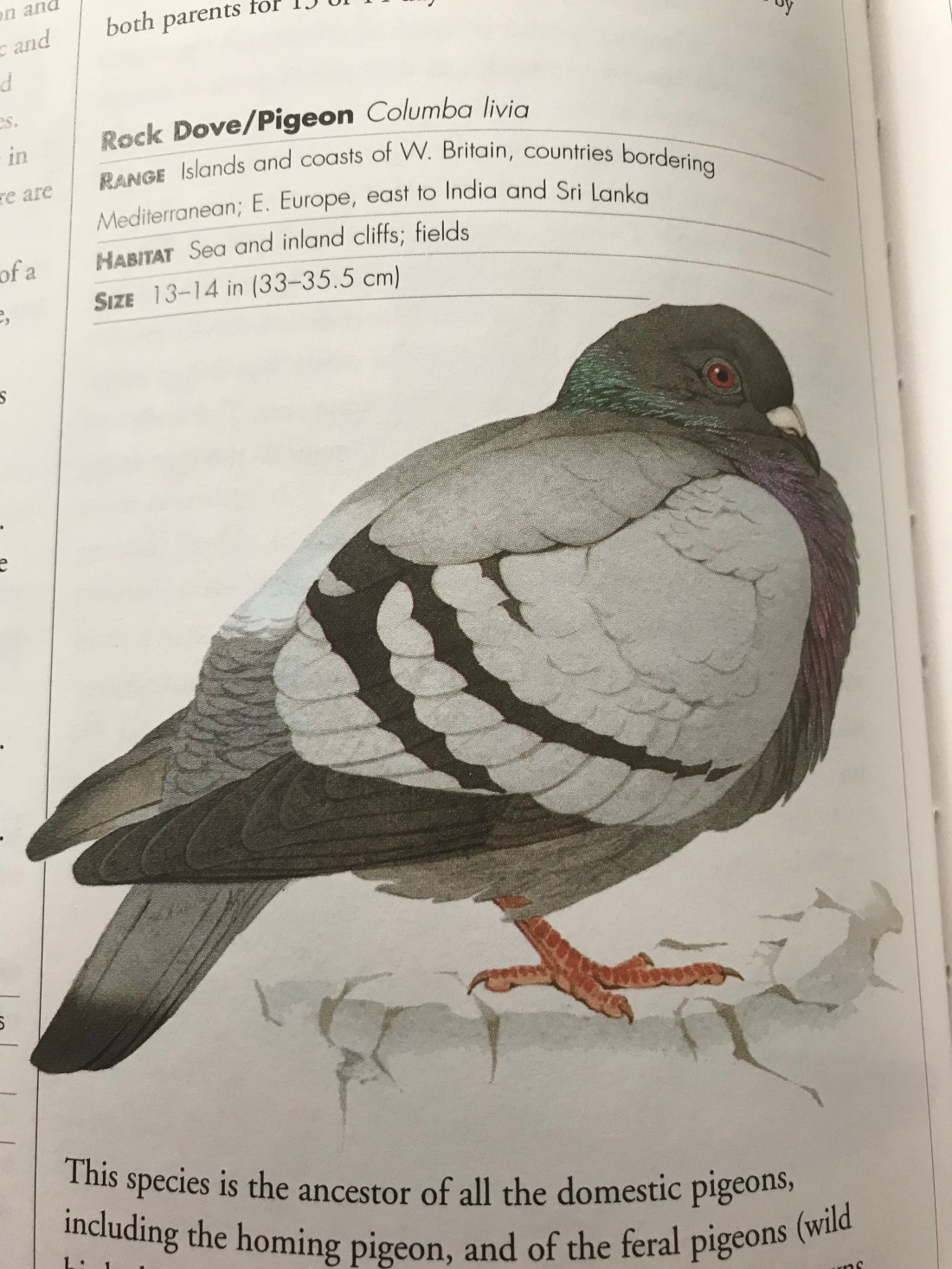
That is a long, precious set up for this essay about pigeons, which I know will seem so random and is a bit different for me. I wanted to laugh and humor myself after exposure to hard things and a ton of hard work, so there you have it.

Yes, hard things are happening, and there is work to be done. But I can still claim joy in some of these moments to write myself well. And you can, too.


Serena & The Humanity of Black Women

It was a gift, especially as I teach the Combahee River Collective statement from 1977 and remind folks that we have been fighting for a long time on behalf of our own freedom not just for the sake of ourselves but so that everyone else can be free, too, to write this for Mic.

It’s more convenient for white sports fans, of course, to turn the healthy, justified rage of black bodies gazed upon for money-making sport into a weapon formed against us. But like Colin Kaepernick, Serena is a generosity. She won’t let anyone or anything make her flat or less complex. Like Shirley Chisholm, she is unbought and unbossed. She contains multitudes. She can be both livid and kind, distraught and sweet, within the same hour.

What audacity, what nerve, that black girl with the big hair and the strong legs and amazing body has, showing up, demanding to be seen as human. What a gift, in this time, in this void of regal reckoning for black or brown bodies anywhere but fictitious worlds, that we get to witness Serena’s humanity unfurl, unedited.

Kirkus Feature: Jacqueline Woodson

“Our community is such a community of survivors and resisters and resilience. We’ve been like water when we have also wanted to be a bridge. Day by day, I have to find a way to figure out a way to do self-care. Writing is very cathartic for me; creating worlds where people end up OK is very helpful. Whatever’s happening now is happening for a reason, the thing that happens when there’s a big, big shift coming.”

Jacqueline Woodson on her latest books, Harbor Me and The Day You Begin

Farewell, Queen Aretha

This summer was the second in a row I got to teach writing with one of my favorite groups on earth, Young Women Empowered. Y-WE Write has educated me about what it means to foster brave space with young people, how to be vulnerable as a creator and writer and teacher, how to find my process through explaining it, which parts of my story are most beneficial to share with this generation of young writers now. It has been held at Whidbey Institute, on Whidbey Island, which is also home to the writer’s residency Hedgebrook. For this reason, the Pacific Northwest has become my healing sanctuary, place where I have been shielded from hard things in recent years.

So it was with a heavy, heaving heart that I peeked at the news to take note of Aretha Franklin dying while I was there. I got there almost two weeks ago Sunday, and spent the full week waking in the morning to some of my favorite songs, trying to articulate what she meant to my life. Before she died that Thursday, one of my students asked a question about how you keep from feeling like so many people are writing about something or someone that anything you write might be inferior — and I could hear their voice in my head as I read and bookmarked long articles and obituaries for Aretha, wondering what, if anything there was left to say.

When I was done showing up for the young women I came there to teach, as we mourned and celebrated Aretha together; after I cried leaving them and they offered me such sweet, adoring words of affirmation and I flew to Newark on a red-eye, landed, drove 2.5 hours to the middle of Pennsylvania for a two-day workshop to discover a really significant shift to my work in progress that will make it soar in a way that I could have never found on my own (Thank you Highlights Foundation!!) drove 2.5 hours back to New York City after being away from home 10 days, attended an all-day faculty orientation the following day that left me with just enough mental energy to finish writing what I needed to, I was able to write this piece about Aretha Franklin and what she means to me, and what I believe she means for Black women, in particular.  It was important to write not because I felt like I needed to write about Aretha because other people were writing about Aretha, but because I wanted to read work about Aretha that centered what I know other Black women would want to read and see lifted up about the Queen of Soul as we prepare for her homegoing.


A review of Black KkKlansman featured on Medium

Happy Summer Friday!

At Cannes Film Festival, Black KkKlansman got something between 7 and 10 standing ovations — the industry magazines literally could not agree on how many times the folks at Cannes broke out in applause between the credits and the end of the movie — and they were well-deserved. If you’ve been reading my work for awhile (thank you! you’re the best!) you know that I’m not a gusher. I don’t do a lot of hyperbole, and I certainly don’t do it in the summer when it’s hot like this and I need to conserve my energy.

But I liked Black KkKlansman so much that I took time away from some other writing to share some thoughts about it because I think it’s important to watch and be in conversation about.

I wrote a review from my notes back in June which is featured on Medium, which is also exciting because I’ve been contributing to Medium for awhile and my work hasn’t been featured on the platform before.

If you’re the kind of person who reads reviews before you see a film, let me know what you think — but I’d be interested in hearing your thoughts anyway, if you see it. (You should also read one of my favorite critics, A.O. Scott, who educated me about that opening shot; I obviously blocked out huge swaths of “Gone With The Wind” but learned a great deal about cross-cutting and “Birth of a Nation” in his review.)

But even if reading reviews isn’t a thing you do, you should see Black KkKlansman because it’s Spike Lee at the height of his potential. Because it’s John David Washington stepping out of his father’s shadow (at least in his own mind and maybe for others who don’t yet know him but certainly will, and he has some exciting additional projects outside of Ballers coming up later this fall) and into his power as a humble but exciting talent to watch as a leading man. It’s also rare for the Black community to have this generation of creatives who have parents and mentors who paved a way for them to take on dynamic roles like this which have nuance and substance.


Summer Music & Magic

I’ve been more quiet than usual because I’ve been dusting off my photography/summer counselor skills at Jewish surf camp (!) [more on that later, obviously] interviewing my share of incredible writers for Kirkus Reviews, reading and watching and reporting all of kinds of other things for other stories, finishing up my work in progress draft, for which I am in the final stages (last push! OMG!) and trying to find the essence of this thing they call the “summer slow down” (Have you seen it? Is it really real?)

Anyway, when the rest of the world is back to school and on a more regular schedule, I suppose I will be, too. In the meantime, I wrote this piece about the dynamic poet JP Howard, a Harlem native in Brooklyn and fellow VONA/Voice Workshop alum for Literary Hub, which posted today. I also spent some time writing this other piece for Bitch Magazine about my favorite albums from 1998, which I can’t even believe was 20 years ago!

I hope you’re enjoying your summer. How are you spending it out there?

My 2004 interview with Octavia Butler

“I’m black. I’m solitary. I’ve always been an outsider.”

This is how Octavia Butler described herself, the first self-possessed Black woman writer introvert, I had the honor of writing about for publication. Actually interviewing her was one of the great honors of my life, two years before her death in 2006. I wonder what she would have made of this beautiful Google Doodle, which I was delightfully surprised to see this morning before I went to sleep.

OctaviaButlerGoogleDoodle71

I was 26 when I interviewed her and Octavia Butler was the first person of consequence who was meaningful to the culture that I would interview. That year, I would also meet my mentor, and interview other influential Black women writers and scholars who inspired me to keep writing, even if they may not have been aware that’s what they were doing in the moment.

What I found most delightful about Octavia Butler was how unimpressed she was with herself and her habits. She had so many gifts that she shared with us, and so much wisdom. Our elders can see ahead on the path, can keep us from making mistakes we don’t need to.

I’ll always be so grateful for how generously kind she was with me, even though I was so clearly new at interviewing writers. I greatly respected how she wove stories even when she was talking about the most mundane things – we were discussing her first visit to New York, for instance, when she described the stamina you need to do something physical as akin to the writing life: “I think climbing mountains or buildings or whatever has been a really good metaphor for finishing my work. Because no matter how tired you get, no matter how you feel like you can’t possibly do this, somehow you do.”

Even if our culture only values what we can see at this moment, what they offer us is information about coping with the hard things in life – in the past, in what they imagined the future to be – that can tell us much more than any anxiety might be able to.

Here’s the whole interview, as republished by In Motion Magazine from Africana.com:

Interview with Octavia Butler

“… one of the few African American women writing
in the male-dominated science fiction genre”

by Joshunda Sanders
Oakland, California

Octavia Butler is one of the few African American women writing in the male-dominated science fiction genre. The worlds she creates with her pen are groundbreaking, powerful multicultural revisions of history; sometimes frightening and complex visions of the future. The author of twelve books and an award-winning collection of short stories, Butler was also the recipient of an esteemed MacArthur Fellowship grant in 1995 — the only science fiction writer on a list of more than 600 names in the last 20 years. She’s also won the most esteemed awards in the genre: the Hugo and Nebula wards for her books and short stories.

While she has referred to herself simply by saying, “I’m black. I’m solitary. I’ve always been an outsider,” Butler, 56, manages to render the emotional lives of her characters like an insider. It is a talent that she attributes to her life’s journey — she challenges her readers to confront themselves in spite of their circumstances and often, because of them.

The only living child of a shoeshine man and a maid who grew up a bookworm and loner in Pasadena, California has crafted the universe according to Octavia Estelle Butler since she was four; though she didn’t start making a living at it until she was older. Before she embarked on a professional writing career, she took writing classes, did odd jobs — from telemarketing to sorting potato chips — before she sold her first novel, Patternmaster, in 1976. Currently, she is on tour, celebrating the 25th Anniversary of the publication of Kindred — the story of a modern day woman who is transported back to the antebellum South to save her white ancestor. Her most recent works, two short stories entitled “The Book of Martha” and “Amnesty,” are online at www.scifi.com.

Joshunda Sanders: You grew up in Pasadena, California? What made you want to move to Seattle?

Octavia Butler: I went to Seattle for the first time in 1976. My first novel was published then, and that meant that I could take my first vacation. I got on a Greyhound bus and took a Greyhound Ameripass tour, which means that for a month I could go wherever I wanted to on Greyhound. There were a lot more buses then, so it was nice. Now I’m not sure it would be, because they get into so many places in the middle of the night and they leave in the middle of the night. So, it’s kind of inconvenient. But anyway, I went to Seattle, among other places. I went first to New York, because I’d never been there and I wanted to go.

Joshunda Sanders: What’d you think of New York?

Octavia Butler: I had a great time there. I met this West Indian woman, we were both going to the Statue of Liberty. She was wearing these thick-soled sandals, really uncomfortable shoes. We were both going to go to the top of the Empire State Building. Now, with me, my only excuse is that I’m not in shape, and wasn’t then. And with her, it was her feet. We’d encourage each other back and forth going to the top. And finally made it.

I think climbing mountains or buildings or whatever has been a really good metaphor for finishing my work. Because no matter how tired you get, no matter how you feel like you can’t possibly do this, somehow you do.

I hiked down not quite to the bottom of the Grand Canyon because I only had that one day, it was part of the same trip. I discovered that I didn’t really like going to cities, so I went to National Parks. And I hiked almost to the bottom and I realized that the bus was going to leave me if I didn’t get myself back up. Now it’s easy going down, but coming back up…and I did it c ompletely unprepared. So, I didn’t have any water… this is not sensible and I don’t think anyone should do it. I didn’t have anything except maybe some candies like this [she holds up a peppermint candy] because they tend to live at the bottom of my bag. And I kept thinking, “How embarrassing, and how humiliating it would be if somebody had to come get me.” I mean, it really hurts to walk that much if you’re out of shape and not used to it.

Joshunda Sanders: Why did you think you could do it?

Octavia Butler: It never occurred to me. I didn’t know what I was doing. I mean, it was a totally silly thing to do. And I kept trying and I would push myself. Part way down and part way back the only water was when it began to rain. And then it began to rain sideways and it plastered mud all down the front of my body. But I got back up on my on two feet, which really hurt by the time I got back up. And it’s sort of like writing.

When I went to Peru, I climbed Huayna Picchu, the taller of the two peaks you see when you see Machu Picchu. It’s an easy climb for anyone who is okay, you know. I mean, even if you’re not in very good shape. But I managed to hurt my knee hiking. I kept saying, this is high enough, this is high enough, why don’t I go back down? I got all the way to the top, crawled through the little cave and got to the top of the mountain and came back down. That’s what I mean. It’s a good metaphor for writing, because there will always come a time in writing a novel for instance, a long undertaking like that, when you don’t think you can do it. Or, you think it’s so bad you want to throw it away. I tell the students that there comes a time when you want to either burn it or flush it. But if you keep going, you know, that’s what makes you a writer instead of an “I wish I was a writer.”

I had a dentist when I was down in Pasadena and he knew I wrote and I had given him a couple of my books. And his attitude then was, “Well, writing is so easy even she can do it, so I’ll do some writing.” And he wrote the most appalling piece of…well. Truly bad. And he gave it to me to read. And I should have said, well, for legal reasons I don’t want to read your work, but I did him a favor and read his work. But what I had to say about it, as gently as I could say it, was, “Let this be an exercise, go take a class, here are some of the problems you might want to work on.” Very gently. But I never really wanted to let him at me with a drill again after that. So it cost me a dentist. But that was his attitude, you know, if I was doing it, it must be easy and anybody could do it.

Joshunda Sanders: A lot of people have that attitude about writing, but one of the things that strikes me about your work in particular is that it’s so complex that I don’t understand how people could come to you with that sort of cavalier attitude.

Octavia Butler: I don’t think they see it that way. I think their attitude has more to do with me than with the work. Just me, as a black, as a woman, or as a woman who doesn’t look as though she could do anything terribly complex.

Joshunda Sanders: That doesn’t frustrate you?

Octavia Butler: Oh, I’m doing okay.

Joshunda Sanders: What is it that fascinates you about books?

Octavia Butler: My big problem is my mother gave me this gene — there must be a gene for it, or several perhaps. It’s the pack rat gene, you know, where you just don’t throw things out. I haven’t thrown books out since I was a kid. I gave some books away when I was a little girl. My mother said I could give some to the Salvation Army. I gave some to a friend, and her brothers and sisters tore them bits. That was the last time I gave books away in large amounts. I just keep stuff. I still have books from childhood.

Joshunda Sanders: That’s a blessing.

Octavia Butler: It comforts me. I imagine when I’m dead someone will have a huge yard sale or estate sale and I don’t care! Some of them are worth something. Even my comic books — I have first editions of this and that, the first issue of the Fantastic Four. I used to collect them, not in the way that people collect things now. I didn’t put them in plastic bags and never touch them. I read them and they looked pretty bad, some of them. But they’re still worth something just because they are what they are.

Joshunda Sanders: How has your childhood affected your work?

Octavia Butler: I think writers use absolutely everything that happens to us, and surely if I had had a different sort of childhood and still come out a writer, I’d be a different kind of writer. It’s on a par with, but different from, the fact that I had four brothers who were born and died before I was born. Some of them didn’t come to term, some of them did come to term and then died. But my mother couldn’t carry a child to term, for the most part something went wrong. If they had lived, I would be a very different person. So, anything that happens in your life that is important, if it didn’t happen you would be someone different.

Joshunda Sanders: People attach a lot of titles to you –

Octavia Butler: Please don’t call me the grand dame. Someone said it in Essence and it stuck.

Joshunda Sanders: You’re annoyed by it?

Octavia Butler: Well, it’s another word for grandmother! I’m certainly old enough to be someone’s grandmother, but I’m not.

Joshunda Sanders: What about the science fiction or speculative fiction titles attached to your work?

Octavia Butler: Really, it doesn’t matter. A good story is a good story. If what I’m writing reaches you, then it reaches you no matter what title is stuck on it. The titles are mainly so that you’ll know where to look in the library, or as a marketing title, know where to put it in the bookstore so booksellers know how to sell it. It has very little to do with actual writing.

Joshunda Sanders: Have you found that it intimidates African Americans, in particular?

Octavia Butler: No. I think people have made up their minds that they don’t like science fiction because they’ve made up their minds that they know what science fiction is. And they have a very limited notion of what it is. I used to say science fiction and black people are judged by their worst elements. And it’s sadly enough still true. People think, “Oh, science fiction, Star Wars. I don’t like that.” And they don’t want to read what I’ve written because they don’t like Star Wars. Then again, you get the other kind who do want to read what I’ve written because they like Star Wars and they think that must be what I’m doing. In both cases they’re going to be disappointed. That’s the worst thing about verbal shorthand. All too often, it’s an excuse not to do something, more often than it’s a reason for doing something.

There isn’t any subject you can’t tackle by way of science fiction. And probably there isn’t any subject that somebody hasn’t tackled at one time or another. You don’t have the formulas that you might have for a mystery, or even a romance. It’s completely wide open. If you’re going to write science fiction, that means you’re using science and you’ll need to use it accurately. At least speculate in ways that make sense, you know. If you’re not using science, what you’re probably writing is fantasy, I mean if it’s still odd. Some species of fantasy…people tend to think fantasy, oh Tolkien, but Kindred is fantasy because there’s no science. With fantasy, all you have to do is follow the rules that you’ve created.

Joshunda Sanders: There are so many parts of the Parables, for instance, that seem to echo what’s happening in the world right now.

Octavia Butler: Keep in mind that when I wrote them, Bush wasn’t president. Clinton had yet to be reelected. When I wrote them the time was very different. I was trying not to prophesize. Matter of fact, I was trying to give warning.

One of the kinds of research I did was to read a lot of stuff about World War II. Not the war itself, but I wanted to know in particular how a country goes fascist. So, I have this country, in Parable of the Sower, and especially Parable of the Talents, sliding in that direction. And I really was not trying to prophesize that somehow we would do that but…

Joshunda Sanders: Is it jarring to you, with the new mission to Mars and such?

Octavia Butler: Oh, no, I don’t see any reason to pay attention to that. I don’t think Bush is any more serious about Mars than he was about getting rid of some of our emissions in the atmosphere. It’s just something he said and probably forgot it a moment later. Or will eventually. Because, after all, it’s not something that’s supposed to happen while he’s still in office. It can’t. So I don’t think we need to really pay any attention to that.

Joshunda Sanders: You came of age when there was an actual space race, but my generation is a little removed from that.

Octavia Butler: I think of the space race as a way of having a nuclear war without having one. I mean that literally. We had a competition with the USSR and from that competition came a lot of good technical fallout. We learned a lot of things we hadn’t know before, even things that apply to weapons systems and yet we didn’t wipe each other out. I mean, there were people who thought a nuclear war would be a cool idea. During the early part of the Reagan era, there were people who thought we could win a nuclear war and rid ourselves of the Soviet Empire. I thought they were nuts, but they were there. And Reagan got into office in spite of the fact that he thought a nuclear war was winnable.

Joshunda Sanders: That’s heavy stuff.

Octavia Butler: I got my idea for the Xenogenesis books (Dawn, Adulthood Rites and Imago) from Ronald Reagan because he was advocating this kind of thing. I thought there must be something basic, something really genetically wrong with us if we’re falling for this stuff. And I came up with these characteristics. The aliens arrive after the war and they tell us that we have these two characteristics that don’t work and play well together. They are intelligent, and they tell us we’re the most intelligent species they’ve come across. But we’re also hierarchical. And I put this after the big war because it’s kind of an example. We’ve one-upped ourselves to death, just our tendency to one-up each other as individuals and groups, large and small.

It has a greater consequence if you combine it with intelligence. If what you have is two elk fighting over who’s going to make the food, I mean, the consequences to them…but if you’re going to have somebody sending people off to war for egotistical or economic reasons, both hierarchal sorts of reasons, you end up with a lot more dead people. When you’re throwing nuclear weapons in the pie, which is what we were doing back then, you end up with more dead people than any war before. It could have been very bad.

Joshunda Sanders: Do some of your ideas disturb you or keep you up at night?

Octavia Butler: A lot of the ones in the Parables, of course, did. Like I said, they weren’t things that I wanted to happen. Kindred was a difficult book to write because of the research I had to do. The slave narratives, the histories in general — I read books written by the wives of plantation owners, at the LA Public Library. Unfortunately, a few years after that, somebody torched it. Some of the books I used to write Wild Seed and Kindred, they would have been one copy in the library and now they’re gone.

Joshunda Sanders: Why do you think Kindred has been one of your more popular works?

Octavia Butler: Because it’s accessible to a number of audience: black studies, oh, I guess I have to modify my vocabulary here — African American studies, women’s studies and science fiction. It sometimes reaches people who might not otherwise read that kind of book, who might not read a history, a historical novel even about that period unless it was a Gone With the Wind type.

[With Kindred] I chose the time I was living in. I thought it was interesting to start at the bicentennial and the country’s 200 years old and the country’s still dealing with racial problems, and here’s my character having to deal with slavery all of a sudden. If I had written the book now, it probably wouldn’t be very different. What I was trying to do is make the time real, I wanted to take them back into it. The idea was always to make that time emotionally real to people. And that’s still what it’s about. The nice thing is that it is read in schools. Every now and then I hear about younger kids reading it and I wonder how they relate to it. All too often, especially young men, will feel, “Oh, if it was me, I would just…” and they have some simple solution that wouldn’t work at all and would probably get them killed. Because they don’t really understand how serious it is when the whole society is literally arrayed against you and arrayed to really keep you in your place. If you get seriously out of line, they will kill you because they fear you.

Kindred was kind of draining and depressing, especially the research for writing it. I now have a talk that begins with the question, “How long does it take to write a novel?” and the answer is, as long as you’ve lived up to the time you sit down to write the novel and then some. I got the idea for it in college. But a lot of my reason for writing it came when I was in preschool, when my mother used to take me to work with her.

I got to see her not hearing insults and going in back doors, and even though I was a little kid, I realized it was humiliating. I knew something was wrong, it was unpleasant, it was bad. I remember saying to her a little later, at seven or eight, “I’ll never do what you do, what you do is terrible.” And she just got this sad look on her face and didn’t say anything. I think it was the look and the memory of the indignities she endured. I just remembered that and wanted to convey that people who underwent all this were not cowards, were not people who were just too pathetic to protect themselves, but were heroes because they were using what they had to help their kids get a little further. She knew what it was to be hungry, she was a young woman during the Depression; she was taken out of school when she was ten. There were times when there was no food, there were times when they were scrambling to put a roof over their heads. I never had to worry about any of that. We never went hungry, we never went homeless. I got to go to college and she didn’t even get to finish elementary school. All that because she was willing to put up with this nonsense and try to help me. I wanted to convey some of that and not have it look as though these people were deficient because they weren’t fighting. They were fighting, they just weren’t fighting with fists, which is sometimes easy and pointless. The quick and dirty solution is often the one that’s most admired until you have to live with the results.

Joshunda Sanders: So I hear you’re working on a book about a vampire?

Octavia Butler: It’s sort of like my Wild Seed for this time in my life. I wrote Wild Seed as my reward for having written Kindred. I wrote the two Parable books and I was trying to write a third, and I wasn’t getting anything worthwhile done. To me, writer’s block doesn’t mean that I can’t write — it just means that what I’m writing is not worth anything and that writing it is difficult and unpleasant. And then, for some reason I got hold of a Vampire story and it was a lot of fun, I really enjoyed it. And after awhile, I found myself writing one. It’s a novel, I’m enjoying it and I hope other people will, too.

Joshunda Sanders: Where do you get your ideas?

Octavia Butler: When I got the idea for Patternmaster, I was twelve, but I had no idea how to write a novel. I tried, but it was quite a few years before I was able to write it. When I got the idea for Mind of My Mind, I was 15. When I got the idea for Survivor, I was 19. Finally, when I got the idea forKindred, I was in college. My ideas generally come from what’s going on around me. But sometimes they come from other novels. For instance, when I wrote Patternmaster, I included these people called the Clay Arks and they were just kind of throwaway people, but I didn’t like them as throwaway people and I wanted to know more about them. So I wrote Clay’s Ark. And learned about them as I went along. Sometimes a book will seem like one book and turn into two or three, which happened with the Xenogenesis books.

Sometimes I hear from people who want to write and [they ask] what should they do? The first thing I want to know from them is, are they writing? Are they writing every day? And a remarkable number of them are not. Do they read omnivorously, because that’s not only a source of ideas, but a way to learn to write, to see what other people have been up to. I recommend that they take classes because it’s a great way to rent an audience and make sure you’re communicating what you think you’re communicating, which is not always the case, and I recommend that they forget a couple of things. Forget about talent. I recommend that they go to the bestselling lists and see who else doesn’t have talent and it hasn’t stopped them, so don’t worry. Forget about inspiration, because it’s more likely to be a reason not to write, as in, “I can’t write today because I’m not inspired.” I tell them I used to live next to my landlady and I told everybody she inspired me. And the most valuable characteristic any would-be writer can possibly have is persistence. Just keep at it, keep learning your craft and keep trying.

Published in In Motion Magazine March 14, 2004

First published in Africana.com ( February 24, 2004. Africana content © Copyright 1999-2003 Microsoft Corporation. All rights reserved to media owners. Re-published with permission.

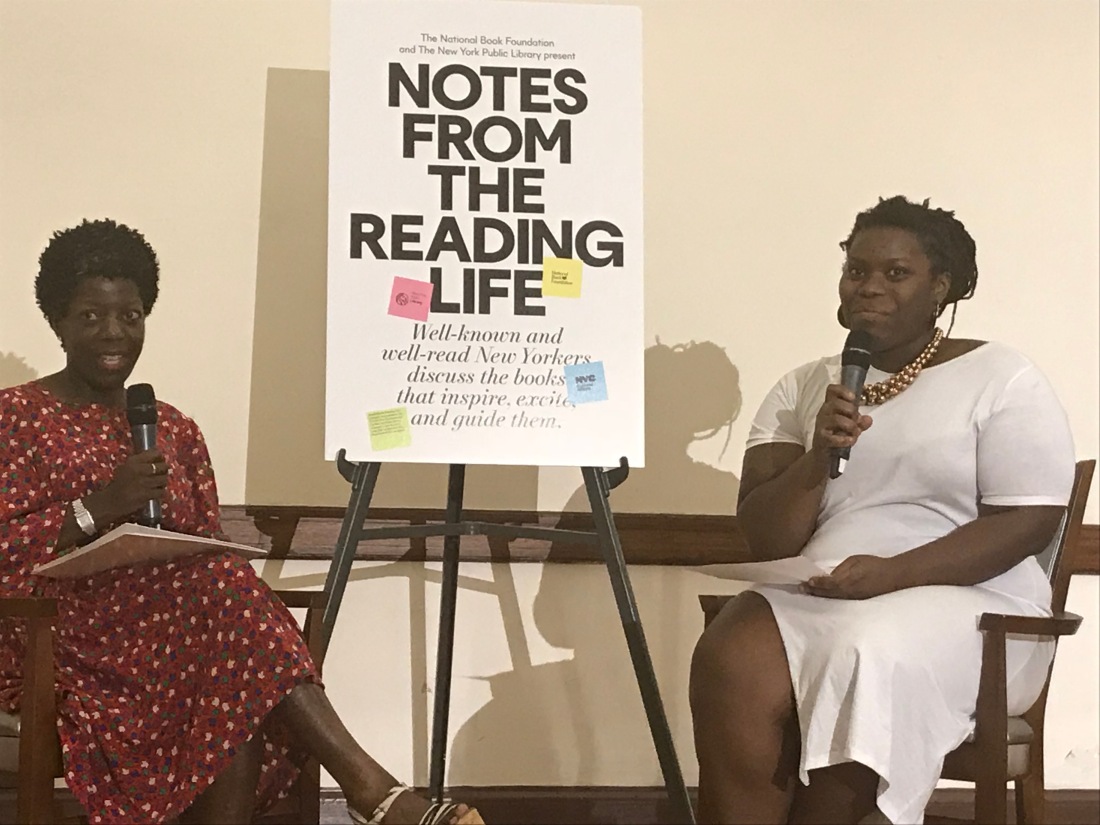
Notes From the Reading Life: Thelma Golden & Kaitlyn Greenidge

IMG_1866
One of Thelma Golden’s favorite novels.

Last Friday evening, I was first in line at the Harry Belafonte Library in Harlem to listen to the first in a series of talks co-presented by the National Book Foundation and the New York Public Library called Notes from the Reading Life featuring two Black women I admire: Thelma Golden and Kaitlyn Greenidge.

Golden has been at the helm of The Studio Museum in Harlem for 17 years, and she is currently serving as Director and Chief Curator. Greenidge is the author of We Love You, Charlie Freeman (and, it must be said, has one of the best Twitter TLs in the game.)

It’s rare that I get to hear two Black women engage in a loving and wide-ranging conversation that centers a Black woman’s engagement with books and reading merely for fun. So of course, I took notes.

The value of attending talks like this is to remember how rejuvenating it is when Black women frame conversation and also how we view story versus how story is framed for us — and frankly, against us. Often, when others are charged with framing aesthetic conversation, in particular, they center themselves and put us at the margins.

For an artist, this makes it hard to invoke the imagination because you never spend any time in a rich, creative or fertile environment. But being in the audience for Golden and Greenidge was one such experience for me.

Golden started by saying she was excited about the renaming of the NYPL branch on 115th street where the talk was held on behalf of Harry Belafonte, and, “to walk in and see the photo of Langston Hughes, to be here in the Alvin Ailey community room — all cultural giants.” And then she underscored that it’s the work of the Studio Museum of Harlem to elevate such giants in ways that often aren’t.

Greenidge started by asking Golden who made her a reader. And Golden mentioned her father, who was born in Harlem, and worked in the building, actually, where the Studio Museum, now is, when it was a bank.

“Arthur Golden was a reader who loved literature. My mother was from Brooklyn. New Yorkers will understand this; when they got married, they compromised and moved to Queens,” she said, to my delight. (It’s hard enough trying to date someone from a different borough I can’t even imagine trying to marry one. Different blog for a different day.)

She described growing up in Queens in a house with what was then known as a den full of books from her father’s library, but no television. He was deeply interested in literature and encouraged her to read.

Her theory is that because she was born in 1965, when he was 40 —  considered old for a parent in those days — he let her read anything. Or as she puts it, “We had a relationship to books that was very wide.”

She read both A Tree Grows in Brooklyn and Paule Marshall’s Brown Girl, Brownstones when she was as young as 11, noting with laughter that her mother was very early trying to recruit her to view Brooklyn as the best borough. She read the latter again when she was 16 and again when she was older.

Her mother was from Barbados and grew up in Brooklyn with her siblings in a house purchased by her family in 1926 where some of her relatives still live.

“It wasn’t until I re-read Brown Girl, Brownstones that I really understood my mother and her journey and her quirks,” Golden said. You can think you know about the life of your mother, that it may resemble something that you read in a work of fiction that feels real.

But by reading Marshall’s work, Golden said, “They were all of a sudden actual facts. I asked her later in life, ‘Why did you give me that book?’ She said, ‘I wanted you to understand me better.'”

I don’t imagine I’ll have children of my own, but if that ends up being the path, I imagine this would be such a profound experience…to learn more about the inner life of your mother this way, both in person but also via a book that she loves and gifts to you.

Greenidge said, “I think what you’re describing is the magic of reading for kids. Children can be kind of narcissistic. We think the first time we feel something is the first time its happened.” Golden agreed and expounded on the idea of thinking her experiences were singular and the power of learning they were connected to history.

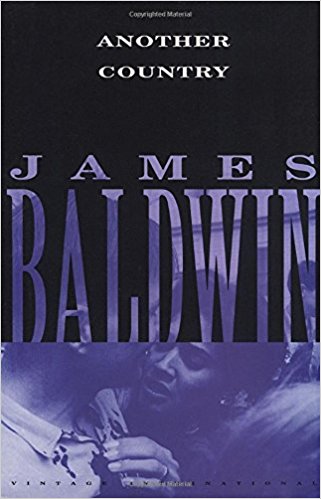
Which brought us to James Baldwin’s Another Country. (At this point, I admittedly got distracted from the bane of my existence and my lifeline to the world, my smartphone, but I believe I heard Golden said she took a seminar at Smith with James Baldwin when she was student) and he asked her who her favorite character in the novel was. And she said Ida, Rufus’ sister.

Another Country
Baldwin’s 1962 novel explores the complex life and sexuality of Rufus Scott.

I came to quickly enough to hear this gem, “My father went to the same middle school as James Baldwin, and Countee Cullen was their teacher.” (!!)

I was so enamored of this because I have such generational envy for what Harlem was like during the time when Baldwin lived. I know I’m romanticizing it and it was probably as problematic and complex for Black women to navigate emotionally and artistically as every other space is today. But the richness, the products of the period, suggest that the magic had a power that provided at least some possibilities for transcendence. And that’s the part I love and very selfishly wish was still present/actively cultivated for Black writers, at least.

But as Alice Walker has said, We Are The Ones We Have Been Waiting For.

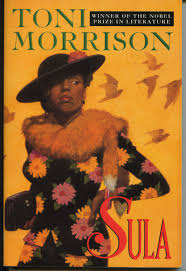
Walker is an example of what it means to be an exceptional living Black woman writer, much like Toni Morrison, the author of another Golden favorite, Sula.

Of all the luscious Morrison books I’ve had the privilege of savoring, Sula falls, for me, just slightly below the Scriptural supremacy and spiritual force in Song of Solomon. But Golden described Sula so poetically, noting that she loved reading it because it was “layered with all the things I know about the world.”

download.jpg
“I don’t want to make somebody else. I want to make myself.” Amen, Sula.

Golden said she never read The Bluest Eye, which is a statement I actually love. Although I did read it, and found that Pecola Breedlove’s envy of blond hair and blue eyes was actually quite resonant for me, I love a contrarian and this assertion (among others) gave me a sense of that streak in Golden. The spectacle of little black girls who hate themselves because they are not white is actually also not the healthiest or most edifying experience for young black girls, so I was happy for Golden, and envious, too, wanting to experience this vicarious liberation from thinking of my beauty in relationship to whiteness and having that praised even from the very beginning — of a life or of a career.

Still, Morrison is not only America’s greatest living novelist, but she is the originator of our current Black literary renaissance, insofar as writers like myself, readers like Golden and almost every Black woman writer I’ve ever known or met who perseveres through self-doubt and the other perils of the writing life have uttered and taken to heart Morrison’s words, “If there’s a book you want to read, but it hasn’t been written yet, then you must write it.”

“That informs my work as a curator, to provide room for so many artists of African descent, to make art to allow us into space,” Golden said. “Toni Morrison is, to me, a rigorous example of Black genius.”

The last of Golden’s favorite books she discussed with Greenidge were The Collected Autobiographies by Maya Angelou and Americanah by Chimamanda Ngozi Adichie.

It was nice to be reminded of Maya’s habit of keeping a hotel room in any city in which she visited, so that she could write without interruption, accompanied only with “two books, a bottle of sloe gin and a deck of cards,” Greenidge informed us.

Angelou’s work in memoir was the first instance of showing Golden, she said, “the stories we create of ourselves…the importance of the creation of our artistic selves. We get to make for ourselves a world that doesn’t make space for us.”

As for Americanah, Golden’s husband is Nigerian and lives in London. Along with the work that she leads and is invested in, she’s tied to Africa, then, “not just in the past, but also art, culture and ideas in the present.”

As a result, she said that she “felt profoundly seen,” by Americanah, in the same way she did by Zadie Smith’s On Beauty. “It’s what happens when outsiders look at your culture.”

Other notable aspects of the talk included the following:

  • When Greenidge asked Golden which book she would give to a small child if she had to, she mentioned Whistle for Willie by Ezra Jack Keats.
  • She recalled someone giving her a copy of Invisible Man and finding it formative. She mentioned that someone should write a biography of Ralph Ellison’s wife, Fannie Ellison — do your thing, Internet!
  • Since we were in Harlem, and Golden had made note of the pictures of Langston Hughes and other cultural giants of the neighborhood earlier, Greenidge mentioned the I, Too Arts Collective the literary nonprofit helmed by author Renee Watson that has continued to do God’s work preserving Langston Hughes’ brownstone and has transformed it into a site of community for writers of color. “I wish it had not been so hard. I wish it had been a natural act. So much of history is not in buildings. It’s in the neighborhood. I hope that while we continue to move toward our future, that we can continue to honor our past. This is a community with a deep and rich history. This wasn’t just a setting for great work. This neighborhood created opportunity for artists. I hope we can preserve that in ways that people will be able to touch and feel in the future.”

You should go to some of the future Notes from the Reading Life events if you’re in New York or if you’ll be in town for one that’s upcoming. Tonight, it’s a conversation between Tim Gunn & Min Lee. I’m so sad to say I’ll miss the conversation (in the Bronx!) between Desus Nice & Rebecca Carroll at the Bronx Library Center on June 15th — but you shouldn’t.