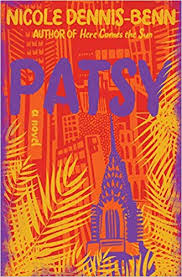
You can buy the book on Indie Bound, Barnes and Noble or Amazon. Please review this book on Amazon and Goodreads please!
Category: books
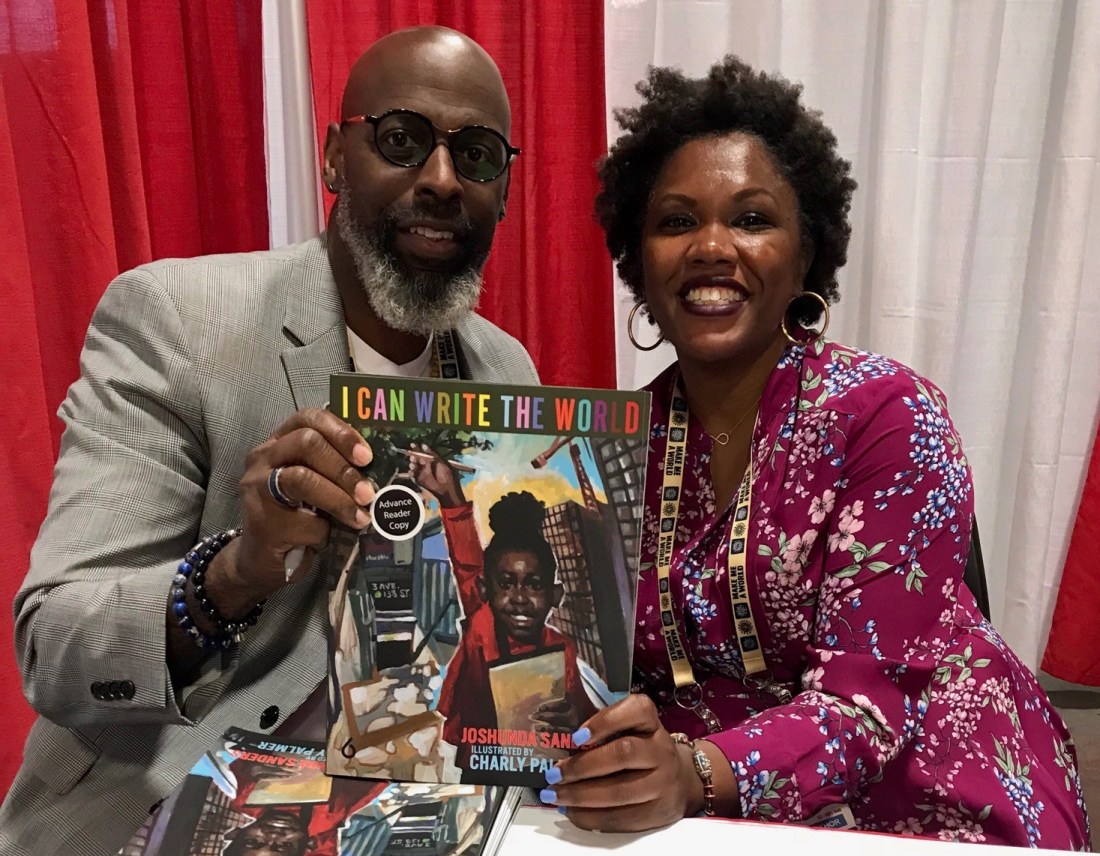
I Can Write the World at ALA 2019
I had a whirlwind weekend launching I Can Write the World at the American Library Association Conference in D.C. Librarians, teachers and others were so receptive to the book that I was the first author in my cohorts to run out of books both on Saturday night at a lovely Ingram reception at Spire and on Sunday afternoon after a great panel discussing the importance of representation in Children’s books. I even got to see a former library professor who popped up in the signing line (thanks for coming by, Stan!).
The most common question librarians had is one that most people ask me, which is “What is this book about?” This comes up right after they say, “Wow, the book is so beautiful!” Which makes my heart sing.
The answer is that I Can Write the World is about 8-year old Ava Murray, who lives in the South Bronx. She is named after the brilliant filmmaker Ava DuVernay and the incredible legal scholar, Episcopalian priest & poet Rev. Dr. Pauli Murray, who created the legal precedent known as Jane Crow and, were the world ready for her in her time, might have had a much easier time accepting what we would call her trans identity in this time.
In I Can Write the World, Ava notices the beauty of the Bronx that she knows and loves is at odds with how journalists often depict her world. On the news, a little girl about her age is fined for tagging, which confuses Ava because she sees the colorful murals around her as making the city more beautiful. Her mother, Kim, explains that journalists are like the window frame around their living room window and they shape what we see when we look out of it. Ava decides that she wants to become a journalist so that she can be just like them and shape the world they see.
The first book in the series has Ava exploring more of hip hop culture and how it came to be through a prose poem. I’m honored to say that one of my writing heroines Jacqueline Woodson has called I Can Write the World, “Lovely and timely.” I hope you will find it to be the same. Thank you so much to everyone who has pre-ordered and shared your thoughts with me about the book. I’d be so grateful if you could also write reviews and spread the word. You can find the book on Amazon, Barnes & Noble and several other outlets.
Next stops for I Can Write the World signings are the Children’s Institute (Ci7) & PrideFest on Sunday — which includes a book giveaway for the first 100 kids.
On Cooking & Vegetables Unleashed
As much as I love writing & sketching, sometimes, honestly, my creative situation is not abundant.
I don’t understand writer’s block — thank God, I’ve never really struggled to get things down on the page. But revising said words is something else. There are times when I can’t read another word or the writing is…stale. This is usually around the time that I decide that, in my mind, I’m a professional chef…that no one knows about because I rarely unmask my culinary inclinations.
I taught myself to cook in my twenties when I realized that I wasn’t making enough as a rookie reporter to pay for going out to eat pretty much ever. Some of the things I used to eat make me sad to remember — there was the standard meal of Velveeta Shells & Cheese + Frozen Jumbo Shrimp via the Beaumont, Texas 24-hour Wal-Mart (also the site of much of my entertainment, aside from my obsession with Big Brother); a steady diet of Chunky soup for lunch when I lived in a closet-sized studio in Oakland and every burrito & breakfast taco known to mankind when I lived in Austin.
I was first introduced to vegetables as a food group I could get behind when I visited the farmer’s market in Oakland and the Berkeley Bowl a little further north. (For those of you who complain about Whole Foods on a weekend, Berkeley Bowl felt like that at all times multiplied by a thousand).
I would sheepishly pick up lettuce and spinach and occasionally an avocado, but all the other veggies might as well have had stickers with question marks on them. I thought fennel and leeks and artichokes were fresh (as in beautiful) to look at, but they intimidated me as someone who was really not into vegetables that didn’t act as side kicks for food with parents because I couldn’t figure out how to make them taste good by themselves.

Over the years I’ve gotten much better about this. I have a small collection of cookbooks, like the Joy of Cooking and Mark Bittman’s How to Cook Everything. These help me jazz up Brussel Sprouts and green beans, mostly as guidance for what flavors work together and what flavors don’t. Bittman has a simmered Brussel Sprout recipe with breadcrumbs that is delish, for example.
José Andres’ new Vegetables Unleashed is even better than that — the gorgeous photography and Andres’ trademark wit demonstrate the kind of confidence and creativity that make you feel brave enough to try almost anything in the kitchen. It’s also published under the Anthony Bourdain imprint and we’re nearing the anniversary of Bourdain’s death; I wrote about the CNN-produced book about him here.
It helped me admit to myself that fear of leeks is odd and one of these days I’m going to get over it.) The best thing about the book is that it is written in Andres’ trademark wit underscored by a clear expertise about what you should have in your pantry — I’ve added organic miso that I’m not confident enough to experiment with but I’ll try; but he also recommends Paprika, harissa and some others that you’ll need to go to a gourmet shop to find — how to use the parts of veggies that we often throw away and how to add flair to decidedly unsexy vegetables like, say, corn. For the latter, there’s a delicious Austin Grill Corn Soup that looks like heaven in a bowl.

I wanted to try a few of these recipes but I ran out of time because life. Aguacates con Cosas is like a guacamole salad that has chopped up tomatillos in it. You can add tortillas or anything else to it to give it a crunch, but it was delightfully textured and delicious. It maybe took me 15-20 minutes to chop up the red onions, lime, tomatillos and smash the avocados. His version has cilantro and pomegranate seeds. I added the former and I inhaled this with chips and then made another batch that I ate with a spoon. For this recipe and others, you should definitely check out the book. It just so happens there looks like there’s an event at Politics and Prose coming up tonight, if you’re in D.C.

The 2nd Annual Bronx Book Festival is almost here!

I’ve been looking forward to the 2nd Annual Bronx Book Festival now for several months, and I can’t believe June is almost here. VIBE Magazine announced the line up last week & I’ll be speaking on a panel & reading from my new love, I Can Write the World, which publishes June 15th. (Have you pre-ordered? No? You’re in luck because here’s a link…)
- Panel: Publishing Debunked
Time: 11:00 AM – 11:45 AM
Location: Fordham Plaza Main Stage
Panelists: Norma Perez-Hernandez (Assistant Editor at Kensington), Joshunda Sanders (I Can Write The World), Queressa Robinson (Literary Agent at Nelson Literary Agency), Alexis Daria (Take the Lead)
Moderator: Saraciea J. Fennell, founder of The Bronx is Reading
Description: Join editors, agents, and authors from the Bronx as they debunk the publishing industry for Bronxites.
Signing: 11:45 AM – 12:15 PM - Panel: Indie Power Hour
Time: 12:00 PM – 12:45 PM
Location: Fordham Plaza Main Stage
Description: Join three Bronx-based indie authors as they read from their current works. Readers include Joshunda Sanders (I Can Write The World), Josue Caceres (Bronx Stories & Heartbreak), Yajaira Eduardo (If at First You Don’t Succeed)
And it’s special to me that I’ll be there for a dozen reasons, including that just last year I was writing about the significance of the festival for the Village Voice, fellow Vassar alum and Tight author Torrey Maldonado will also be participating & I’m so proud of Saraceia for reinforcing her vision of creating a literary community that thrives in the Bronx. I hope you see you there — organizers ask that you register for this free event at this link.
Patsy Review in TIME Magazine

I loved Patsy so much that I got the beautiful book hangover that one gets when you miss the 400+ pages that took you on an epic journey. I’m really proud of this TIME Magazine review:
There have been few narrative epics that effectively tally the emotional, logistical, physical, psychological and financial trials of the black female immigrant and mother or, likewise, the impact on the family of a black woman who dares transform herself. Dennis-Benn maps the internal terrain of black women yearning to be free — without romanticizing or ignoring their flaws. Yes, her central characters are persistent, but they can also be naive. Yes, these are strong black women, but they’re also human, and they’re nearly broken by loneliness, despair and a sense that they’ll never belong. Showing us the triumphs and pitfalls of these two parallel rites of passage, Patsy fills a literary void with compassion, complexity and tenderness.
New York Times Book Review on Elizabeth Acevedo’s New Book
When I heard Elizabeth Acevedo read at last year’s inaugural Bronx Book Festival, I understood exactly why The Poet X was as important and astounding as the author herself. It wasn’t just an authentic narrative for authenticity’s sake, but a work of beauty particularly for women of color meant to inspire them to find their voices and paths. It took my breath away.
With The Fire on High was similar – a beautiful page-turner. I couldn’t wait to share with y’all that I got the assignment of a lifetime to write about it for the New York Times Book Review. Below is an excerpt, but if you read the whole thing, I’d love to hear your feedback — especially if you’ve read the book, which you should definitely get a copy of.

Xiomara is like the more subdued fictive kin of Emoni Santiago, the self-possessed heroine of Acevedo’s second novel, WITH THE FIRE ON HIGH (HarperTeen, 400 pp., $17.99; ages 13 and up). A talented aspiring chef and unapologetic teenage mother, Emoni is as stubbornly committed to following her dreams as Xiomara is, but she cares less about other people’s perceptions. Anchored by her baby girl, Emma, and her grandmother Gloria (whom she calls ‘Buela), Emoni is sure of everything except whom she can trust as she chases her dream of running her own kitchen.
The nomenclature theme nods to Emoni’s maturity and integrity, and her attention to detail. She knows her own name is a signifier of her Afro-Latinx identity; “Emma,” on the other hand, “is the kind of name that didn’t tell you too much before you met her, the way mine does,” Emoni tells us. “Because nobody ever met a white girl named Emoni, and as soon as they see my name on a résumé or college application they think they know exactly what kind of girl they getting.”
What a wrong assumption. “Information ain’t free, so my daughter’s name wasn’t going to tell anybody any information they didn’t earn.”
My new children’s book series: I Can Write the World

I am just settling back into being home after a quick, amazing trip to the Bologna Children’s Book Fair – one of the world’s largest international fairs for children’s books – where I discussed the children’s book series I’ve been working on over the past year, I Can Write the World. I was in Bologna as part of a “Black Books Matter” panel meant to commemorate the 50th anniversary of the Coretta Scott King Awards.
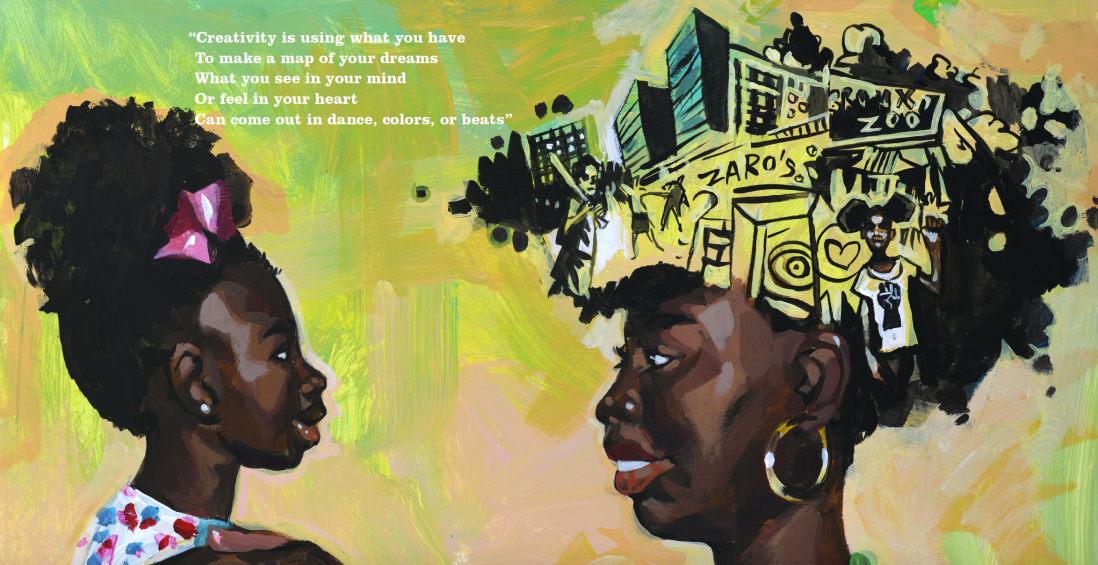
I’m delighted to share the cover and one of my favorite images from award-winning artist Charly Palmer from the book, which is the first publication of Six Foot Press, coming June 15th. It’s available for pre-order on Amazon .
I Can Write the World is the story of an 8-year-old Bronx girl named Ava Murray, named for the trailblazers Ava DuVernay and Rev. Pauli Murray (two women who have changed the course of history by uncovering stories with beauty that might otherwise remain lost, hidden or forgotten) who decides to become a journalist after seeing a different version of her neighborhood on television than the one she normally experiences.
I originally wrote a book that was for older kids without knowing it — my default is always to write more complex stories because even the lives of our children are, unfortunately, more nuanced than we might prefer. Carla Precht, the Executive Director of the Bronx Children’s Museum, and her team were instrumental in offering me feedback of child development experts who liked the narrative but thought it might be geared toward older readers in its previous iteration. So inspired by the likes of Jacqueline Woodson and Elizabeth Acevedo, I revisited my original writing love, poetry and wrote it as a picture book in verse. I felt like the result was much closer to my heart. I hope you will sense that too.
I recently went to a workshop for storytellers and educators at the Caribbean Cultural Center and African Diaspora Institute where Juliet Gray, a phenomenal educator and storyteller, shared with us that the average Black six year old child enters elementary school with around 3,000 words, which her white peer is likely to have 20,000. That astounding figure has stuck with me, because it only reinforces how important a book like I Can Write the World is — to give young readers access to a world that looks like them, sounds like them and makes them feel like they can do and be anything they want.

Review: The Source of Self-Regard by Toni Morrison
I am ecstatic to share my review for Bitch Media on Toni Morrison’s stunning collection of speeches, essays and meditations, out today, The Source of Self-Regard. I inhaled it and underlined entire paragraphs over the last two months. I went to the Schomburg for something else entirely and found an annotated bibliography that informed a lot of this piece. These glimpses and pieces of her are the nation’s greatest living novelist at the top of her form and the most intimate look we are likely to get at her most closely guarded feelings and emotions — especially as it relates to the writing process.
The third section of the book, “God’s Language,” begins with the most beautiful piece of writing I have ever read—the eulogy Morrison delivered at James Baldwin’s funeral on December 8, 1987. It is also the closest glimpse we’ve had into Morrison’s personal relationships. Morrison lays her heart bare for a friend in a short poetic jubilee that’s reminiscent of Smokey Robinson’s recent speech at his childhood friend Aretha Franklin’s homegoing service.
“Jimmy, there is too much to think about you, and much too much to feel,” she begins. “The difficulty is your life refuses summation—it always did—and invites contemplation instead. Like many of us left here, I thought I knew you. Now I discover that, in your company, it is myself I know. That is the astonishing gift of your art and your friendship: You gave us ourselves to think about, to cherish.” Morrison might as well be speaking about herself. For me and many other writers, Morrison demonstrates how to be in a world that’s committed to your destruction. “You gave me a language to dwell in—a gift so perfect it seems my own invention,” she continues.
Throughout the book, Morrison reveals herself to be a teacher-student who is not just giving readers information that they’re expected to take in and regurgitate. Instead, she’s a “literary homegirl” (a phrase that she actually uses in the text). Referring to a friend as a “homegirl” implies a sense of ease in the presence of someone who knows and loves us, who evokes in us the joy, relaxation, comfort, and depth we typically only associate with home. Home is where we learn who we are, if not who we will become. Home is the starting point. In the title essay, delivered in Portland in 1992, Morrison explains how she viewed self-regard while writing her Pulitzer Prize-winning novel Beloved. Morrison’s lecture deeply resonates with me because it gives context for arguably her most famous work, which at its heart, offers Black women an artistic vision of our liberation.

Lane Moore’s How to Be Alone
“Your commitment to survival is more than a notion; it’s a balm, an affirmation, an eternal love note, and a sacred love manifestation that starts as a whisper and rises into the atmosphere. How to be Alone gave me closure. What a gift it is to know that there’s another person in the world who’s so brave and true to her spirit that she survived the hardest parts of being alive. Instead of sinking into despair or madness; being waylaid by bitterness or tragedy; or turning the grueling and terrifying dark of isolation against yourself, you’ve transmuted it into a fire so bright that it blazes brilliantly, with a classic, universal humanity. James Baldwin said, “You think your heartbreak is unprecedented in the world, and then you read.” How To Be Alone is like that.”
— In which I write a very vulnerable open letter-review for Bitch Media to the beautiful bad ass Lane Moore, whose tremendous and lovely book, How To Be Alone, really helped me sort some things out in the best, most heartbreaking way. Shout out to those of you who remember my Single & Happy blog & eBook days. Feels like a lifetime ago now.
P.S. New Yorkers: Lane will be in convo with the HQ host (!!) at The Strand tonight at 7 p.m.

Celebrating a Profound Literary Inheritance: Glory Edim on the Well-Read Black Girl Anthology
— Read on longreads.com/2018/11/06/glory-edim-on-the-well-read-black-girl-anthology/