When I heard Elizabeth Acevedo read at last year’s inaugural Bronx Book Festival, I understood exactly why The Poet X was as important and astounding as the author herself. It wasn’t just an authentic narrative for authenticity’s sake, but a work of beauty particularly for women of color meant to inspire them to find their voices and paths. It took my breath away.
With The Fire on High was similar – a beautiful page-turner. I couldn’t wait to share with y’all that I got the assignment of a lifetime to write about it for the New York Times Book Review. Below is an excerpt, but if you read the whole thing, I’d love to hear your feedback — especially if you’ve read the book, which you should definitely get a copy of.
Xiomara is like the more subdued fictive kin of Emoni Santiago, the self-possessed heroine of Acevedo’s second novel, WITH THE FIRE ON HIGH (HarperTeen, 400 pp., $17.99; ages 13 and up). A talented aspiring chef and unapologetic teenage mother, Emoni is as stubbornly committed to following her dreams as Xiomara is, but she cares less about other people’s perceptions. Anchored by her baby girl, Emma, and her grandmother Gloria (whom she calls ‘Buela), Emoni is sure of everything except whom she can trust as she chases her dream of running her own kitchen.
The nomenclature theme nods to Emoni’s maturity and integrity, and her attention to detail. She knows her own name is a signifier of her Afro-Latinx identity; “Emma,” on the other hand, “is the kind of name that didn’t tell you too much before you met her, the way mine does,” Emoni tells us. “Because nobody ever met a white girl named Emoni, and as soon as they see my name on a résumé or college application they think they know exactly what kind of girl they getting.”
What a wrong assumption. “Information ain’t free, so my daughter’s name wasn’t going to tell anybody any information they didn’t earn.”
Last night, I was watching Brene Brown’s The Call to Courage and so much of it resonated with me because what writers do, all the time, is meet risk and vulnerability with courage. We have this in common, of course, with other artists: Actors, visual artists, musicians. I spend a lot of time wondering about the paradoxical nature of how our culture both obsesses over creation and art and devalues it, simultaneously. It has become part of my personal and spiritual practice to do what Maya Angelou is quoted saying in Beyonce’s film, “Homecoming” which I’ve seen three times now (and is definitely another Netflix film for you to watch, which is “Tell the truth. To yourself first.”
To that end, I wrote about a trend I’ve watched emerge in recent years online for Topic about Black spirituality particularly among young black women. The TL; DR version of this is that traditional church institutions (not unlike government, I might add) have tried to suppress and belittle women’s sexuality, personhood and desires for centuries. I think that seeing the perverse ways in which the negation of people’s true selves manifests — in pedophilia in the Catholic Church, in homophobia and transphobia that warps relationships in similar ways in the Black Church — has led thousands of Black women and many others to choose a different way. In some ways, creating individualized spiritual practices for oneself is nothing new. But I believe it’s become more popular because we are seeking more control over our worlds and our lives. And it’s just too painful to hand over our personal power to patriarchal systems that fundamentally ask us to remain faithful to systems that make us feel shame for wanting to be free.
TO UNDERSTAND WHAT nontraditional Christianity looks like for many black millennials, we have to, perhaps unsurprisingly, turn to the internet. There, one can find a robust community of black and Afro Latina women leveraging social media to gain followers and clients—the majority of them also black women—while offering free guidance about how to use the energy of the cosmos to their benefit.
Over the past seven years, I have noted, with some delight, a growing and powerful group of young people, primarily women, preaching messages of self-empowerment, intuitive guidance, and ancestral reverence. They are everywhere, from Twitter and Instagram to YouTube and the crowdfunding platform Patreon.
It makes sense: in a world where young people’s attachment to smartphones has become one of their most intimate relationships, it would follow that divinely inspired messages of empowerment would reach us via our devices, like everything else we think has meaning. (No judgment—I used to sleep with my phone, too.) And because most social media is used predominantly by women and people of color, there’s a natural synchronicity to digital interactions that allows for seemingly disparate groups to connect to alternative forms of faith.
So that piece was the most vulnerable I’ve been about my faith journey pretty much ever and it gave me a gigantic vulnerability hangover of the sort that is probably tiny compared to what Brene Brown describes in her special. Nevertheless, it was with so much joy that I watched “Homecoming” again and again and got back all of the energy that was expended over ten revisions of the Topic piece, which I kind of loved every minute of. I was tweeting about the fact that Beyonce is the best entertainer of all time and thankfully one of my former colleagues (thank you, Omar!!) suggested me as a writer who could attempt to slay writing about “Homecoming” for Book Plus Film.
Beyoncé is the greatest entertainer of our era and one of the quietest, most silent workers in the game. But she’s a lot of other things, including a scholar. She doesn’t talk about it; she is about it. Her references make evident her awareness and respect for history. She wields silence strategically, working behind the scenes until she’s ready for you to see what she’s been doing. This, along with other methods evident in Homecoming, connects her to a tradition of Black women guarding our sacred inner lives–what historian Darlene Clark Hine calls a “culture of dissemblance.”
In the Reconstruction Era, the Historically Black Colleges and Universities to which Beyoncé pays homage directly in Homecoming offered alternatives to Black people in the South who had no other outlet for edifying themselves spiritually and intellectually. Black women perfected the art of protecting their inner lives through performing personae of intimacy and vulnerability. The damage slavery wrought to our spirits, bodies and position in American popular culture meant the broader world considered us worthless.
But we reclaimed our value and worth through the important, necessary alchemy of consorting with and among ourselves to transform ugly stereotypes. We would never be protected like white women, or valued in the same way, but we had ourselves. We had one another.
“Without community, there is no liberation,” Audre Lorde said.
“The most disrespected woman in America is the Black woman,” Malcolm X said.
A Modern-Day Nefertiti
A little Black Girl Magic in Beyoncé’s Homecoming.
The truths that unfurl in “Homecoming” flip what most people thought they knew about Black Girl Magic into a two-hour spectacle of reunion pageantry, Black Boy Joy intersecting with a Texas Bamma steeped in the glory of her abundant, glorious Black womanness.
Throughout the athletic and awe-inspiring performances that make up Homecoming, Beyoncé as always, does multiple things at once. She channels a spiritual clinic on how to birth one’s singular vision while also allowing us, as viewers, to project our dreams onto her everywoman canvas. She signifies with subversive and overt joy, refracting and projecting light that’s illuminated by a pulsing, alive darkness.
Beyoncé summons us in Homecoming to witness an intimate-looking, vulnerable and considered return to herself. This, she tells us, is her homecoming, too. We feel that without her having to say a word as the show begins. A Black woman drummer commands the camera’s attention with a ferocity that every living being on the stage will soon match. A modern-day Nefertiti saunters her way to her pyramid of vibrantly clad dancers, singers and a Black orchestra, a swelling, uproarious band that aptly represents the pinnacle of swag.
It’s not easy reading, but it needed to be said. On Medium:
What will become of the white women who say they want the world to be better for all of us, but will not gather their white sisters or relatives at the dinner table when they say deeply racist things because they are all bound up in the comforts of the patriarchy that oppresses us all? How will we reconcile the addictive nature of comfort and how comfortable narratives keep us stuck in the lie of solidarity?
Are we willing to be angry with one another in the service of understanding that discomfort might be the thing that saves us?
Audre Lorde also said this back in 1981: “But the strength of women lies in recognizing differences between us as creative, and in standing to those distortions which we inherited without blame, but which are now ours to alter. The angers of women can transform difference through insight into power. For anger between peers births change, not destruction, and the discomfort and sense of loss it often causes is not fatal, but a sign of growth.”
It was a gift, especially as I teach the Combahee River Collective statement from 1977 and remind folks that we have been fighting for a long time on behalf of our own freedom not just for the sake of ourselves but so that everyone else can be free, too, to write this for Mic.
It’s more convenient for white sports fans, of course, to turn the healthy, justified rage of black bodies gazed upon for money-making sport into a weapon formed against us. But like Colin Kaepernick, Serena is a generosity. She won’t let anyone or anything make her flat or less complex. Like Shirley Chisholm, she is unbought and unbossed. She contains multitudes. She can be both livid and kind, distraught and sweet, within the same hour.
What audacity, what nerve, that black girl with the big hair and the strong legs and amazing body has, showing up, demanding to be seen as human. What a gift, in this time, in this void of regal reckoning for black or brown bodies anywhere but fictitious worlds, that we get to witness Serena’s humanity unfurl, unedited.
When I spoke to Carol Anderson for Kirkus Reviews, it felt like we could have talked for hours. Her book, One Person, No Vote, is an important read for anyone who cares about what’s at stake for the midterms and for 2020. What stayed with me most about what she said when I asked her about her call to action in the book is that voting is essentially the only remaining lever of power available to most people in our Democracy. I know folks feel various levels of indignation about the suggestion that anyone should be telling you to vote, but opting out combined with the steady erosion of the Voting Rights Act of 1965 will set us back farther than anything you can imagine — for generations.
In his 1951 novel, Requiem for a Nun, William Faulkner wrote the oft-quoted line, “The past is never dead. It’s not even past.” This is true now, it seems, of so many things, but it’s particularly resonant for the fight against voter suppression.
As much as immigration or Supreme Court picks have dominated conversations about the Trump Administration, political power in the United States begins and ends with the vote. Acclaimed historian Carol Anderson’s latest book, One Person, No Vote: How Voter Suppression is Destroying Our Democracy, scheduled for publication on September 11th, situates current truncated discussions, exaggerated rhetoric and lies about voter fraud and suppression at the polls meant to disenfranchise voters in a past that feels eerily like it never became history.
Jeff Sessions, for example, when he was Alabama U.S. attorney, referred to the Voting Rights Act of 1965 as an “intrusive piece of legislation,” then “rounded up twenty elderly blacks and had Alabama state troopers drive them away from their community into a predominately white area to be fingerprinted, photographed and grilled before a grand jury” to intimidate them out of voting, Anderson writes. There are troubling and astounding stories like this throughout One Person, No Vote from Anderson, the Charles Howard Candler Professor of African American Studies at Emory University. She said the idea for her latest book emerged when she was on tour for her 2016 book, White Rage, which won the National Book Critics Circle Award for Criticism along with a host of other accolades.
“During the Q&A on the road, I often got a question about the part of [White Rage] about voting, ‘How hard is it to get an ID?’ Because headlines about voter fraud became the shorthand mantra,” Anderson says. “So you begin to talk about which IDs voters need. African Americans and poor people often don’t have the kinds of IDs that you need. I wanted to demonstrate how difficult it is to get those IDs.” She also details the combined effectiveness of voter ID laws combined with the lie of voter fraud, found by law professor Justin Levitt to amount to “31 voter impersonation cases out of one billion votes nationwide” cast between 2002 and 2015 and a “powerful and effective ‘political weapon’ wielded against minorities, youth and the poor.”
Hello from the land of working while most people are on vacation or trying to avoid the heat or some combination of both (or is this my imagination?)
It’s been five years since I presented at South by Southwest Interactive with my late mentor and friend, Dori Maynard about the business imperative for diversity — which happened the same year I gave the TED Talk embedded in the link to my new proposal for a 2019 SXSW Panel, Content is a Dirty Word.
I’d love your vote to send me back to Austin, home away from home, to offer up some tips on how storytellers, journalists and writers can support themselves through the seismic changes in the traditional & digital landscape, and some strategies for positioning oneself sustainably in the confusing and low-paying content eco-system. You can vote for the panel at this link.
Thank you in advance for your help! Spread the word!
I loved talking about acting and craft with John David Washington for Backstage magazine in what I hope will be the first of many cover stories. He’s humble and wise, and I especially appreciate how thoughtful he is regarding process — how important it is to honor yours as an artist. It’s true for actors and true for writers. He’s also excellent as the leading man coming into his own in Black KkKlansman which is one of Spike Lee’s best.
John David Washington has been eyeing the big leagues for years.
First, it was the NFL. At Morehouse College, he received a full athletic scholarship and set records as a running back. Later, he would play for the United Football League and excel as an undrafted free agent for the then–St. Louis Rams. But even after two years of training with the pros, come Sunday game time, he’d still never touched the field. He had the chops, but never managed to move off the practice squad to reach the star-making level of a pro.
To be clear, Washington is not the kind of person who craves undue credit. He’s humble, driven, and, above all, enjoys doing the work. So when an Achilles tendon injury during a New York Giants tryout put an end to his football career—after a number of already ego-crushing rejections from the NFL—Washington decided to take his work ethic elsewhere. Surgery was an option, but the time out of commission had him on the brink of depression, and he had already cleared space in his mind for another industry: Hollywood. After this summer, it seems the switch will have paid off; Washington is on the path to being a bona fide star.
I’ve been reading some of the beautiful and important memoirs of the Movement for Black Lives that are forthcoming from Black feminists like Barbara Ransby & Charlene Carruthers as well as screening Rest in Power: The Trayvon Martin story, which begins airing tonight on the Paramount Network, since the end of June. I wrote about the docuseries, as well as the books, for the Village Voice:
“They say that time heals all wounds. It does not,” observes Sybrina Fulton, Trayvon Martin’s mother, in Rest in Power: The Trayvon Martin Story. “Had the tragedy not been so public, I probably would have taken more time to grieve, but I wasn’t given that type of privilege.”
The six-part documentary series, produced by Jay-Z and the Cinemart, begins and ends as it should, with the murdered seventeen-year-old’s parents. Over the course of subsequent episodes, the audience hears a series of 911 calls from Martin’s killer, George Zimmerman, the aspiring police officer who became neighborhood watch captain in his previously exclusive gated community in part to live out a racist vigilante fantasy.
Rest in Power establishes a pattern of behavior from Zimmerman: He calls the cops so frequently on Black children who moved to his neighborhood after the 2008 economic crisis that dispatchers know his voice and refer to him by his first name. Yet, as the series documents, it still took more than forty days, not to mention the intervention of media-savvy civil rights attorney Benjamin Crump, for Zimmerman to be arrested and charged with Martin’s fatal shooting, and to get the killing reported in context by the media.
Martin’s death was the first real major convergence of race and policing in President Barack Obama’s presidency after the euphoria of post-racial liberalism had worn off. In Rest in Power, we see Obama graying at a rapid pace, weary, saying that if he had a son, his son “would look like Trayvon.” He doubles down and says that, put another way, he could have been Trayvon Martin when he was younger. As author Mychal Denzel Smith puts it in an interview, it becomes clear that there will always be more Trayvon Martins than Barack Obamas.
Rest in Power captures this monumental moment in American resistance with moving detail, showing scenes from protests around the country. And forthcoming soon are some additional invaluable histories of this period that provide a broader picture of the modern articulation of Black protest and mobilization in response to racist and vigilante violence.
These books are particularly remarkable because all too often, the narratives of resistance that do exist are positioned as though cisgender heterosexual men have always been at the forefront. As these works demonstrate, Black women have been the unsung architects of many of these protest movements — and they have only recently started to get their due.
Indeed, as we see the signs of hate rising all around us today, it becomes clear that Black women tried to warn us. Khan-Cullors notes this in When They Call You a Terrorist, writing on how she and her co-founders of Black Lives Matter as a movement were nearly erased from early reporting: “Despite it being a part of the historical record that it is always women who do the work, even as men get the praise — it takes a long time for us to occur to most reporters in the mainstream. Living in patriarchy means that the default inclination is to center men and their voices, not women and their work.”
That is true both for how she situates the BLM founders in relation to Martin’s case and for how she writes about the uprising in Ferguson, Missouri, after unarmed teen Michael Brown’s shooting by police officer Darren Wilson. In a chapter dedicated to activism in Ferguson, Ransby profiles Black feminist organizers, including Darnell Moore, Kayla Reed, Brittany Ferrell, Alexis Templeton, and Jamala Rogers.
“When I suggest that the movement is a Black feminist-led movement, I am not asserting that there was no opposition and contestation over leadership, or that everyone involved subscribed to feminist views,” Ransby writes. “Nevertheless, when we listen carefully, we realize that the most coherent, consistent, and resolute political voices to emerge over the years since 2012 have been Black feminist voices, or Black feminist-influenced voices.”
I’ve been more quiet than usual because I’ve been dusting off my photography/summer counselor skills at Jewish surf camp (!) [more on that later, obviously] interviewing my share of incredible writers for Kirkus Reviews, reading and watching and reporting all of kinds of other things for other stories, finishing up my work in progress draft, for which I am in the final stages (last push! OMG!) and trying to find the essence of this thing they call the “summer slow down” (Have you seen it? Is it really real?)
Anyway, when the rest of the world is back to school and on a more regular schedule, I suppose I will be, too. In the meantime, I wrote this piece about the dynamic poet JP Howard, a Harlem native in Brooklyn and fellow VONA/Voice Workshop alum for Literary Hub, which posted today. I also spent some time writing this other piece for Bitch Magazine about my favorite albums from 1998, which I can’t even believe was 20 years ago!
I hope you’re enjoying your summer. How are you spending it out there?



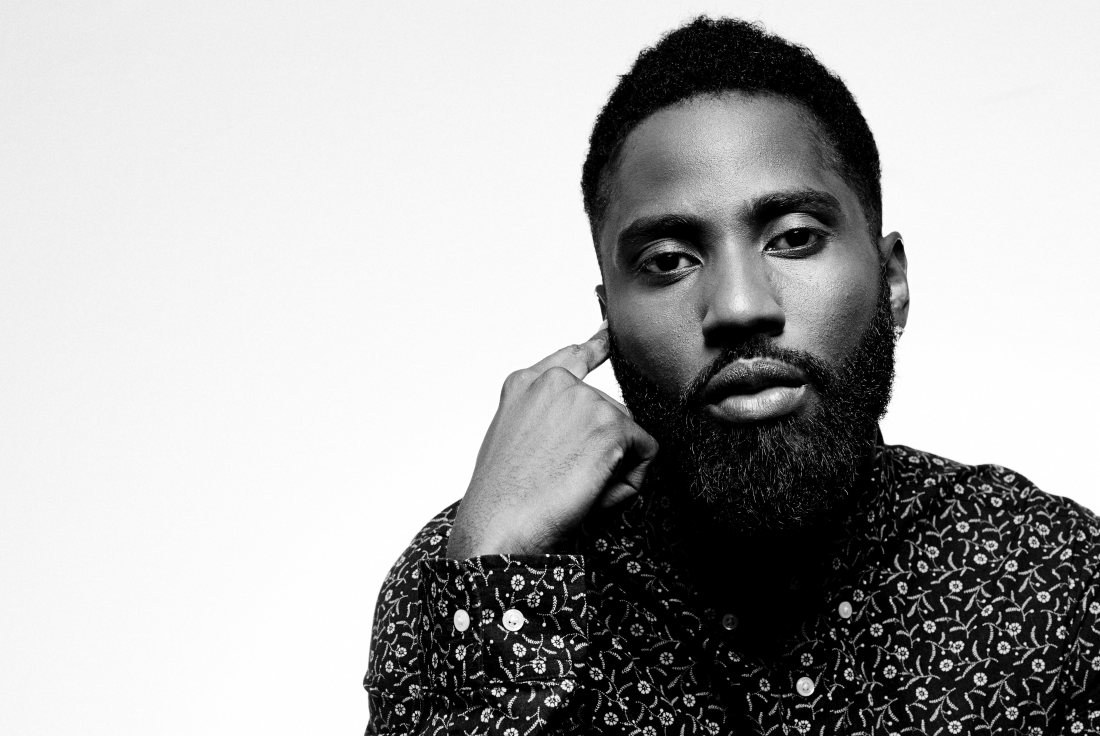


 Joshunda Sanders