
Celebrating a Profound Literary Inheritance: Glory Edim on the Well-Read Black Girl Anthology
Celebrating a Profound Literary Inheritance: Glory Edim on the Well-Read Black Girl Anthology
— Read on longreads.com/2018/11/06/glory-edim-on-the-well-read-black-girl-anthology/
Category: media
On necessary anger & discomfort

It’s not easy reading, but it needed to be said. On Medium:
What will become of the white women who say they want the world to be better for all of us, but will not gather their white sisters or relatives at the dinner table when they say deeply racist things because they are all bound up in the comforts of the patriarchy that oppresses us all? How will we reconcile the addictive nature of comfort and how comfortable narratives keep us stuck in the lie of solidarity?
Are we willing to be angry with one another in the service of understanding that discomfort might be the thing that saves us?
Audre Lorde also said this back in 1981: “But the strength of women lies in recognizing differences between us as creative, and in standing to those distortions which we inherited without blame, but which are now ours to alter. The angers of women can transform difference through insight into power. For anger between peers births change, not destruction, and the discomfort and sense of loss it often causes is not fatal, but a sign of growth.”
Kirkus Reviews Feature| Carol Anderson’s One Person, No Vote: How Voter Suppression is Destroying Our Democracy
When I spoke to Carol Anderson for Kirkus Reviews, it felt like we could have talked for hours. Her book, One Person, No Vote, is an important read for anyone who cares about what’s at stake for the midterms and for 2020. What stayed with me most about what she said when I asked her about her call to action in the book is that voting is essentially the only remaining lever of power available to most people in our Democracy. I know folks feel various levels of indignation about the suggestion that anyone should be telling you to vote, but opting out combined with the steady erosion of the Voting Rights Act of 1965 will set us back farther than anything you can imagine — for generations.


In his 1951 novel, Requiem for a Nun, William Faulkner wrote the oft-quoted line, “The past is never dead. It’s not even past.” This is true now, it seems, of so many things, but it’s particularly resonant for the fight against voter suppression.
As much as immigration or Supreme Court picks have dominated conversations about the Trump Administration, political power in the United States begins and ends with the vote. Acclaimed historian Carol Anderson’s latest book, One Person, No Vote: How Voter Suppression is Destroying Our Democracy, scheduled for publication on September 11th, situates current truncated discussions, exaggerated rhetoric and lies about voter fraud and suppression at the polls meant to disenfranchise voters in a past that feels eerily like it never became history.
Jeff Sessions, for example, when he was Alabama U.S. attorney, referred to the Voting Rights Act of 1965 as an “intrusive piece of legislation,” then “rounded up twenty elderly blacks and had Alabama state troopers drive them away from their community into a predominately white area to be fingerprinted, photographed and grilled before a grand jury” to intimidate them out of voting, Anderson writes. There are troubling and astounding stories like this throughout One Person, No Vote from Anderson, the Charles Howard Candler Professor of African American Studies at Emory University. She said the idea for her latest book emerged when she was on tour for her 2016 book, White Rage, which won the National Book Critics Circle Award for Criticism along with a host of other accolades.
“During the Q&A on the road, I often got a question about the part of [White Rage] about voting, ‘How hard is it to get an ID?’ Because headlines about voter fraud became the shorthand mantra,” Anderson says. “So you begin to talk about which IDs voters need. African Americans and poor people often don’t have the kinds of IDs that you need. I wanted to demonstrate how difficult it is to get those IDs.” She also details the combined effectiveness of voter ID laws combined with the lie of voter fraud, found by law professor Justin Levitt to amount to “31 voter impersonation cases out of one billion votes nationwide” cast between 2002 and 2015 and a “powerful and effective ‘political weapon’ wielded against minorities, youth and the poor.”
Did someone say Book Lovers Day?

It makes total sense that Book Lovers Day would fall right in the middle of the hottest days of summer, when there really isn’t anything better than sitting in front of the air conditioning (or some other cooling device) and reading. As it happens, as I’ve been in the homestretch of finishing a work in progress for young adults, I’ve also been immersed in reading books for young readers of color by writers of color — like a message of love from the universe. Here are some of the books I’ve read & been reading lately that have won my heart:


- Fresh Ink: An Anthology
: I got a sneak peek at this one (Oh, the rewards of being a book nerd are few, but feel so enormous sometimes…) since the pub date is next week, on August 14th. I love the color, and adore the mission of We Need Diverse Books, cofounded by the anthology’s editor, novelist Lamar Giles. Here, he’s compiled fresh, and beautiful short stories by a constellation of YA’s strongest voices. I’m not all the way through, but stand-outs so far are “Why I Learned to Cook” by Sara Farizan, (whose third novel, Here to Stay
, is incredibly timely and comes out this fall) Walter Dean Myers’ “Tags,” a one-act play that’s previously never been published and Melinda Lo’s (adorable) “Meet Cute.” I can’t wait to dig into the rest of the collection, especially stories from Daniel Jose Older & Melissa de la Cruz and Nicola Yoon. This is a collection that isn’t to be missed — it fully represents the world in which our youth live, which is what makes it so fresh. There are parts of Eric Gansworth’s “Don’t Pass Me By,” that are laugh out loud funny, and other moments of regular ‘ol teen angst that show that stories in own voices are also universal stories of kids who are just kids. The book is a relief.


- Courage
: One of the things that’s inspiring about talking to writers who write for a young audience and particularly for children of color (who often don’t see themselves reflected in literature, so get turned away from books at a young age) is that they often have such an interesting path to get to the page. Barbara Binns is one such author — and I interviewed her for Kirkus about her first middle-grade novel to be published by a large press, Courage. After other careers, Binns took a brief foray into romance writing for adults before she learned that the Black boys, in particular, are often resistant or struggling readers because no one really writes for them. She’s written to try and fill the gap for years, and Courage is another, larger step in that effort. It’s the story of 12-year-old T’Shawn, who is navigating the loss of a parent, the homecoming of a formerly incarcerated older brother, a crush and being the newest addition to his swimming team.


- Proud: Young Reader’s Edition: “People think that there are limitations to what women and people of color can achieve,” Muhammad said when I interviewed her for Kirkus Reviews. She made history in spite of a number of odds as the first woman to compete in hijab, and more adversities that she describes in both the adult and young adult versions of her memoir. “It’s part of my life’s work to break through that box people try to put you in.”
I’m reading some other books, of course, but I’ll save all that for another time. What are you reading this summer? How are you liking it? What’s your favorite?
Vote for my SXSW 2019 Panel, “Content is a Dirty Word: Rebranding Creatives”
Hello from the land of working while most people are on vacation or trying to avoid the heat or some combination of both (or is this my imagination?)
It’s been five years since I presented at South by Southwest Interactive with my late mentor and friend, Dori Maynard about the business imperative for diversity — which happened the same year I gave the TED Talk embedded in the link to my new proposal for a 2019 SXSW Panel, Content is a Dirty Word.
I’d love your vote to send me back to Austin, home away from home, to offer up some tips on how storytellers, journalists and writers can support themselves through the seismic changes in the traditional & digital landscape, and some strategies for positioning oneself sustainably in the confusing and low-paying content eco-system. You can vote for the panel at this link.

Thank you in advance for your help! Spread the word!
My Backstage Cover Story on John David Washington & Black KkKlansman
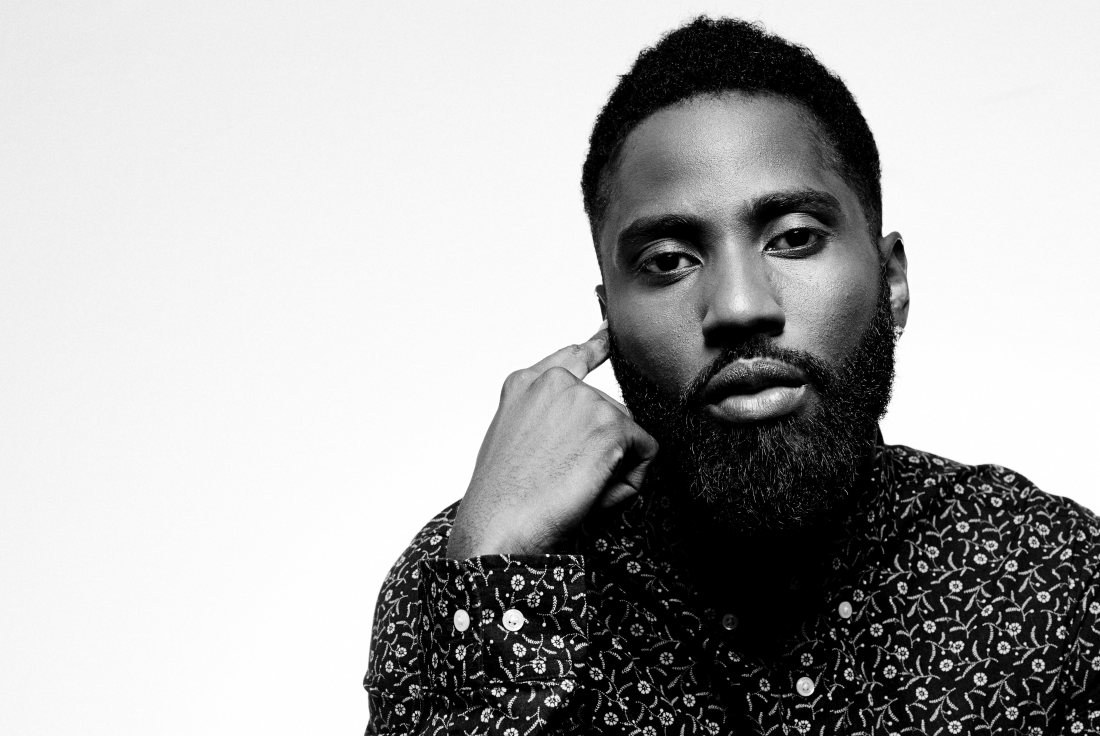
I loved talking about acting and craft with John David Washington for Backstage magazine in what I hope will be the first of many cover stories. He’s humble and wise, and I especially appreciate how thoughtful he is regarding process — how important it is to honor yours as an artist. It’s true for actors and true for writers. He’s also excellent as the leading man coming into his own in Black KkKlansman which is one of Spike Lee’s best.
John David Washington has been eyeing the big leagues for years.
First, it was the NFL. At Morehouse College, he received a full athletic scholarship and set records as a running back. Later, he would play for the United Football League and excel as an undrafted free agent for the then–St. Louis Rams. But even after two years of training with the pros, come Sunday game time, he’d still never touched the field. He had the chops, but never managed to move off the practice squad to reach the star-making level of a pro.
To be clear, Washington is not the kind of person who craves undue credit. He’s humble, driven, and, above all, enjoys doing the work. So when an Achilles tendon injury during a New York Giants tryout put an end to his football career—after a number of already ego-crushing rejections from the NFL—Washington decided to take his work ethic elsewhere. Surgery was an option, but the time out of commission had him on the brink of depression, and he had already cleared space in his mind for another industry: Hollywood. After this summer, it seems the switch will have paid off; Washington is on the path to being a bona fide star.
On Rest in Power: The Trayvon Martin Story & Memoirs on the Movement for Black Lives
I’ve been reading some of the beautiful and important memoirs of the Movement for Black Lives that are forthcoming from Black feminists like Barbara Ransby & Charlene Carruthers as well as screening Rest in Power: The Trayvon Martin story, which begins airing tonight on the Paramount Network, since the end of June. I wrote about the docuseries, as well as the books, for the Village Voice:
“They say that time heals all wounds. It does not,” observes Sybrina Fulton, Trayvon Martin’s mother, in Rest in Power: The Trayvon Martin Story. “Had the tragedy not been so public, I probably would have taken more time to grieve, but I wasn’t given that type of privilege.”
The six-part documentary series, produced by Jay-Z and the Cinemart, begins and ends as it should, with the murdered seventeen-year-old’s parents. Over the course of subsequent episodes, the audience hears a series of 911 calls from Martin’s killer, George Zimmerman, the aspiring police officer who became neighborhood watch captain in his previously exclusive gated community in part to live out a racist vigilante fantasy.
Rest in Power establishes a pattern of behavior from Zimmerman: He calls the cops so frequently on Black children who moved to his neighborhood after the 2008 economic crisis that dispatchers know his voice and refer to him by his first name. Yet, as the series documents, it still took more than forty days, not to mention the intervention of media-savvy civil rights attorney Benjamin Crump, for Zimmerman to be arrested and charged with Martin’s fatal shooting, and to get the killing reported in context by the media.
Martin’s death was the first real major convergence of race and policing in President Barack Obama’s presidency after the euphoria of post-racial liberalism had worn off. In Rest in Power, we see Obama graying at a rapid pace, weary, saying that if he had a son, his son “would look like Trayvon.” He doubles down and says that, put another way, he could have been Trayvon Martin when he was younger. As author Mychal Denzel Smith puts it in an interview, it becomes clear that there will always be more Trayvon Martins than Barack Obamas.
Rest in Power captures this monumental moment in American resistance with moving detail, showing scenes from protests around the country. And forthcoming soon are some additional invaluable histories of this period that provide a broader picture of the modern articulation of Black protest and mobilization in response to racist and vigilante violence.
These books are particularly remarkable because all too often, the narratives of resistance that do exist are positioned as though cisgender heterosexual men have always been at the forefront. As these works demonstrate, Black women have been the unsung architects of many of these protest movements — and they have only recently started to get their due.
Indeed, as we see the signs of hate rising all around us today, it becomes clear that Black women tried to warn us. Khan-Cullors notes this in When They Call You a Terrorist, writing on how she and her co-founders of Black Lives Matter as a movement were nearly erased from early reporting: “Despite it being a part of the historical record that it is always women who do the work, even as men get the praise — it takes a long time for us to occur to most reporters in the mainstream. Living in patriarchy means that the default inclination is to center men and their voices, not women and their work.”
That is true both for how she situates the BLM founders in relation to Martin’s case and for how she writes about the uprising in Ferguson, Missouri, after unarmed teen Michael Brown’s shooting by police officer Darren Wilson. In a chapter dedicated to activism in Ferguson, Ransby profiles Black feminist organizers, including Darnell Moore, Kayla Reed, Brittany Ferrell, Alexis Templeton, and Jamala Rogers.
“When I suggest that the movement is a Black feminist-led movement, I am not asserting that there was no opposition and contestation over leadership, or that everyone involved subscribed to feminist views,” Ransby writes. “Nevertheless, when we listen carefully, we realize that the most coherent, consistent, and resolute political voices to emerge over the years since 2012 have been Black feminist voices, or Black feminist-influenced voices.”


Stolen Youth

June 25th should be Tamir Rice’s birthday, but he was killed in 2014 by police officers who thought he was grown, they said. I have read accounts that say the call to 911 was from someone who said she thought she saw an adult. He was 12.
Tamir’s mother held a Sweet Sixteen party for what would have been the beginning of his rite of passage into his becoming a young man. Black mothers, especially, have had to learn how to transform the dehumanizing separation of us from our children — permanently or temporarily — into something less tragic for a long time.
Had Tamir survived, like Antwon Rose, like so many other of our children whose youth is taken from them, he would have had to battle for the rest of his life to overcome what health experts call Adverse Childhood Experiences (ACES) or the kind of trauma that some children survive that shows up in mental and physical health problems that can last for the rest of their lives.
This heartbreaking story about a father separated from his 6-year-old daughter evoked in me the memory of being taken from my mother in the same way that Tamir’s death and the death of young black people often has. In my case, it was foster care, and probably necessary, because of neglect.
I was 5 when I was sent on a year-long journey through the homes of strangers in the Philly area. Around 6 years old when I was returned to her and we arrived in New York. I don’t remember much of that year, in part because I was young. I know that there are formative things that children learn from their parents that I did not — how to ride a bike, brushing my teeth twice a day, eating the right kind of foods in the right amounts — that year. I remember feeling as if the entire world was unsafe from the moment I was taken from my mother’s home and placed in a strange environment without any understanding of when — or if — I could return.
I don’t think it’s the kind of thing you ever really recover from. It took me many years of therapy and incredible friends and faith to get even close to healing and I’m not all the way there.
No matter what happens now, the hundreds of children who were stolen from their parents have had their lives irreparably changed to prove one man’s political point.
But just like it’s a privilege to grow old and to grow up, it’s also a privilege to have the humanity extended to you to be allowed to be a child. When the humanity of children is recognized, we protect them. We show them that the world is safe for them to grow in, that we will give them room to be and flourish, that they will not have to live in spite of their wounds, they will not have to begin their lives by overcoming the traumas of their beginnings.
The hardest stretch of time, after all, is between when we are young and when we find out who we are supposed to become, if we ever get a chance to get to the latter or if we ever get to be the former.
The alarming inclusion gap between film critics & audiences
In case you wondered if we were making any progress on media diversity in entertainment criticism as storytellers, directors and actors of color in Hollywood start investing in a wider range of stories, the answer is no, according to a new USC Annenberg Inclusion Initiative report.
White critics authored 82% of reviews whereas critics from underrepresented racial/ethnic groups authored 18%. This point statistic is substantially below (-20.7 percentage points) U.S. Census, where individuals from underrepresented groups clock in at 38.7% of the population.
Looking at reviews through an intersectional lens, White male critics wrote substantially more reviews (63.9%) than their White female (18.1%) or underrepresented male (13.8%) peers. Underrepresented female critics only wrote 4.1% of the sample. The ratio of White women’s reviews to those of their underrepresented female counterparts was 4.4 to 1.
I wrote about this in my book in 2015, but it bears repeating: Diversity is a business imperative, not a moral imperative. It’s not just “nice to have,” it’s important to keep your business profitable.
I seek out the work of Wesley Morris and Hilton Als and Doreen St. Felix because they are talented writers and reporters and because I know they understand my worldview as well as the aesthetics and aspirations of the world builders who are working to center Black narratives. Bless Anthony Lane’s heart, I love to read his thoughts on anything else, but I give a damn what he thinks about Black Panther or Girls Trip or even Get Out.
The companies that hire and retain a diverse cadre of writers are the ones that will be around for the long haul. If most of the world doesn’t look like the critics who are supposed to be the experts on cultural products they don’t really get, how long do you think you’ll keep your audience?
A full week into Pride Month, but nevertheless…
Transitioning back into writing full-time has also meant getting used to learning how to manage my time — or, I guess, reclaiming it (thank you, Auntie Maxine) — but it also means that as my friend Jennifer has remarked, you realize that “Linear time is a trip.”
 Anyway, I worked on this piece for the Village Voice on how erasing black LGBTQ women from Pride almost 50 years after Stonewall defeats the point of what Pride is supposed to mean. I hope you dig it.
While I was working on it, I thought about the piece I reference toward the end, the Questioning Continuum, which I wrote for Bitch back in July 2014. This week, I met someone who said that someone told her that coming out is not really a one time process but something you’re always doing. That, to me, feels kind of exhausting, so I’m not entirely sure about that — and back then, I wasn’t even convinced that I needed to come out at all.
But there are a lot of people who feel, like I do, that they’re not quite heterosexual and they’re not in another category either. And maybe queer doesn’t fit them. But they know that they could fall in love with another kindred spirit and that’s the thing that matters. This blog is for them, or if it’s you, it’s for you. Happy Pride.
 Joshunda Sanders