On Becoming a Mother, Part I & II

Dear baby girl,

I wonder how old you will be when you finally read this. I wish I had a letter from my mother when she was carrying me, so I could understand a little better what her world was like, what exactly she carried me through, and what brought her joy while she was doing it. I also mainly identify in the world as a writer, and this is how I process everything, by trying to move feeling into language.

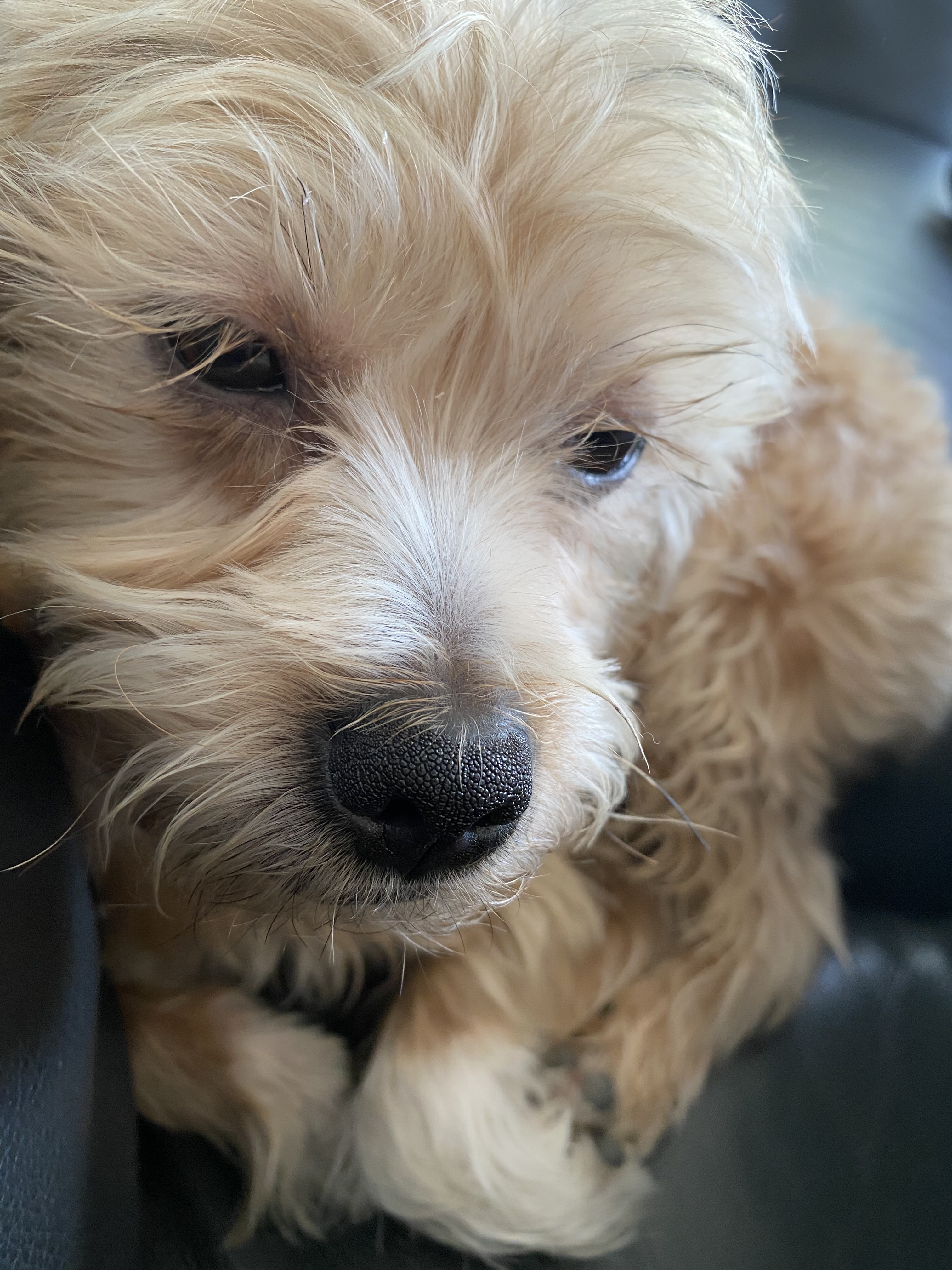
That’s part of why I’m writing to you. It is April 2025, a chilly spring that is having a tough time shaking off winter for good. The sun is shining, the family dog is curled up next to me on the couch. I have checked all my email accounts no less than five times today, worked hard at the job I adore, which is also my career, done some work to prepare for when you come into the world – I do a little bit every day — and napped because at six months, you make me more tired than usual, which is how I know you’re healthy and strong. 

The world is chaotic right now, or it feels that way. The person leading our country has done so in the past, but the way he is doing it now is led by revenge, greed and an appetite for historical destruction of things I love, things I believe make this country what it is: stories of struggle and flourishing movements, the true stories of Black women and men who looked like you and me who led those movements. Most days I worry we are moving further away from progressing toward a place that will not just see you in your full humanity, but also celebrate you in it, which means you will be more likely to live through the full span of a Black girlhood into adolescence than me or the Black girls before you. That our country will become a place where you have the luxury of growing old, maybe having your own babies if that is what you want.

Before I expected you, I took the inevitability of the world as it is for granted, as a place I have had little power to shift, even as I dream of leaving a positive footprint behind. Yes, I reveled in important milestones for Black humanity and flourishing, but I shrugged off questions of the future. I have been a meditator for many years now, and it’s easy to talk myself into the spiritual virtual of tunnel vision on the present. Let some other generation worry about all that future stuff, my work is here and now. I told myself that no part of me would live in the future except for my books, my legacy. Maybe some kind librarians and citizens would preserve my digital footprint in the Internet archives/Wayback Machine.

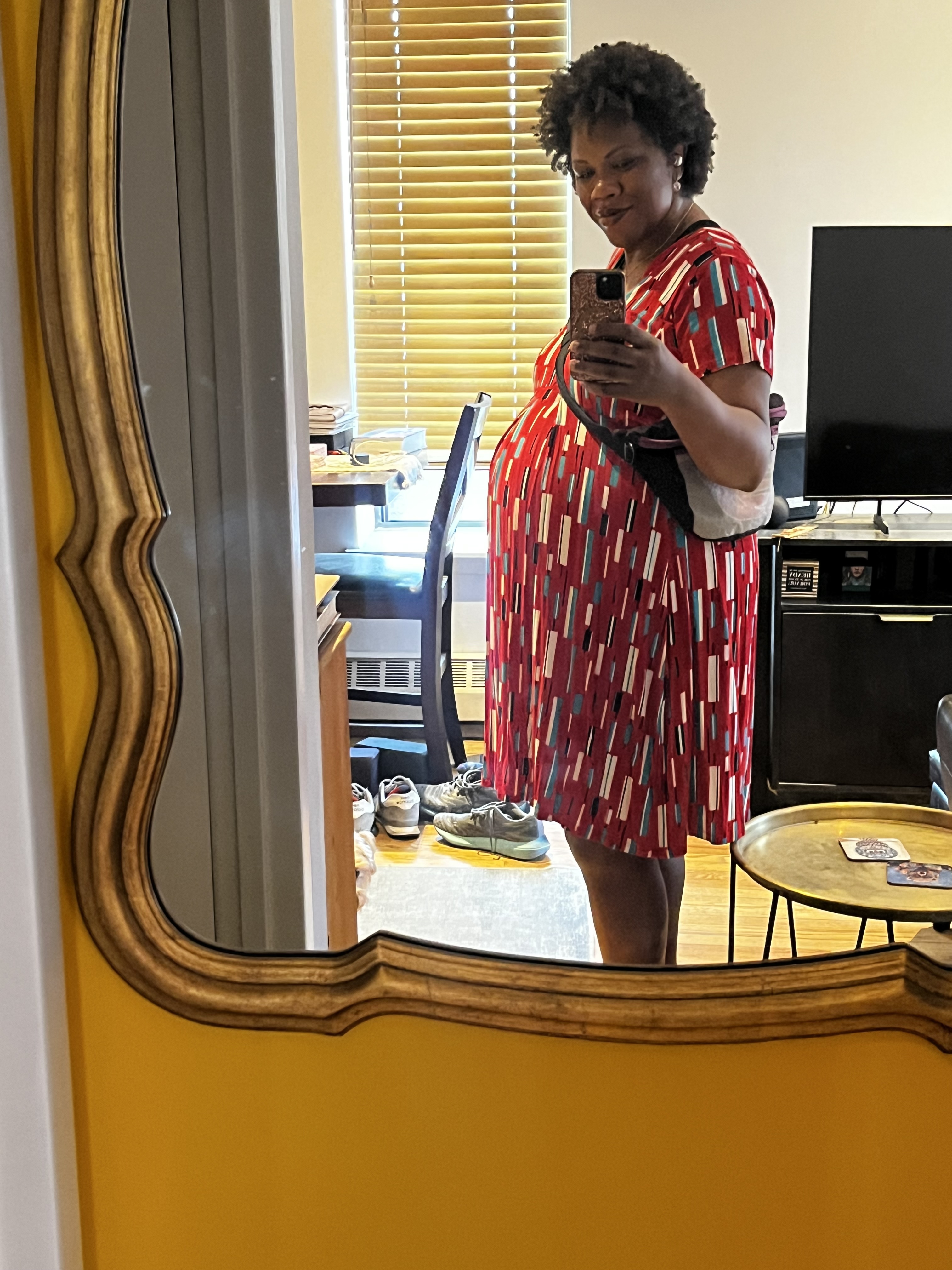
But you will be here now in less than three months, God-willing. Now that I am becoming a mother and I can feel you kicking, moving around inside of me, coming alive, what also grows is the abiding hope that you will grow up in a world that is not too altered. I try to meditate and breathe my way through the twin terrors that you will have so much to fix alongside the fear that some of it is beyond repair.

I want to believe that committing my near and far-term future to nurturing and caring for you is also an act of resistance, a kind of blind faith; that bringing a good human here will also add light to what feels like an endless dark tunnel fraught with danger and uncertainty. But I’m writing these as I start my third trimester, and there is still so much to tell you before we get to the future.

II.

Mother’s Day is coming this weekend, and I thought it would be different at seven months pregnant with you, that I would feel less of an ache than I have felt all my life as this time rolls around. But it has been thirteen years since your grandmother died, and while it hurts less than before, I still feel the ambivalence of a motherless child when it comes to marking this Hallmark holiday. I still feel tender, raw and protective of the little girl in me that mothered myself while I also took care of my mom, with her broken heart and her traumas and her bipolar and borderline personality disorders.
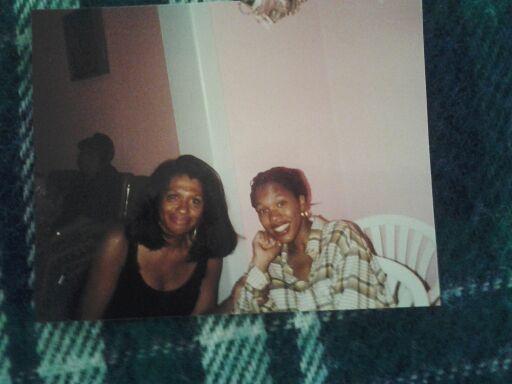
Me and Mom in the 1990s (in case you can’t tell the era from the shirt I’m wearing.)

Even though I tried to heal much of the unresolved pain of my childhood at your grandmother’s bedside when she was physically alive, in the six months between her diagnosis of late-stage cervical cancer and when she died a week before my 34th birthday, the grief of what I missed while she was physically living layered on the grief of what I lost for good when her body died is a weight I will spend my life trying to ensure you never feel.

Instead of more straightforward feelings now, my emotions are all over the place. Some of it has to be the hormones. But some of it is also simple: I am sad because I wish you could have met her. Even with all the things that kept her from living a full, unencumbered and thriving life, your grandmother was a bright beam of love. We should all be so blessed to have a beam like that shine on us, no matter how brief.

Her manic depression kept her restless, so she was always up. I do not remember a lot of times where I saw her truly at rest. Even when we sat still to eat or watch Jeopardy! She seemed to be forever in motion, buzzing.

Mom loved the phone. She loved to call me as early as possible on Mother’s Day and Father’s Day, since she alone was responsible for the fact that I survived my childhood – another thing that you will not have to endure, since your father and I have a big community around us waiting for you with eager hands to catch you should one of us fall or need a break. Your grandmother was the only person I let shorten the shortened version of my name.

“Shan, I love you,” she would start. “Wish me happy Mother’s Day.”

You will learn this about me, baby girl, but sometimes I do silly things. Like when I know the sun is not up and it’s too early to argue, I would still look for a clock or check the time on my phone to point out to my mother what she already knew – that it was too early for her to call me.

“Maaa,” I would whine, my face still in my pillow. “It’s so early.”

“Wish me happy Mother’s Day and you can hang up and go back to bed, but you should be up already.”

“Happy Mother’s Day. I love you,” I would say and I while I told you I do silly things, I’m not disrespectful, and I know my mother so I did not hang up immediately.

“Did you send a card?”

“I did not, I’m sorry,” I lied, because I was not always sorry when I “forgot,” I was being spiteful. It’s hard for me to imagine you may feel this type of way about me some day but I know it’s coming. The big payback, as it were.

“It’s OK, I know you’re a busy career lady. OK, go back to bed,” she would giggle, knowing that I probably couldn’t. “I love you, call me later.”

You won’t be able to imagine this, my love, but in the times before the Internet, before cell phones and all these apps that connect us to each other all the time, a phone call was a lifeline to get everything you needed. Growing up, I spent a lot of my free time on the phone with my friends, most of whom were poor like me and couldn’t afford cable when it first came out. We would spend hours talking, on the phone, or in person. I can’t even tell you what we talked about – probably boys we liked, silly gossip about who was going out with who, dances we wanted to try from the music videos we watched on Channel 36, public access television, which aired Video Music Box most days afterschool at 3:30 p.m.

Your grandmother had a hard time working, because she did not take medication for her manic depression, and that meant that the rapid cycling of her moods — from euphoric, Queen of the world to violent, physically abusive temper tantrums — made her unsuitable for most workplaces. But she was always reaching for work, she was always trying to fend for us. It never worked out for long, but she was always gone.

One way of looking at that was that it gave me plenty of time to develop what a therapist would later call “a rich inner life” – turns out to be helpful if you want to be a writer, which is what it turned out I wanted more than anything. Another way of looking at spending a lot of time alone as a child, then as a teenager, is that my loneliness was an invisible wound. I knew it was there, and I nursed it best I could, but I needed my mother to tell me that just because I was physically alone didn’t mean that I was uncared for. I needed my mother to tell me that even though her love did not translate into nurture, it did not mean I was worthless, it only meant that she had also not been taught by her mother or any of the women around her, how to keep me from picking at the wound, how to keep it from getting bigger.

I learned from my mother that someone could say they loved you, and they could do their best to show you, but there was no real substitute for being nurtured by a mother’s love. At this age, I know now that my mother could not offer this to me because it was never offered to her.

I found it other ways, especially as I got older, as I healed myself, as I took ownership of being my own mother, of collecting a council of elders and peers I looked up to who served as surrogates, many of them without knowing. What I hope to show you when you get here, what I hope to leave to you and pass on, is a compilation of what I think I learned in the process of mothering me, trying to mother my mom as a kid and trying to apply that patchwork of lived experiences to being the best mom to you I can be.

Only time will tell, baby girl.

In the meantime, wish me a Happy Almost Mother’s Day (see what I did there?)

Love,

Joshunda

Juneteenth: Reflections on Freedom and Writing

Jonathan Soren Davidson for Disabled And HereDisabled And Here project page

I’ve been thinking a lot about Juneteenth and a common response that I have when anyone asks me how I deal with writer’s block. I know more people became familiar with Juneteenth during the pandemic, but I learned about the holiday in the state where it was born, Texas. (I highly recommend reading Annette Gordon-Reed’s slim, enlightening book, On Juneteenth, which I like to return to once in awhile.) I was in my 30s, working in Austin, when I first learned about it. Before that moment, I had never considered the quantum emotional leap that had to be required for enslaved people to transition to full, legal (on paper, at least) autonomy.

And, as a native New Yorker, I had mixed feelings about the holiday, which on its surface felt to me like the celebration of delayed freedom. And understanding what little I do about the Reconstruction Era, thanks to Bryan Stevenson and Kidada Williams especially, the holiday seems to have been observed, always, in an environment of extreme animosity for former dehumanized engines of labor resting up, relaxing and otherwise trying to see what this nation and its attraction to a simple freedom narrative really meant for them. After all, the end of slavery really reached a chilling crescendo in the twelve-year period immediately following the Civil War, when there were so many promising laws meant to offer Black folks a path to full citizenship.

But as part of a system of racial hierarchy, the caste system built here to justify slavery in the first place, the first tool of dehumanization was to cut Black people off from educating themselves. Because without reading or writing, you are chained to ignorance. Reading as a practice is what lead me to writing. Writing is what became the catalyst for personal expression that built the architecture of this amazing life.

Anti-Black literacy laws in this country were meant to strip us of any chance at navigating the world around us. And, as a kind of shorthand whenever anyone asks me about writer’s block and how I deal with it, I say that given that my ancestors were forbidden by law to read or write, I do not have the luxury that the phrase writer’s block insinuates.

The Harvard library talks about the barriers to education for Black people this way:  

 
Between 1740 and 1867, anti-literacy laws in the United States prohibited enslaved, and sometimes free, Black Americans from learning to read or write. White elites viewed Black literacy as a threat to the institution of slavery – it facilitated escape, uprisings, and the sharing of information and ideas among enslaved people. Indeed, literacy undermined the false foundation slavery was built on: the intellectual inferiority and inhumanity of African-descended people.

The small percentage of enslaved people who became literate did so at great risk – those who were caught were often violently punished, sold, or even killed. Because of the danger, enslaved people had to be strategic and resourceful in learning to read and write. They attended secret informal schools taught by free Blacks at night, covertly learned from white enslavers’ children, or found opportunities when enslavers were away.
 

So, what does this have to do with Juneteenth? For me, when I consider the struggle of being truly freed after being conditioned to believe you were unworthy, I also wonder about what it must have felt like to realize that the promise of freedom is not the same as being truly liberated. And the true liberation of Black people in this country has always been and will always be contested, and greeted with hostility. 

Freedom to read and write does not equal liberation from work — in fact, the more you read and write, the more work is ahead of you. You have to understand the context: Once the slaves were free, they had nothing of their own; everything they touched with their hands belonged to white people — Land, clothing, books. There was hunger and drought especially in the South. The last thing anyone probably cared about was writing about it, but this is a reminder to me to read W.E.B. Du Bois’s Black Reconstruction.

The hardest thing about writing is how often you fail, no matter how often you try. Much like the paradox my ancestors found themselves living at the end of the Civil War, writing is not a 1:1 scenario. What you put in is not what you get out. Everything about writing is complex, and it resists platitudes and reason.

But these complexities also make writing beautiful, just like the ongoing freedom struggle. They have made me pledge my undying devotion to sitting in quiet places trying to put my thoughts into the right order to share them with you. 

Writers and those who profit from our weirdness make up so many romantic stories about writer’s block and fatigue and distraction. And those ideas are not entirely without merit. But what Black writers have that others do not is the haunting reality of a legacy truncated by racism and racist practices in this country.

Black people who looked like us, who had dreams for their lives and their families like us, also had to go to school in secret and risk their lives to learn what is so abundantly available to us. How many millions of stories have not been written and therefore remain unread that our ancestors did not have the luxury of writing down? Understanding this past, it feels impossible to believe in writer’s block. Whenever I run out of things that feel new to write, I imagine what got buried in the Atlantic Ocean during the Middle Passage. I try to imagine all the other possible futures for those gone too soon.

I think of this when I have to make much smaller sacrifices to make room for what I am here to write, like getting up early before most of the world (on the East Coast, anyway) is up or writing on the rare quiet weekend morning. I think of this whenever anyone asks me a question about how it is I manage to write so much with all the things that I always have going on. And I especially think of these things when I remember that it was not long ago that my ancestors were enslaved, when this country dragged its feet to do what was morally sound, even though we were the ones everyone said were morally corrupt, dangerous and inferior. 

My offering this Juneteenth/Freedom Day is just the reminder that while our freedoms as Black writers may be fraught, contested and resented, they are, nonetheless, freedoms that our ancestors endured much for us to have. May we continue to revel in this abundance, and write to our heart’s content, in their honor. 

From the Dodo: Me and Bendito on the podcast An Animal Saved My Life

Yes, he is *this* cute every single day.

I wrote about Bendito arriving in my life around the time that it seemed a number of people discovered a 2014 Bark article I wrote about Cleo and the fraught relationship some Black folks have with dogs. The folks at the podcast An Animal Saved My Life over at The Dodo were kind enough to interview me about my sweet Bendito, who very soon will be 1 year old. I hope you enjoy it, especially if podcasts are your jam.

On Belonging

I appreciate being in a period of national relief. There is something so calming, even when the world is still in a shambles, about humane leadership. It allows my creative mind, anyway, room to react to events without trying to problem solve or anticipate the next horrific thing.

One result of that has been more space in my mind to reflect and create. One aspect of my life I’ve been thinking about a lot over the past year has been my connection to The Bronx and why I am so attached to it as a site of my fiction and creative nonfiction, why it is a place that, when I lived far from New York City, pulled me back to it. I think I understand better having written this piece on Medium, but I’m not sure. It may be constantly changing like everything else.

Here’s an excerpt:

It feels like the least a Black woman can expect in the way of belonging and safety in 2021 is to not stand out from the crowd in an era of white nationalist fervor and anger. I want that sentence to mean less in the wake of this historic week but I fear it means more.The safest option, even when the world is quarantining during a pandemic, is to not make oneself more of a target for surveillance or harassment.

In the before times, I found subtle ways of trying to take up less space knowing I would be in a situation, or traveling to a place, where I would be The Only One or One of The Onlies. The stress of living in a cauldron of constant chaos and upheaval is offset by the relief of not having to navigate multiple reactions to my Blackness and my womanhood and their intersection, which seems to be the most intimidating and off-putting fact of my existence of all.

Staying in my lane, or my neighborhood, has become my safety, my insurance. My safety is that I am surrounded by others who more or less expect me to be here. That expectation is reassuring, because when white people are surprised by Black people, the Black people end up dead or in prison. It probably helps that I don’t move that quickly, since there’s a lot of me to move around. Even if I were to be one of those sudden movement types, there is, after all, a police precinct up the street. That said, I am not often made to feel like a suspect in my neighborhood, though I wonder if the Black men in my neighborhood would say the same. I bet even the famous ones would tell a different story.

I wonder: Do you feel like you belong to the place where you live? Why or why not?

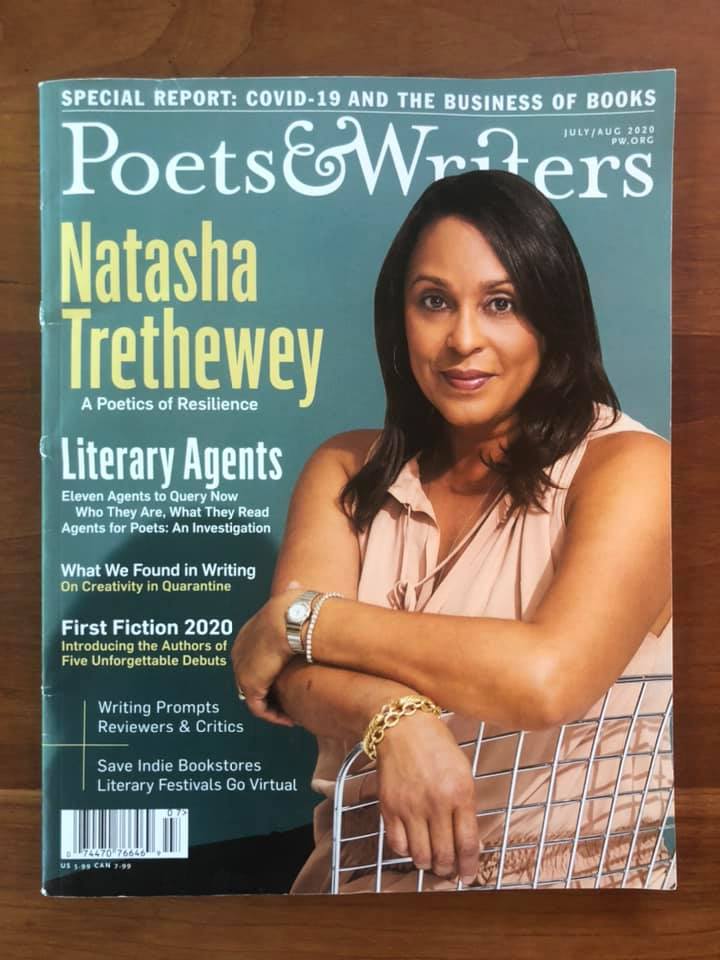
My Poets & Writers Cover on Natasha Trethewey

102965712_10222202564280423_8955403904693343719_n


I’m so excited about this cover story I wrote about Natasha Trethewey for the July/August 2020 issue of Poets & Writers, which is only available in print but you can order your copy here (better yet subscribe!)

I feel like I have been wanting to post about it since I got the assignment months ago, so now I’m bursting with joy and excitement. I wanted to just share some more about the wonder of Black creatives, the lessons we have across timelines & movements.

I thought when I read Memorial Drive that what magnetized me to Natasha Trethewey’s work was our common mother loss, but no, it was so much deeper than that. I loved and still do her resilience, her strength, her vulnerability and her focused ability to transmute pain into real, lasting beauty and triumph.

In our interview, I was honored that she trusted me so much to hold space for so much of her journey. She talked about going up to read her work and people introducing the life-shaping story of her mother’s death “with the word murder hanging in the air,” so her memoir was an opportunity to re-contextualize the life of her mother, the social worker and self-advocate who did not live because we have no way of really protecting victims of intimate partner violence and what a failure that is.

There’s so much more and I hope you will read the print issue. Here is more, another part that stays with me: “They have a saying in South Korea that you don’t bury a mother in the ground; you bury her in the chest, or you carry her corpse on your back…As much as I carry her corpse around, I have also planted my living mother in my chest, and she grows there continuously. I have both, two mothers.” May that offer some kind of comfort and/or recognition to all of us as we mourn not just our mothers, but Black daughters like Breonna Taylor & the many others whose names we can’t forget to keep saying.

Meditations on Staying Safe in the Bronx

Probably like everyone else, I have my decent days under self-isolation and I have my difficult ones. Increasingly, they are complex, especially as the parental holidays approach…but every day now has some kind of asterisk, doesn’t it? Here’s my latest on Medium, (here’s a friend link!) which, like everything I seem to write, is about the Bronx but also about trying to navigate grief and humanity and showing up for ourselves in the midst of all of it.

Before the pandemic, my hometown had been changing dramatically, while also remaining very much anchored in what it has always been. The Bronx is always treated like a predominately Latinx and Black outpost of New York City. But it is actually the city, too. At last Census count, there were roughly 1.4 million people here.

Like Queens, the Bronx has been highlighted as an epicenter within an epicenter of the coronavirus because of the high rates of infection and death among people of color here. The deaths of people of color from coronavirus have been at rates 50 percent and higher here in the Bronx compared to Manhattan, with some of the wealthiest zip codes in the city.

Many stories have documented the health disparities that have been laid bare — showing that many black people at higher risk of being infected because of long-standing problems accessing affordable health care, distrust of healthcare providers and our likelihood of being among the ranks of essential workers.

I share in the collective anticipatory grief — grieving those you know will die — that now hangs over the city. It also feels hauntingly familiar. My father died by suicide a decade ago this month. As shocked and confused and angry as I was then, as long as it has taken for me to try to peel apart all of the emotions that still feel fresh in that grief, I know that to lose him now, when the way that we mourn is even shifting, would come with an additional stain and stigma.

I felt the most anticipatory grief for my mother, who died almost two years after my father in 2012. I watched her skin shrivel around her eyes and cheeks as Stage IV cervical cancer ate away at the fleshy, coy expressions she always made that taught me the finer ways to flirt, to help joy shine from one’s face.

In those months and days before she died, I felt a lot like I do now: I kept a daily vigil at the edge of the world I used to know with her at the center, whether I wanted her there or not. Mourning itself felt like a virus I needed to save others from.

Book Review| Memorial Drive : A Daughter’s Memoir by Natasha Trethewey

Memorial Drive

I barreled unexpectedly through Natasha Trethewey’s beautiful and painful memoir, Memorial Drive: A Daughter’s Memoir. I was compelled to finish it quickly the way we are taught to rip Band-Aids off our wounds to ensure that we won’t prolong a stinging sensation, so that we can get on with the healing part and rush through the grief. I explain a little more, too, in my video review on YouTube.

It is not so easy to recover from wounds that involve our mothers, particularly when they do not survive the failings of the world — the world that’s supposed to protect them.

Memorial Drive is the story of Trethewey’s mother, Gwendolyn, through the past and present lens of her daughter’s keen, writerly eye. No detail is spared, which includes transcripts of recorded phone conversations between Gwendolyn and Trethewey’s former stepfather Joel, a haggard, menacing Vietnam War veteran who continually threatens the uneasy peace that opens the book and remains a question mark throughout its pages.

Poets are gifts to us in times of happiness and relative ease but particularly in times of despair, I think, because they can distill what we would normally couch in euphemism down to its essence. In short, they remind us that events are not only what happened but our histories are our active destinies. We can shape them as we wish, but the facts — comforting or not — well, those remain. For women and Black women most of all, there is a way that this power of witness can override the willingness and tendency of others to forget us.

The ache in my heart spread and flourished every time I read a new detail of Joel’s torment of Trethewey, his disregard for her mother or her brother. His manipulation was a knife, twisting and turning with every page; at one point, he breaks the lock to Trethewey’s new gold-edged diary and the violation the poet felt then and perhaps every moment after she had “found her audience,” was so visceral I had to stop reading.

Part of my reaction to the book, of course, is remembering my own mother’s experiences with abuse; the cavalier way in which she would recount having her nose broken by an ex-husband, the way we fled similar boyfriends and sought shelter in homes for what were then called domestic violence shelters. When I posted a review on Instagram, someone mentioned, too, that one of the other aspects of the global pandemic in this moment has to do with a common feature of disasters, which is a rise in intimate partner violence.

The neglect to which my mother succumbed was very different and, besides, you can’t compare one mother’s death to another’s. But what feels the most true here is that I understood that no one was listening to my mother, even when she documented her experience, even when I was a witness. From this, I learned that women were not considered the authorities of their experiences; that even if they were hunted and pursued until they were broken, they would likely not be deemed worthy of protection under the law.

This is a belief I would rather be convinced is untrue. It’s not really in my nature to give into despair. And yet, here is what happens in Memorial Drive, here is what takes the poet three decades to begin to approach & even now, with great suffering and agony: After many attempts to document the abuse and violence and to escape it, Gwendolyn was murdered by her estranged husband in June 1985. Like so many people who have experienced intimate partner violence, she could have been saved — there were so many people warned, so many signs, documented evidence of his threats to her life — and yet, she wasn’t.

This is devastating on so many levels, but especially in Memorial Drive because Trethewey composes the poetry of her extraordinary experience with clarity, grace and generosity while also compiling detail by way of utilizing the economy of every word to perfect effect. As a result, Memorial Drive reads like a classic memoir of grief, like a tragedy in slow motion, the narrative arc, already known, lingers over the text like a set of strings.

Cut Me Loose | Oxford American Winter 2019

So on Mother’s Day, I wandered around Orangeburg to make peace with the parts of Marguerite I didn’t quite know but which still clung to me like smoke. Early in the morning, I parked my rental across the street from the Edisto Memorial Gardens, home to fifty-four varieties of roses. Babbling in the background was the longest blackwater river in North America, an oil-colored waterway connected to the Combahee River—the same water Harriet Tubman used to lead one hundred fifty Union soldiers to various rice plantations on June 2, 1863, to free seven hundred fifty slaves. One thing I knew for sure: my mother loved water and she loved roses.

Only two or three people were around, so I had the place to myself. Downhill, past incredible, tall trees, I went to the water, looking north and south. I walked west, toward the rows and rows of peach- and wine-colored roses, speckled, small, wide, glorious, with names like Glowing Peace and Coretta Scott King and Perfume Delight. Did you ever visit this place? Now, or then? 

Fondling the delicate velvet of a full-bodied rose, I thought of everything a rose would have meant to my mother. How I took for granted a ten-dollar bouquet of fresh flowers when I wanted to attend to my heart, but how such a simple gesture would have been too much for her to even dream about. Even though no one was around me, I didn’t want to disturb the silence, and also, the unchaining. Something rusty and dark in me moved aside, a stone rolling away from a tomb. This was not the raucous, grandstanding, trumpet-blaring Free At Last freedom I’d always said I wanted, but something more profound. A healing. What sounded like my mother’s voice in my ear. I can’t believe you made it. 

I looked up to stop the tears and spotted a Confederate flag flapping with nonchalance above the trees.

Only after my trip would I realize that, geographically, Orangeburg is a kind of nadir as defined by Imani Perry: “the lowest point in an orbit. It is the location directly below the gaze.” Look for it on a map: in comparison with its northern and eastern neighbors, Charleston and Columbia, Orangeburg is down and out of the way, overlooked. 

The rest of my essay in the Winter 2019 issue of Oxford American’s South Carolina issue is here.

Starting from the Beginning

I think all the time about blogging, but then life calls. I don’t even know if people blog anymore, but to me, it feels like the people who care the most about hearing anything I have to say are over here, so I appreciate your patience. And that you have stuck around all this time.

Without saying too much more about it, if you have been a fan of my nonfiction work, consider pre-ordering a copy of the Oxford American 21st Annual South Carolina Music Issue. When the piece is out in the world, I’ll say a little more about it. I’m the most proud of the essay that appears in this issue that I have ever been about anything I’ve written.

In the past week, I’ve wrapped up a revision of about half of a novel; submitted a short story & received an acceptance (!) talked about the gloriousness of writing with a mentee — I am honored to be in the company of writers who are part of the AWP Writer to Writer Mentorship program, which you can read more about here — and was excited to see this Lambda Literary video from the Emerging Writers Fellowship readings pop up on the timeline.

I also decided that it’s time for me to find an actual hobby.

Also: I am not without hobbies. I draw. I cook. But all of these things are productive. You know, like running marathons. [ Side note: The NYC Marathon is next Sunday, Nov. 3rd! If you’re in New York, come through! I’m at 42% of my fundraising goal, the deadline is Oct. 31st but I’m floored by the generosity of donors to my campaign who have helped get me to $1,268. That’s a lot of meals for the people who deserve to have the services of a food pantry and a hot meal served to them with respect & embodied empathy.]

And now I’m worn out. Totally pooped. Exhausted.

So, picture me out here in these virtual streets trying to play Grand Theft Auto V.

Yup, I’m dipping my toes in gamer world. If you have suggestions and tips on how to not suck, let me know? It took me a smooth 10 minutes to figure out how to make the main character walk around. I was irritated, but then, something cool happened.

I realize how much I love being a beginner. Maybe it’s the essence of being underestimated, both the self’s underestimation and that of others. I sort of enjoy not being very good at gaming.  I can see how people get swept up into these other worlds, start spending money they don’t have (this is why I had to break up with Candy Crush! I was about to start buying lives and my soul just shook its imaginary head…) I mean, I only just started a few days ago. So, like, there’s time.

But this is also what I love about National Novel Writing Month every November– what matters so much isn’t the end product; there may not be one! The point is that you write like hell, roughly 1,667 words a day, and then hopefully, by the end of the month, you have 50,000 words. I just so happen to have a project or two that I want to sink into in November, so I’m in. I’ve been doing it almost every year for about five years. What about you?


On running the NYC Marathon again

Almost a decade ago, maybe the fifth or sixth time I tried to quit smoking, I started running.

Since I was a girl, I would sometimes just take off running around the block because I didn’t really have friends or anything else really to do besides read. And getting my heart rate going was my favorite thing.

I could feel the wind on my face. I loved the sheen of sweat on my arms and legs. I felt powerful, like the master of my own fate.

One weird thing about me, though, is that I don’t have a good sense of distance. A childhood friend would be so mad at me when I would guesstimate how far a walk from, say, the Fordham train station was to the Botanical Gardens. To me, especially because there was a big part of it that was downhill, it almost didn’t matter. “Maybe six blocks,” was a standard answer for distance of all lengths, all kinds, anywhere.

“Girl, this is more like fifteen blocks!”

All I could do was shrug and apologize. I was used to just meandering the city, a habit I learned from walking everywhere, borough to borough, with my mother. We walked to save carfare, walked to go to the welfare office, walked to church, walked to the pantry, walked and walked and walked.

But running was mine. Running was mine when I was a kid and it was mine when I joined the track team and set a school record my freshman year. It was mine even when I felt like I was coughing up tobacco residue during Austin 5Ks. Then 10Ks. Then half marathons. One, two, three half marathons, 13.1 miles each, and I wondered about the marathon distance, whether I was brave enough to fail. 26.2 miles, even to someone who doesn’t have a normal estimation of distance is still really damn far.

But here is what I wrote about that about four years ago, in a longer post, Running Through Madness:

Next thing I knew, I had made the lottery for the New York Marathon, the same spring when I learned my father had committed suicide.

Both reminded me that nothing was impossible.

It turns out that running 26.2 miles, and training body and soul to do it, is useful for heartbreak. It does not mend anything, your muscles are all broken, and that becomes the point. Everything is weary and strained and exhausted like your heart.

It took me almost six full hours to run that marathon. I started with thousands of marathoners around the world before the sun came up and finished with just a few lonely Clydesdale running souls just as the sun was going down.

This year, I am running the TCS NYC Marathon again with some of my colleagues at the New York Common Pantry. I sit on the Junior Board for the pantry, which helps serve New Yorkers with dignity.

I’m raising $3,000 to help feed New Yorkers who may not have the resources to make ends meet. The New York Common Pantry provides 6+ million meals each year. We are committed to meeting the needs of underserved New Yorkers by providing nutritiously balanced food and services.

I’m also running to see if I can be a little faster, since I have distance and time has helped me heal the heartbreak that got me running in the first place. But the thing that gets me out the door for running miles that take hours to complete is my passion for making sure the hungry get fed. I hope you can contribute to help with the cause. (I also accept prayers, Biofreeze products and chocolate chip cookies.)