A Black History Month Reading List, Part 1

Some of you have been kind enough to follow my musings about individual books on my new YouTube channel, Black Book Stacks. This is a natural endeavor for me, to find, devour and support books by and about Black people, who I define as people from throughout the African Diaspora. This is an evolving definition, I guess; I was reading David Yoon’s Frankly In Love, which is an addictive YA book that delves into interracial dating and intraracial friendship, including with his Black friend Q. Frankly In Love is a good, recent example of the kind of book that blends a lot of different kinds of diversity and that was part of what thrilled me about it.

I forget who I was talking to who said this, but it stuck with me: Black people in this country do not have the luxury of having as long a literary tradition as any other group in America because of the legacy of slavery. Because of being forbidden to read or write. To me, that makes it that much more important to lift up books that recover and restore us to ourselves; that expand what we know of ourselves and our lineage, real and imagined. Anyway, here is the beginning of a list of some essentials of Black history, to me, anyway, that can be a good resource and are some of my favorite books that filled in important gaps for me along my reading journey:

  1. (New) Daughters of Africa: An International Anthology of Writing by Women of African Descent, edited by Margaret Busby | I have the great fortune of having both a copy of the original Daughters of Africa, and the newest addition, which just expands the important, vast collection of significant work to include 200 writers. A classic.
  2. Sister Outsider by Audre Lorde | “Poetry is Not A Luxury,” “Uses of the Erotic,” and many other seminal works by Audre Lorde were first written or delivered as lectures in the 1970s. Like the Combahee River Collective as a whole, she was integral to giving us language to describe and express the interlocking oppressions we know now as an intersectionality framework.
  3. How We Get Free: Black Feminism and the Combahee River Collective by Keanga Yamahtta-Taylor | I was not familiar with Dr. Yamahtta-Taylor’s work until I taught it at the New School, and hearing first hand from the likes of Barbara Smith, Barbara Ransby and Alicia Garza helped contextualize not only a lot of what we’re seeing now in terms of how Black women are dismissed or lifted up, depending on the community, but also how much has happened behind the scenes along the way.
  4. At the Dark End of the Street: Black Women, Rape, and Resistance — a New History of the Civil Rights Movement from Rosa Parks to the Rise of Black Power by Danielle L. McGuire | No disrespect to Rosa Parks, but I did not know the name of Claudette Colvin until I read McGuire’s book, of my own volition, long after undergrad, where I had Africana Studies as a minor and learned a good deal, just not enough.
  5. The Warmth of Other Suns: The Epic Story of America’s Great Migration by Isabel Wilkerson | It’s hard to believe that 2020 is the 10th anniversary of this book’s publication (!) but what an incredible work of scholarship, recovery and re-membering from Wilkerson, who, if memory serves, interviewed thousands for this book, including a young pre-presidential hopeful named Barack Obama. No list of important Black historical texts is complete without this one.

Words of Fire is another underrated anthology of Black Feminist thought; Black Skin, White Masks has always haunted me, and Sisters of the Yam, by bell hooks, was the beginning of my understanding of wellness and self-care.

I’d love to hear what your thoughts are on these books if you’ve read them, or what books you consider essential to learning about Black history are.

School Library Connection Author of the Month Interview

SLC Author of the Month

I’m delighted to share a Q&A with School Library Connection as its December Author of the Month. I got to share my love of The Bronx, the story behind Ava Murray’s name in the I Can Write the World series and more about faith, solitude and writing across genres. I hope you’ll check it out. You can read the whole thing here, but I’ve included an excerpt below:


I love the way Ava’s mother uses the window frame to explain how journalists “frame” stories. It seems like so much of our news these days is framed to fit a particular narrative, rather than to express the truth. Why do you think this started to happen, and what can be done to fix it?

Thank you; it wasn’t until I had the great honor of sitting on a panel at the 2019 Bologna Children’s Book Fair with Rudine Sims Bishop, whose beautiful description of books as windows preceded Kim’s description in the book, that I thought more about the significance of how we talk to children (or don’t talk to them) about how stories are framed, or shaped.

I think that it’s fairly recent in society—adjacent and aligned with the rise of social media—that everyone sort of considers themselves a journalist. When you think about it, journalists are witnesses, people who report what they see. So in a way, everybody’s right. What everyone doesn’t necessarily have, though, are the ethics that go along with what professional news gatherers have—this inclination to shine a light on injustice and unfairness. Most news reporters get into the business (and it is increasingly considered mainly a business) with the aims of comforting the afflicted and afflicting the comfortable. But I think the reason why news more often resembles propaganda now has to do with a kind of commodification of truth and certainly of news. Integrity or nobility are less emphasized than they used to be because most media moguls are looking for revenue to survive in an environment where no one thinks they need an intermediary for news.

One thing I think all of us could do more of is to consider how powerful our platforms are, whether you think you have one or not. All of us who write, for example, have presences online. How can we use that to help others share their opinions or their stories more mindfully? Sometimes it’s as simple as asking these questions, which I love and did not originate with me: “Does it need to be said? Does it need to be said now? Does it need to be said by me?” The other thing is if we are all journalists, now, it shouldn’t just be when it’s comfortable or cute, but all the time. Ask more difficult questions. Who is the source of this information? Are they lying to me about their objectivity? Why do I believe them? Why should I believe them? When in doubt, find your own credible sources and go with that.

Cut Me Loose | Oxford American Winter 2019

So on Mother’s Day, I wandered around Orangeburg to make peace with the parts of Marguerite I didn’t quite know but which still clung to me like smoke. Early in the morning, I parked my rental across the street from the Edisto Memorial Gardens, home to fifty-four varieties of roses. Babbling in the background was the longest blackwater river in North America, an oil-colored waterway connected to the Combahee River—the same water Harriet Tubman used to lead one hundred fifty Union soldiers to various rice plantations on June 2, 1863, to free seven hundred fifty slaves. One thing I knew for sure: my mother loved water and she loved roses.

Only two or three people were around, so I had the place to myself. Downhill, past incredible, tall trees, I went to the water, looking north and south. I walked west, toward the rows and rows of peach- and wine-colored roses, speckled, small, wide, glorious, with names like Glowing Peace and Coretta Scott King and Perfume Delight. Did you ever visit this place? Now, or then? 

Fondling the delicate velvet of a full-bodied rose, I thought of everything a rose would have meant to my mother. How I took for granted a ten-dollar bouquet of fresh flowers when I wanted to attend to my heart, but how such a simple gesture would have been too much for her to even dream about. Even though no one was around me, I didn’t want to disturb the silence, and also, the unchaining. Something rusty and dark in me moved aside, a stone rolling away from a tomb. This was not the raucous, grandstanding, trumpet-blaring Free At Last freedom I’d always said I wanted, but something more profound. A healing. What sounded like my mother’s voice in my ear. I can’t believe you made it. 

I looked up to stop the tears and spotted a Confederate flag flapping with nonchalance above the trees.

Only after my trip would I realize that, geographically, Orangeburg is a kind of nadir as defined by Imani Perry: “the lowest point in an orbit. It is the location directly below the gaze.” Look for it on a map: in comparison with its northern and eastern neighbors, Charleston and Columbia, Orangeburg is down and out of the way, overlooked. 

The rest of my essay in the Winter 2019 issue of Oxford American’s South Carolina issue is here.

The Nuances of Harriet

This was one of Harriet Tubman’s common refrains:

“If you are tired, keep going; if you are scared, keep going; if you are hungry, keep going; if you want to taste freedom, keep going.”

We all need to hear that message all the time, regardless of who delivers it. I wrote about my thoughts on the movie, Harriet, on Medium. I’d love to hear your thoughts if you’ve seen it.

Starting from the Beginning

I think all the time about blogging, but then life calls. I don’t even know if people blog anymore, but to me, it feels like the people who care the most about hearing anything I have to say are over here, so I appreciate your patience. And that you have stuck around all this time.

Without saying too much more about it, if you have been a fan of my nonfiction work, consider pre-ordering a copy of the Oxford American 21st Annual South Carolina Music Issue. When the piece is out in the world, I’ll say a little more about it. I’m the most proud of the essay that appears in this issue that I have ever been about anything I’ve written.

In the past week, I’ve wrapped up a revision of about half of a novel; submitted a short story & received an acceptance (!) talked about the gloriousness of writing with a mentee — I am honored to be in the company of writers who are part of the AWP Writer to Writer Mentorship program, which you can read more about here — and was excited to see this Lambda Literary video from the Emerging Writers Fellowship readings pop up on the timeline.

I also decided that it’s time for me to find an actual hobby.

Also: I am not without hobbies. I draw. I cook. But all of these things are productive. You know, like running marathons. [ Side note: The NYC Marathon is next Sunday, Nov. 3rd! If you’re in New York, come through! I’m at 42% of my fundraising goal, the deadline is Oct. 31st but I’m floored by the generosity of donors to my campaign who have helped get me to $1,268. That’s a lot of meals for the people who deserve to have the services of a food pantry and a hot meal served to them with respect & embodied empathy.]

And now I’m worn out. Totally pooped. Exhausted.

So, picture me out here in these virtual streets trying to play Grand Theft Auto V.

Yup, I’m dipping my toes in gamer world. If you have suggestions and tips on how to not suck, let me know? It took me a smooth 10 minutes to figure out how to make the main character walk around. I was irritated, but then, something cool happened.

I realize how much I love being a beginner. Maybe it’s the essence of being underestimated, both the self’s underestimation and that of others. I sort of enjoy not being very good at gaming.  I can see how people get swept up into these other worlds, start spending money they don’t have (this is why I had to break up with Candy Crush! I was about to start buying lives and my soul just shook its imaginary head…) I mean, I only just started a few days ago. So, like, there’s time.

But this is also what I love about National Novel Writing Month every November– what matters so much isn’t the end product; there may not be one! The point is that you write like hell, roughly 1,667 words a day, and then hopefully, by the end of the month, you have 50,000 words. I just so happen to have a project or two that I want to sink into in November, so I’m in. I’ve been doing it almost every year for about five years. What about you?


On running the NYC Marathon again

Almost a decade ago, maybe the fifth or sixth time I tried to quit smoking, I started running.

Since I was a girl, I would sometimes just take off running around the block because I didn’t really have friends or anything else really to do besides read. And getting my heart rate going was my favorite thing.

I could feel the wind on my face. I loved the sheen of sweat on my arms and legs. I felt powerful, like the master of my own fate.

One weird thing about me, though, is that I don’t have a good sense of distance. A childhood friend would be so mad at me when I would guesstimate how far a walk from, say, the Fordham train station was to the Botanical Gardens. To me, especially because there was a big part of it that was downhill, it almost didn’t matter. “Maybe six blocks,” was a standard answer for distance of all lengths, all kinds, anywhere.

“Girl, this is more like fifteen blocks!”

All I could do was shrug and apologize. I was used to just meandering the city, a habit I learned from walking everywhere, borough to borough, with my mother. We walked to save carfare, walked to go to the welfare office, walked to church, walked to the pantry, walked and walked and walked.

But running was mine. Running was mine when I was a kid and it was mine when I joined the track team and set a school record my freshman year. It was mine even when I felt like I was coughing up tobacco residue during Austin 5Ks. Then 10Ks. Then half marathons. One, two, three half marathons, 13.1 miles each, and I wondered about the marathon distance, whether I was brave enough to fail. 26.2 miles, even to someone who doesn’t have a normal estimation of distance is still really damn far.

But here is what I wrote about that about four years ago, in a longer post, Running Through Madness:

Next thing I knew, I had made the lottery for the New York Marathon, the same spring when I learned my father had committed suicide.

Both reminded me that nothing was impossible.

It turns out that running 26.2 miles, and training body and soul to do it, is useful for heartbreak. It does not mend anything, your muscles are all broken, and that becomes the point. Everything is weary and strained and exhausted like your heart.

It took me almost six full hours to run that marathon. I started with thousands of marathoners around the world before the sun came up and finished with just a few lonely Clydesdale running souls just as the sun was going down.

This year, I am running the TCS NYC Marathon again with some of my colleagues at the New York Common Pantry. I sit on the Junior Board for the pantry, which helps serve New Yorkers with dignity.

I’m raising $3,000 to help feed New Yorkers who may not have the resources to make ends meet. The New York Common Pantry provides 6+ million meals each year. We are committed to meeting the needs of underserved New Yorkers by providing nutritiously balanced food and services.

I’m also running to see if I can be a little faster, since I have distance and time has helped me heal the heartbreak that got me running in the first place. But the thing that gets me out the door for running miles that take hours to complete is my passion for making sure the hungry get fed. I hope you can contribute to help with the cause. (I also accept prayers, Biofreeze products and chocolate chip cookies.)


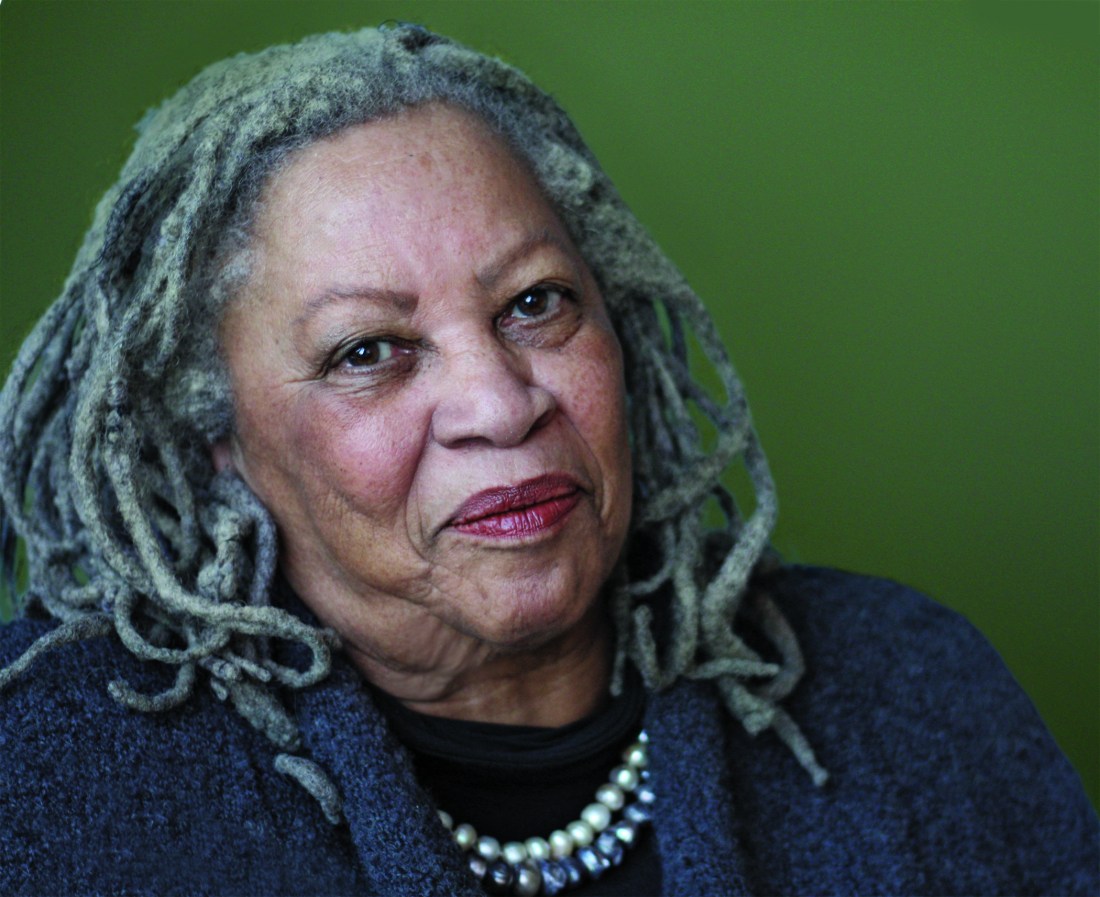
On the legacy of Toni Morrison

“In time, writing became a way to ‘order my experience…’ It’s always seemed to me that black people’s grace has been with what they do with language.”

Late last year I received a copy of The Source of Self-Regard. I guarded this galley with my life, and from the first page, I felt fed. Redeemed. Seen.

I was completely astounded by it, and by the possibility of writing about Toni Morrison for the first time after years of steeping myself in her work. I did what I always do when I’m intimidated by the prospect, by the responsibility, of trying to do someone justice: I went overboard with research. Flung myself into the stacks at the Schomburg. The above quote comes from the 1987 book, Toni Morrison: An Annotated Bibliography by David L. Middleton. Here are my other notes:

Born 1931 in Lorain, Ohio

Chloe Anthony Wofford

Shortened her name to an abbreviation of her middle name purportedly (and with regret) because no one could pronounce Chloe. The theme of claiming one’s name emerged –noted in entry – in her fiction – from third novel, Song of Solomon (1977) to Tar Baby, her fourth ( 1981)

Graduated from Howard in 1953, English Major, classics minor

Master’s from Cornell in 1955 – her thesis was on suicide in the work of William Faulkner and Virginia Woolf.

She taught for two years at Texas Southern University in Houston, then returned to Howard as a faculty member.

She married Jamaican architect Harold Morrison in 1958

They had two sons together, Harold Ford and Slade Kevin. They divorced in 1964.

She moved w/sons to Syracuse where she worked as Random House textbook editor. Began writing at night as therapy for her loneliness when her sons were in bed.

Transferred to NYC in 1967 to headquarters for Random House editing acclaimed black women writers like Gayl Jones and Toni Cade Bambara.

She kept teaching – at SUNY Purchase 1971-72, Yale, 1976-77. She left Random House in 1983; Appointed Albert Schweitzer chair at SUNY Albany in 1984. Stayed until 1989, when Princeton appointed her Robert F. Goheen Professor of the Council of the Humanities at Princeton University. (Note from me: That means 2019 marks the 30th anniversary of Toni Morrison becoming the first Black woman to hold a chair at an ivy league university.)

When I am overwhelmed with sadness and grief, like now, I reach for books. Toni Morrison made it so that when I reached for books, I saw the most glorious, complicated and layered parts of myself as a black woman becoming. When I joined the Well Read Black Girl sisterhood for a viewing of the documentary about her life, Toni Morrison: The Pieces That I Am, it felt like we were witnessing a celebrity in the room with us, like she was talking to every black woman in the room even though we were in a crowded theater in Brooklyn.

She did not know me, but she knew me, because her work reached into my soul and embraced the core of me. That is some of how I feel about Toni Morrison’s work; Toni Morrison who lived by the Hudson, recovered from personal tragedies and still, rose. Still, she wrote. Not just anything — everything. The following paragraph did not make it into my Bitch Magazine review of The Source of Self-Regard:

It is easy for us to take for granted Morrison’s vision, the scope and depth and breadth of it. How far she could see into our future from the quiet of those dark nights of her loneliness. The Bluest Eye, for example, was a precursor for this time – showing us that we would continue, always to vilify the acts of sexual assault against black girls or against women, at least, and maybe sometimes we would consider those two to be in the same category, but we would always excuse the perpetrators of that violence in the bodies of black men. It is easy to look back now that Morrison is nearing the end of a storied, established life, not to put her in a grave or anything, and applaud or be dismissive of the soaring loveliness of Beloved. If the book’s failure to win the 1987 National Book Award or the National Book Critics Circle Award despite notable acclaim was any indication – as these things go, it was taken as such – the idea that a mother willing to kill her children instead of submitting it to a life of slavery was so great a leap that it took an open letter published in the New York Times Book Review signed by 48 prominent black writers to have the literary establishment look again at their discomfort. The following year, Morrison won the Pulitizer Prize.

I would be a less proud, confident, whole black woman writer were it not for the gifts of Toni Morrison. She was and is a literary light for the ages. I will miss her sharp, soft language, that keenly spiritual eye and of course, always, forevermore, the narratives she had left to write, if there was any more for her to give.

I’m too gutted to read her eulogy to James Baldwin in its entirety this morning. But this part, this is what I feel about Toni this morning:

You knew, didn’t you, how I needed your language and the mind that formed it? How I relied on your fierce courage to tame wildernesses for me? How strengthened I was by the certainty that came from knowing you would never hurt me? You knew, didn’t you, how I loved your love? You knew. This then is no calamity. No. This is jubilee. ”Our crown,” you said, ”has already been bought and paid for. All we have to do,” you said, ”is wear it.”

And we do, Jimmy. You crowned us.

Happy Pub Day to I Can Write the World

Happy publication day to us!
I’ve thought for months about how to best commemorate this day. I’ve been posting and talking and writing and talking about I Can Write the World since last year, so it’s hard to believe that the rest of the world will have access to my labor of love starting today. 
It might surprise you that I never thought I’d write a children’s book, let alone a series. Many of you know that I had a childhood that made me grown in many ways before my time, just like a lot of little Black girls who have our innocence taken or presumed to be a non-entity. But when Six Foot Press’ publisher, Chul R. Kim, asked if I had a children’s book to write, Ava Murray arrived fully formed — a curious girl with incredible storytellers and justice warriors as her namesake in the brilliant storyteller Ava DuVernay and Rev. Dr. Pauli Murray, the poet, scholar and legal pioneer who broken barriers even while Murray struggled with gender dysmorphia. 
I was raised in the Bronx, an underdog borough often defined — like Black women — by lack, poverty and everything that it is not. But just like I always sought out Black women role models and lighthouses of beauty and class, I have always seen the best of the Bronx even when I struggled within it because of poverty. Some people see a place that has been neglected because of the Latinx and Black people, largely immigrants, who are stuck or striving; people for whom success would mean being able to leave for a less abandoned, more expensive, whiter place. But I missed the Bronx every single time I left, even though I was in beautiful elite spaces that were supposed to be better for me, were supposed to be indicators I was moving up. 
This is what home is: It is the place where you are most yourself, where you can feel yourself becoming more of your dreams by the minute, regardless of what you or others may see right before you. 
This is what I loved about my girl Ava as soon as she arrived: She came asking questions about the media she absorbed. She is far less shy than I was, with a parent that is more present, more receptive, more attentive, as so many Black mothers and maternal figures are.
Why, she wonders, is a little girl getting arrested for tagging outside when the murals and graffiti around the poor neighborhoods — which, by the way, have become a global force and industry — actually feel like they make it easier to see the beauty there? As adults, we can say and observe that this is heavy for little kids to encounter, but my answer to that is that we already see that they are witnessing this world of criminalizing Black and Brown children. Not just in the Bronx, but everywhere where teachers tell me 7-year-olds have to report to court monthly to talk to strangers to justify their living here in the U.S. Of course, too, at our borders, where toddlers cry unattended, may have to sleep on warehouse floors, may not be allowed to bathe. 
I had the great privilege of being at Essence Festival this weekend and hearing Michelle Obama talk about the kind of world we want our children to inherit, to live in. I am not yet a parent, but I know that I want our babies to grow up in a world where they know that their voices are important. That they can write their stories. That they can write the world. Not only can they write their world; in order for the world to be the best it can be, for the world to be hold, they must. 
I say happy publication day to us because any book’s publication day is the representation of the work of dozens of people. Thank you for being in partnership with me as I seek to tell stories for young readers. This book is for you. Thank you to Charly Palmer, the gifted illustrator who so thoughtfully crafted the beauty of Ava’s world. Thank you to Six Foot Press and Serendipity Literary Agency for all of the support. Thank you to everyone at Ingram for your encouragement. To my librarian, teacher and writer friend communities — Thank you for understanding the vision and helping me share it widely. I hope this book is as meaningful to you as it has been to me. 
I shared this on social media, but during PrideFest/KidFest, a young girl around Ava’s age with barrettes in her hair held the book and lovingly gazed at it and even in the chaotic craziness around us, I could see that small flicker of recognition that you get when you see yourself. And she said, “She looks like me.” And that to me is everything. That is the inspiration for this book, and the next, and the next.

You can buy the book on Indie Bound, Barnes and Noble or Amazon. Please review this book on Amazon and Goodreads please!

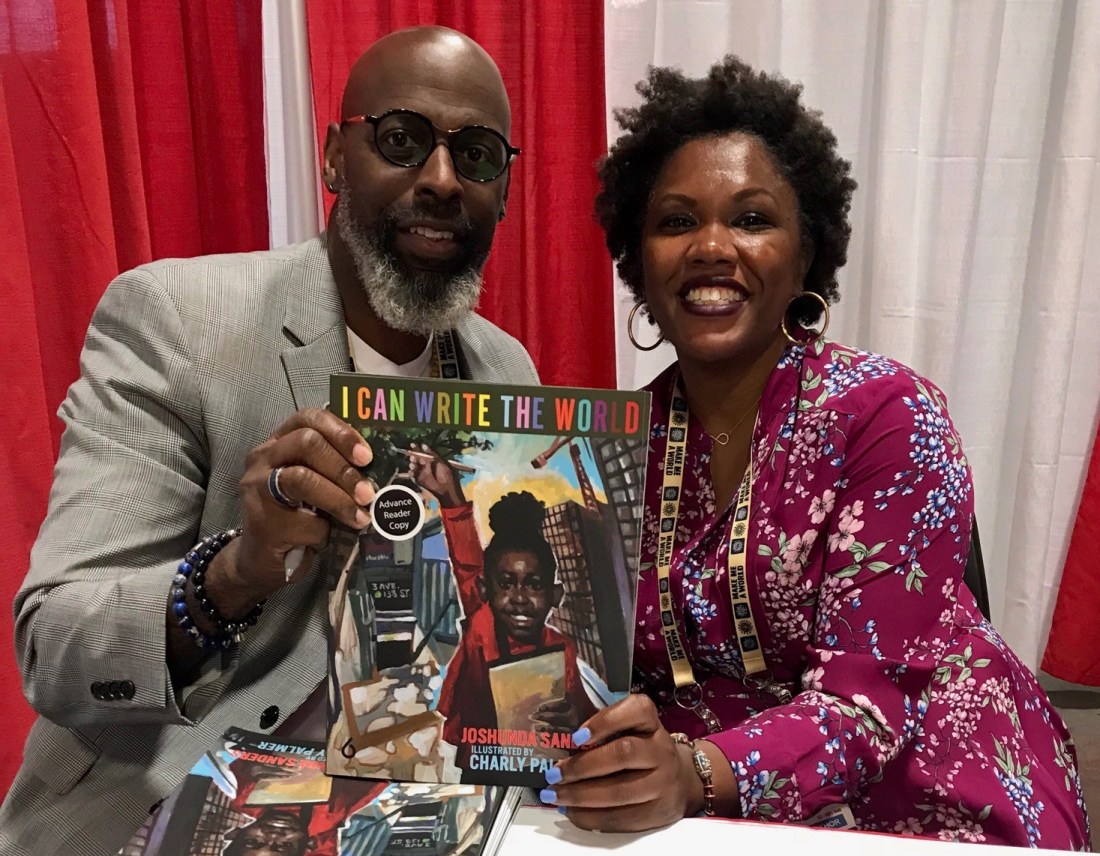
I Can Write the World at ALA 2019


I had a whirlwind weekend launching I Can Write the World at the American Library Association Conference in D.C. Librarians, teachers and others were so receptive to the book that I was the first author in my cohorts to run out of books both on Saturday night at a lovely Ingram reception at Spire and on Sunday afternoon after a great panel discussing the importance of representation in Children’s books. I even got to see a former library professor who popped up in the signing line (thanks for coming by, Stan!).

The most common question librarians had is one that most people ask me, which is “What is this book about?” This comes up right after they say, “Wow, the book is so beautiful!” Which makes my heart sing.

The answer is that I Can Write the World is about 8-year old Ava Murray, who lives in the South Bronx. She is named after the brilliant filmmaker Ava DuVernay and the incredible legal scholar, Episcopalian priest & poet Rev. Dr. Pauli Murray, who created the legal precedent known as Jane Crow and, were the world ready for her in her time, might have had a much easier time accepting what we would call her trans identity in this time.

In I Can Write the World, Ava notices the beauty of the Bronx that she knows and loves is at odds with how journalists often depict her world. On the news, a little girl about her age is fined for tagging, which confuses Ava because she sees the colorful murals around her as making the city more beautiful. Her mother, Kim, explains that journalists are like the window frame around their living room window and they shape what we see when we look out of it. Ava decides that she wants to become a journalist so that she can be just like them and shape the world they see.

The first book in the series has Ava exploring more of hip hop culture and how it came to be through a prose poem. I’m honored to say that one of my writing heroines Jacqueline Woodson has called I Can Write the World, “Lovely and timely.” I hope you will find it to be the same. Thank you so much to everyone who has pre-ordered and shared your thoughts with me about the book. I’d be so grateful if you could also write reviews and spread the word. You can find the book on Amazon, Barnes & Noble and several other outlets.

Next stops for I Can Write the World signings are the Children’s Institute (Ci7) & PrideFest on Sunday — which includes a book giveaway for the first 100 kids.

On Cooking & Vegetables Unleashed

As much as I love writing & sketching, sometimes, honestly, my creative situation is not abundant.

I don’t understand writer’s block — thank God, I’ve never really struggled to get things down on the page. But revising said words is something else.  There are times when I can’t read another word or the writing is…stale. This is usually around the time that I decide that, in my mind, I’m a professional chef…that no one knows about because I rarely unmask my culinary inclinations.

I taught myself to cook in my twenties when I realized that I wasn’t making enough as a rookie reporter to pay for going out to eat pretty much ever. Some of the things I used to eat make me sad to remember — there was the standard meal of Velveeta Shells & Cheese + Frozen Jumbo Shrimp via the Beaumont, Texas 24-hour Wal-Mart (also the site of much of my entertainment, aside from my obsession with Big Brother); a steady diet of Chunky soup for lunch when I lived in a closet-sized studio in Oakland and every burrito & breakfast taco known to mankind when I lived in Austin.

I was first introduced to vegetables as a food group I could get behind when I visited the farmer’s market in Oakland and the Berkeley Bowl a little further north. (For those of you who complain about Whole Foods on a weekend, Berkeley Bowl felt like that at all times multiplied by a thousand).

I would sheepishly pick up lettuce and spinach and occasionally an avocado, but all the other veggies might as well have had stickers with question marks on them. I thought fennel and leeks and artichokes were fresh (as in beautiful) to look at, but they intimidated me as someone who was really not into vegetables that didn’t act as side kicks for food with parents because I couldn’t figure out how to make them taste good by themselves.

Aguacate Con Cosas PHOTO CREDIT Peter Frank Edwards.jpg
Aguacates con cosas – Guacamole Salad from José Andres’ new, lovely & informative Cookbook, Vegetables Unleashed

Over the years I’ve gotten much better about this. I have a small collection of cookbooks, like the Joy of Cooking and Mark Bittman’s How to Cook Everything. These help me jazz up Brussel Sprouts and green beans, mostly as guidance for what flavors work together and what flavors don’t. Bittman has a simmered Brussel Sprout recipe with breadcrumbs that is delish, for example.

José Andres’ new Vegetables Unleashed is even better than that — the gorgeous photography and Andres’ trademark wit demonstrate the kind of confidence and creativity that make you feel brave enough to try almost anything in the kitchen. It’s also published under the Anthony Bourdain imprint and we’re nearing the anniversary of Bourdain’s death; I wrote about the CNN-produced book about him here.

It helped me admit to myself that fear of leeks is odd and one of these days I’m going to get over it.) The best thing about the book is that it is written in Andres’ trademark wit underscored by a clear expertise about what you should have in your pantry — I’ve added organic miso that I’m not confident enough to experiment with but I’ll try; but he also recommends Paprika, harissa and some others that you’ll need to go to a gourmet shop to find — how to use the parts of veggies that we often throw away and how to add flair to decidedly unsexy vegetables like, say, corn. For the latter, there’s a delicious Austin Grill Corn Soup that looks like heaven in a bowl.

The Plant Index
I used to be part of the 42 percent, but I’m trying to be better.

I wanted to try a few of these recipes but I ran out of time because life. Aguacates con Cosas is like a guacamole salad that has chopped up tomatillos in it. You can add tortillas or anything else to it to give it a crunch, but it was delightfully textured and delicious. It maybe took me 15-20 minutes to chop up the red onions, lime, tomatillos and smash the avocados. His version has cilantro and pomegranate seeds. I added the former and I inhaled this with chips and then made another batch that I ate with a spoon. For this recipe and others, you should definitely check out the book. It just so happens there looks like there’s an event at Politics and Prose coming up tonight, if you’re in D.C.

MyAguacates