Review for Oprah Daily: Of Women and Salt

I am beside myself with joy over sharing with you that I am contributing to book coverage for Oprah Magazine online, now the Oprah Daily. I wrote about the gorgeous Of Women and Salt by Gabriela Garcia for the Oprah Daily launch today.

The novel opens in 2018 with Carmen lamenting her daughter Jeannette’s opioid addiction, desperately hoping she will get sober, survive. This is not the American dream Carmen had envisioned for her family when she migrated from Cuba to Miami. Carmen writes: Maybe if I had a way of seeing all the past, all the paths, maybe I’d have some answer as to why: Why did our lives turn out this way?

Readers are then whisked back to 1866 and introduced to Carmen’s great-grandmother, Maria Isabel, who was the only female employee in an all-male cigar factory in Camagüey, Cuba. Antonio, Carmen’s great-grandfather, enchanted Maria Isabel by reading aloud to her and other workers to help pass the time. He reads from novels by Alexander Dumas, from Shakespeare’s plays, from news stories—his aim to help distract them from their toil, and from the encroachment of guerrilla fighting in their town. Maria Isabel herself cannot read, but in listening to Antonio she wonders: “Can one learn to fall in love with a mind?”

Book Review: The Office of Historical Corrections

Danielle Evans’ sophomore collection of short stories with a timely, prescient eponymous novella is a delightful follow up to Before You Suffocate Your Own Fool Self, whose title alone you have to love.

In The Office of Historical Corrections, we meet Black women who are sexy, dispassionate, cerebral and astute. They come from money and status; the Jack and Jill set, if they wanted to join, but generally, they’re not that interested in what you think of them. From Alcatraz to Wisconsin to the D.C./Maryland/Virginia trinity, these characters traverse the physical landscape while tromping on the generally limited and boundary-laden universes into which they are typically crammed or altogether absent.

One of my favorites in this collection is “Boys Go to Jupiter,” told from the perspective of the clueless white girl Claire who becomes a lightning rod for controversy when she dons a Confederate-flag printed bikini and posts carelessly about it online. In less skilled hands, the story would veer towards tropes that don’t truly vindicate the Black women who are often unheard in these narratives. In Evans’ hands, though, we understand Claire’s indignation clearly, and we know that it is her right to do what she wants as a kind of blind participation in white privilege that of course has come to the fore in public life more recently.

Pub date is November 10th 2020

The eponymous novella, however, featuring two frenemies united in their noble profession or recovering or literally re-membering aspects of Black history that are often intentionally lost, is beautiful, timely and thought-provoking. Novellas are still unfortunately rare, but I really love the form and Evans showcases its best features here, underscoring how convenient forgetting can be even for the most conscientious among us. I hope you’ll pre-order the book from my affiliate page on Bookshop.org. I also made a short video review on Black Book Stacks, which you can see here.

Book Review: Caste by Isabel Wilkerson

Happy summer, as happy as it can be, I suppose. I wanted to drop by to rave a little about Isabel Wilkerson’s masterpiece, Caste, publishing soon and definitely one for you to pick up. Here’s my full review from the Sunday Boston Globe and an excerpt:

“With an old house, the work is never done, and you don’t expect it to be,” writes Isabel Wilkerson in her new book, “Caste: The Origins of Our Discontents.” “America is an old house.” It is a simple analogy that is classic Wilkerson, whose previous book, “The Warmth of Other Suns,” chronicled the Great Migration through the masterful weaving of thousands of narratives within the United States. In her new book, which should be required reading for generations to come and is as propulsive a reading experience as her debut, she turns her attention to India, Germany, and what their histories have in common with America’s.

A significant work of social science, journalism, and history, “Caste” removes the tenuous language of racial animus and replaces it with a sturdier lexicon based on power relationships. “Caste is the infrastructure of our divisions,” Wilkerson explains, “an artificial construction, a fixed and embedded ranking of human value that sets the presumed supremacy of one group against the presumed inferiority of other groups on the basis of ancestry.” Using examples from around the world, she goes on to demonstrate how the codification of caste throughout the world has hardened economic and political inequality into seemingly permanent markers of difference.

Book Review| Memorial Drive : A Daughter’s Memoir by Natasha Trethewey

Memorial Drive

I barreled unexpectedly through Natasha Trethewey’s beautiful and painful memoir, Memorial Drive: A Daughter’s Memoir. I was compelled to finish it quickly the way we are taught to rip Band-Aids off our wounds to ensure that we won’t prolong a stinging sensation, so that we can get on with the healing part and rush through the grief. I explain a little more, too, in my video review on YouTube.

It is not so easy to recover from wounds that involve our mothers, particularly when they do not survive the failings of the world — the world that’s supposed to protect them.

Memorial Drive is the story of Trethewey’s mother, Gwendolyn, through the past and present lens of her daughter’s keen, writerly eye. No detail is spared, which includes transcripts of recorded phone conversations between Gwendolyn and Trethewey’s former stepfather Joel, a haggard, menacing Vietnam War veteran who continually threatens the uneasy peace that opens the book and remains a question mark throughout its pages.

Poets are gifts to us in times of happiness and relative ease but particularly in times of despair, I think, because they can distill what we would normally couch in euphemism down to its essence. In short, they remind us that events are not only what happened but our histories are our active destinies. We can shape them as we wish, but the facts — comforting or not — well, those remain. For women and Black women most of all, there is a way that this power of witness can override the willingness and tendency of others to forget us.

The ache in my heart spread and flourished every time I read a new detail of Joel’s torment of Trethewey, his disregard for her mother or her brother. His manipulation was a knife, twisting and turning with every page; at one point, he breaks the lock to Trethewey’s new gold-edged diary and the violation the poet felt then and perhaps every moment after she had “found her audience,” was so visceral I had to stop reading.

Part of my reaction to the book, of course, is remembering my own mother’s experiences with abuse; the cavalier way in which she would recount having her nose broken by an ex-husband, the way we fled similar boyfriends and sought shelter in homes for what were then called domestic violence shelters. When I posted a review on Instagram, someone mentioned, too, that one of the other aspects of the global pandemic in this moment has to do with a common feature of disasters, which is a rise in intimate partner violence.

The neglect to which my mother succumbed was very different and, besides, you can’t compare one mother’s death to another’s. But what feels the most true here is that I understood that no one was listening to my mother, even when she documented her experience, even when I was a witness. From this, I learned that women were not considered the authorities of their experiences; that even if they were hunted and pursued until they were broken, they would likely not be deemed worthy of protection under the law.

This is a belief I would rather be convinced is untrue. It’s not really in my nature to give into despair. And yet, here is what happens in Memorial Drive, here is what takes the poet three decades to begin to approach & even now, with great suffering and agony: After many attempts to document the abuse and violence and to escape it, Gwendolyn was murdered by her estranged husband in June 1985. Like so many people who have experienced intimate partner violence, she could have been saved — there were so many people warned, so many signs, documented evidence of his threats to her life — and yet, she wasn’t.

This is devastating on so many levels, but especially in Memorial Drive because Trethewey composes the poetry of her extraordinary experience with clarity, grace and generosity while also compiling detail by way of utilizing the economy of every word to perfect effect. As a result, Memorial Drive reads like a classic memoir of grief, like a tragedy in slow motion, the narrative arc, already known, lingers over the text like a set of strings.

Book Review: When You Were Everything

BB8836E2-6B2B-41D7-A0D7-61B4A45BD6D9
Book Cover for When You Were Everything, a novel by Ashley Woodfolk

I have been desperate for stories and narratives that have nothing to do with pandemics, so that’s part of the reason it took me less than a week to tear through this sophomore effort by Ashley Woodfolk. The other part is that it is really, really good and it’s a topic that is almost never raised in literature, which is sad — the topic of friendship break ups.

The story at the center of When You Were Everything is essentially this: Cleo and Layla have been friends for a long time. Layla has a speech impediment (she stutters) and Cleo is, for the duration of their friendship, generally encouraging and supportive of Layla being brave enough to tackle things like school musicals and other environments where she knows her friend can shine, impediment be damned. But then, things start to shift. Layla needs Cleo a little less when she encounters the Chorus Girls, a group of musical nerds at their high school. The adults start acting weird too, and suddenly, Cleo’s parents are separating and her father, a librarian, transfers to a different school. There’s a hot guy named Dominic Grey — yes, even his name is hot — who mostly distracts Cleo from all the chaos, but romantic love is not a salve for losing your best friend to a bunch of snotty choir brats. At least, it’s not always; not at first.

So I won’t give away much more of what happens in the book, but I had so many emotions and feelings almost from the opening pages. ( I say a little bit more on my book tube channel, so you can listen to me go on about my feelings here, if you’d like.) First, like most people, I have plenty of ex-friends who come to mind immediately. Female friendship is one of those intimacies and sisterhoods that can feel even deeper than any romantic bond because of how sacred and sweet it can feel when it’s good. The emotional wreckage, though, feels arguably worse than any romantic break up, too, because weirdly, it feels like you can always replace a romantic partner but a friend of your soul and spirit? A little, tiny bit harder to do, no?

Woodfolk puts this well in the book, when Cleo tries to describe what happened with her and Layla:  “The hurt feels so much like when my parents decided they didn’t love each other anymore that I can feel a shift in my breathing. ‘We…broke up.’

Dom snorts. ‘It’s not like it was a relationship,’ he says, and I frown, annoyed at his reaction. Perhaps he doesn’t know how it feels…to break in this particular way. Or perhaps it’s different for boys? But girls cling to their friends for dear life as they wade through the rough waters of learning who they are while everything around and inside them is changing minute by minute. And aren’t we all a little bit in love with our best friends?”

One of my first published essays was in an anthology called “Secrets and Confidences: The Uncomplicated Truth About Women’s Friendships,” published by Seal Press in 2004. It was about the shifting, challenging dynamics of a middle school best friend who, sadly, did not remain my best friend for too long into adulthood. At the heart of parsing out the whys and the hows of a deeply intimate and close friendship ending was the core of what makes When You Were Everything so beautiful and helpful to have, particularly for young adult readers: We all change and grow. Sometimes the people we love the most change and grow in different ways, or they don’t at all, and that’s somehow more heartbreaking. Our culture of loose ties has made it seem like the norm to stay “friends” with people from your past indefinitely by giving them and everyone else unilateral access to the performance of our lives and happiness online. But the truth is, sometimes it’s the healthiest thing for a friendship to have its season in our lives and be over. You might shed some tears over that sentiment and certainly while reading this book, but it’s good for the soul, I promise — on both counts.

Patsy Review in TIME Magazine


download-2.jpg

I loved Patsy so much that I got the beautiful book hangover that one gets when you miss the 400+ pages that took you on an epic journey. I’m really proud of this TIME Magazine review:


There have been few narrative epics that effectively tally the emotional, logistical, physical, psychological and financial trials of the black female immigrant and mother or, likewise, the impact on the family of a black woman who dares transform herself. Dennis-Benn maps the internal terrain of black women yearning to be free — without romanticizing or ignoring their flaws. Yes, her central characters are persistent, but they can also be naive. Yes, these are strong black women, but they’re also human, and they’re nearly broken by loneliness, despair and a sense that they’ll never belong. Showing us the triumphs and pitfalls of these two parallel rites of passage, Patsy fills a literary void with compassion, complexity and tenderness.

Review: The Source of Self-Regard by Toni Morrison

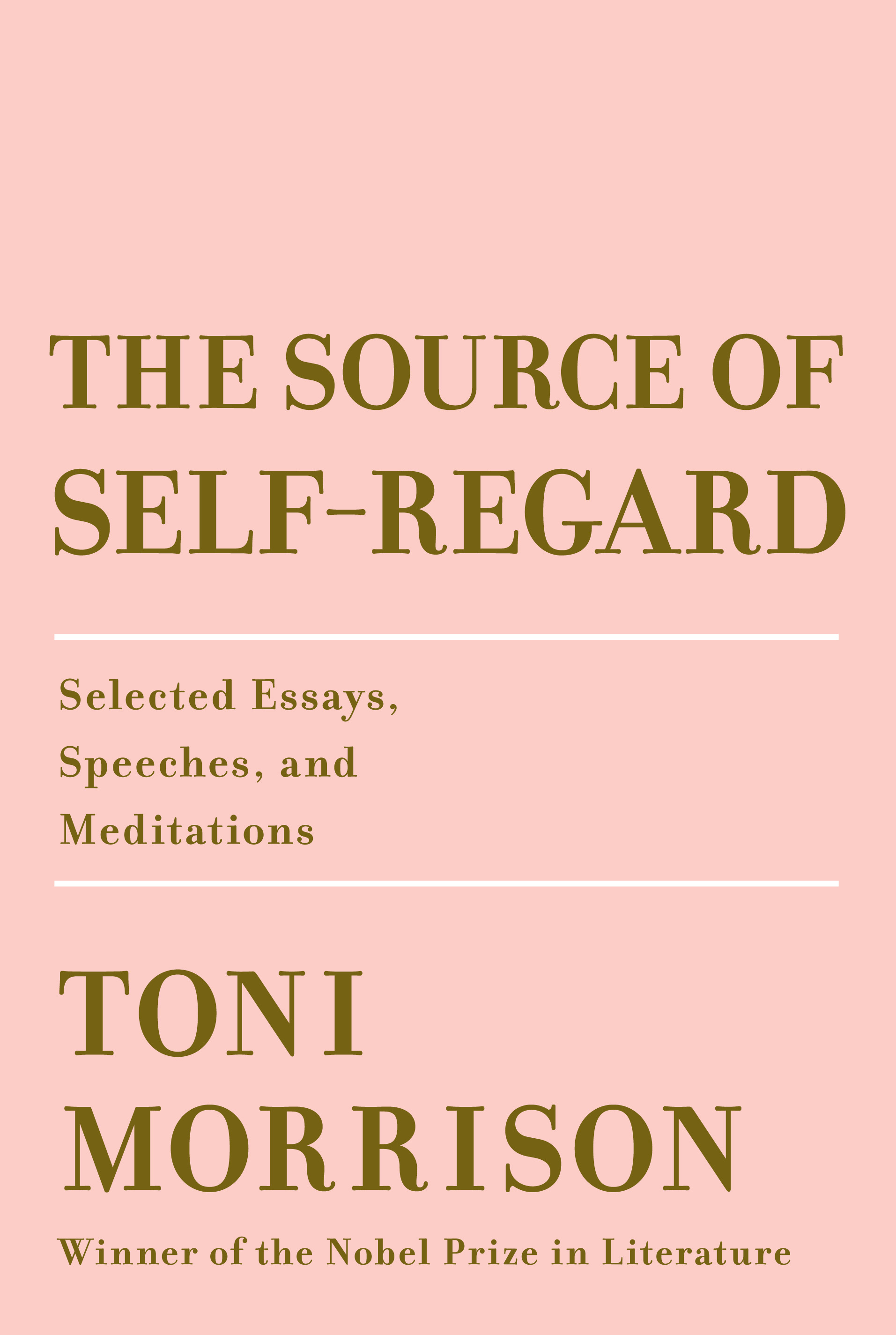
I am ecstatic to share my review for Bitch Media on Toni Morrison’s stunning collection of speeches, essays and meditations, out today, The Source of Self-Regard. I inhaled it and underlined entire paragraphs over the last two months. I went to the Schomburg for something else entirely and found an annotated bibliography that informed a lot of this piece. These glimpses and pieces of her are the nation’s greatest living novelist at the top of her form and the most intimate look we are likely to get at her most closely guarded feelings and emotions — especially as it relates to the writing process.

The third section of the book, “God’s Language,” begins with the most beautiful piece of writing I have ever read—the eulogy Morrison delivered at James Baldwin’s funeral on December 8, 1987. It is also the closest glimpse we’ve had into Morrison’s personal relationships. Morrison lays her heart bare for a friend in a short poetic jubilee that’s reminiscent of Smokey Robinson’s recent speech at his childhood friend Aretha Franklin’s homegoing service.

“Jimmy, there is too much to think about you, and much too much to feel,” she begins. “The difficulty is your life refuses summation—it always did—and invites contemplation instead. Like many of us left here, I thought I knew you. Now I discover that, in your company, it is myself I know. That is the astonishing gift of your art and your friendship: You gave us ourselves to think about, to cherish.” Morrison might as well be speaking about herself. For me and many other writers, Morrison demonstrates how to be in a world that’s committed to your destruction. “You gave me a language to dwell in—a gift so perfect it seems my own invention,” she continues.

Throughout the book, Morrison reveals herself to be a teacher-student who is not just giving readers information that they’re expected to take in and regurgitate. Instead, she’s a “literary homegirl” (a phrase that she actually uses in the text). Referring to a friend as a “homegirl” implies a sense of ease in the presence of someone who knows and loves us, who evokes in us the joy, relaxation, comfort, and depth we typically only associate with home. Home is where we learn who we are, if not who we will become. Home is the starting point. In the title essay, delivered in Portland in 1992, Morrison explains how she viewed self-regard while writing her Pulitzer Prize-winning novel Beloved. Morrison’s lecture deeply resonates with me because it gives context for arguably her most famous work, which at its heart, offers Black women an artistic vision of our liberation.

9780525521037