It’s more than halfway through National Poetry Month, which I personally observe in some way every April, and this post, to me, is a little late. What I wrestle with in these times is trying to figure out what to say that is helpful, even when I’m not sure what that is. Trying to make sure that I am not allowing events or bullies to suppress my natural inclination to share, while I am also not adding to the noise.
“…Poetry reminds me that feelings of despair and hopelessness that I sometimes feel are not unique to this time, that beautiful words and unique insights are a common reoccurence.
The white fathers told us, I think therefore I am; and the black mothers in each of us-the poet whispers in our dreams, I feel therefore I can be free. Poetry coins the language to express and charter this revolutionary awareness and demand, the implementation of that freedom.
I hope these times find you implementing your freedom in all the ways you see fit. If you are a poetry lover, please share your faves with me in the comments. I made a brief list of some of mine over at Bookshop.
It’s hard to believe it is has been almost two full years since the publication of Women of the Post. It feels like the characters in the book are with me all the time, even as I work on my next book.
A large part of that has been the warm reception, the kind words and notes others have shared about the book. It was nice to see, just the other day, that Women of the Post was included in this Book Riot roundup of books about the 6888th Central Postal Battalion. I also loved seeing every member of the battalion listed at the end of Six Triple Eight, Tyler Perry’s Netflix movie — that kind of recognition is long overdue. It’s exciting to see all the different ways creators, storytellers and historians are amplifying the story of the Women’s Army Corps, and the 855 Black women who served as part of the Six Triple Eight.
In the broader world, there is an aggressive push to proclaim the end of diversity, equity and inclusion. That war is separate but related to a false sense of competition between my version of the 6888th history and other versions. First, those of us who embody the histories central to Black History Month and Women’s History Month know that the work of pulling important, erased narratives from the margins to the center of discourse is not done. If it were, I would not get regular emails from readers sharing their dismay that they never learned about these Black women veterans. I would not hear from women veterans all over the country that each year during Veterans’ Day, their husbands are thanked for their service but they continue to be overlooked, even when they are the veterans and their spouses are not.
But second, history has been generous to non-Black and male veterans in this country, to put it mildly. There are many millions of stories, movies, books, plays and other archives brimming with descriptions of service to this country that do not include Black women at all. So there is much more to be written, told and shared about Black women veterans, and Black women, period. There is more than enough room for all of our stories.
It’s encouraging to me, always, to be in the virtual literary community that continues to lift up Women’s History all year long. This year, I’m also delighted to note that Women of the Post is included in great company as part of author Janis R. Daly’s 2025 list of 31 Titles about Women in History that educate and inspire. I’m looking forward to picking up some of these titles myself, and I hope you’ll spread the word about them, too.
I’ve been thinking a lot about Juneteenth and a common response that I have when anyone asks me how I deal with writer’s block. I know more people became familiar with Juneteenth during the pandemic, but I learned about the holiday in the state where it was born, Texas. (I highly recommend reading Annette Gordon-Reed’s slim, enlightening book, On Juneteenth, which I like to return to once in awhile.) I was in my 30s, working in Austin, when I first learned about it. Before that moment, I had never considered the quantum emotional leap that had to be required for enslaved people to transition to full, legal (on paper, at least) autonomy.
And, as a native New Yorker, I had mixed feelings about the holiday, which on its surface felt to me like the celebration of delayed freedom. And understanding what little I do about the Reconstruction Era, thanks to Bryan Stevenson and Kidada Williams especially, the holiday seems to have been observed, always, in an environment of extreme animosity for former dehumanized engines of labor resting up, relaxing and otherwise trying to see what this nation and its attraction to a simple freedom narrative really meant for them. After all, the end of slavery really reached a chilling crescendo in the twelve-year period immediately following the Civil War, when there were so many promising laws meant to offer Black folks a path to full citizenship.
But as part of a system of racial hierarchy, the caste system built here to justify slavery in the first place, the first tool of dehumanization was to cut Black people off from educating themselves. Because without reading or writing, you are chained to ignorance. Reading as a practice is what lead me to writing. Writing is what became the catalyst for personal expression that built the architecture of this amazing life.
Anti-Black literacy laws in this country were meant to strip us of any chance at navigating the world around us. And, as a kind of shorthand whenever anyone asks me about writer’s block and how I deal with it, I say that given that my ancestors were forbidden by law to read or write, I do not have the luxury that the phrase writer’s block insinuates.
The Harvard library talks about the barriers to education for Black people this way:
Between 1740 and 1867, anti-literacy laws in the United States prohibited enslaved, and sometimes free, Black Americans from learning to read or write. White elites viewed Black literacy as a threat to the institution of slavery – it facilitated escape, uprisings, and the sharing of information and ideas among enslaved people. Indeed, literacy undermined the false foundation slavery was built on: the intellectual inferiority and inhumanity of African-descended people.
The small percentage of enslaved people who became literate did so at great risk – those who were caught were often violently punished, sold, or even killed. Because of the danger, enslaved people had to be strategic and resourceful in learning to read and write. They attended secret informal schools taught by free Blacks at night, covertly learned from white enslavers’ children, or found opportunities when enslavers were away.
So, what does this have to do with Juneteenth? For me, when I consider the struggle of being truly freed after being conditioned to believe you were unworthy, I also wonder about what it must have felt like to realize that the promise of freedom is not the same as being truly liberated. And the true liberation of Black people in this country has always been and will always be contested, and greeted with hostility.
Freedom to read and write does not equal liberation from work — in fact, the more you read and write, the more work is ahead of you. You have to understand the context: Once the slaves were free, they had nothing of their own; everything they touched with their hands belonged to white people — Land, clothing, books. There was hunger and drought especially in the South. The last thing anyone probably cared about was writing about it, but this is a reminder to me to read W.E.B. Du Bois’s Black Reconstruction.
The hardest thing about writing is how often you fail, no matter how often you try. Much like the paradox my ancestors found themselves living at the end of the Civil War, writing is not a 1:1 scenario. What you put in is not what you get out. Everything about writing is complex, and it resists platitudes and reason.
But these complexities also make writing beautiful, just like the ongoing freedom struggle. They have made me pledge my undying devotion to sitting in quiet places trying to put my thoughts into the right order to share them with you.
Writers and those who profit from our weirdness make up so many romantic stories about writer’s block and fatigue and distraction. And those ideas are not entirely without merit. But what Black writers have that others do not is the haunting reality of a legacy truncated by racism and racist practices in this country.
Black people who looked like us, who had dreams for their lives and their families like us, also had to go to school in secret and risk their lives to learn what is so abundantly available to us. How many millions of stories have not been written and therefore remain unread that our ancestors did not have the luxury of writing down? Understanding this past, it feels impossible to believe in writer’s block. Whenever I run out of things that feel new to write, I imagine what got buried in the Atlantic Ocean during the Middle Passage. I try to imagine all the other possible futures for those gone too soon.
I think of this when I have to make much smaller sacrifices to make room for what I am here to write, like getting up early before most of the world (on the East Coast, anyway) is up or writing on the rare quiet weekend morning. I think of this whenever anyone asks me a question about how it is I manage to write so much with all the things that I always have going on. And I especially think of these things when I remember that it was not long ago that my ancestors were enslaved, when this country dragged its feet to do what was morally sound, even though we were the ones everyone said were morally corrupt, dangerous and inferior.
My offering this Juneteenth/Freedom Day is just the reminder that while our freedoms as Black writers may be fraught, contested and resented, they are, nonetheless, freedoms that our ancestors endured much for us to have. May we continue to revel in this abundance, and write to our heart’s content, in their honor.
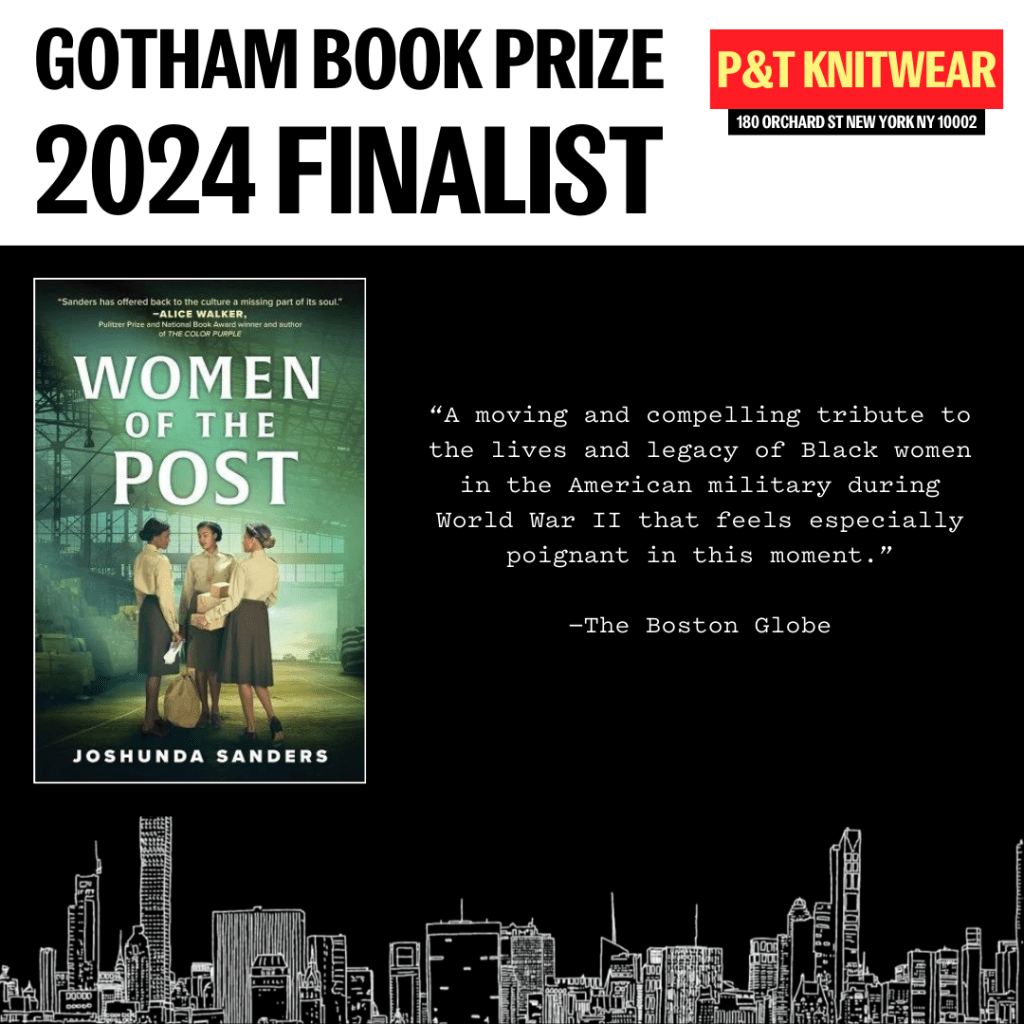
Thank you for your ongoing patience with me as I navigate a full and busy life. I’ve been gushing all over social media about the news that Women of the Postis a 2024 Gotham Book Prize finalist. The winner will be publicly announced next week, but in the meantime, here’s a little history about the prize, and why it’s such an honor to even be nominated.
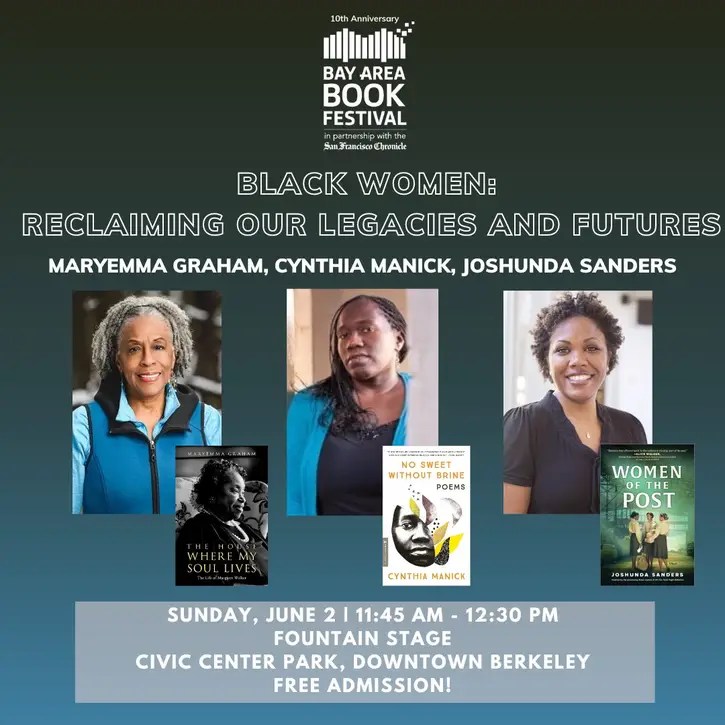
And I would be remiss not to mention that I’m headed back to the Bay Area for the 10th Anniversary of the Bay Area Book Festival to speak on a panel with some brilliant Black women, which is basically my favorite thing to do in life. Come visit if you’re at the festival!
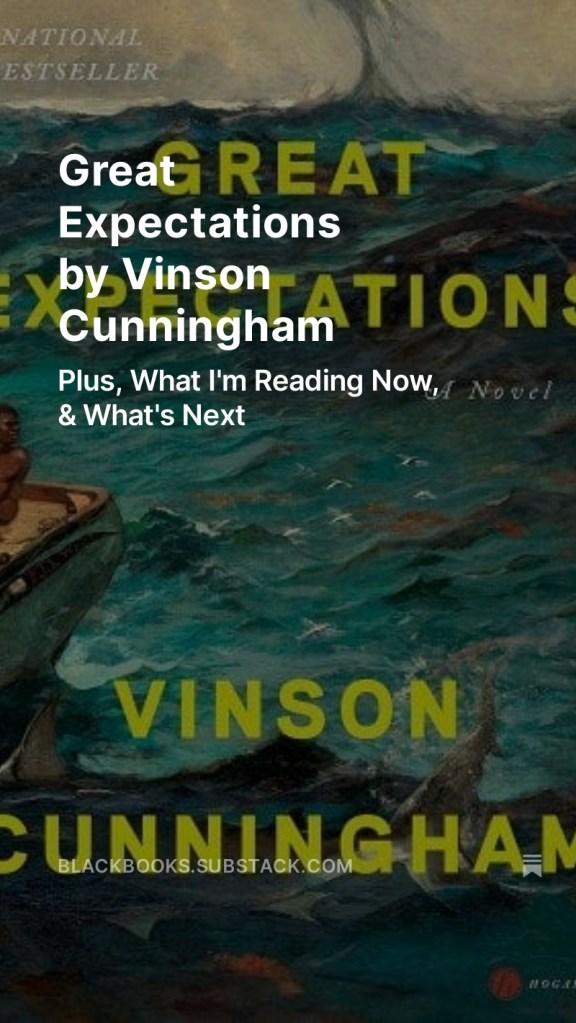
Finally, in case I haven’t mentioned it enough, I spend most of any imagined free time I have writing reviews and other things at my Substack, Black Book Stacks. Here’s what I thought about Great Expectations by Vinson Cunningham, and what I’m reading now.
I’ve been up to a lot since I last updated my blog, and I’ve resolved to write here more when I can, so here I am!
Wild to write a novel about Black women trailblazers marginalized in history and get to talk about the Six Triple Eight not only during Black History Month, but also as part of Women’s History Month and throughout the year. Thank you for your kind notes, for the virtual book club conversations, for all your love and support for Women of the Post. It’s been beautiful to experience.
I wanted to share some events and opportunities to write with me that are coming up:
On March 14th, I’ll be in conversation with fabulous fellow authors Victoria Christopher Murray and Ruth P. Watson at the Library of Congress for a conversation called “First Ladies: Historical Fiction about Pioneering Black Women”: https://www.loc.gov/item/event-412002
And last but not least, March 15th I’ll kick off a weekend of joy-centered creative nonfiction writing with my friends at the Martha’s Vineyard Institute of Creative Writing. I’ve taught versions of a class I call Subversive Joy on and off for six years now. It’s a powerful, revolutionary practice to use our writing powers to cultivate gratitude, bliss and to remember the delight available to us when we remember we don’t have to suffer to create beauty in our work; indeed, we get to celebrate together, in the words of the lovely Lucille Clifton, that everyday something has tried to kill us, and has failed. I hope I see you for the virtual writing in mid-March.
One of things I’ve been doing lately is thinking about my legacy as a writer, as a person. It feels a little abstract to think about what your influence will be when you’re gone. And then someone you love dies. And it doesn’t feel so abstract.
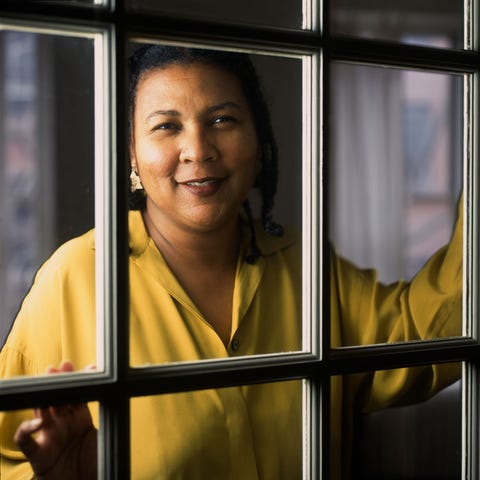
My heart is still heavy thinking about bell hooks’ transition. I was honored, as someone who was profoundly shaped by her passion, her courage, her clear-sighted articulation of the things that keep Black women from soaring — and how to overcome them — were balm for me. She was really an iconic trailblazer. I tried to do her work and life and impact some justice for Oprah Daily. An excerpt is below. You can read it here, or here. I hope she is resting well.
Mourning bell hooks—who died on December 15, 2021, at age 69 after giving us four decades of trailblazing feminist scholarship—means celebrating everything she taught us about what it means to be a Black woman in love with herself and the world, and with the life of the mind. With her passing, there will be one fewer pair of hands holding up Black women—all women—as inherently valuable. For decades she has helped me in my journey to become myself; her legacy will live in my bones, and in the minds and hearts of all she awakened and inspired.
Born Gloria Jean Watkins in Hopkinsville, Kentucky, in 1952, hooks honored her matrilineal line by taking her maternal great-grandmother’s name as her nom de plume in a lowercase version to emphasize “the substance of books, not who I am.” She influenced several well-known luminaries and writers to adopt the same practice. Let us defer to the work of our hands and pay tribute to our elders instead of bowing to tradition and capitalizing ourselves.
Maybe honoring her elders and ancestors played a role in enabling her to speak and write her fame into existence, to hear her family tell it. Like most Southern towns, Hopkinsville, Kentucky, was stratified by race and class; hooks’s father was a janitor, and her mother a maid. “Gloria learned to read and write at an early age and even proclaimed she would be famous one day,” her family said in a statement. “Growing up, the girls shared an upstairs bedroom, and she would always keep the light on well into the night. Every night we would try to sleep, but the sounds of her writing or page turning caused us to yell down to Mom to make her turn the light off.”
Her family went on to say that Gloria always had at least 10 serious books she was reading simultaneously, whether Shakespeare, Little Women, or other classics, which quenched her “great thirst for knowledge, which she incorporated into her life’s work.” Against the backdrop of the great civil rights struggles, she graduated from a newly integrated high school. Her intellectual acumen and writer’s gifts were apparent early, and she majored in English literature at Stanford University, then earned her MA from the University of Wisconsin and her PhD from the University of California at Santa Cruz, where she wrote her dissertation on Toni Morrison.
Karjean Levine, Getty Images
She thrived in the classroom, and her criticism and charisma quickly acquired a following both in and beyond academic circles. I first encountered her during one of my many trips to my local New York library at age 13 and was instantly in awe. Hooks wrote with confident wisdom and ease about topics I had never read from a Black woman’s perspective; she seemed so like me, even if she was from a different part of the country and a different generation. We were kindred spirits.
My dog-eared copy ofSisters of the Yam: Black Women and Self-Recovery was the gateway to reprogramming myself. The microaggressions, the confusing pauses and rudeness that came my way because of my dark skin and natural hair—bell hooks helped me understand that these were the manifestations of social constructs she interrogated, not figments of my imagination. Her writing about writing, the way she mined the role of self-love and self-care: All these things and more marked her as a visionary. Radical, yes, for her positions on racism and patriarchy and capitalism. Radical, too, for attending to the hearts of Black women. For saying that we were not just our work, but we deserved, as much as anyone, our own affection and tenderness. The world would not give it to us, not without a fight.
Before I was a journalist, my favorite non-fiction writing and non-journaling activity was to attend readings or lectures featuring Black authors and take copious notes. So it is a kind of coming full circle that I’ve started a Substack newsletter focused on book reviews related to books for and by Black people, Black Book Stacks. (About a year ago, I started a YouTube channel of the same name, which you can view here and if I have a Bookshop store you can find here.)
I always had the innate sense that being a writer was not just about putting words to paper and hoping that others would read those words. I was always searching to put the words I wrote into a tradition. Writing was another way of trying to belong and to solidify a place for myself in a world that seemed bent on my erasure or destruction.
I have vivid memories of a small royal blue Mead notebook that was thick as a brick. I carried it with me to the old Barnes & Noble on Astor Place, through Washington Square Park, up to Emma Willard and Vassar. I had the privilege of listening and trying to absorb the wisdom of Jamaica Kincaid, Gloria Naylor, Janet McDonald, Elaine Brown and so many others. I was a careful collector of Black women writers’ quotes, usually because I couldn’t afford to purchase books of my own and I didn’t not want to vandalize library books. Quotes were the happy compromise; they were short enough for me to carry wherever I went. These were the breadcrumbs and manna they left for me in a trail to who-knew-where but I gobbled them up. Every nugget was a jewel in my crown.
As I made my way in journalism, it became harder and harder for me to give myself permission to keep up this witnessing practice in the same way. Mostly because of time, but also because I realized that such forums and opportunities to hear Black writers and share space with them were fewer in other states and cities. It just so happened that reading the work of Black women in particular was my self-paced MFA program. Sometimes, I had the opportunity to profile, interview and write about them, as was the case with Octavia Butler in 2004 and Alice Walker around the same time. But mostly, I was just glad to have their work to sit with and revel in.
Over the years, I’ve continued to focus my attention on the work of Black writers because, as more of the world knows now, we live in a world where white supremacist capitalism means that what is considered valuable is everything but Blackness or real intimate discussions of all its flourishing contours in spite of and beyond the gaze of the consumption of white people. What I mean to say, I think, is that Black literature has always been a miracle to behold. In part because it comes from a people who have a shorter lineage in the Americas of thriving in literature because of the legal restrictions that forbade them to read and write. Our resilience and perseverance and faith, all bound up in the Word, continued both in an oral tradition and on paper.
The overcorrection here, I’ve found, is that when it comes to fair critique or evaluation of the work of Black writers, is that our books are either ignored, as if they never happened, especially beyond the date or week of their publication, or they are elevated as neutral objects for sale without a real analysis of them and their context. That’s what my new newsletter is aiming to help create in the world. I hope that if that sounds of interest to you, that you’ll subscribe. Looking forward to seeing you on the list.
Happy summer, as happy as it can be, I suppose. I wanted to drop by to rave a little about Isabel Wilkerson’s masterpiece, Caste, publishing soon and definitely one for you to pick up. Here’s my full review from the Sunday Boston Globe and an excerpt:
“With an old house, the work is never done, and you don’t expect it to be,” writes Isabel Wilkerson in her new book, “Caste: The Origins of Our Discontents.” “America is an old house.” It is a simple analogy that is classic Wilkerson, whose previous book, “The Warmth of Other Suns,” chronicled the Great Migration through the masterful weaving of thousands of narratives within the United States. In her new book, which should be required reading for generations to come and is as propulsive a reading experience as her debut, she turns her attention to India, Germany, and what their histories have in common with America’s.
A significant work of social science, journalism, and history, “Caste” removes the tenuous language of racial animus and replaces it with a sturdier lexicon based on power relationships. “Caste is the infrastructure of our divisions,” Wilkerson explains, “an artificial construction, a fixed and embedded ranking of human value that sets the presumed supremacy of one group against the presumed inferiority of other groups on the basis of ancestry.” Using examples from around the world, she goes on to demonstrate how the codification of caste throughout the world has hardened economic and political inequality into seemingly permanent markers of difference.
I barreled unexpectedly through Natasha Trethewey’s beautiful and painful memoir, Memorial Drive: A Daughter’s Memoir. I was compelled to finish it quickly the way we are taught to rip Band-Aids off our wounds to ensure that we won’t prolong a stinging sensation, so that we can get on with the healing part and rush through the grief. I explain a little more, too, in my video review on YouTube.
It is not so easy to recover from wounds that involve our mothers, particularly when they do not survive the failings of the world — the world that’s supposed to protect them.
Memorial Drive is the story of Trethewey’s mother, Gwendolyn, through the past and present lens of her daughter’s keen, writerly eye. No detail is spared, which includes transcripts of recorded phone conversations between Gwendolyn and Trethewey’s former stepfather Joel, a haggard, menacing Vietnam War veteran who continually threatens the uneasy peace that opens the book and remains a question mark throughout its pages.
Poets are gifts to us in times of happiness and relative ease but particularly in times of despair, I think, because they can distill what we would normally couch in euphemism down to its essence. In short, they remind us that events are not only what happened but our histories are our active destinies. We can shape them as we wish, but the facts — comforting or not — well, those remain. For women and Black women most of all, there is a way that this power of witness can override the willingness and tendency of others to forget us.
The ache in my heart spread and flourished every time I read a new detail of Joel’s torment of Trethewey, his disregard for her mother or her brother. His manipulation was a knife, twisting and turning with every page; at one point, he breaks the lock to Trethewey’s new gold-edged diary and the violation the poet felt then and perhaps every moment after she had “found her audience,” was so visceral I had to stop reading.
Part of my reaction to the book, of course, is remembering my own mother’s experiences with abuse; the cavalier way in which she would recount having her nose broken by an ex-husband, the way we fled similar boyfriends and sought shelter in homes for what were then called domestic violence shelters. When I posted a review on Instagram, someone mentioned, too, that one of the other aspects of the global pandemic in this moment has to do with a common feature of disasters, which is a rise in intimate partner violence.
The neglect to which my mother succumbed was very different and, besides, you can’t compare one mother’s death to another’s. But what feels the most true here is that I understood that no one was listening to my mother, even when she documented her experience, even when I was a witness. From this, I learned that women were not considered the authorities of their experiences; that even if they were hunted and pursued until they were broken, they would likely not be deemed worthy of protection under the law.
This is a belief I would rather be convinced is untrue. It’s not really in my nature to give into despair. And yet, here is what happens in Memorial Drive, here is what takes the poet three decades to begin to approach & even now, with great suffering and agony: After many attempts to document the abuse and violence and to escape it, Gwendolyn was murdered by her estranged husband in June 1985. Like so many people who have experienced intimate partner violence, she could have been saved — there were so many people warned, so many signs, documented evidence of his threats to her life — and yet, she wasn’t.
This is devastating on so many levels, but especially in Memorial Drive because Trethewey composes the poetry of her extraordinary experience with clarity, grace and generosity while also compiling detail by way of utilizing the economy of every word to perfect effect. As a result, Memorial Drive reads like a classic memoir of grief, like a tragedy in slow motion, the narrative arc, already known, lingers over the text like a set of strings.
If we have anything in common (and maybe we do, since you’re here), it’s difficult to pull yourself away from the surreal every day world into a book at this moment. This morning, news about some of the major independent booksellers that I love laying off hundreds of workers makes me feel small and powerless. There are still things in our control: Our attention, for starters. And, if we have enough to give, our support of authors and others whose book tours and gigs and opportunities have been gutted, canceled and rearranged due to our new world disorder and chaos.
We can also:
Read All The Things: I pulled Aja Monet’s My Mother Was a Freedom Fighter & Tanisha Ford’s Dressed in Dreams off a dusty bookshelf to get started after I finish a few of these books, mainly by people of color, about pandemics & surviving them for HuffPost. I am greatly enjoying Sharks In The Time of Saviors. I just finished the very readable & inspirational More Than Enough by Elaine Welteroth. What are you reading?
Pre-order: When I was still moving freely about in the world, last weekend, one of the first things I did was pre-order Elizabeth Acevedo’s two new projects: Write Yourself A Lantern & Clap When You Land. Because I could and I wanted to and she is one of the writers I adore. (It’s such an unusual thing for me to do from my phone that Apple called me to alert me to fradulent activity!! So much shade.) It also feels nice to believe in the future ahead of us and beyond the pandemic. We will flatten the curve and life will not be the same, but we can hope that all of us will still be here with good books.
Stop Reading & Go Outside: This is also book related. It is safe for you to take your book to a park or walk it around the block with you, for now, I guess. But also good for your brain and your retention of story for you to step away from the screens as much as possible and ground yourself.
You have other tips? Let me know in the comments. And be well. Thanks for stopping by.






 Joshunda Sanders