Book Review: When You Were Everything

BB8836E2-6B2B-41D7-A0D7-61B4A45BD6D9
Book Cover for When You Were Everything, a novel by Ashley Woodfolk

I have been desperate for stories and narratives that have nothing to do with pandemics, so that’s part of the reason it took me less than a week to tear through this sophomore effort by Ashley Woodfolk. The other part is that it is really, really good and it’s a topic that is almost never raised in literature, which is sad — the topic of friendship break ups.

The story at the center of When You Were Everything is essentially this: Cleo and Layla have been friends for a long time. Layla has a speech impediment (she stutters) and Cleo is, for the duration of their friendship, generally encouraging and supportive of Layla being brave enough to tackle things like school musicals and other environments where she knows her friend can shine, impediment be damned. But then, things start to shift. Layla needs Cleo a little less when she encounters the Chorus Girls, a group of musical nerds at their high school. The adults start acting weird too, and suddenly, Cleo’s parents are separating and her father, a librarian, transfers to a different school. There’s a hot guy named Dominic Grey — yes, even his name is hot — who mostly distracts Cleo from all the chaos, but romantic love is not a salve for losing your best friend to a bunch of snotty choir brats. At least, it’s not always; not at first.

So I won’t give away much more of what happens in the book, but I had so many emotions and feelings almost from the opening pages. ( I say a little bit more on my book tube channel, so you can listen to me go on about my feelings here, if you’d like.) First, like most people, I have plenty of ex-friends who come to mind immediately. Female friendship is one of those intimacies and sisterhoods that can feel even deeper than any romantic bond because of how sacred and sweet it can feel when it’s good. The emotional wreckage, though, feels arguably worse than any romantic break up, too, because weirdly, it feels like you can always replace a romantic partner but a friend of your soul and spirit? A little, tiny bit harder to do, no?

Woodfolk puts this well in the book, when Cleo tries to describe what happened with her and Layla:  “The hurt feels so much like when my parents decided they didn’t love each other anymore that I can feel a shift in my breathing. ‘We…broke up.’

Dom snorts. ‘It’s not like it was a relationship,’ he says, and I frown, annoyed at his reaction. Perhaps he doesn’t know how it feels…to break in this particular way. Or perhaps it’s different for boys? But girls cling to their friends for dear life as they wade through the rough waters of learning who they are while everything around and inside them is changing minute by minute. And aren’t we all a little bit in love with our best friends?”

One of my first published essays was in an anthology called “Secrets and Confidences: The Uncomplicated Truth About Women’s Friendships,” published by Seal Press in 2004. It was about the shifting, challenging dynamics of a middle school best friend who, sadly, did not remain my best friend for too long into adulthood. At the heart of parsing out the whys and the hows of a deeply intimate and close friendship ending was the core of what makes When You Were Everything so beautiful and helpful to have, particularly for young adult readers: We all change and grow. Sometimes the people we love the most change and grow in different ways, or they don’t at all, and that’s somehow more heartbreaking. Our culture of loose ties has made it seem like the norm to stay “friends” with people from your past indefinitely by giving them and everyone else unilateral access to the performance of our lives and happiness online. But the truth is, sometimes it’s the healthiest thing for a friendship to have its season in our lives and be over. You might shed some tears over that sentiment and certainly while reading this book, but it’s good for the soul, I promise — on both counts.

A Black History Month Reading List, Part 2

DSC_0015


So you may have already seen my other list of recommendations, but if not, here’s Part I. Part 2 is not meant to be exhaustive or comprehensive, because there are many lists of books about Black history and culture that you can check out for even more recommendations, including the Zora Canon of 100 best books here, this Penguin Random House list of 25 contemporary fiction and nonfiction  or this Electric Literature list of 10 books about Black Appalachia and then there’s Goodreads and Twitter and a dozen other places.

I realized when I was thinking about some of my favorite works of history or of historical significance about Blackness that they were across genres.

For instance, for colored girls who have considered suicide when the rainbow is enuf by Ntozake Shange was actually the second or third book of hers I read. Before that, I was in love with Liliane, Sassafrass, Cypress & Indigo, her poetry collection, The Love Space Demands. But what I loved most about for colored girls — which was recently a sold out production in all of its glory at The Public Theater — was that it showed Black women in our multicultural context. As being in relationship to Latinx, Caribbean and African spiritualities, dreams and aspirations. It showed our love and joy and pain as being Diasporic like a lot of Ms. Shange’s work.

In this way she was definitely a part of the literary tradition of recovering the wholeness of Black womanhood in the way that Zora Neale Hurston did in Their Eyes Were Watching God, one of my favorite novels of all time.

Much has been said about the beauty and timelessness of Their Eyes Were Watching God; to understand more about the life of Zora, however, an essential text is Valerie Boyd’s Wrapped in Rainbows. It is a classic example of the ways Black women’s lives are cherished in unique ways when we have Black women biographers to attend to the beautiful and brutal details of our lives.

Speaking of the unique beauty of having a Black woman author reflecting the details of Black women writers, bell hooks’ work has been foundational in helping me decode and externalize internalized biases that get in the way of my work. This includes everything from Sisters of the Yam, Writing About Race (a book in which I was surprised to find myself cited!!) to one of her most important books to me, Remembered Rapture: The  Writer at Work. I often talk about this book because it was the first time I read a respected black woman author say that no Black woman could write too much; that we are always writing against time because of the illnesses that take us out, because our ancestors were silenced and we don’t have to be and much more.

I have not mentioned one of the most important writers in my development and understanding of the myriad possibilities for Black writers and intellectuals on a global scale yet, James Baldwin, in part because the book by which I was introduced to him is no longer in print. I had the great fortune to pick up a thick book, The Price of the Ticket, a collection of Baldwin’s essays in the early 1990s. Published in 1985, it represents some of his most powerful writing from 1948 to 1985. I read it in seventh grade and kept the book with me, somehow, across a lot of moves to a lot of different places. It reads to me like sacred text, and its beautiful cadences and nuances, the confidence and fear, the anger and disappointment, all elegant and alive, helped me really see America for the country that it is instead of the country I believe most of us want it to be.

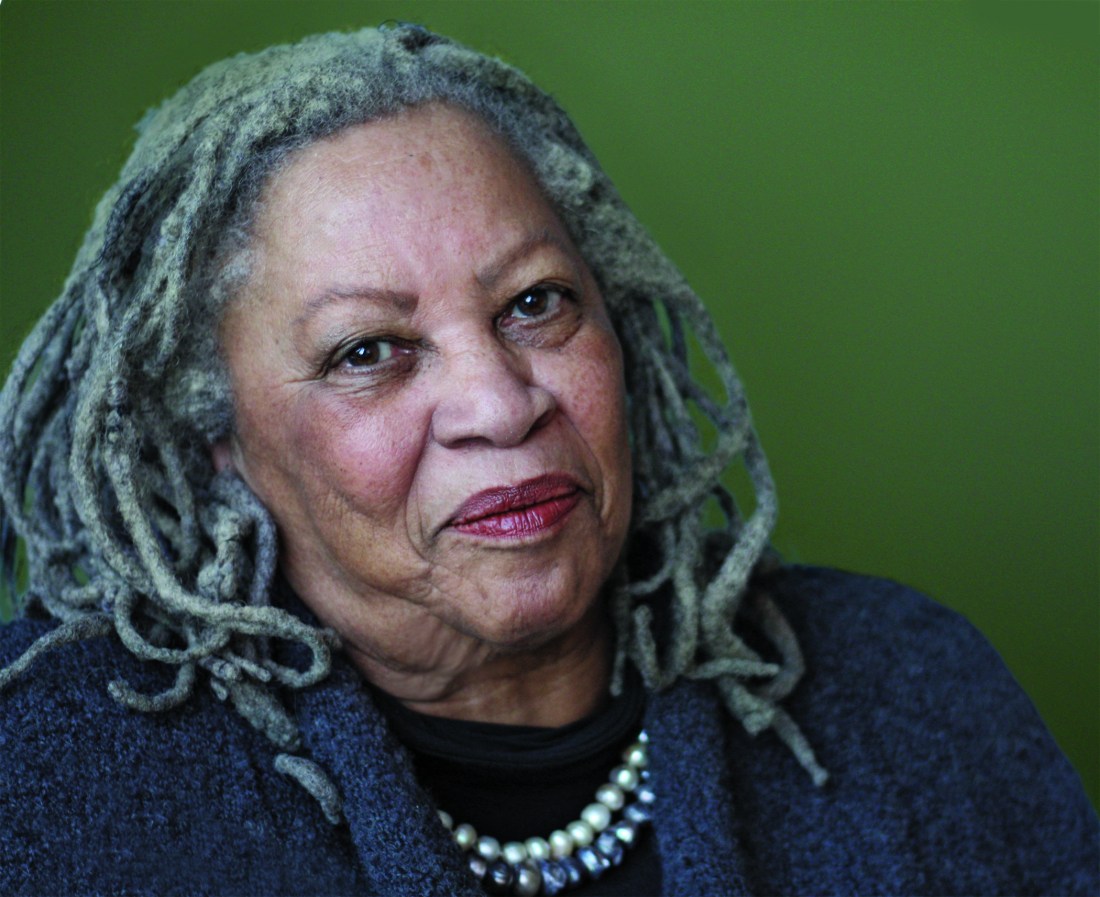
On the legacy of Toni Morrison

“In time, writing became a way to ‘order my experience…’ It’s always seemed to me that black people’s grace has been with what they do with language.”

Late last year I received a copy of The Source of Self-Regard. I guarded this galley with my life, and from the first page, I felt fed. Redeemed. Seen.

I was completely astounded by it, and by the possibility of writing about Toni Morrison for the first time after years of steeping myself in her work. I did what I always do when I’m intimidated by the prospect, by the responsibility, of trying to do someone justice: I went overboard with research. Flung myself into the stacks at the Schomburg. The above quote comes from the 1987 book, Toni Morrison: An Annotated Bibliography by David L. Middleton. Here are my other notes:

Born 1931 in Lorain, Ohio

Chloe Anthony Wofford

Shortened her name to an abbreviation of her middle name purportedly (and with regret) because no one could pronounce Chloe. The theme of claiming one’s name emerged –noted in entry – in her fiction – from third novel, Song of Solomon (1977) to Tar Baby, her fourth ( 1981)

Graduated from Howard in 1953, English Major, classics minor

Master’s from Cornell in 1955 – her thesis was on suicide in the work of William Faulkner and Virginia Woolf.

She taught for two years at Texas Southern University in Houston, then returned to Howard as a faculty member.

She married Jamaican architect Harold Morrison in 1958

They had two sons together, Harold Ford and Slade Kevin. They divorced in 1964.

She moved w/sons to Syracuse where she worked as Random House textbook editor. Began writing at night as therapy for her loneliness when her sons were in bed.

Transferred to NYC in 1967 to headquarters for Random House editing acclaimed black women writers like Gayl Jones and Toni Cade Bambara.

She kept teaching – at SUNY Purchase 1971-72, Yale, 1976-77. She left Random House in 1983; Appointed Albert Schweitzer chair at SUNY Albany in 1984. Stayed until 1989, when Princeton appointed her Robert F. Goheen Professor of the Council of the Humanities at Princeton University. (Note from me: That means 2019 marks the 30th anniversary of Toni Morrison becoming the first Black woman to hold a chair at an ivy league university.)

When I am overwhelmed with sadness and grief, like now, I reach for books. Toni Morrison made it so that when I reached for books, I saw the most glorious, complicated and layered parts of myself as a black woman becoming. When I joined the Well Read Black Girl sisterhood for a viewing of the documentary about her life, Toni Morrison: The Pieces That I Am, it felt like we were witnessing a celebrity in the room with us, like she was talking to every black woman in the room even though we were in a crowded theater in Brooklyn.

She did not know me, but she knew me, because her work reached into my soul and embraced the core of me. That is some of how I feel about Toni Morrison’s work; Toni Morrison who lived by the Hudson, recovered from personal tragedies and still, rose. Still, she wrote. Not just anything — everything. The following paragraph did not make it into my Bitch Magazine review of The Source of Self-Regard:

It is easy for us to take for granted Morrison’s vision, the scope and depth and breadth of it. How far she could see into our future from the quiet of those dark nights of her loneliness. The Bluest Eye, for example, was a precursor for this time – showing us that we would continue, always to vilify the acts of sexual assault against black girls or against women, at least, and maybe sometimes we would consider those two to be in the same category, but we would always excuse the perpetrators of that violence in the bodies of black men. It is easy to look back now that Morrison is nearing the end of a storied, established life, not to put her in a grave or anything, and applaud or be dismissive of the soaring loveliness of Beloved. If the book’s failure to win the 1987 National Book Award or the National Book Critics Circle Award despite notable acclaim was any indication – as these things go, it was taken as such – the idea that a mother willing to kill her children instead of submitting it to a life of slavery was so great a leap that it took an open letter published in the New York Times Book Review signed by 48 prominent black writers to have the literary establishment look again at their discomfort. The following year, Morrison won the Pulitizer Prize.

I would be a less proud, confident, whole black woman writer were it not for the gifts of Toni Morrison. She was and is a literary light for the ages. I will miss her sharp, soft language, that keenly spiritual eye and of course, always, forevermore, the narratives she had left to write, if there was any more for her to give.

I’m too gutted to read her eulogy to James Baldwin in its entirety this morning. But this part, this is what I feel about Toni this morning:

You knew, didn’t you, how I needed your language and the mind that formed it? How I relied on your fierce courage to tame wildernesses for me? How strengthened I was by the certainty that came from knowing you would never hurt me? You knew, didn’t you, how I loved your love? You knew. This then is no calamity. No. This is jubilee. ”Our crown,” you said, ”has already been bought and paid for. All we have to do,” you said, ”is wear it.”

And we do, Jimmy. You crowned us.

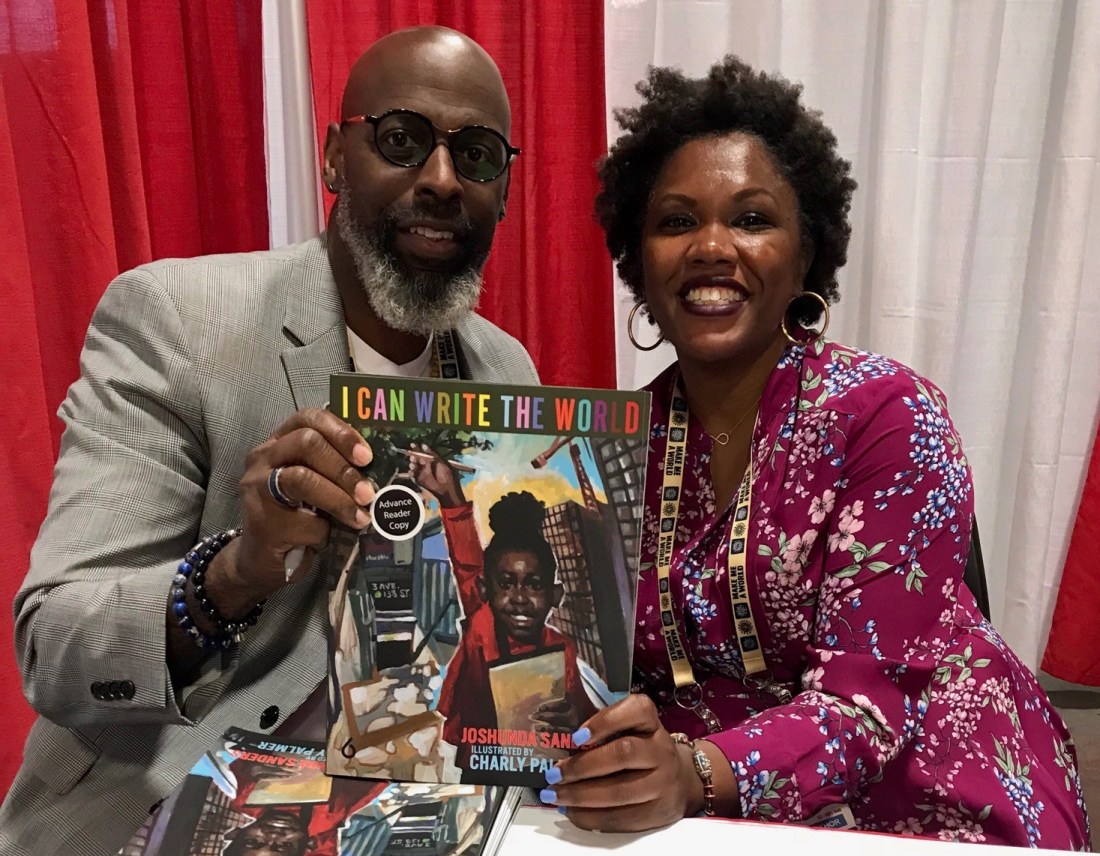
Happy Pub Day to I Can Write the World

Happy publication day to us!
I’ve thought for months about how to best commemorate this day. I’ve been posting and talking and writing and talking about I Can Write the World since last year, so it’s hard to believe that the rest of the world will have access to my labor of love starting today. 
It might surprise you that I never thought I’d write a children’s book, let alone a series. Many of you know that I had a childhood that made me grown in many ways before my time, just like a lot of little Black girls who have our innocence taken or presumed to be a non-entity. But when Six Foot Press’ publisher, Chul R. Kim, asked if I had a children’s book to write, Ava Murray arrived fully formed — a curious girl with incredible storytellers and justice warriors as her namesake in the brilliant storyteller Ava DuVernay and Rev. Dr. Pauli Murray, the poet, scholar and legal pioneer who broken barriers even while Murray struggled with gender dysmorphia. 
I was raised in the Bronx, an underdog borough often defined — like Black women — by lack, poverty and everything that it is not. But just like I always sought out Black women role models and lighthouses of beauty and class, I have always seen the best of the Bronx even when I struggled within it because of poverty. Some people see a place that has been neglected because of the Latinx and Black people, largely immigrants, who are stuck or striving; people for whom success would mean being able to leave for a less abandoned, more expensive, whiter place. But I missed the Bronx every single time I left, even though I was in beautiful elite spaces that were supposed to be better for me, were supposed to be indicators I was moving up. 
This is what home is: It is the place where you are most yourself, where you can feel yourself becoming more of your dreams by the minute, regardless of what you or others may see right before you. 
This is what I loved about my girl Ava as soon as she arrived: She came asking questions about the media she absorbed. She is far less shy than I was, with a parent that is more present, more receptive, more attentive, as so many Black mothers and maternal figures are.
Why, she wonders, is a little girl getting arrested for tagging outside when the murals and graffiti around the poor neighborhoods — which, by the way, have become a global force and industry — actually feel like they make it easier to see the beauty there? As adults, we can say and observe that this is heavy for little kids to encounter, but my answer to that is that we already see that they are witnessing this world of criminalizing Black and Brown children. Not just in the Bronx, but everywhere where teachers tell me 7-year-olds have to report to court monthly to talk to strangers to justify their living here in the U.S. Of course, too, at our borders, where toddlers cry unattended, may have to sleep on warehouse floors, may not be allowed to bathe. 
I had the great privilege of being at Essence Festival this weekend and hearing Michelle Obama talk about the kind of world we want our children to inherit, to live in. I am not yet a parent, but I know that I want our babies to grow up in a world where they know that their voices are important. That they can write their stories. That they can write the world. Not only can they write their world; in order for the world to be the best it can be, for the world to be hold, they must. 
I say happy publication day to us because any book’s publication day is the representation of the work of dozens of people. Thank you for being in partnership with me as I seek to tell stories for young readers. This book is for you. Thank you to Charly Palmer, the gifted illustrator who so thoughtfully crafted the beauty of Ava’s world. Thank you to Six Foot Press and Serendipity Literary Agency for all of the support. Thank you to everyone at Ingram for your encouragement. To my librarian, teacher and writer friend communities — Thank you for understanding the vision and helping me share it widely. I hope this book is as meaningful to you as it has been to me. 
I shared this on social media, but during PrideFest/KidFest, a young girl around Ava’s age with barrettes in her hair held the book and lovingly gazed at it and even in the chaotic craziness around us, I could see that small flicker of recognition that you get when you see yourself. And she said, “She looks like me.” And that to me is everything. That is the inspiration for this book, and the next, and the next.

You can buy the book on Indie Bound, Barnes and Noble or Amazon. Please review this book on Amazon and Goodreads please!

I Can Write the World at ALA 2019


I had a whirlwind weekend launching I Can Write the World at the American Library Association Conference in D.C. Librarians, teachers and others were so receptive to the book that I was the first author in my cohorts to run out of books both on Saturday night at a lovely Ingram reception at Spire and on Sunday afternoon after a great panel discussing the importance of representation in Children’s books. I even got to see a former library professor who popped up in the signing line (thanks for coming by, Stan!).

The most common question librarians had is one that most people ask me, which is “What is this book about?” This comes up right after they say, “Wow, the book is so beautiful!” Which makes my heart sing.

The answer is that I Can Write the World is about 8-year old Ava Murray, who lives in the South Bronx. She is named after the brilliant filmmaker Ava DuVernay and the incredible legal scholar, Episcopalian priest & poet Rev. Dr. Pauli Murray, who created the legal precedent known as Jane Crow and, were the world ready for her in her time, might have had a much easier time accepting what we would call her trans identity in this time.

In I Can Write the World, Ava notices the beauty of the Bronx that she knows and loves is at odds with how journalists often depict her world. On the news, a little girl about her age is fined for tagging, which confuses Ava because she sees the colorful murals around her as making the city more beautiful. Her mother, Kim, explains that journalists are like the window frame around their living room window and they shape what we see when we look out of it. Ava decides that she wants to become a journalist so that she can be just like them and shape the world they see.

The first book in the series has Ava exploring more of hip hop culture and how it came to be through a prose poem. I’m honored to say that one of my writing heroines Jacqueline Woodson has called I Can Write the World, “Lovely and timely.” I hope you will find it to be the same. Thank you so much to everyone who has pre-ordered and shared your thoughts with me about the book. I’d be so grateful if you could also write reviews and spread the word. You can find the book on Amazon, Barnes & Noble and several other outlets.

Next stops for I Can Write the World signings are the Children’s Institute (Ci7) & PrideFest on Sunday — which includes a book giveaway for the first 100 kids.

The 2nd Annual Bronx Book Festival is almost here!

IMG_5029.PNG

I’ve been looking forward to the 2nd Annual Bronx Book Festival now for several months, and I can’t believe June is almost here. VIBE Magazine announced the line up  last week & I’ll be speaking on a panel & reading from my new love, I Can Write the World, which publishes June 15th. (Have you pre-ordered? No? You’re in luck because here’s a link…)

  • Panel: Publishing Debunked
    Time: 11:00 AM – 11:45 AM
    Location: Fordham Plaza Main Stage
    Panelists: Norma Perez-Hernandez (Assistant Editor at Kensington), Joshunda Sanders (I Can Write The World), Queressa Robinson (Literary Agent at Nelson Literary Agency), Alexis Daria (Take the Lead)
    Moderator: Saraciea J. Fennell, founder of The Bronx is Reading
    Description: Join editors, agents, and authors from the Bronx as they debunk the publishing industry for Bronxites.
    Signing: 11:45 AM – 12:15 PM
  • Panel: Indie Power Hour
    Time: 12:00 PM – 12:45 PM
    Location: Fordham Plaza Main Stage
    Description: Join three Bronx-based indie authors as they read from their current works. Readers include Joshunda Sanders (I Can Write The World), Josue Caceres (Bronx Stories & Heartbreak), Yajaira Eduardo (If at First You Don’t Succeed)

And it’s special to me that I’ll be there for a dozen reasons, including that just last year I was writing about the significance of the festival for the Village Voice, fellow Vassar alum and Tight author Torrey Maldonado will also be participating & I’m so proud of  Saraceia for reinforcing her vision of creating a literary community that thrives in the Bronx. I hope you see you there — organizers ask that you register for this free event at this link.


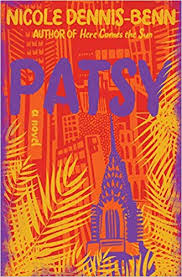
Patsy Review in TIME Magazine


download-2.jpg

I loved Patsy so much that I got the beautiful book hangover that one gets when you miss the 400+ pages that took you on an epic journey. I’m really proud of this TIME Magazine review:


There have been few narrative epics that effectively tally the emotional, logistical, physical, psychological and financial trials of the black female immigrant and mother or, likewise, the impact on the family of a black woman who dares transform herself. Dennis-Benn maps the internal terrain of black women yearning to be free — without romanticizing or ignoring their flaws. Yes, her central characters are persistent, but they can also be naive. Yes, these are strong black women, but they’re also human, and they’re nearly broken by loneliness, despair and a sense that they’ll never belong. Showing us the triumphs and pitfalls of these two parallel rites of passage, Patsy fills a literary void with compassion, complexity and tenderness.

Review: The Source of Self-Regard by Toni Morrison

I am ecstatic to share my review for Bitch Media on Toni Morrison’s stunning collection of speeches, essays and meditations, out today, The Source of Self-Regard. I inhaled it and underlined entire paragraphs over the last two months. I went to the Schomburg for something else entirely and found an annotated bibliography that informed a lot of this piece. These glimpses and pieces of her are the nation’s greatest living novelist at the top of her form and the most intimate look we are likely to get at her most closely guarded feelings and emotions — especially as it relates to the writing process.

The third section of the book, “God’s Language,” begins with the most beautiful piece of writing I have ever read—the eulogy Morrison delivered at James Baldwin’s funeral on December 8, 1987. It is also the closest glimpse we’ve had into Morrison’s personal relationships. Morrison lays her heart bare for a friend in a short poetic jubilee that’s reminiscent of Smokey Robinson’s recent speech at his childhood friend Aretha Franklin’s homegoing service.

“Jimmy, there is too much to think about you, and much too much to feel,” she begins. “The difficulty is your life refuses summation—it always did—and invites contemplation instead. Like many of us left here, I thought I knew you. Now I discover that, in your company, it is myself I know. That is the astonishing gift of your art and your friendship: You gave us ourselves to think about, to cherish.” Morrison might as well be speaking about herself. For me and many other writers, Morrison demonstrates how to be in a world that’s committed to your destruction. “You gave me a language to dwell in—a gift so perfect it seems my own invention,” she continues.

Throughout the book, Morrison reveals herself to be a teacher-student who is not just giving readers information that they’re expected to take in and regurgitate. Instead, she’s a “literary homegirl” (a phrase that she actually uses in the text). Referring to a friend as a “homegirl” implies a sense of ease in the presence of someone who knows and loves us, who evokes in us the joy, relaxation, comfort, and depth we typically only associate with home. Home is where we learn who we are, if not who we will become. Home is the starting point. In the title essay, delivered in Portland in 1992, Morrison explains how she viewed self-regard while writing her Pulitzer Prize-winning novel Beloved. Morrison’s lecture deeply resonates with me because it gives context for arguably her most famous work, which at its heart, offers Black women an artistic vision of our liberation.

9780525521037

Lane Moore’s How to Be Alone

“Your commitment to survival is more than a notion; it’s a balm, an affirmation, an eternal love note, and a sacred love manifestation that starts as a whisper and rises into the atmosphere. How to be Alone gave me closure. What a gift it is to know that there’s another person in the world who’s so brave and true to her spirit that she survived the hardest parts of being alive. Instead of sinking into despair or madness; being waylaid by bitterness or tragedy; or turning the grueling and terrifying dark of isolation against yourself, you’ve transmuted it into a fire so bright that it blazes brilliantly, with a classic, universal humanity. James Baldwin said, “You think your heartbreak is unprecedented in the world, and then you read.” How To Be Alone is like that.”

— In which I write a very vulnerable open letter-review for Bitch Media to the beautiful bad ass Lane Moore, whose tremendous and lovely book, How To Be Alone, really helped me sort some things out in the best, most heartbreaking way. Shout out to those of you who remember my Single & Happy blog & eBook days. Feels like a lifetime ago now.

P.S. New Yorkers: Lane will be in convo with the HQ host (!!) at The Strand tonight at 7 p.m.

how-to-be-alone-9781501178832_hr.jpg