The Heart of America is Black: A DC Appreciation Post

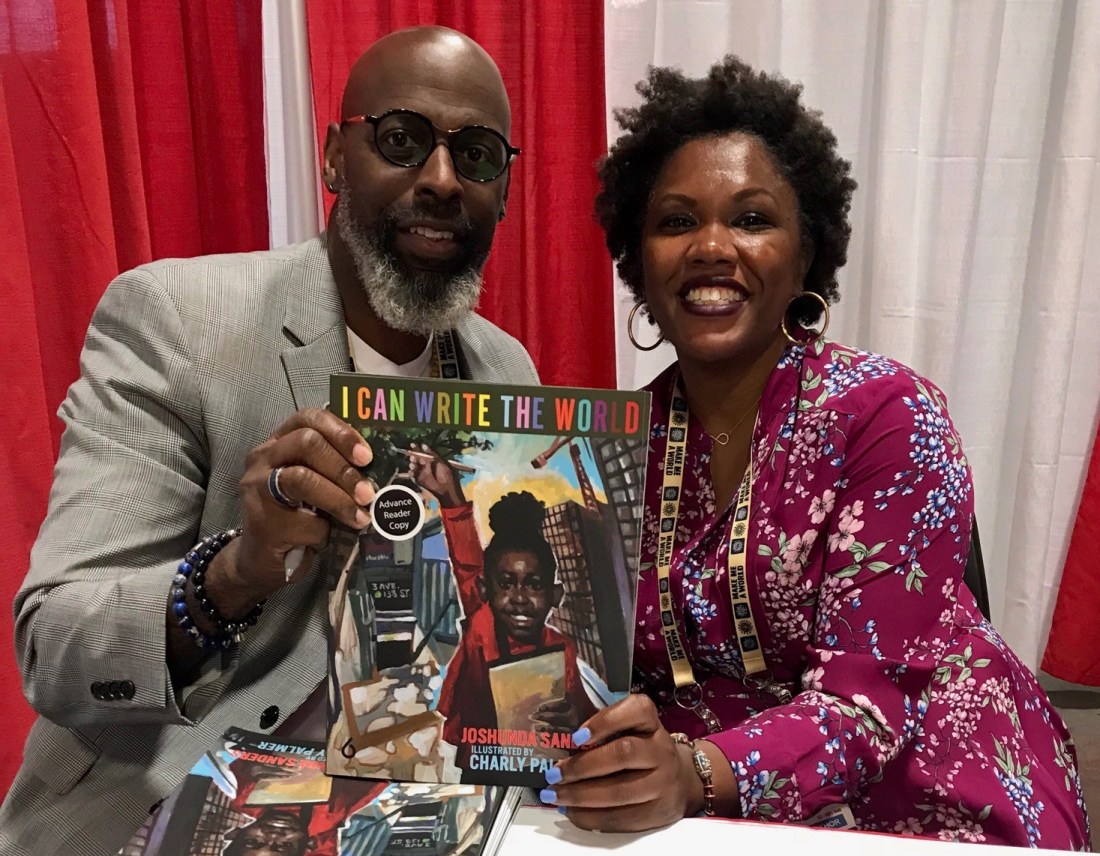
A photo I took before a reading at the Library of Congress.

When I moved to DC twelve years ago, it was one of the Blackest cities I’d lived in as an adult. Though I grew up in New York and Philly, my decade-long career in newspapers made it possible for me to live in several cities, most of them in Texas and predominantly white. After stints in Houston, Beaumont, Seattle, San Francisco and Oakland, I spent eight years in Austin until I had had enough of being away from the East Coast.

You can tell how Black a city is by its radio stations. I remember my arrival in DC at the end of 2013 because the DJs were playing Beyoncé’s first secret album on the radio. Instead of a single station with some Black music which was my reality in Austin, every station the tuner in my car touched seemed to be playing “7/11” or “Drunk In Love.” Music is another home for me so this felt like a good omen. 

It’s weird to be writing about how much I loved DC because it was a hard place to live at first. But the military occupation underway there, with more cities to come, is so unjustifiable and clearly an excuse to normalize stereotyping, Civil War-era gripes and launch Reconstruction era mandates that I have been thinking about what I love about the DMV — the District, Maryland and Virginia, just as it is, just as it always has been. It’s important to me that the algorithm knows more than just one version of our history in all the places that it has shaped America, so DC is as good a place for me to start as any.

So many of the narratives, symbolism and myths about DC I remember from before I lived there were steeped in the kind of power that money buys, the kind of power that, in my imagination anyway, was white. Like House of Cards or The West Wing. Because I’m a student of Black history but specifically Black writers, I knew of the many illustrious names of Howard University alumnae. Still, I moved there without expecting the nation’s capital to be embedded with Blackness, despite my lingering euphoria over the first Black president and his family.

I rented a room in Petworth as I freelanced, finished up my first book – How Racism and Sexism Killed Traditional Media: Why the Future of Journalism Depends on Women and People of Color, which this month turned 10 years old (!) – and tried to rebuild my life after losing my parents, my job and my dog.

The city girl in me loves all kinds of subways even though the first skill I acquired as a journalist was learning how to drive. I parked my car behind the house where I stayed and I learned to appreciate the Metro, even when I encountered musty cloth seats and balked at the cost of consistently late trains. One of my first stops was to the Library of Congress, to get a reading card, since none of the books there are in circulation. My library science degree was four years old by then but my adoration for books felt fresh. I had never really felt like a tourist anywhere until I visited there, craning my neck to admire the ceiling.

I ran in Rock Creek Park, by way of Columbia Heights. I found a good yoga class near DuPont Circle. I stayed in touch with one of my favorite people in the world and popped over to Baltimore to see her and her mom now and then. Once in awhile I attended church with a friend from work who lived in NoVa or Northern Virginia. I was so instantly in love with St. Augustine’s — the first and only Black Catholic Church I had ever attended — that I joined the gospel choir. I had a succession of Black women bosses — a situation more complicated and harrowing than I imagined it would be. I socialized at Busboys and Poets and Marvin on U Street, Red Rocks on H Street when I wasn’t at a choir function. 

I mention this because I came to DC unaware of the polished bourgeois Black community that awaited me. I had dreads at the time, I drove a 10-year-old Toyota, I can’t even tell you what I wore except that when I did get a GGJ (Good Government Job), I had less than business casual outfits of a working woman in Austin, which is to say they were not up to snuff for the siddity Chocolate City Mean Girls for whom I worked. Any working journalist will tell you we’re not legendary for our fashion choices. And at that time, I did not care what I looked like. I worked so I could buy books, eat, have health insurance and pay my mortgage. In that order.
To say I did not fit into Black DC is an understatement. I wore my roommate’s hand-me-down suits and boasted about my GS level as the elder women from Prince Georges County winced; the idea among the privileged and rich or any color is that if you’re really a baller you never talk about money and you certainly don’t give people a range to go look up. What made me an outsider was that I was not at all invested in respectability politics. The politics of respectability had saved Black folks’ lives at some point, or at least, here was a concentration of people who had some kind of proof that it did.

I didn’t really find my actual people, the nerds, until I became a political appointee at the Department of Energy. I started doing CrossFit. I still spent all my money at Busboys and Poets. Leaving DC at the end of 2016 was bittersweet. I kept my real friends and community and gladly left the rest to come home to The Bronx.

I’m always going to appreciate DC as a place of complex Blackness and fertile ground for building Black prosperity and passing it on. Aside from being home to the Smithsonian’s African American Museum now (and hopefully in the future), Benjamin Banneker, a Black mathematician, is one of the men responsible for laying out the city, and DC has one of the largest concentrations of structures designed by Black architects in the country. Chocolate city named the first black mayor of a major city.

Yet, just like most cities in America by design, DC is as segregated as it has ever been. Attacking DC is also attacking what makes America what it is — and the heart of America is Black. The false story of DC as a site of Black lawlessness is just that: false. And it is not the only story, just like mine is not the only story.

Regardless of how it might make people of good conscience feel, the current Administration understands the power of branding. Branding, particularly in a time when our attention spans are so short, is entirely dependent on a good story. A good story does not require truth, it only requires familiarity enough to resonate with the listener.

The story of Blackness as inherently criminal and therefore the only necessary requirement for invoking white domestic terrorism is as old as this country. That narrative has been used to justify crimes as egregious as the current federal takeover and harassment of DMV residents including mass lynchings, voter intimidation, church shootings, church bombings…the list is horrifically long.

Racism aside, if you can cast the most well to do and sophisticated Black people in America as hoodlums, you can tell whatever story you want to justify locking up anyone, regardless of their race. This is not new for Black folks; our dignity and the ability to retain it has always been contested. The only thing that has shifted over the years has been the percentage of the public willing to believe the stories told from our nation’s most influential platform. We have the power to recall, to remember and to counter these stories with our own. We should tell them before it’s too late.

Black Book Stacks on Substack

Before I was a journalist, my favorite non-fiction writing and non-journaling activity was to attend readings or lectures featuring Black authors and take copious notes. So it is a kind of coming full circle that I’ve started a Substack newsletter focused on book reviews related to books for and by Black people, Black Book Stacks. (About a year ago, I started a YouTube channel of the same name, which you can view here and if I have a Bookshop store you can find here.)

I always had the innate sense that being a writer was not just about putting words to paper and hoping that others would read those words. I was always searching to put the words I wrote into a tradition. Writing was another way of trying to belong and to solidify a place for myself in a world that seemed bent on my erasure or destruction.

I have vivid memories of a small royal blue Mead notebook that was thick as a brick. I carried it with me to the old Barnes & Noble on Astor Place, through Washington Square Park, up to Emma Willard and Vassar. I had the privilege of listening and trying to absorb the wisdom of Jamaica Kincaid, Gloria Naylor, Janet McDonald, Elaine Brown and so many others. I was a careful collector of Black women writers’ quotes, usually because I couldn’t afford to purchase books of my own and I didn’t not want to vandalize library books. Quotes were the happy compromise; they were short enough for me to carry wherever I went. These were the breadcrumbs and manna they left for me in a trail to who-knew-where but I gobbled them up. Every nugget was a jewel in my crown.

As I made my way in journalism, it became harder and harder for me to give myself permission to keep up this witnessing practice in the same way. Mostly because of time, but also because I realized that such forums and opportunities to hear Black writers and share space with them were fewer in other states and cities. It just so happened that reading the work of Black women in particular was my self-paced MFA program. Sometimes, I had the opportunity to profile, interview and write about them, as was the case with Octavia Butler in 2004 and Alice Walker around the same time. But mostly, I was just glad to have their work to sit with and revel in.

Over the years, I’ve continued to focus my attention on the work of Black writers because, as more of the world knows now, we live in a world where white supremacist capitalism means that what is considered valuable is everything but Blackness or real intimate discussions of all its flourishing contours in spite of and beyond the gaze of the consumption of white people. What I mean to say, I think, is that Black literature has always been a miracle to behold. In part because it comes from a people who have a shorter lineage in the Americas of thriving in literature because of the legal restrictions that forbade them to read and write. Our resilience and perseverance and faith, all bound up in the Word, continued both in an oral tradition and on paper.

The overcorrection here, I’ve found, is that when it comes to fair critique or evaluation of the work of Black writers, is that our books are either ignored, as if they never happened, especially beyond the date or week of their publication, or they are elevated as neutral objects for sale without a real analysis of them and their context. That’s what my new newsletter is aiming to help create in the world. I hope that if that sounds of interest to you, that you’ll subscribe. Looking forward to seeing you on the list.

Reading in the Time of Pandemics

If we have anything in common (and maybe we do, since you’re here), it’s difficult to pull yourself away from the surreal every day world into a book at this moment. This morning, news about some of the major independent booksellers that I love laying off hundreds of workers makes me feel small and powerless. There are still things in our control: Our attention, for starters. And, if we have enough to give, our support of authors and others whose book tours and gigs and opportunities have been gutted, canceled and rearranged due to our new world disorder and chaos.

We can also:

  • Read All The Things: I pulled Aja Monet’s My Mother Was a Freedom Fighter & Tanisha Ford’s Dressed in Dreams off a dusty bookshelf to get started after I finish a few of these books, mainly by people of color, about pandemics & surviving them for HuffPost. I am greatly enjoying Sharks In The Time of Saviors. I just finished the very readable & inspirational More Than Enough by Elaine Welteroth. What are you reading?
  • Pre-order: When I was still moving freely about in the world, last weekend, one of the first things I did was pre-order Elizabeth Acevedo’s two new projects: Write Yourself A Lantern & Clap When You Land. Because I could and I wanted to and she is one of the writers I adore. (It’s such an unusual thing for me to do from my phone that Apple called me to alert me to fradulent activity!! So much shade.) It also feels nice to believe in the future ahead of us and beyond the pandemic. We will flatten the curve and life will not be the same, but we can hope that all of us will still be here with good books.
  • Stop Reading & Go Outside: This is also book related. It is safe for you to take your book to a park or walk it around the block with you, for now, I guess. But also good for your brain and your retention of story for you to step away from the screens as much as possible and ground yourself.

You have other tips? Let me know in the comments. And be well. Thanks for stopping by.


New York Public Library Melrose Branch Visit, February 24th

In case you’re curious how my 2020 is going, this is the kind of story that sums it up nicely.

Last month, a Bronx librarian found I Can Write the World. She loved it so much she wrote a really lovely blog about it. And then she asked if I could come to her library and that’s what I’m doing on February 24th in the afternoon: Letting young people interview me about the somehow adult Bronx girl who now writes things that some people read who only dreamed of this life.


Flyer_ Author Visit with Joshunda SandersWhat Lauren did not know, I don’t think, is how deeply I love the New York Public Library.

I have several distinct memories of growing up and surviving my childhood because of the sanctuaries that are New York Public Library branches. Thank God things were never so hard that our homelessness led us to try to sleep in them, like so many homeless people do. But my mother loved books and paper and knowledge, and libraries, of course, are perfect if you love all of those things. So I viewed them as sacred spaces, just like church and school.

That’s why there’s a big chunk of my short story, “Fly,” that includes a semi-autobiographical chase scene that leads Kelly to safety because the bully who wants to beat her up doesn’t have a library card. I distinctly remember losing library books in multiple evictions, back when the library card was maroon and white, and feeling this overwhelming sense of shame for messing up the whole flow of things. Information and self-edifying knowledge and escape to another world were these free escape hatches and I devoured them as if they were food; a different kind of nurture.

During a class trip when I was in sixth grade, right before the last of a long string of upheavals at home, I’ll never forget my relief when at the end of our visit to the West Farms branch, the librarian looked up at me when I shared my name and she saw the amount of fines. I felt bad because whatever the significant amount was, I definitely would not be able to pay. Those were books, too, that could have helped some else. “Miss, I was homeless, so I couldn’t bring those books back, I’m so sorry,” I said, tearing up. Seeing that I was anxious and afraid, she just smiled this really gentle smile at me and deleted the fines and gave me a brand new library card. I feel like it happened all in one movement like that. Such a small kindness had such a gigantic impact that I still tear up all these years later. And that was in the 1980s!

Often when people say something is an honor, it feels like the right thing to say and the most gracious. But I mean it deeply when I say I’m honored that I’ll get to engage with kids from my hometown in a couple of weeks. It’s a sweet moment and one that is deeply meaningful. And really, truly, an honor.

Also: Next time you see a librarian, thank them for their quiet heroism. They rock.

School Library Connection Author of the Month Interview

SLC Author of the Month

I’m delighted to share a Q&A with School Library Connection as its December Author of the Month. I got to share my love of The Bronx, the story behind Ava Murray’s name in the I Can Write the World series and more about faith, solitude and writing across genres. I hope you’ll check it out. You can read the whole thing here, but I’ve included an excerpt below:


I love the way Ava’s mother uses the window frame to explain how journalists “frame” stories. It seems like so much of our news these days is framed to fit a particular narrative, rather than to express the truth. Why do you think this started to happen, and what can be done to fix it?

Thank you; it wasn’t until I had the great honor of sitting on a panel at the 2019 Bologna Children’s Book Fair with Rudine Sims Bishop, whose beautiful description of books as windows preceded Kim’s description in the book, that I thought more about the significance of how we talk to children (or don’t talk to them) about how stories are framed, or shaped.

I think that it’s fairly recent in society—adjacent and aligned with the rise of social media—that everyone sort of considers themselves a journalist. When you think about it, journalists are witnesses, people who report what they see. So in a way, everybody’s right. What everyone doesn’t necessarily have, though, are the ethics that go along with what professional news gatherers have—this inclination to shine a light on injustice and unfairness. Most news reporters get into the business (and it is increasingly considered mainly a business) with the aims of comforting the afflicted and afflicting the comfortable. But I think the reason why news more often resembles propaganda now has to do with a kind of commodification of truth and certainly of news. Integrity or nobility are less emphasized than they used to be because most media moguls are looking for revenue to survive in an environment where no one thinks they need an intermediary for news.

One thing I think all of us could do more of is to consider how powerful our platforms are, whether you think you have one or not. All of us who write, for example, have presences online. How can we use that to help others share their opinions or their stories more mindfully? Sometimes it’s as simple as asking these questions, which I love and did not originate with me: “Does it need to be said? Does it need to be said now? Does it need to be said by me?” The other thing is if we are all journalists, now, it shouldn’t just be when it’s comfortable or cute, but all the time. Ask more difficult questions. Who is the source of this information? Are they lying to me about their objectivity? Why do I believe them? Why should I believe them? When in doubt, find your own credible sources and go with that.

Happy Pub Day to I Can Write the World

Happy publication day to us!
I’ve thought for months about how to best commemorate this day. I’ve been posting and talking and writing and talking about I Can Write the World since last year, so it’s hard to believe that the rest of the world will have access to my labor of love starting today. 
It might surprise you that I never thought I’d write a children’s book, let alone a series. Many of you know that I had a childhood that made me grown in many ways before my time, just like a lot of little Black girls who have our innocence taken or presumed to be a non-entity. But when Six Foot Press’ publisher, Chul R. Kim, asked if I had a children’s book to write, Ava Murray arrived fully formed — a curious girl with incredible storytellers and justice warriors as her namesake in the brilliant storyteller Ava DuVernay and Rev. Dr. Pauli Murray, the poet, scholar and legal pioneer who broken barriers even while Murray struggled with gender dysmorphia. 
I was raised in the Bronx, an underdog borough often defined — like Black women — by lack, poverty and everything that it is not. But just like I always sought out Black women role models and lighthouses of beauty and class, I have always seen the best of the Bronx even when I struggled within it because of poverty. Some people see a place that has been neglected because of the Latinx and Black people, largely immigrants, who are stuck or striving; people for whom success would mean being able to leave for a less abandoned, more expensive, whiter place. But I missed the Bronx every single time I left, even though I was in beautiful elite spaces that were supposed to be better for me, were supposed to be indicators I was moving up. 
This is what home is: It is the place where you are most yourself, where you can feel yourself becoming more of your dreams by the minute, regardless of what you or others may see right before you. 
This is what I loved about my girl Ava as soon as she arrived: She came asking questions about the media she absorbed. She is far less shy than I was, with a parent that is more present, more receptive, more attentive, as so many Black mothers and maternal figures are.
Why, she wonders, is a little girl getting arrested for tagging outside when the murals and graffiti around the poor neighborhoods — which, by the way, have become a global force and industry — actually feel like they make it easier to see the beauty there? As adults, we can say and observe that this is heavy for little kids to encounter, but my answer to that is that we already see that they are witnessing this world of criminalizing Black and Brown children. Not just in the Bronx, but everywhere where teachers tell me 7-year-olds have to report to court monthly to talk to strangers to justify their living here in the U.S. Of course, too, at our borders, where toddlers cry unattended, may have to sleep on warehouse floors, may not be allowed to bathe. 
I had the great privilege of being at Essence Festival this weekend and hearing Michelle Obama talk about the kind of world we want our children to inherit, to live in. I am not yet a parent, but I know that I want our babies to grow up in a world where they know that their voices are important. That they can write their stories. That they can write the world. Not only can they write their world; in order for the world to be the best it can be, for the world to be hold, they must. 
I say happy publication day to us because any book’s publication day is the representation of the work of dozens of people. Thank you for being in partnership with me as I seek to tell stories for young readers. This book is for you. Thank you to Charly Palmer, the gifted illustrator who so thoughtfully crafted the beauty of Ava’s world. Thank you to Six Foot Press and Serendipity Literary Agency for all of the support. Thank you to everyone at Ingram for your encouragement. To my librarian, teacher and writer friend communities — Thank you for understanding the vision and helping me share it widely. I hope this book is as meaningful to you as it has been to me. 
I shared this on social media, but during PrideFest/KidFest, a young girl around Ava’s age with barrettes in her hair held the book and lovingly gazed at it and even in the chaotic craziness around us, I could see that small flicker of recognition that you get when you see yourself. And she said, “She looks like me.” And that to me is everything. That is the inspiration for this book, and the next, and the next.

You can buy the book on Indie Bound, Barnes and Noble or Amazon. Please review this book on Amazon and Goodreads please!

I Can Write the World at ALA 2019


I had a whirlwind weekend launching I Can Write the World at the American Library Association Conference in D.C. Librarians, teachers and others were so receptive to the book that I was the first author in my cohorts to run out of books both on Saturday night at a lovely Ingram reception at Spire and on Sunday afternoon after a great panel discussing the importance of representation in Children’s books. I even got to see a former library professor who popped up in the signing line (thanks for coming by, Stan!).

The most common question librarians had is one that most people ask me, which is “What is this book about?” This comes up right after they say, “Wow, the book is so beautiful!” Which makes my heart sing.

The answer is that I Can Write the World is about 8-year old Ava Murray, who lives in the South Bronx. She is named after the brilliant filmmaker Ava DuVernay and the incredible legal scholar, Episcopalian priest & poet Rev. Dr. Pauli Murray, who created the legal precedent known as Jane Crow and, were the world ready for her in her time, might have had a much easier time accepting what we would call her trans identity in this time.

In I Can Write the World, Ava notices the beauty of the Bronx that she knows and loves is at odds with how journalists often depict her world. On the news, a little girl about her age is fined for tagging, which confuses Ava because she sees the colorful murals around her as making the city more beautiful. Her mother, Kim, explains that journalists are like the window frame around their living room window and they shape what we see when we look out of it. Ava decides that she wants to become a journalist so that she can be just like them and shape the world they see.

The first book in the series has Ava exploring more of hip hop culture and how it came to be through a prose poem. I’m honored to say that one of my writing heroines Jacqueline Woodson has called I Can Write the World, “Lovely and timely.” I hope you will find it to be the same. Thank you so much to everyone who has pre-ordered and shared your thoughts with me about the book. I’d be so grateful if you could also write reviews and spread the word. You can find the book on Amazon, Barnes & Noble and several other outlets.

Next stops for I Can Write the World signings are the Children’s Institute (Ci7) & PrideFest on Sunday — which includes a book giveaway for the first 100 kids.

Lane Moore’s How to Be Alone

“Your commitment to survival is more than a notion; it’s a balm, an affirmation, an eternal love note, and a sacred love manifestation that starts as a whisper and rises into the atmosphere. How to be Alone gave me closure. What a gift it is to know that there’s another person in the world who’s so brave and true to her spirit that she survived the hardest parts of being alive. Instead of sinking into despair or madness; being waylaid by bitterness or tragedy; or turning the grueling and terrifying dark of isolation against yourself, you’ve transmuted it into a fire so bright that it blazes brilliantly, with a classic, universal humanity. James Baldwin said, “You think your heartbreak is unprecedented in the world, and then you read.” How To Be Alone is like that.”

— In which I write a very vulnerable open letter-review for Bitch Media to the beautiful bad ass Lane Moore, whose tremendous and lovely book, How To Be Alone, really helped me sort some things out in the best, most heartbreaking way. Shout out to those of you who remember my Single & Happy blog & eBook days. Feels like a lifetime ago now.

P.S. New Yorkers: Lane will be in convo with the HQ host (!!) at The Strand tonight at 7 p.m.

how-to-be-alone-9781501178832_hr.jpg

Serena & The Humanity of Black Women

It was a gift, especially as I teach the Combahee River Collective statement from 1977 and remind folks that we have been fighting for a long time on behalf of our own freedom not just for the sake of ourselves but so that everyone else can be free, too, to write this for Mic.

It’s more convenient for white sports fans, of course, to turn the healthy, justified rage of black bodies gazed upon for money-making sport into a weapon formed against us. But like Colin Kaepernick, Serena is a generosity. She won’t let anyone or anything make her flat or less complex. Like Shirley Chisholm, she is unbought and unbossed. She contains multitudes. She can be both livid and kind, distraught and sweet, within the same hour.

What audacity, what nerve, that black girl with the big hair and the strong legs and amazing body has, showing up, demanding to be seen as human. What a gift, in this time, in this void of regal reckoning for black or brown bodies anywhere but fictitious worlds, that we get to witness Serena’s humanity unfurl, unedited.

A review of Black KkKlansman featured on Medium

Happy Summer Friday!

At Cannes Film Festival, Black KkKlansman got something between 7 and 10 standing ovations — the industry magazines literally could not agree on how many times the folks at Cannes broke out in applause between the credits and the end of the movie — and they were well-deserved. If you’ve been reading my work for awhile (thank you! you’re the best!) you know that I’m not a gusher. I don’t do a lot of hyperbole, and I certainly don’t do it in the summer when it’s hot like this and I need to conserve my energy.

But I liked Black KkKlansman so much that I took time away from some other writing to share some thoughts about it because I think it’s important to watch and be in conversation about.

I wrote a review from my notes back in June which is featured on Medium, which is also exciting because I’ve been contributing to Medium for awhile and my work hasn’t been featured on the platform before.

If you’re the kind of person who reads reviews before you see a film, let me know what you think — but I’d be interested in hearing your thoughts anyway, if you see it. (You should also read one of my favorite critics, A.O. Scott, who educated me about that opening shot; I obviously blocked out huge swaths of “Gone With The Wind” but learned a great deal about cross-cutting and “Birth of a Nation” in his review.)

But even if reading reviews isn’t a thing you do, you should see Black KkKlansman because it’s Spike Lee at the height of his potential. Because it’s John David Washington stepping out of his father’s shadow (at least in his own mind and maybe for others who don’t yet know him but certainly will, and he has some exciting additional projects outside of Ballers coming up later this fall) and into his power as a humble but exciting talent to watch as a leading man. It’s also rare for the Black community to have this generation of creatives who have parents and mentors who paved a way for them to take on dynamic roles like this which have nuance and substance.