
Dear baby girl,
I wonder how old you will be when you finally read this. I wish I had a letter from my mother when she was carrying me, so I could understand a little better what her world was like, what exactly she carried me through, and what brought her joy while she was doing it. I also mainly identify in the world as a writer, and this is how I process everything, by trying to move feeling into language.
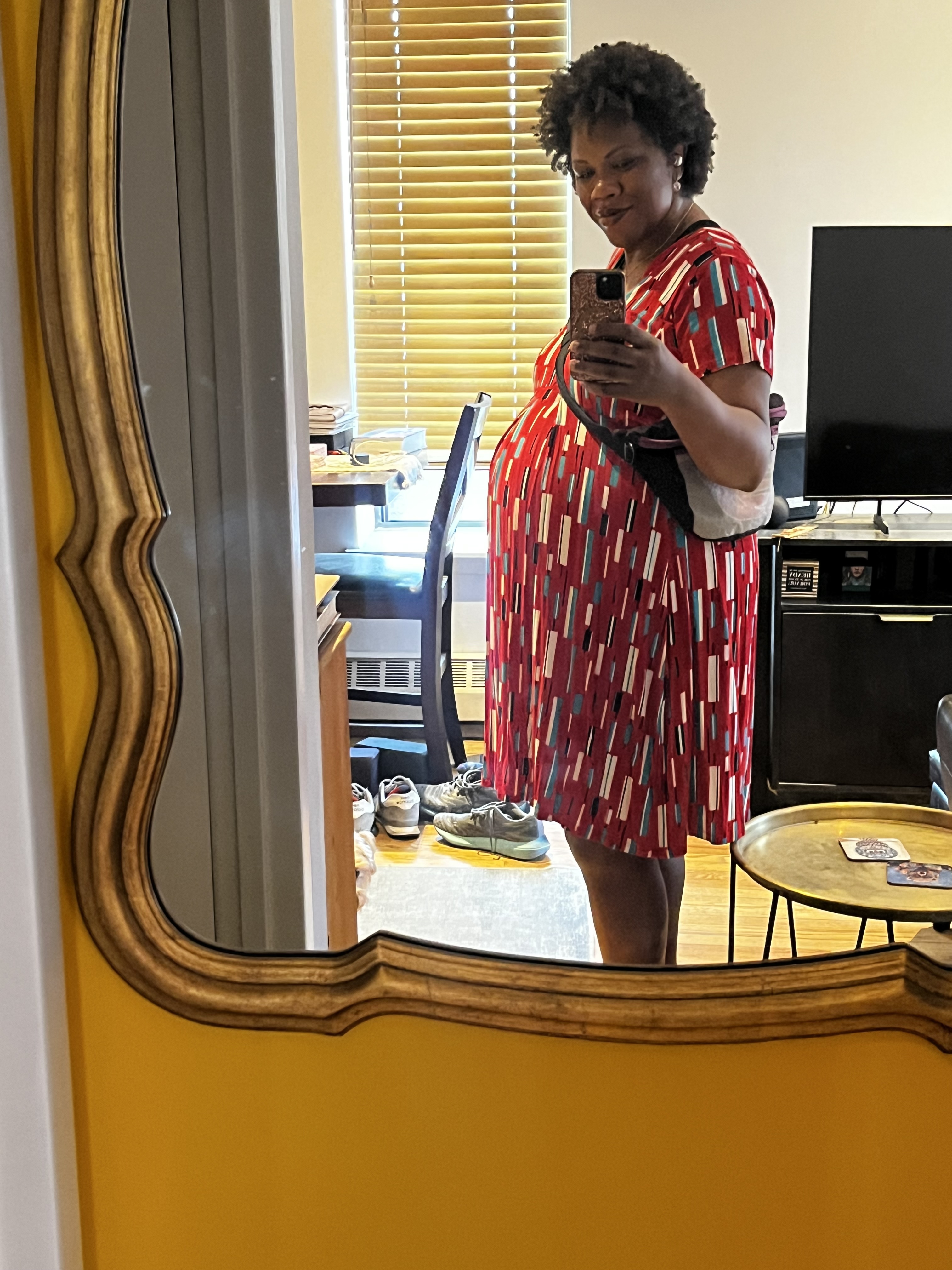
That’s part of why I’m writing to you. It is April 2025, a chilly spring that is having a tough time shaking off winter for good. The sun is shining, the family dog is curled up next to me on the couch. I have checked all my email accounts no less than five times today, worked hard at the job I adore, which is also my career, done some work to prepare for when you come into the world – I do a little bit every day — and napped because at six months, you make me more tired than usual, which is how I know you’re healthy and strong.
The world is chaotic right now, or it feels that way. The person leading our country has done so in the past, but the way he is doing it now is led by revenge, greed and an appetite for historical destruction of things I love, things I believe make this country what it is: stories of struggle and flourishing movements, the true stories of Black women and men who looked like you and me who led those movements. Most days I worry we are moving further away from progressing toward a place that will not just see you in your full humanity, but also celebrate you in it, which means you will be more likely to live through the full span of a Black girlhood into adolescence than me or the Black girls before you. That our country will become a place where you have the luxury of growing old, maybe having your own babies if that is what you want.
Before I expected you, I took the inevitability of the world as it is for granted, as a place I have had little power to shift, even as I dream of leaving a positive footprint behind. Yes, I reveled in important milestones for Black humanity and flourishing, but I shrugged off questions of the future. I have been a meditator for many years now, and it’s easy to talk myself into the spiritual virtual of tunnel vision on the present. Let some other generation worry about all that future stuff, my work is here and now. I told myself that no part of me would live in the future except for my books, my legacy. Maybe some kind librarians and citizens would preserve my digital footprint in the Internet archives/Wayback Machine.
But you will be here now in less than three months, God-willing. Now that I am becoming a mother and I can feel you kicking, moving around inside of me, coming alive, what also grows is the abiding hope that you will grow up in a world that is not too altered. I try to meditate and breathe my way through the twin terrors that you will have so much to fix alongside the fear that some of it is beyond repair.
I want to believe that committing my near and far-term future to nurturing and caring for you is also an act of resistance, a kind of blind faith; that bringing a good human here will also add light to what feels like an endless dark tunnel fraught with danger and uncertainty. But I’m writing these as I start my third trimester, and there is still so much to tell you before we get to the future.
II.
Mother’s Day is coming this weekend, and I thought it would be different at seven months pregnant with you, that I would feel less of an ache than I have felt all my life as this time rolls around. But it has been thirteen years since your grandmother died, and while it hurts less than before, I still feel the ambivalence of a motherless child when it comes to marking this Hallmark holiday. I still feel tender, raw and protective of the little girl in me that mothered myself while I also took care of my mom, with her broken heart and her traumas and her bipolar and borderline personality disorders.
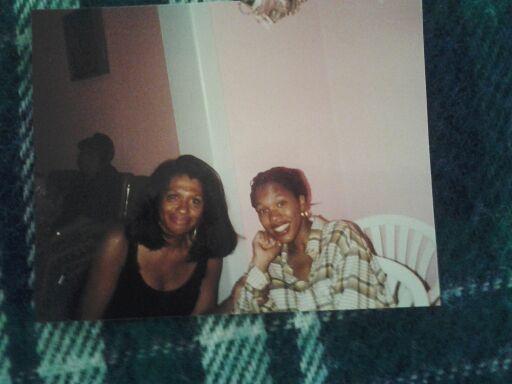
Even though I tried to heal much of the unresolved pain of my childhood at your grandmother’s bedside when she was physically alive, in the six months between her diagnosis of late-stage cervical cancer and when she died a week before my 34th birthday, the grief of what I missed while she was physically living layered on the grief of what I lost for good when her body died is a weight I will spend my life trying to ensure you never feel.
Instead of more straightforward feelings now, my emotions are all over the place. Some of it has to be the hormones. But some of it is also simple: I am sad because I wish you could have met her. Even with all the things that kept her from living a full, unencumbered and thriving life, your grandmother was a bright beam of love. We should all be so blessed to have a beam like that shine on us, no matter how brief.
Her manic depression kept her restless, so she was always up. I do not remember a lot of times where I saw her truly at rest. Even when we sat still to eat or watch Jeopardy! She seemed to be forever in motion, buzzing.
Mom loved the phone. She loved to call me as early as possible on Mother’s Day and Father’s Day, since she alone was responsible for the fact that I survived my childhood – another thing that you will not have to endure, since your father and I have a big community around us waiting for you with eager hands to catch you should one of us fall or need a break. Your grandmother was the only person I let shorten the shortened version of my name.
“Shan, I love you,” she would start. “Wish me happy Mother’s Day.”
You will learn this about me, baby girl, but sometimes I do silly things. Like when I know the sun is not up and it’s too early to argue, I would still look for a clock or check the time on my phone to point out to my mother what she already knew – that it was too early for her to call me.
“Maaa,” I would whine, my face still in my pillow. “It’s so early.”
“Wish me happy Mother’s Day and you can hang up and go back to bed, but you should be up already.”
“Happy Mother’s Day. I love you,” I would say and I while I told you I do silly things, I’m not disrespectful, and I know my mother so I did not hang up immediately.
“Did you send a card?”
“I did not, I’m sorry,” I lied, because I was not always sorry when I “forgot,” I was being spiteful. It’s hard for me to imagine you may feel this type of way about me some day but I know it’s coming. The big payback, as it were.
“It’s OK, I know you’re a busy career lady. OK, go back to bed,” she would giggle, knowing that I probably couldn’t. “I love you, call me later.”
You won’t be able to imagine this, my love, but in the times before the Internet, before cell phones and all these apps that connect us to each other all the time, a phone call was a lifeline to get everything you needed. Growing up, I spent a lot of my free time on the phone with my friends, most of whom were poor like me and couldn’t afford cable when it first came out. We would spend hours talking, on the phone, or in person. I can’t even tell you what we talked about – probably boys we liked, silly gossip about who was going out with who, dances we wanted to try from the music videos we watched on Channel 36, public access television, which aired Video Music Box most days afterschool at 3:30 p.m.
Your grandmother had a hard time working, because she did not take medication for her manic depression, and that meant that the rapid cycling of her moods — from euphoric, Queen of the world to violent, physically abusive temper tantrums — made her unsuitable for most workplaces. But she was always reaching for work, she was always trying to fend for us. It never worked out for long, but she was always gone.
One way of looking at that was that it gave me plenty of time to develop what a therapist would later call “a rich inner life” – turns out to be helpful if you want to be a writer, which is what it turned out I wanted more than anything. Another way of looking at spending a lot of time alone as a child, then as a teenager, is that my loneliness was an invisible wound. I knew it was there, and I nursed it best I could, but I needed my mother to tell me that just because I was physically alone didn’t mean that I was uncared for. I needed my mother to tell me that even though her love did not translate into nurture, it did not mean I was worthless, it only meant that she had also not been taught by her mother or any of the women around her, how to keep me from picking at the wound, how to keep it from getting bigger.
I learned from my mother that someone could say they loved you, and they could do their best to show you, but there was no real substitute for being nurtured by a mother’s love. At this age, I know now that my mother could not offer this to me because it was never offered to her.
I found it other ways, especially as I got older, as I healed myself, as I took ownership of being my own mother, of collecting a council of elders and peers I looked up to who served as surrogates, many of them without knowing. What I hope to show you when you get here, what I hope to leave to you and pass on, is a compilation of what I think I learned in the process of mothering me, trying to mother my mom as a kid and trying to apply that patchwork of lived experiences to being the best mom to you I can be.
Only time will tell, baby girl.
In the meantime, wish me a Happy Almost Mother’s Day (see what I did there?)
Love,
Joshunda
 Joshunda Sanders