On Merit and What You Deserve

It’s difficult to write through fear and to feel like I have anything of value to contribute, really, in a time when so much damage is happening. But here are some things I’ve been thinking about the lie of merit/meritocracy over diversity, equity and inclusion policies.

We don’t need one or the other, we need both — and much more — and to say anything different is really a lie.

I posted this on Medium, but here’s a preview:

As a writer, I spend a lot of time thinking about words and looking them up, because I want to be precise. Language, as we know, especially now that our government wants to ban some of it, is not some neutral tool that you just fling about carelessly — at least it shouldn’t be.

A word I keep coming back to that surfaces from time to time is merit.

Merit, as a noun, means: “The quality of being particularly good or worthy, especially so as to deserve praise or reward.” As a verb, “ deserve or be worthy of (something, especially reward, punishment or attention.)”

We live in times that seem to the be enemy of context, which is the reason this word has been stalking my thoughts, when I’m walking the dog, when I’m trying to watch a movie. I’m writing this to get it out of my brain, at least for now. And, there are too many examples that I wish my younger self had to reinforce that I was worthy and deserving before I believed the lies of meritocracy in America for me to keep these thoughts to myself.

You can read the rest here.
Remembering bell hooks

One of things I’ve been doing lately is thinking about my legacy as a writer, as a person. It feels a little abstract to think about what your influence will be when you’re gone. And then someone you love dies. And it doesn’t feel so abstract.

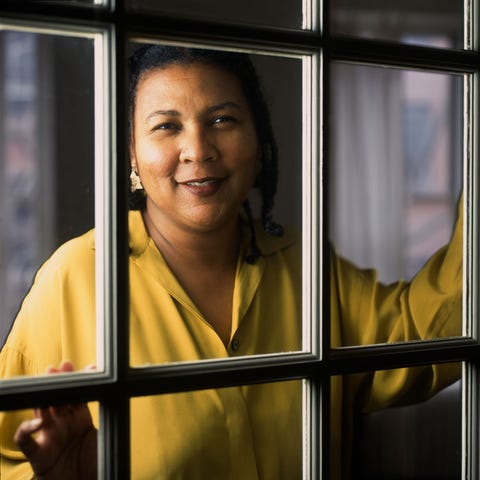
My heart is still heavy thinking about bell hooks’ transition. I was honored, as someone who was profoundly shaped by her passion, her courage, her clear-sighted articulation of the things that keep Black women from soaring — and how to overcome them — were balm for me. She was really an iconic trailblazer. I tried to do her work and life and impact some justice for Oprah Daily. An excerpt is below. You can read it here, or here. I hope she is resting well.

Mourning bell hooks—who died on December 15, 2021, at age 69 after giving us four decades of trailblazing feminist scholarship—means celebrating everything she taught us about what it means to be a Black woman in love with herself and the world, and with the life of the mind. With her passing, there will be one fewer pair of hands holding up Black women—all women—as inherently valuable. For decades she has helped me in my journey to become myself; her legacy will live in my bones, and in the minds and hearts of all she awakened and inspired.

Born Gloria Jean Watkins in Hopkinsville, Kentucky, in 1952, hooks honored her matrilineal line by taking her maternal great-grandmother’s name as her nom de plume in a lowercase version to emphasize “the substance of books, not who I am.” She influenced several well-known luminaries and writers to adopt the same practice. Let us defer to the work of our hands and pay tribute to our elders instead of bowing to tradition and capitalizing ourselves.

Maybe honoring her elders and ancestors played a role in enabling her to speak and write her fame into existence, to hear her family tell it. Like most Southern towns, Hopkinsville, Kentucky, was stratified by race and class; hooks’s father was a janitor, and her mother a maid. “Gloria learned to read and write at an early age and even proclaimed she would be famous one day,” her family said in a statement. “Growing up, the girls shared an upstairs bedroom, and she would always keep the light on well into the night. Every night we would try to sleep, but the sounds of her writing or page turning caused us to yell down to Mom to make her turn the light off.”

Her family went on to say that Gloria always had at least 10 serious books she was reading simultaneously, whether Shakespeare, Little Women, or other classics, which quenched her “great thirst for knowledge, which she incorporated into her life’s work.” Against the backdrop of the great civil rights struggles, she graduated from a newly integrated high school. Her intellectual acumen and writer’s gifts were apparent early, and she majored in English literature at Stanford University, then earned her MA from the University of Wisconsin and her PhD from the University of California at Santa Cruz, where she wrote her dissertation on Toni Morrison.

bell hooks
Karjean Levine, Getty Images

She thrived in the classroom, and her criticism and charisma quickly acquired a following both in and beyond academic circles. I first encountered her during one of my many trips to my local New York library at age 13 and was instantly in awe. Hooks wrote with confident wisdom and ease about topics I had never read from a Black woman’s perspective; she seemed so like me, even if she was from a different part of the country and a different generation. We were kindred spirits.

My dog-eared copy of Sisters of the Yam: Black Women and Self-Recovery was the gateway to reprogramming myself. The microaggressions, the confusing pauses and rudeness that came my way because of my dark skin and natural hair—bell hooks helped me understand that these were the manifestations of social constructs she interrogated, not figments of my imagination. Her writing about writing, the way she mined the role of self-love and self-care: All these things and more marked her as a visionary. Radical, yes, for her positions on racism and patriarchy and capitalism. Radical, too, for attending to the hearts of Black women. For saying that we were not just our work, but we deserved, as much as anyone, our own affection and tenderness. The world would not give it to us, not without a fight.

School Library Connection Author of the Month Interview

SLC Author of the Month

I’m delighted to share a Q&A with School Library Connection as its December Author of the Month. I got to share my love of The Bronx, the story behind Ava Murray’s name in the I Can Write the World series and more about faith, solitude and writing across genres. I hope you’ll check it out. You can read the whole thing here, but I’ve included an excerpt below:


I love the way Ava’s mother uses the window frame to explain how journalists “frame” stories. It seems like so much of our news these days is framed to fit a particular narrative, rather than to express the truth. Why do you think this started to happen, and what can be done to fix it?

Thank you; it wasn’t until I had the great honor of sitting on a panel at the 2019 Bologna Children’s Book Fair with Rudine Sims Bishop, whose beautiful description of books as windows preceded Kim’s description in the book, that I thought more about the significance of how we talk to children (or don’t talk to them) about how stories are framed, or shaped.

I think that it’s fairly recent in society—adjacent and aligned with the rise of social media—that everyone sort of considers themselves a journalist. When you think about it, journalists are witnesses, people who report what they see. So in a way, everybody’s right. What everyone doesn’t necessarily have, though, are the ethics that go along with what professional news gatherers have—this inclination to shine a light on injustice and unfairness. Most news reporters get into the business (and it is increasingly considered mainly a business) with the aims of comforting the afflicted and afflicting the comfortable. But I think the reason why news more often resembles propaganda now has to do with a kind of commodification of truth and certainly of news. Integrity or nobility are less emphasized than they used to be because most media moguls are looking for revenue to survive in an environment where no one thinks they need an intermediary for news.

One thing I think all of us could do more of is to consider how powerful our platforms are, whether you think you have one or not. All of us who write, for example, have presences online. How can we use that to help others share their opinions or their stories more mindfully? Sometimes it’s as simple as asking these questions, which I love and did not originate with me: “Does it need to be said? Does it need to be said now? Does it need to be said by me?” The other thing is if we are all journalists, now, it shouldn’t just be when it’s comfortable or cute, but all the time. Ask more difficult questions. Who is the source of this information? Are they lying to me about their objectivity? Why do I believe them? Why should I believe them? When in doubt, find your own credible sources and go with that.

I Can Write the World at ALA 2019


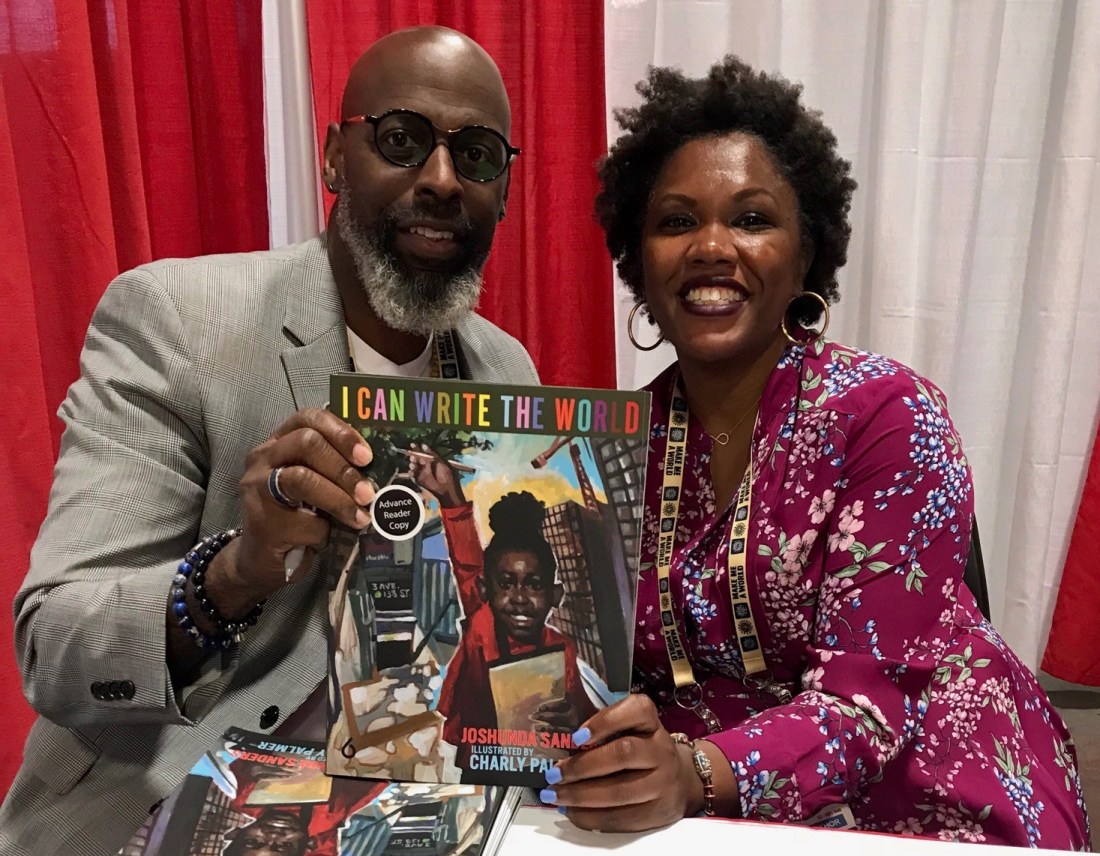
I had a whirlwind weekend launching I Can Write the World at the American Library Association Conference in D.C. Librarians, teachers and others were so receptive to the book that I was the first author in my cohorts to run out of books both on Saturday night at a lovely Ingram reception at Spire and on Sunday afternoon after a great panel discussing the importance of representation in Children’s books. I even got to see a former library professor who popped up in the signing line (thanks for coming by, Stan!).

The most common question librarians had is one that most people ask me, which is “What is this book about?” This comes up right after they say, “Wow, the book is so beautiful!” Which makes my heart sing.

The answer is that I Can Write the World is about 8-year old Ava Murray, who lives in the South Bronx. She is named after the brilliant filmmaker Ava DuVernay and the incredible legal scholar, Episcopalian priest & poet Rev. Dr. Pauli Murray, who created the legal precedent known as Jane Crow and, were the world ready for her in her time, might have had a much easier time accepting what we would call her trans identity in this time.

In I Can Write the World, Ava notices the beauty of the Bronx that she knows and loves is at odds with how journalists often depict her world. On the news, a little girl about her age is fined for tagging, which confuses Ava because she sees the colorful murals around her as making the city more beautiful. Her mother, Kim, explains that journalists are like the window frame around their living room window and they shape what we see when we look out of it. Ava decides that she wants to become a journalist so that she can be just like them and shape the world they see.

The first book in the series has Ava exploring more of hip hop culture and how it came to be through a prose poem. I’m honored to say that one of my writing heroines Jacqueline Woodson has called I Can Write the World, “Lovely and timely.” I hope you will find it to be the same. Thank you so much to everyone who has pre-ordered and shared your thoughts with me about the book. I’d be so grateful if you could also write reviews and spread the word. You can find the book on Amazon, Barnes & Noble and several other outlets.

Next stops for I Can Write the World signings are the Children’s Institute (Ci7) & PrideFest on Sunday — which includes a book giveaway for the first 100 kids.

The 2nd Annual Bronx Book Festival is almost here!

IMG_5029.PNG

I’ve been looking forward to the 2nd Annual Bronx Book Festival now for several months, and I can’t believe June is almost here. VIBE Magazine announced the line up  last week & I’ll be speaking on a panel & reading from my new love, I Can Write the World, which publishes June 15th. (Have you pre-ordered? No? You’re in luck because here’s a link…)

  • Panel: Publishing Debunked
    Time: 11:00 AM – 11:45 AM
    Location: Fordham Plaza Main Stage
    Panelists: Norma Perez-Hernandez (Assistant Editor at Kensington), Joshunda Sanders (I Can Write The World), Queressa Robinson (Literary Agent at Nelson Literary Agency), Alexis Daria (Take the Lead)
    Moderator: Saraciea J. Fennell, founder of The Bronx is Reading
    Description: Join editors, agents, and authors from the Bronx as they debunk the publishing industry for Bronxites.
    Signing: 11:45 AM – 12:15 PM
  • Panel: Indie Power Hour
    Time: 12:00 PM – 12:45 PM
    Location: Fordham Plaza Main Stage
    Description: Join three Bronx-based indie authors as they read from their current works. Readers include Joshunda Sanders (I Can Write The World), Josue Caceres (Bronx Stories & Heartbreak), Yajaira Eduardo (If at First You Don’t Succeed)

And it’s special to me that I’ll be there for a dozen reasons, including that just last year I was writing about the significance of the festival for the Village Voice, fellow Vassar alum and Tight author Torrey Maldonado will also be participating & I’m so proud of  Saraceia for reinforcing her vision of creating a literary community that thrives in the Bronx. I hope you see you there — organizers ask that you register for this free event at this link.


Writing Yourself Well

It makes sense to me that writers don’t agree on whether writing is therapeutic.

For me, it always has been, but for some, writing is just hard and grueling. Writing  has always been a site of pleasure even when I was writing about pain. It has offered me sanctuary and escape, transformation and beauty, solace, comfort and more.

As I’ve gotten older and grown in confidence and experience, writing has started to also offer me joy.

For Black women, especially, who are expected to do so much emotional labor and work in different contexts in this country, joy is a revolution. It is an act of resistance to decide to be well, and to choose joy.

This was hard to do this week, especially. I argued with myself about it, somewhat publicly on Twitter, briefly. I wrestled, privately, with whether I should be sharing. I have been writing, in no particular order, about the historical trauma and chronic stresses that Black women hold in our bodies due to racism; the long and ignored history of Black women’s political participation in this country since before the Nineteenth Amendment; fiction and poetry at the intersection of police violence, mental health, and Black Christian resistance to the full range and humanity of queer identities that literally kill Black women with silence — directly or indirectly.

When I finally stopped; when I realized I was triggered and needed to step away, there was more to be done but there was also a historic spectacle centered on the devaluation of women and patriarchal resentment — where a respectable woman was speaking bravely and an angry, livid, entitled white man was lashing out angrily and I just could not be a witness. I could not do the work of being a witness because I was tired.

I say this not because I want anyone to play any tiny violins for me — my life is wonderful and full and I have privileges that I have been both blessed with and I have worked my ass off for. I say this because I wish when I was younger I would have read, seen and heard more Black women say and model for me what to do when you are depleted.

We have seen with the very public suicides of celebrities what happens when people suffer privately with their demons; but there’s another choice to overwhelm. There’s a proactive answer to overwhelm, to fatigue, to the stress of burnout: Go some place quiet. Fill yourself up. Do what you want to do, for as long as you can, for as long as you can afford to. Do not die, literally or figuratively, at the mercy of what you think other people expect you to perform of your pain.

I’m thankful to have friends and loved ones to affirm me and to affirm this. They save my life. Every day. Every hour. Every moment — often without realizing it. They are constant reminders that I don’t have to expose myself constantly to things that are triggering and nor do you.

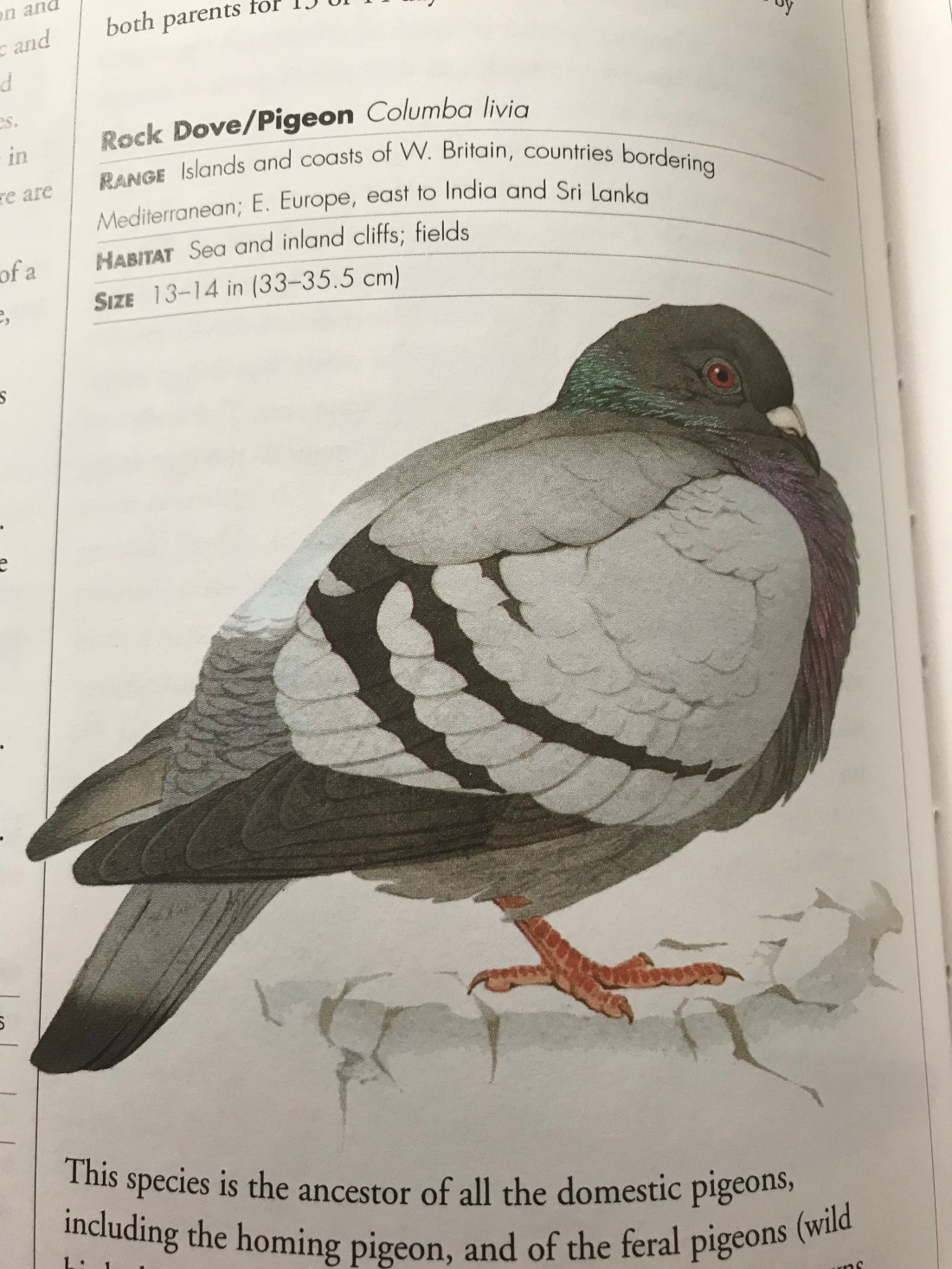
That is a long, precious set up for this essay about pigeons, which I know will seem so random and is a bit different for me. I wanted to laugh and humor myself after exposure to hard things and a ton of hard work, so there you have it.

Yes, hard things are happening, and there is work to be done. But I can still claim joy in some of these moments to write myself well. And you can, too.


Serena & The Humanity of Black Women

It was a gift, especially as I teach the Combahee River Collective statement from 1977 and remind folks that we have been fighting for a long time on behalf of our own freedom not just for the sake of ourselves but so that everyone else can be free, too, to write this for Mic.

It’s more convenient for white sports fans, of course, to turn the healthy, justified rage of black bodies gazed upon for money-making sport into a weapon formed against us. But like Colin Kaepernick, Serena is a generosity. She won’t let anyone or anything make her flat or less complex. Like Shirley Chisholm, she is unbought and unbossed. She contains multitudes. She can be both livid and kind, distraught and sweet, within the same hour.

What audacity, what nerve, that black girl with the big hair and the strong legs and amazing body has, showing up, demanding to be seen as human. What a gift, in this time, in this void of regal reckoning for black or brown bodies anywhere but fictitious worlds, that we get to witness Serena’s humanity unfurl, unedited.

Farewell, Queen Aretha

This summer was the second in a row I got to teach writing with one of my favorite groups on earth, Young Women Empowered. Y-WE Write has educated me about what it means to foster brave space with young people, how to be vulnerable as a creator and writer and teacher, how to find my process through explaining it, which parts of my story are most beneficial to share with this generation of young writers now. It has been held at Whidbey Institute, on Whidbey Island, which is also home to the writer’s residency Hedgebrook. For this reason, the Pacific Northwest has become my healing sanctuary, place where I have been shielded from hard things in recent years.

So it was with a heavy, heaving heart that I peeked at the news to take note of Aretha Franklin dying while I was there. I got there almost two weeks ago Sunday, and spent the full week waking in the morning to some of my favorite songs, trying to articulate what she meant to my life. Before she died that Thursday, one of my students asked a question about how you keep from feeling like so many people are writing about something or someone that anything you write might be inferior — and I could hear their voice in my head as I read and bookmarked long articles and obituaries for Aretha, wondering what, if anything there was left to say.

When I was done showing up for the young women I came there to teach, as we mourned and celebrated Aretha together; after I cried leaving them and they offered me such sweet, adoring words of affirmation and I flew to Newark on a red-eye, landed, drove 2.5 hours to the middle of Pennsylvania for a two-day workshop to discover a really significant shift to my work in progress that will make it soar in a way that I could have never found on my own (Thank you Highlights Foundation!!) drove 2.5 hours back to New York City after being away from home 10 days, attended an all-day faculty orientation the following day that left me with just enough mental energy to finish writing what I needed to, I was able to write this piece about Aretha Franklin and what she means to me, and what I believe she means for Black women, in particular.  It was important to write not because I felt like I needed to write about Aretha because other people were writing about Aretha, but because I wanted to read work about Aretha that centered what I know other Black women would want to read and see lifted up about the Queen of Soul as we prepare for her homegoing.


My Backstage Cover Story on John David Washington & Black KkKlansman

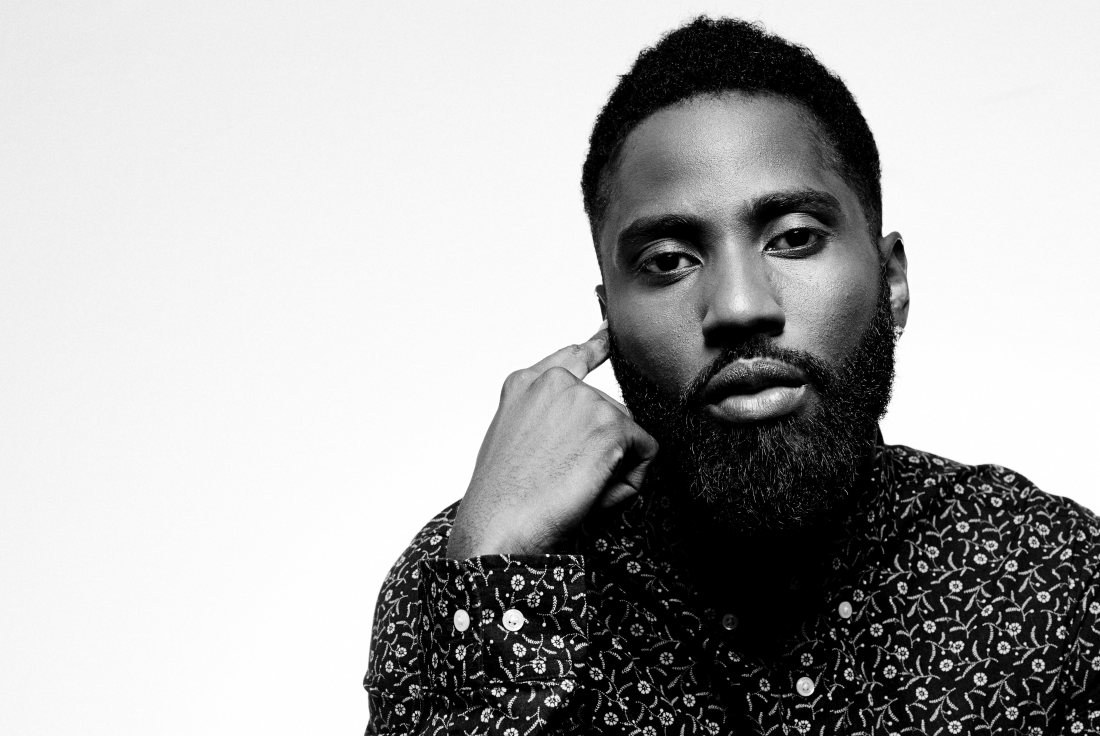
I loved talking about acting and craft with John David Washington for Backstage magazine in what I hope will be the first of many cover stories. He’s humble and wise, and I especially appreciate how thoughtful he is regarding process — how important it is to honor yours as an artist. It’s true for actors and true for writers. He’s also excellent as the leading man coming into his own in Black KkKlansman which is one of Spike Lee’s best.

John David Washington has been eyeing the big leagues for years.

First, it was the NFL. At Morehouse College, he received a full athletic scholarship and set records as a running back. Later, he would play for the United Football League and excel as an undrafted free agent for the then–St. Louis Rams. But even after two years of training with the pros, come Sunday game time, he’d still never touched the field. He had the chops, but never managed to move off the practice squad to reach the star-making level of a pro.

To be clear, Washington is not the kind of person who craves undue credit. He’s humble, driven, and, above all, enjoys doing the work. So when an Achilles tendon injury during a New York Giants tryout put an end to his football career—after a number of already ego-crushing rejections from the NFL—Washington decided to take his work ethic elsewhere. Surgery was an option, but the time out of commission had him on the brink of depression, and he had already cleared space in his mind for another industry: Hollywood. After this summer, it seems the switch will have paid off; Washington is on the path to being a bona fide star.

When your greatest shame is also what makes you free

The spring before I left the Bronx to go to boarding school, to accept a scholarship that would change the entire trajectory of my life, I had an abortion. I was 15.

I was raised a devout Catholic; I’ve always been a deeply spiritual person. But I also had been so desperately lonely for such a long time. My high school boyfriend was a dumb ass and so was I. But he was lonely, too, in a different way. Poverty, violence, rage: They make you want the instant gratification it seems that sex can provide when you’re young.

I got pregnant not long after my mother had a manic episode during which she threatened to kill me. I’d run away from home to my best friend’s apartment in the projects as a temporary solution, to gather my thoughts. That was the weekend, when I was 14, that I first had sex. Looking for safety, a home, somewhere, with someone.

I had been keeping a journal daily for at least six months up to that point. When I told social workers I’d applied to boarding school, that I didn’t want to go home because it wasn’t safe, but I just needed a few more months to figure something out, they told me I could go to a group home, but it was unlikely that I could go to boarding school from any group home.

Reluctantly, I returned home. When she tried to hit me again, I held her wrists. “The next time you hit me, I will hit you back.”

It was a small win compared to what came next, which was that she found my journal, which, because I was an idiot, detailed how ambivalent I was about a future I didn’t know I could believe in. On one hand, I believed that if I had a baby, my boyfriend would always have to love me, and it would mean on some level that at least two people — he and the child — would have to love me. Right?

On the other, I have never wanted to be a mother. I have seen what this world does to Black babies. I am named for one who was killed at 12. A day does not pass when one is not harassed, though these days, it feels lucky that they are not murdered.

My mother’s discovery of my journal triggered our visit to Planned Parenthood, where she recited her rosary, loudly, while we waited to see the doctor. This was, for the doctors, a red flag, that she would be so bold. They saw us separately — in retrospect, I don’t know if this was legal or not. Is it safe, they wondered, to tell her that you’re pregnant?

“Absolutely not,” I said, shaking my head.

When they called her in, they lied to her. I lied to her on the day that I went to have the abortion with one of my Catholic school classmates. I have never cried so much or so hard in my life as I did as I mourned my deepest shame.

By then, the packet of summer reading for my first year at the new elite school had arrived in the mail. I had stopped writing things down. I was going to read my way to my future.

Continue reading “When your greatest shame is also what makes you free”