Finding Sanctuary & Tribe at Sababa

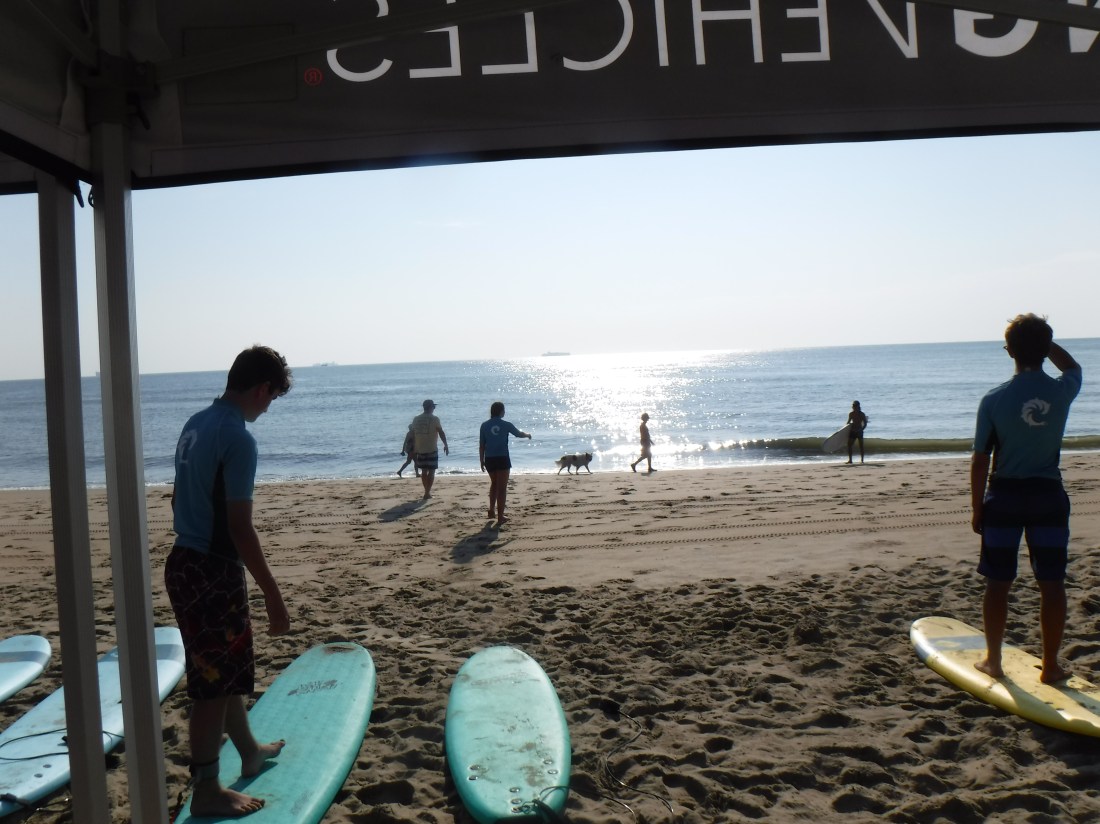
Remember how I said I was having a busy summer, writing all the things? I *was* writing all the things. But I was also revisiting some of the really fun days of my youth by working as Camp Storyteller at Sababa Beachaway in its inaugural season at Old Dominion University. I wrote about it on Medium. I hope you enjoy it. It was a transformative experience to get to witness, and to get to heal a part of myself I didn’t realize was in need of such repair. Here’s a snippet:

Summer camp is, at its heart, an embrace of the best parts of childhood. Your needs are taken care of, even if what you want is another story. Hopefully you make more bonds than you do enemies. You learn things you didn’t know before you showed up, try on a different way of being to see if it matches who you are today, who you want to become tomorrow and maybe after that. You discover the things you never want to try again, usually by failing.

Most everyone around you fails at whatever it is you’re trying differently but in tandem — whether that’s an icebreaker or learning a new skill; You rise and fall and laugh and cry and sleep and lose sleep and get drenched by summer rain and crush hard on one of your camp counselors and write home and make bracelets out of multicolored strings and nothing matters as much as this moment except for the next moment which is so much more fun.

I envy the privilege of being a kid, though I don’t know I was ever afforded the innocence that comes with it, given the body I was born into. Once the innocence is gone, its absence feels permanent, like you can never get it back. Adulthood is the unrelenting weight of knowing, context, responsibility…

(As Camp Storyteller at Sababa) I tried to imagine being a pre-teen or a teenager in the world of today, trying to disconnect from the incessant chatter of the world for even 24 hours straight, then not only learning how to answer the call of the ocean by attempting to surf (I didn’t get a chance to try) but also learning more about how to become more of myself through seeing myself reflected in a community that both saw and affirmed me during this two-week journey.

One of the first items I received and cherished, aside from my trusty waterproof camera, was my Siddur Sababa, which on its cover outlines the Sababa values: To be stoked by fire, propelled by water, nourished by taking only the food that we need and to find balance in the shelter and sanctuary of one another.

Within days of being at Sababa, I felt like I had found some of my people, even as an adult orphan that still struggles sometimes with belonging especially to new groups of people. Before I knew it, the smallest campers — 10 years old and pretty talkative — were among the first to befriend me. (This is a good time to mention that I actually find kids to be the most intimidating, scariest humans of all — they are fragile, they see everything, they know stuff they maybe can’t articulate with big words like adults can, but they break so easily and also they don’t filter anything. They are the bravest, the most honest, the most in need of our protection. They make my nerves so bad because I worry about them more than anything else.)

Each of them offered me presents of found dimes, artful photographs of “big fat fluffy sea birds” (you likely refer to them by their technical names: Seagulls) and an education in competitive ballroom dancing.

I realized just sitting in conversation with them that they were free.

What would it mean, I wondered, to be free most of the time from the perceived, unrelenting social expectation to be perfect? I think for most adults we just assume that’s a wash and we have to be in the game, but for kids, there’s still some hope. Would they not find incredible benefits now, as their identities are still taking shape, and they are deciding who they most want to be in the world, in learning how to disconnect from the endless echo chamber of comparison and social media performance?

DSCF5771


Vote for my SXSW 2019 Panel, “Content is a Dirty Word: Rebranding Creatives”

Hello from the land of working while most people are on vacation or trying to avoid the heat or some combination of both (or is this my imagination?)

It’s been five years since I presented at South by Southwest Interactive with my late mentor and friend, Dori Maynard about the business imperative for diversity — which happened the same year I gave the TED Talk embedded in the link to my new proposal for a 2019 SXSW Panel, Content is a Dirty Word.

I’d love your vote to send me back to Austin, home away from home, to offer up some tips on how storytellers, journalists and writers can support themselves through the seismic changes in the traditional & digital landscape, and some strategies for positioning oneself sustainably in the confusing and low-paying content eco-system. You can vote for the panel at this link.

SXSW2019_PanelPickerVoting-IG

Thank you in advance for your help! Spread the word!


My Backstage Cover Story on John David Washington & Black KkKlansman

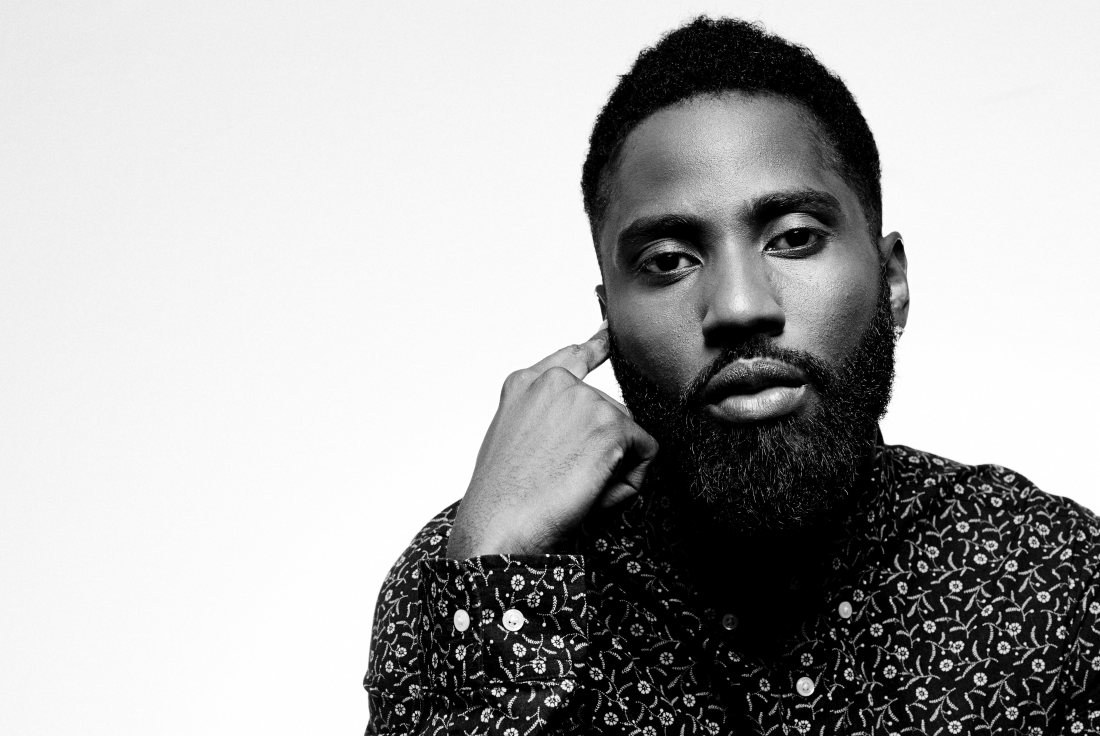
I loved talking about acting and craft with John David Washington for Backstage magazine in what I hope will be the first of many cover stories. He’s humble and wise, and I especially appreciate how thoughtful he is regarding process — how important it is to honor yours as an artist. It’s true for actors and true for writers. He’s also excellent as the leading man coming into his own in Black KkKlansman which is one of Spike Lee’s best.

John David Washington has been eyeing the big leagues for years.

First, it was the NFL. At Morehouse College, he received a full athletic scholarship and set records as a running back. Later, he would play for the United Football League and excel as an undrafted free agent for the then–St. Louis Rams. But even after two years of training with the pros, come Sunday game time, he’d still never touched the field. He had the chops, but never managed to move off the practice squad to reach the star-making level of a pro.

To be clear, Washington is not the kind of person who craves undue credit. He’s humble, driven, and, above all, enjoys doing the work. So when an Achilles tendon injury during a New York Giants tryout put an end to his football career—after a number of already ego-crushing rejections from the NFL—Washington decided to take his work ethic elsewhere. Surgery was an option, but the time out of commission had him on the brink of depression, and he had already cleared space in his mind for another industry: Hollywood. After this summer, it seems the switch will have paid off; Washington is on the path to being a bona fide star.

On Rest in Power: The Trayvon Martin Story & Memoirs on the Movement for Black Lives

I’ve been reading some of the beautiful and important memoirs of the Movement for Black Lives that are forthcoming from Black feminists like Barbara Ransby & Charlene Carruthers as well as screening Rest in Power: The Trayvon Martin story, which begins airing tonight on the Paramount Network, since the end of June. I wrote about the docuseries, as well as the books, for the Village Voice:

“They say that time heals all wounds. It does not,” observes Sybrina Fulton, Trayvon Martin’s mother, in Rest in Power: The Trayvon Martin Story. “Had the tragedy not been so public, I probably would have taken more time to grieve, but I wasn’t given that type of privilege.”

The six-part documentary series, produced by Jay-Z and the Cinemart, begins and ends as it should, with the murdered seventeen-year-old’s parents. Over the course of subsequent episodes, the audience hears a series of 911 calls from Martin’s killer, George Zimmerman, the aspiring police officer who became neighborhood watch captain in his previously exclusive gated community in part to live out a racist vigilante fantasy.

Rest in Power establishes a pattern of behavior from Zimmerman: He calls the cops so frequently on Black children who moved to his neighborhood after the 2008 economic crisis that dispatchers know his voice and refer to him by his first name.  Yet, as the series documents, it still took more than forty days, not to mention the intervention of media-savvy civil rights attorney Benjamin Crump, for Zimmerman to be arrested and charged with Martin’s fatal shooting, and to get the killing reported in context by the media.

Martin’s death was the first real major convergence of race and policing in President Barack Obama’s presidency after the euphoria of post-racial liberalism had worn off. In Rest in Power, we see Obama graying at a rapid pace, weary, saying that if he had a son, his son “would look like Trayvon.” He doubles down and says that, put another way, he could have been Trayvon Martin when he was younger. As author Mychal Denzel Smith puts it in an interview, it becomes clear that there will always be more Trayvon Martins than Barack Obamas.

Rest in Power captures this monumental moment in American resistance with moving detail, showing scenes from protests around the country. And forthcoming soon are some additional invaluable histories of this period that provide a broader picture of the modern articulation of Black protest and mobilization in response to racist and vigilante violence.

These books are particularly remarkable because all too often, the narratives of resistance that do exist are positioned as though cisgender heterosexual men have always been at the forefront. As these works demonstrate, Black women have been the unsung architects of many of these protest movements — and they have only recently started to get their due.

Indeed, as we see the signs of hate rising all around us today, it becomes clear that Black women tried to warn us. Khan-Cullors notes this in When They Call You a Terrorist, writing on how she and her co-founders of Black Lives Matter as a movement were nearly erased from early reporting: “Despite it being a part of the historical record that it is always women who do the work, even as men get the praise — it takes a long time for us to occur to most reporters in the mainstream. Living in patriarchy means that the default inclination is to center men and their voices, not women and their work.”

That is true both for how she situates the BLM founders in relation to Martin’s case and for how she writes about the uprising in Ferguson, Missouri, after unarmed teen Michael Brown’s shooting by police officer Darren Wilson. In a chapter dedicated to activism in Ferguson, Ransby profiles Black feminist organizers, including Darnell Moore, Kayla Reed, Brittany Ferrell, Alexis Templeton, and Jamala Rogers.

“When I suggest that the movement is a Black feminist-led movement, I am not asserting that there was no opposition and contestation over leadership, or that everyone involved subscribed to feminist views,” Ransby writes. “Nevertheless, when we listen carefully, we realize that the most coherent, consistent, and resolute political voices to emerge over the years since 2012 have been Black feminist voices, or Black feminist-influenced voices.”

Summer Music & Magic

I’ve been more quiet than usual because I’ve been dusting off my photography/summer counselor skills at Jewish surf camp (!) [more on that later, obviously] interviewing my share of incredible writers for Kirkus Reviews, reading and watching and reporting all of kinds of other things for other stories, finishing up my work in progress draft, for which I am in the final stages (last push! OMG!) and trying to find the essence of this thing they call the “summer slow down” (Have you seen it? Is it really real?)

Anyway, when the rest of the world is back to school and on a more regular schedule, I suppose I will be, too. In the meantime, I wrote this piece about the dynamic poet JP Howard, a Harlem native in Brooklyn and fellow VONA/Voice Workshop alum for Literary Hub, which posted today. I also spent some time writing this other piece for Bitch Magazine about my favorite albums from 1998, which I can’t even believe was 20 years ago!

I hope you’re enjoying your summer. How are you spending it out there?

When your greatest shame is also what makes you free

The spring before I left the Bronx to go to boarding school, to accept a scholarship that would change the entire trajectory of my life, I had an abortion. I was 15.

I was raised a devout Catholic; I’ve always been a deeply spiritual person. But I also had been so desperately lonely for such a long time. My high school boyfriend was a dumb ass and so was I. But he was lonely, too, in a different way. Poverty, violence, rage: They make you want the instant gratification it seems that sex can provide when you’re young.

I got pregnant not long after my mother had a manic episode during which she threatened to kill me. I’d run away from home to my best friend’s apartment in the projects as a temporary solution, to gather my thoughts. That was the weekend, when I was 14, that I first had sex. Looking for safety, a home, somewhere, with someone.

I had been keeping a journal daily for at least six months up to that point. When I told social workers I’d applied to boarding school, that I didn’t want to go home because it wasn’t safe, but I just needed a few more months to figure something out, they told me I could go to a group home, but it was unlikely that I could go to boarding school from any group home.

Reluctantly, I returned home. When she tried to hit me again, I held her wrists. “The next time you hit me, I will hit you back.”

It was a small win compared to what came next, which was that she found my journal, which, because I was an idiot, detailed how ambivalent I was about a future I didn’t know I could believe in. On one hand, I believed that if I had a baby, my boyfriend would always have to love me, and it would mean on some level that at least two people — he and the child — would have to love me. Right?

On the other, I have never wanted to be a mother. I have seen what this world does to Black babies. I am named for one who was killed at 12. A day does not pass when one is not harassed, though these days, it feels lucky that they are not murdered.

My mother’s discovery of my journal triggered our visit to Planned Parenthood, where she recited her rosary, loudly, while we waited to see the doctor. This was, for the doctors, a red flag, that she would be so bold. They saw us separately — in retrospect, I don’t know if this was legal or not. Is it safe, they wondered, to tell her that you’re pregnant?

“Absolutely not,” I said, shaking my head.

When they called her in, they lied to her. I lied to her on the day that I went to have the abortion with one of my Catholic school classmates. I have never cried so much or so hard in my life as I did as I mourned my deepest shame.

By then, the packet of summer reading for my first year at the new elite school had arrived in the mail. I had stopped writing things down. I was going to read my way to my future.

Continue reading “When your greatest shame is also what makes you free”

On Black Independence & the Fourth of July

download-1.jpg

Black folks call Juneteenth the Black Fourth of July because it was the birth of our nation, a fact that King Beyoncé — the force of nature and Black woman genius I have admired as she has continued to evolve over the years — had to have known when her collaboration with Jay-Z, “Everything is Love” dropped just days before this celebration of Black freedom.

After scrambling for no good reason to get Tidal because it was quickly released on Apple Music (grrrrr) I wrote about it for Harper’s Bazaar, though because of all of the other things happening in the news cycle, the Juneteenth context fell away.

Juneteenth is the day the rest of American slaves in Texas learned about their freedom in Galveston, more than 2 years after Lincoln signed the Emancipation Proclamation, in 1865. When I was younger, I wondered why Southerners, and increasingly, others, would celebrate a late coming into one’s freedom.

As Black bodies — children included — are literally policed by white women and others whose fragility and backwards politics have become the presiding expression of patriotism as led by our president, this year, especially, it feels important to reiterate how important images and reminders of Black freedom are. It does not always feel true, because black people keep dying. We keep turning into hashtags. We continue to have to fight from being erased from stories about what America is, what it has been and what it will become.

Juneteenth, this year, reminded me that even liberation postponed is worthy of celebration. Even if America sometimes confuses me, feels hostile toward me and people who look like me, I never tire of the Fourth of July. The universal promise of independence and freedom is infectious. Even nightmarish people can’t snatch the dream of America from me — that you can shape a life in community, even if meritocracy is not the whole truth of how one can do that, always.

The Fourth of July is one of my favorite holidays even though I detest the heat of summer (I’m a winter baby, can’t help it.) Juneteenth, and what it must have meant for our ancestors, is quickly becoming another favorite. Because in times like these, it’s harder to take freedom for granted. It’s easy to see how one day the greedy, heartless power mongers might try to just snatch that from any of us.

Here’s some of what I wrote for Harper’s. If you have some time during what I hope will be a luxurious vacation or some slow down time, I hope you’ll have a read and tell me what you think. Happy Fourth of July!

In her biography of Sojourner Truth, Nell Painter writes about the slave mentality and how it didn’t occur in a vacuum:

“Its characteristics—a lack of self-confidence, personal autonomy; and independent thought; a sense of one’s own insignificance in comparison to the importance of others; a desire to please the powerful at any cost; and finally, a ferocious anger that is often turned inward but can surge into frightening outbursts—are precisely the rants of vulnerable people who have been battered.”

Everything Is Love celebrates the hard-won absence of these qualities 153 years after the Emancipation Proclamation declared all enslaved persons free. One way of gauging how free The Carters are on Everything is Love is comparing them to Painter’s definition.

Stolen Youth

JoshundaSandersasaChildcirca1984
Me as a little girl, sometime in the 1980s

June 25th should be Tamir Rice’s birthday, but he was killed in 2014 by police officers who thought he was grown, they said. I have read accounts that say the call to 911 was from someone who said she thought she saw an adult. He was 12.

Tamir’s mother held a Sweet Sixteen party for what would have been the beginning of his rite of passage into his becoming a young man. Black mothers, especially, have had to learn how to transform the dehumanizing separation of us from our children — permanently or temporarily —  into something less tragic for a long time.

Had Tamir survived, like Antwon Rose, like so many other of our children whose youth is taken from them, he would have had to battle for the rest of his life to overcome what health experts call Adverse Childhood Experiences (ACES) or the kind of trauma that some children survive that shows up in mental and physical health problems that can last for the rest of their lives.

This heartbreaking story about a father separated from his 6-year-old daughter evoked in me the memory of being taken from my mother in the same way that Tamir’s death and the death of young black people often has. In my case, it was foster care, and probably necessary, because of neglect.

I was 5 when I was sent on a year-long journey through the homes of strangers in the Philly area. Around 6 years old when I was returned to her and we arrived in New York. I don’t remember much of that year, in part because I was young. I know that there are formative things that children learn from their parents that I did not — how to ride a bike, brushing my teeth twice a day, eating the right kind of foods in the right amounts — that year. I remember feeling as if the entire world was unsafe from the moment I was taken from my mother’s home and placed in a strange environment without any understanding of when — or if —  I could return.

I don’t think it’s the kind of thing you ever really recover from. It took me many years of therapy and incredible friends and faith to get even close to healing and I’m not all the way there.

No matter what happens now, the hundreds of children who were stolen from their parents have had their lives irreparably changed to prove one man’s political point.


But just like it’s a privilege to grow old and to grow up, it’s also a privilege to have the humanity extended to you to be allowed to be a child. When the humanity of children is recognized, we protect them. We show them that the world is safe for them to grow in, that we will give them room to be and flourish, that they will not have to live in spite of their wounds, they will not have to begin their lives by overcoming the traumas of their beginnings.

The hardest stretch of time, after all, is between when we are young and when we find out who we are supposed to become, if we ever get a chance to get to the latter or if we ever get to be the former.


My 2004 interview with Octavia Butler

“I’m black. I’m solitary. I’ve always been an outsider.”

This is how Octavia Butler described herself, the first self-possessed Black woman writer introvert, I had the honor of writing about for publication. Actually interviewing her was one of the great honors of my life, two years before her death in 2006. I wonder what she would have made of this beautiful Google Doodle, which I was delightfully surprised to see this morning before I went to sleep.

OctaviaButlerGoogleDoodle71

I was 26 when I interviewed her and Octavia Butler was the first person of consequence who was meaningful to the culture that I would interview. That year, I would also meet my mentor, and interview other influential Black women writers and scholars who inspired me to keep writing, even if they may not have been aware that’s what they were doing in the moment.

What I found most delightful about Octavia Butler was how unimpressed she was with herself and her habits. She had so many gifts that she shared with us, and so much wisdom. Our elders can see ahead on the path, can keep us from making mistakes we don’t need to.

I’ll always be so grateful for how generously kind she was with me, even though I was so clearly new at interviewing writers. I greatly respected how she wove stories even when she was talking about the most mundane things – we were discussing her first visit to New York, for instance, when she described the stamina you need to do something physical as akin to the writing life: “I think climbing mountains or buildings or whatever has been a really good metaphor for finishing my work. Because no matter how tired you get, no matter how you feel like you can’t possibly do this, somehow you do.”

Even if our culture only values what we can see at this moment, what they offer us is information about coping with the hard things in life – in the past, in what they imagined the future to be – that can tell us much more than any anxiety might be able to.

Here’s the whole interview, as republished by In Motion Magazine from Africana.com:

Interview with Octavia Butler

“… one of the few African American women writing
in the male-dominated science fiction genre”

by Joshunda Sanders
Oakland, California

Octavia Butler is one of the few African American women writing in the male-dominated science fiction genre. The worlds she creates with her pen are groundbreaking, powerful multicultural revisions of history; sometimes frightening and complex visions of the future. The author of twelve books and an award-winning collection of short stories, Butler was also the recipient of an esteemed MacArthur Fellowship grant in 1995 — the only science fiction writer on a list of more than 600 names in the last 20 years. She’s also won the most esteemed awards in the genre: the Hugo and Nebula wards for her books and short stories.

While she has referred to herself simply by saying, “I’m black. I’m solitary. I’ve always been an outsider,” Butler, 56, manages to render the emotional lives of her characters like an insider. It is a talent that she attributes to her life’s journey — she challenges her readers to confront themselves in spite of their circumstances and often, because of them.

The only living child of a shoeshine man and a maid who grew up a bookworm and loner in Pasadena, California has crafted the universe according to Octavia Estelle Butler since she was four; though she didn’t start making a living at it until she was older. Before she embarked on a professional writing career, she took writing classes, did odd jobs — from telemarketing to sorting potato chips — before she sold her first novel, Patternmaster, in 1976. Currently, she is on tour, celebrating the 25th Anniversary of the publication of Kindred — the story of a modern day woman who is transported back to the antebellum South to save her white ancestor. Her most recent works, two short stories entitled “The Book of Martha” and “Amnesty,” are online at www.scifi.com.

Joshunda Sanders: You grew up in Pasadena, California? What made you want to move to Seattle?

Octavia Butler: I went to Seattle for the first time in 1976. My first novel was published then, and that meant that I could take my first vacation. I got on a Greyhound bus and took a Greyhound Ameripass tour, which means that for a month I could go wherever I wanted to on Greyhound. There were a lot more buses then, so it was nice. Now I’m not sure it would be, because they get into so many places in the middle of the night and they leave in the middle of the night. So, it’s kind of inconvenient. But anyway, I went to Seattle, among other places. I went first to New York, because I’d never been there and I wanted to go.

Joshunda Sanders: What’d you think of New York?

Octavia Butler: I had a great time there. I met this West Indian woman, we were both going to the Statue of Liberty. She was wearing these thick-soled sandals, really uncomfortable shoes. We were both going to go to the top of the Empire State Building. Now, with me, my only excuse is that I’m not in shape, and wasn’t then. And with her, it was her feet. We’d encourage each other back and forth going to the top. And finally made it.

I think climbing mountains or buildings or whatever has been a really good metaphor for finishing my work. Because no matter how tired you get, no matter how you feel like you can’t possibly do this, somehow you do.

I hiked down not quite to the bottom of the Grand Canyon because I only had that one day, it was part of the same trip. I discovered that I didn’t really like going to cities, so I went to National Parks. And I hiked almost to the bottom and I realized that the bus was going to leave me if I didn’t get myself back up. Now it’s easy going down, but coming back up…and I did it c ompletely unprepared. So, I didn’t have any water… this is not sensible and I don’t think anyone should do it. I didn’t have anything except maybe some candies like this [she holds up a peppermint candy] because they tend to live at the bottom of my bag. And I kept thinking, “How embarrassing, and how humiliating it would be if somebody had to come get me.” I mean, it really hurts to walk that much if you’re out of shape and not used to it.

Joshunda Sanders: Why did you think you could do it?

Octavia Butler: It never occurred to me. I didn’t know what I was doing. I mean, it was a totally silly thing to do. And I kept trying and I would push myself. Part way down and part way back the only water was when it began to rain. And then it began to rain sideways and it plastered mud all down the front of my body. But I got back up on my on two feet, which really hurt by the time I got back up. And it’s sort of like writing.

When I went to Peru, I climbed Huayna Picchu, the taller of the two peaks you see when you see Machu Picchu. It’s an easy climb for anyone who is okay, you know. I mean, even if you’re not in very good shape. But I managed to hurt my knee hiking. I kept saying, this is high enough, this is high enough, why don’t I go back down? I got all the way to the top, crawled through the little cave and got to the top of the mountain and came back down. That’s what I mean. It’s a good metaphor for writing, because there will always come a time in writing a novel for instance, a long undertaking like that, when you don’t think you can do it. Or, you think it’s so bad you want to throw it away. I tell the students that there comes a time when you want to either burn it or flush it. But if you keep going, you know, that’s what makes you a writer instead of an “I wish I was a writer.”

I had a dentist when I was down in Pasadena and he knew I wrote and I had given him a couple of my books. And his attitude then was, “Well, writing is so easy even she can do it, so I’ll do some writing.” And he wrote the most appalling piece of…well. Truly bad. And he gave it to me to read. And I should have said, well, for legal reasons I don’t want to read your work, but I did him a favor and read his work. But what I had to say about it, as gently as I could say it, was, “Let this be an exercise, go take a class, here are some of the problems you might want to work on.” Very gently. But I never really wanted to let him at me with a drill again after that. So it cost me a dentist. But that was his attitude, you know, if I was doing it, it must be easy and anybody could do it.

Joshunda Sanders: A lot of people have that attitude about writing, but one of the things that strikes me about your work in particular is that it’s so complex that I don’t understand how people could come to you with that sort of cavalier attitude.

Octavia Butler: I don’t think they see it that way. I think their attitude has more to do with me than with the work. Just me, as a black, as a woman, or as a woman who doesn’t look as though she could do anything terribly complex.

Joshunda Sanders: That doesn’t frustrate you?

Octavia Butler: Oh, I’m doing okay.

Joshunda Sanders: What is it that fascinates you about books?

Octavia Butler: My big problem is my mother gave me this gene — there must be a gene for it, or several perhaps. It’s the pack rat gene, you know, where you just don’t throw things out. I haven’t thrown books out since I was a kid. I gave some books away when I was a little girl. My mother said I could give some to the Salvation Army. I gave some to a friend, and her brothers and sisters tore them bits. That was the last time I gave books away in large amounts. I just keep stuff. I still have books from childhood.

Joshunda Sanders: That’s a blessing.

Octavia Butler: It comforts me. I imagine when I’m dead someone will have a huge yard sale or estate sale and I don’t care! Some of them are worth something. Even my comic books — I have first editions of this and that, the first issue of the Fantastic Four. I used to collect them, not in the way that people collect things now. I didn’t put them in plastic bags and never touch them. I read them and they looked pretty bad, some of them. But they’re still worth something just because they are what they are.

Joshunda Sanders: How has your childhood affected your work?

Octavia Butler: I think writers use absolutely everything that happens to us, and surely if I had had a different sort of childhood and still come out a writer, I’d be a different kind of writer. It’s on a par with, but different from, the fact that I had four brothers who were born and died before I was born. Some of them didn’t come to term, some of them did come to term and then died. But my mother couldn’t carry a child to term, for the most part something went wrong. If they had lived, I would be a very different person. So, anything that happens in your life that is important, if it didn’t happen you would be someone different.

Joshunda Sanders: People attach a lot of titles to you –

Octavia Butler: Please don’t call me the grand dame. Someone said it in Essence and it stuck.

Joshunda Sanders: You’re annoyed by it?

Octavia Butler: Well, it’s another word for grandmother! I’m certainly old enough to be someone’s grandmother, but I’m not.

Joshunda Sanders: What about the science fiction or speculative fiction titles attached to your work?

Octavia Butler: Really, it doesn’t matter. A good story is a good story. If what I’m writing reaches you, then it reaches you no matter what title is stuck on it. The titles are mainly so that you’ll know where to look in the library, or as a marketing title, know where to put it in the bookstore so booksellers know how to sell it. It has very little to do with actual writing.

Joshunda Sanders: Have you found that it intimidates African Americans, in particular?

Octavia Butler: No. I think people have made up their minds that they don’t like science fiction because they’ve made up their minds that they know what science fiction is. And they have a very limited notion of what it is. I used to say science fiction and black people are judged by their worst elements. And it’s sadly enough still true. People think, “Oh, science fiction, Star Wars. I don’t like that.” And they don’t want to read what I’ve written because they don’t like Star Wars. Then again, you get the other kind who do want to read what I’ve written because they like Star Wars and they think that must be what I’m doing. In both cases they’re going to be disappointed. That’s the worst thing about verbal shorthand. All too often, it’s an excuse not to do something, more often than it’s a reason for doing something.

There isn’t any subject you can’t tackle by way of science fiction. And probably there isn’t any subject that somebody hasn’t tackled at one time or another. You don’t have the formulas that you might have for a mystery, or even a romance. It’s completely wide open. If you’re going to write science fiction, that means you’re using science and you’ll need to use it accurately. At least speculate in ways that make sense, you know. If you’re not using science, what you’re probably writing is fantasy, I mean if it’s still odd. Some species of fantasy…people tend to think fantasy, oh Tolkien, but Kindred is fantasy because there’s no science. With fantasy, all you have to do is follow the rules that you’ve created.

Joshunda Sanders: There are so many parts of the Parables, for instance, that seem to echo what’s happening in the world right now.

Octavia Butler: Keep in mind that when I wrote them, Bush wasn’t president. Clinton had yet to be reelected. When I wrote them the time was very different. I was trying not to prophesize. Matter of fact, I was trying to give warning.

One of the kinds of research I did was to read a lot of stuff about World War II. Not the war itself, but I wanted to know in particular how a country goes fascist. So, I have this country, in Parable of the Sower, and especially Parable of the Talents, sliding in that direction. And I really was not trying to prophesize that somehow we would do that but…

Joshunda Sanders: Is it jarring to you, with the new mission to Mars and such?

Octavia Butler: Oh, no, I don’t see any reason to pay attention to that. I don’t think Bush is any more serious about Mars than he was about getting rid of some of our emissions in the atmosphere. It’s just something he said and probably forgot it a moment later. Or will eventually. Because, after all, it’s not something that’s supposed to happen while he’s still in office. It can’t. So I don’t think we need to really pay any attention to that.

Joshunda Sanders: You came of age when there was an actual space race, but my generation is a little removed from that.

Octavia Butler: I think of the space race as a way of having a nuclear war without having one. I mean that literally. We had a competition with the USSR and from that competition came a lot of good technical fallout. We learned a lot of things we hadn’t know before, even things that apply to weapons systems and yet we didn’t wipe each other out. I mean, there were people who thought a nuclear war would be a cool idea. During the early part of the Reagan era, there were people who thought we could win a nuclear war and rid ourselves of the Soviet Empire. I thought they were nuts, but they were there. And Reagan got into office in spite of the fact that he thought a nuclear war was winnable.

Joshunda Sanders: That’s heavy stuff.

Octavia Butler: I got my idea for the Xenogenesis books (Dawn, Adulthood Rites and Imago) from Ronald Reagan because he was advocating this kind of thing. I thought there must be something basic, something really genetically wrong with us if we’re falling for this stuff. And I came up with these characteristics. The aliens arrive after the war and they tell us that we have these two characteristics that don’t work and play well together. They are intelligent, and they tell us we’re the most intelligent species they’ve come across. But we’re also hierarchical. And I put this after the big war because it’s kind of an example. We’ve one-upped ourselves to death, just our tendency to one-up each other as individuals and groups, large and small.

It has a greater consequence if you combine it with intelligence. If what you have is two elk fighting over who’s going to make the food, I mean, the consequences to them…but if you’re going to have somebody sending people off to war for egotistical or economic reasons, both hierarchal sorts of reasons, you end up with a lot more dead people. When you’re throwing nuclear weapons in the pie, which is what we were doing back then, you end up with more dead people than any war before. It could have been very bad.

Joshunda Sanders: Do some of your ideas disturb you or keep you up at night?

Octavia Butler: A lot of the ones in the Parables, of course, did. Like I said, they weren’t things that I wanted to happen. Kindred was a difficult book to write because of the research I had to do. The slave narratives, the histories in general — I read books written by the wives of plantation owners, at the LA Public Library. Unfortunately, a few years after that, somebody torched it. Some of the books I used to write Wild Seed and Kindred, they would have been one copy in the library and now they’re gone.

Joshunda Sanders: Why do you think Kindred has been one of your more popular works?

Octavia Butler: Because it’s accessible to a number of audience: black studies, oh, I guess I have to modify my vocabulary here — African American studies, women’s studies and science fiction. It sometimes reaches people who might not otherwise read that kind of book, who might not read a history, a historical novel even about that period unless it was a Gone With the Wind type.

[With Kindred] I chose the time I was living in. I thought it was interesting to start at the bicentennial and the country’s 200 years old and the country’s still dealing with racial problems, and here’s my character having to deal with slavery all of a sudden. If I had written the book now, it probably wouldn’t be very different. What I was trying to do is make the time real, I wanted to take them back into it. The idea was always to make that time emotionally real to people. And that’s still what it’s about. The nice thing is that it is read in schools. Every now and then I hear about younger kids reading it and I wonder how they relate to it. All too often, especially young men, will feel, “Oh, if it was me, I would just…” and they have some simple solution that wouldn’t work at all and would probably get them killed. Because they don’t really understand how serious it is when the whole society is literally arrayed against you and arrayed to really keep you in your place. If you get seriously out of line, they will kill you because they fear you.

Kindred was kind of draining and depressing, especially the research for writing it. I now have a talk that begins with the question, “How long does it take to write a novel?” and the answer is, as long as you’ve lived up to the time you sit down to write the novel and then some. I got the idea for it in college. But a lot of my reason for writing it came when I was in preschool, when my mother used to take me to work with her.

I got to see her not hearing insults and going in back doors, and even though I was a little kid, I realized it was humiliating. I knew something was wrong, it was unpleasant, it was bad. I remember saying to her a little later, at seven or eight, “I’ll never do what you do, what you do is terrible.” And she just got this sad look on her face and didn’t say anything. I think it was the look and the memory of the indignities she endured. I just remembered that and wanted to convey that people who underwent all this were not cowards, were not people who were just too pathetic to protect themselves, but were heroes because they were using what they had to help their kids get a little further. She knew what it was to be hungry, she was a young woman during the Depression; she was taken out of school when she was ten. There were times when there was no food, there were times when they were scrambling to put a roof over their heads. I never had to worry about any of that. We never went hungry, we never went homeless. I got to go to college and she didn’t even get to finish elementary school. All that because she was willing to put up with this nonsense and try to help me. I wanted to convey some of that and not have it look as though these people were deficient because they weren’t fighting. They were fighting, they just weren’t fighting with fists, which is sometimes easy and pointless. The quick and dirty solution is often the one that’s most admired until you have to live with the results.

Joshunda Sanders: So I hear you’re working on a book about a vampire?

Octavia Butler: It’s sort of like my Wild Seed for this time in my life. I wrote Wild Seed as my reward for having written Kindred. I wrote the two Parable books and I was trying to write a third, and I wasn’t getting anything worthwhile done. To me, writer’s block doesn’t mean that I can’t write — it just means that what I’m writing is not worth anything and that writing it is difficult and unpleasant. And then, for some reason I got hold of a Vampire story and it was a lot of fun, I really enjoyed it. And after awhile, I found myself writing one. It’s a novel, I’m enjoying it and I hope other people will, too.

Joshunda Sanders: Where do you get your ideas?

Octavia Butler: When I got the idea for Patternmaster, I was twelve, but I had no idea how to write a novel. I tried, but it was quite a few years before I was able to write it. When I got the idea for Mind of My Mind, I was 15. When I got the idea for Survivor, I was 19. Finally, when I got the idea forKindred, I was in college. My ideas generally come from what’s going on around me. But sometimes they come from other novels. For instance, when I wrote Patternmaster, I included these people called the Clay Arks and they were just kind of throwaway people, but I didn’t like them as throwaway people and I wanted to know more about them. So I wrote Clay’s Ark. And learned about them as I went along. Sometimes a book will seem like one book and turn into two or three, which happened with the Xenogenesis books.

Sometimes I hear from people who want to write and [they ask] what should they do? The first thing I want to know from them is, are they writing? Are they writing every day? And a remarkable number of them are not. Do they read omnivorously, because that’s not only a source of ideas, but a way to learn to write, to see what other people have been up to. I recommend that they take classes because it’s a great way to rent an audience and make sure you’re communicating what you think you’re communicating, which is not always the case, and I recommend that they forget a couple of things. Forget about talent. I recommend that they go to the bestselling lists and see who else doesn’t have talent and it hasn’t stopped them, so don’t worry. Forget about inspiration, because it’s more likely to be a reason not to write, as in, “I can’t write today because I’m not inspired.” I tell them I used to live next to my landlady and I told everybody she inspired me. And the most valuable characteristic any would-be writer can possibly have is persistence. Just keep at it, keep learning your craft and keep trying.

Published in In Motion Magazine March 14, 2004

First published in Africana.com ( February 24, 2004. Africana content © Copyright 1999-2003 Microsoft Corporation. All rights reserved to media owners. Re-published with permission.


If they come for you in the morning

Some of us, white and black, know how great a price has already been paid to bring into existence a new consciousness, a new people, an unprecedented nation. If we know, and do nothing, we are worse than the murderers hired in our name.

If we know, then we must fight for your life as though it were our own—which it is—and render impassable with our bodies the corridor to the gas chamber. For, if they take you in the morning, they will be coming for us that night. — An Open Letter to My Sister, Miss Angela Davis, November 19, 1970

There are a couple of great lies about history that we tell ourselves as Americans these days.

One of them is that when something horrific happens — like the imprisonment of infants at our borders, the separation of children from their families, the cruel and barbaric implementation of white supremacist policy without proper process — that it’s the horrific manifestation of the work of a singular evil person’s vision.

But what we know is that history repeats itself. On American shores.

Black and brown children have been caged in this country for many years, have been separated from their families and sold. Native American children, too. These things are often called something different, the process and systems sometimes less extreme and more subtle. These things happen over time — through mass incarceration systems and through broken foster care systems. But they happen here. Disproportionately to black, brown and poor children. Every day.

They have happened, before. After Pearl Harbor.

Last night, I was thinking about this — I’ve been so busy and also trying to protect myself from the trauma that I didn’t read Laura Bush’s take that included the mention of Japanese internment camps — but even before that, I thought about writing in Seattle, after Sept. 11th, and talking to people there about the possibilities of internment camps returning to the U.S. again — this time for Muslim Americans.

In Foreign Policy, (where the image and caption first appeared) George Takei writes an astounding passage about his family’s experience in internment camps:

At least during the internment, when I was just 5 years old, I was not taken from my parents. My family was sent to a racetrack for several weeks to live in a horse stall, but at least we had each other. At least during the internment, my parents were able to place themselves between the horror of what we were facing and my own childish understanding of our circumstances. They told us we were “going on a vacation to live with the horsies.” And when we got to Rohwer camp, they again put themselves between us and the horror, so that we would never fully appreciate the grim reality of the mosquito-infested swamp into which we had been thrown.

Left: A Japanese-American woman holds her sleeping daughter as they prepare to leave their home for an internment camp in 1942. 
Right: Japanese-Americans interned at the Santa Anita Assembly Center at the Santa Anita racetrack near Los Angeles in 1942. (Library of Congress/Corbis/VCG via Getty Images/Foreign Policy illustration)

Left: A Japanese-American woman holds her sleeping daughter as they prepare to leave their home for an internment camp in 1942. Right: Japanese-Americans interned at the Santa Anita Assembly Center at the Santa Anita racetrack near Los Angeles in 1942. (Library of Congress/Corbis/VCG via Getty Images/Foreign Policy illustration)

What is different now is that we can hear the cries of anguished children, and as our country becomes more authoritarian, see only a few images. So most of us can only imagine what journalists are describing, really. I feel a similar despair and rage that I witnessed Rachel Maddow displaying on my timeline last night. It’s hard to know what to do when there’s already so much that it feels like needs to be corrected and done.

Thankfully, there are a lot of committed people who are sharing resources for how to help if you are able to donate, spread the word via social media or more. Today also happens to be World Refugee Day, and there are a record number of people around the world who are displaced. I hope we remember that what happens to others happens to us, and if they take others in the morning, they’ll be coming for us later on.

The truest thing about American history is that it repeats itself.

Below is a list of suggested actions from one of the list-servs I’m on from when I served in the Obama Administration. Help if you can.

CALL YOUR MEMBERS OF CONGRESS:

Urge Members of Congress to use Congress’ oversight authority to stop separating families and to VOTE DOWN the two anti-immigrant bills moving through the House this week.

The House is expected to vote on two anti-immigrant bills on Thursday, June 21st: one proposed by Rep. Goodlatte and another proposed by Speaker Ryan. Neither bill addresses the administration’s policy of separating families, and neither bill fixes the administration’s decision to end DACA.

On the two anti-immigrant bills:

Please speak out publicly against the Ryan bill and Goodlatte bill in advance of the vote. Statements are particularly needed on Tuesday, June 19th.

United We Dream’s call tool opposing both the Goodlatte bill and Ryan bill: 844-505-3769 directs calls to target House moderates; when folks call the line, they will hear a recording directing them on asks.

Sample script:

  • Oppose Speaker Ryan’s bill, the Border Security and Immigration Reform Act of 2018. The bill hurts immigrant families and communities more than it helps them and damages the moral credibility of the United States by worsening the family separation crisis occurring on the border
  • This Bill Will Worsen the Family Separation Crisis at the Border. Nothing in the bill prevents the Trump administration from taking children away from their parents, despite claims to the contrary. The current mass separations are a matter of policy – not law – and this bill does not compel the administration to change its policy. Not only does it not solve this abhorrent, manufactured crisis, it actually puts children in more danger by stripping away decades of bipartisan protections. The current crisis began with the Trump administration and can only end with action from the Trump administration itself.
  • Sample Vote Recommendation on the Ryan Bill


Additional resources from the Immigration Hub:

Analysis/Summary of the Ryan Bill

Fact Sheet: Ryan’s “Compromise” Bill Does NOT End Family Separation


On family separation:

  • Ask Members to urge the administration to end the policy of forcibly separating families, particularly by weighing in on social media.
  • Ask Members to also push for President Trump, DHS Secretary Nielsen, and Attorney General Sessions to end the practice of separating and jailing families via letters, appropriations requirements, and Congressional hearings.
  • The ACLU has a call tool specifically for Senators; the American Immigration Lawyers Association (AILA) has a call tool that directs calls, tweets, facebook posts, and emails to all Members of Congress.

In addition, this is a summary of draft bills in the Senate to protect immigrant families that need Republican support:

(S. 2468) The Fair Day In Court for Kids Act.

A bill to provide access to counsel for unaccompanied alien children. You can find the full text here. This is important because every day the U.S. government brings children into immigration court where they are forced to defend themselves without counsel. As a result, thousands of children, some as young as 3-and 4-years-old, are ordered deported without legal representation. Here is the fact sheet from the ACLU.

Please make sure your senators are supporting it here.

(S.2937) The HELP Separated Children Act (Humane Enforcement and Legal Protections for Separated Children Act)

  • This is sponsored by Senator Smith in the Senate and Representative Roybal-Allard in the House. Full text here and list of supporters here.
  • Make sure your Senators AND house members support it.

(S.3036) The Keep Families Together Act

Sponsored by Senator Feinstein. This would define when children can be separated from their parents. Full text here and list of supporters here.

Please make sure both your senators support it.

DONATE

 @netargv
They are some of the best story-tellers of the border region and they are also taking donations for families sleeping outside of ports of entry in extreme heat. They need Diapers, Underwear, Bras, Baby wipes, etc. https://netargv.com/…/take-action-help-asylum-seekers-at-t…/

@LUPE_rgv
One of the most powerful & inspirational organizations is ‪@LUPE_rgv. If you want to help people power grow in this region donate here: https://lupenet.ourpowerbase.net/civic…/contribute/transact…

@TXCivilRights
We can create more accountability if immigrant-supporting civil rights impact litigators have the resources they need to try to intervene in this process in as many ways as possible. One TX based organization doing amazing work is TXCivilRights. They need help to cover more proceedings in more courthouses so that litigators trying to stop this have a better sense as to what is happening as this process lacks transparency across the board. You can donate here: https://texascivilrightsproject.org/donate/

.@RAICESTEXAS
Once parents are separated and prosecuted some move back over into DHS custody and get moved around to other detention centers. This is where having more lawyers who work inside detention centers to help figure out how to get these parents back w/ their kids is important. RAICES has a bond fund to help reunited families and fight their cases from the outside. You can support that bond fund here: https://actionnetwork.org/fundraising/bondfund…&

@CCharitiesRGV
You can clean your closet & supply cabinets and clothing donations to Catholic Charities RGV’s shelter for refugees. People arrive with nothing and this place helps clean, feed and clothe them.
Here is a list of items needed:
• Toiletries for men and women (deodorant, toothpaste, toothbrushes, combs, etc.)
• Shoes (sandals, tennis shoes, loafers, etc.) for men, women, children and infants of all sizes
• Clothes (pants, t-shirts, blouses, underclothing, etc.) for children and adults of all sizes
• Baby supplies for toddlers (Pampers, baby wipes, baby bottles, etc.)
• Sealed snack food (granola bars, chips, peanut butter & cheese crackers, etc.)
• Gift cards to purchase food items
• Phone cards
• Plastic bags for families to pack sandwiches, snacks, and water for their trip
And a link to their Amazon wish list:
https://www.amazon.com/…/ref=cm_sw_r_sms_awwl_xs_RAajBbYZT9…

BEYOND TEXAS:

The Florence Project legal and social services for immigrant families

Kids in Need of Defense (KIND) provides legal assistance to minors

National Immigrant Justice Center, the NIJC is asking for donations to provide legal representation to parents in IL.
Everything said about Texas is needed everywhere else right now, so check out ‪http://InformedImmigrant.com plug in your zip code find out what organizations are near you and help by volunteering there!
For those interested in helping the children and families separated by the recent raid in Sandusky Ohio, advocates for Basic Legal Equality (ABLE) has multiple opportunities to help: https://americasvoice.org/…/advocates-for-basic-legal-equa…/

VOLUNTEER

If you are a lawyer, you can sign up to provide pro-bono services here:

You can also volunteer at Sacred Heart Church, NETA, ProBAR, and the Texas Civil Rights Project listed above if you are in TX or willing to travel there.

You can also refer to the Families Belong Together Guide on How to Help for details about different actions around the country, including the June 30 demonstration outside the White House.

SPEAK OUT
Continue speaking out on social media to raise awareness about the administration’s cruel policy.

Sample tweets can be found here.