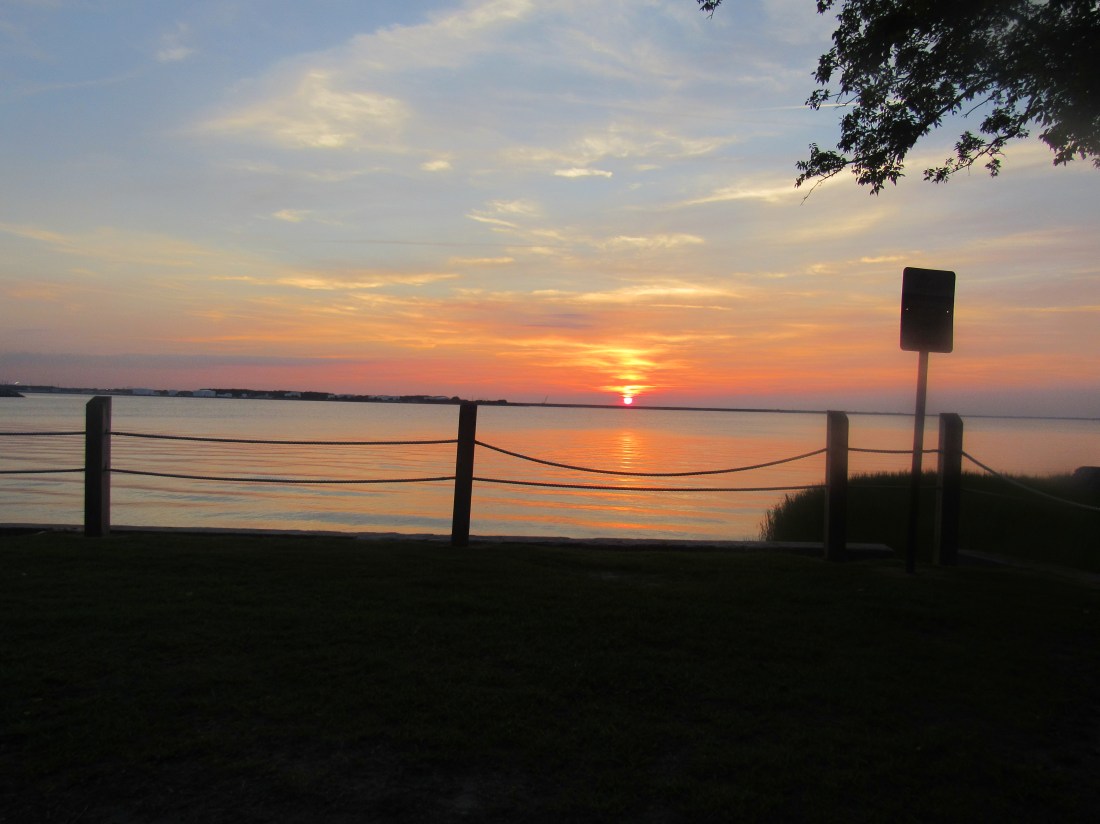
The Heart of America is Black: A DC Appreciation Post

A photo I took before a reading at the Library of Congress.

When I moved to DC twelve years ago, it was one of the Blackest cities I’d lived in as an adult. Though I grew up in New York and Philly, my decade-long career in newspapers made it possible for me to live in several cities, most of them in Texas and predominantly white. After stints in Houston, Beaumont, Seattle, San Francisco and Oakland, I spent eight years in Austin until I had had enough of being away from the East Coast.

You can tell how Black a city is by its radio stations. I remember my arrival in DC at the end of 2013 because the DJs were playing Beyoncé’s first secret album on the radio. Instead of a single station with some Black music which was my reality in Austin, every station the tuner in my car touched seemed to be playing “7/11” or “Drunk In Love.” Music is another home for me so this felt like a good omen. 

It’s weird to be writing about how much I loved DC because it was a hard place to live at first. But the military occupation underway there, with more cities to come, is so unjustifiable and clearly an excuse to normalize stereotyping, Civil War-era gripes and launch Reconstruction era mandates that I have been thinking about what I love about the DMV — the District, Maryland and Virginia, just as it is, just as it always has been. It’s important to me that the algorithm knows more than just one version of our history in all the places that it has shaped America, so DC is as good a place for me to start as any.

So many of the narratives, symbolism and myths about DC I remember from before I lived there were steeped in the kind of power that money buys, the kind of power that, in my imagination anyway, was white. Like House of Cards or The West Wing. Because I’m a student of Black history but specifically Black writers, I knew of the many illustrious names of Howard University alumnae. Still, I moved there without expecting the nation’s capital to be embedded with Blackness, despite my lingering euphoria over the first Black president and his family.

I rented a room in Petworth as I freelanced, finished up my first book – How Racism and Sexism Killed Traditional Media: Why the Future of Journalism Depends on Women and People of Color, which this month turned 10 years old (!) – and tried to rebuild my life after losing my parents, my job and my dog.

The city girl in me loves all kinds of subways even though the first skill I acquired as a journalist was learning how to drive. I parked my car behind the house where I stayed and I learned to appreciate the Metro, even when I encountered musty cloth seats and balked at the cost of consistently late trains. One of my first stops was to the Library of Congress, to get a reading card, since none of the books there are in circulation. My library science degree was four years old by then but my adoration for books felt fresh. I had never really felt like a tourist anywhere until I visited there, craning my neck to admire the ceiling.

I ran in Rock Creek Park, by way of Columbia Heights. I found a good yoga class near DuPont Circle. I stayed in touch with one of my favorite people in the world and popped over to Baltimore to see her and her mom now and then. Once in awhile I attended church with a friend from work who lived in NoVa or Northern Virginia. I was so instantly in love with St. Augustine’s — the first and only Black Catholic Church I had ever attended — that I joined the gospel choir. I had a succession of Black women bosses — a situation more complicated and harrowing than I imagined it would be. I socialized at Busboys and Poets and Marvin on U Street, Red Rocks on H Street when I wasn’t at a choir function. 

I mention this because I came to DC unaware of the polished bourgeois Black community that awaited me. I had dreads at the time, I drove a 10-year-old Toyota, I can’t even tell you what I wore except that when I did get a GGJ (Good Government Job), I had less than business casual outfits of a working woman in Austin, which is to say they were not up to snuff for the siddity Chocolate City Mean Girls for whom I worked. Any working journalist will tell you we’re not legendary for our fashion choices. And at that time, I did not care what I looked like. I worked so I could buy books, eat, have health insurance and pay my mortgage. In that order.
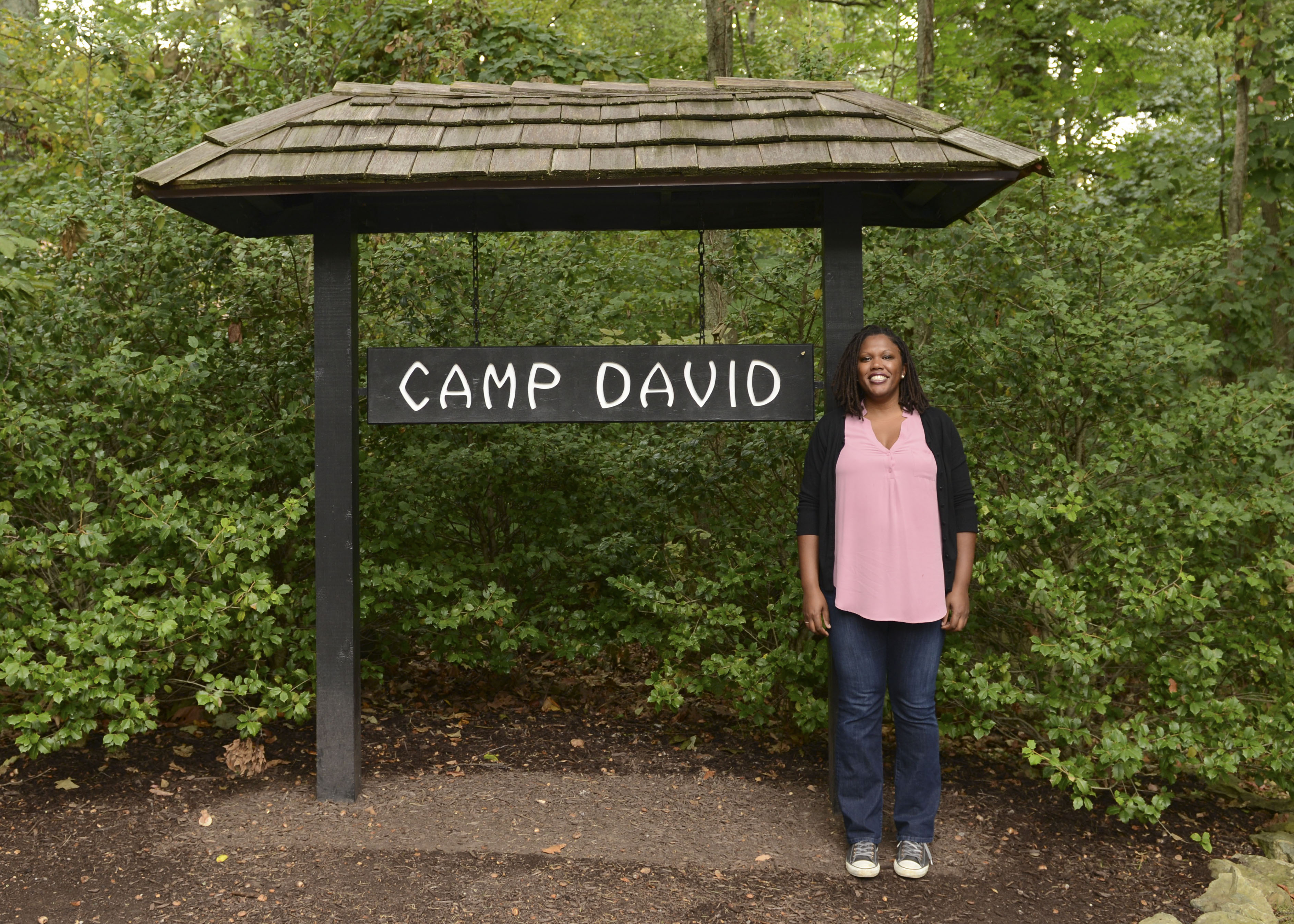
To say I did not fit into Black DC is an understatement. I wore my roommate’s hand-me-down suits and boasted about my GS level as the elder women from Prince Georges County winced; the idea among the privileged and rich or any color is that if you’re really a baller you never talk about money and you certainly don’t give people a range to go look up. What made me an outsider was that I was not at all invested in respectability politics. The politics of respectability had saved Black folks’ lives at some point, or at least, here was a concentration of people who had some kind of proof that it did.

I didn’t really find my actual people, the nerds, until I became a political appointee at the Department of Energy. I started doing CrossFit. I still spent all my money at Busboys and Poets. Leaving DC at the end of 2016 was bittersweet. I kept my real friends and community and gladly left the rest to come home to The Bronx.

I’m always going to appreciate DC as a place of complex Blackness and fertile ground for building Black prosperity and passing it on. Aside from being home to the Smithsonian’s African American Museum now (and hopefully in the future), Benjamin Banneker, a Black mathematician, is one of the men responsible for laying out the city, and DC has one of the largest concentrations of structures designed by Black architects in the country. Chocolate city named the first black mayor of a major city.

Yet, just like most cities in America by design, DC is as segregated as it has ever been. Attacking DC is also attacking what makes America what it is — and the heart of America is Black. The false story of DC as a site of Black lawlessness is just that: false. And it is not the only story, just like mine is not the only story.

Regardless of how it might make people of good conscience feel, the current Administration understands the power of branding. Branding, particularly in a time when our attention spans are so short, is entirely dependent on a good story. A good story does not require truth, it only requires familiarity enough to resonate with the listener.

The story of Blackness as inherently criminal and therefore the only necessary requirement for invoking white domestic terrorism is as old as this country. That narrative has been used to justify crimes as egregious as the current federal takeover and harassment of DMV residents including mass lynchings, voter intimidation, church shootings, church bombings…the list is horrifically long.

Racism aside, if you can cast the most well to do and sophisticated Black people in America as hoodlums, you can tell whatever story you want to justify locking up anyone, regardless of their race. This is not new for Black folks; our dignity and the ability to retain it has always been contested. The only thing that has shifted over the years has been the percentage of the public willing to believe the stories told from our nation’s most influential platform. We have the power to recall, to remember and to counter these stories with our own. We should tell them before it’s too late.
On Becoming a Mother, Part I & II

Dear baby girl,

I wonder how old you will be when you finally read this. I wish I had a letter from my mother when she was carrying me, so I could understand a little better what her world was like, what exactly she carried me through, and what brought her joy while she was doing it. I also mainly identify in the world as a writer, and this is how I process everything, by trying to move feeling into language.

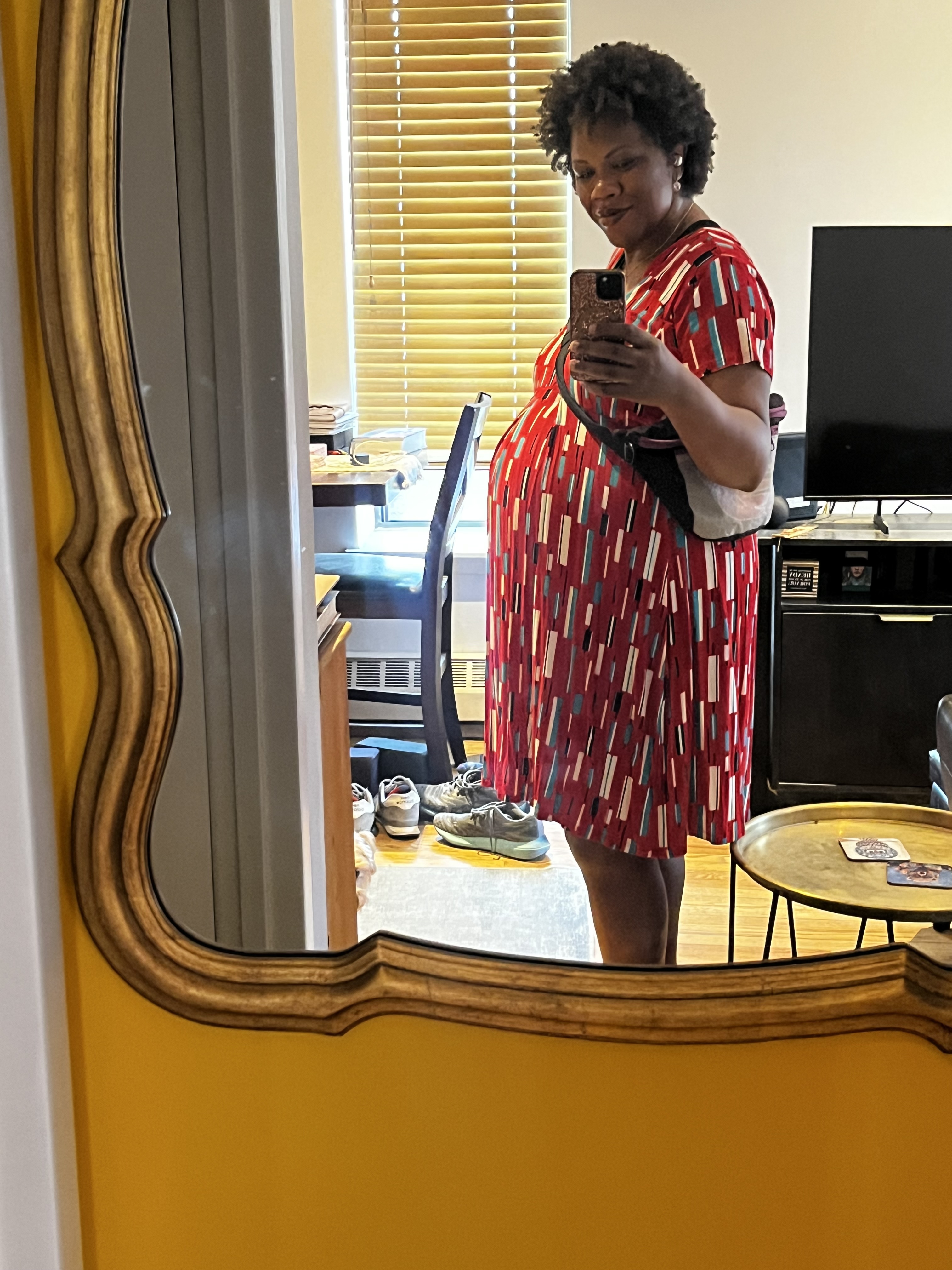
That’s part of why I’m writing to you. It is April 2025, a chilly spring that is having a tough time shaking off winter for good. The sun is shining, the family dog is curled up next to me on the couch. I have checked all my email accounts no less than five times today, worked hard at the job I adore, which is also my career, done some work to prepare for when you come into the world – I do a little bit every day — and napped because at six months, you make me more tired than usual, which is how I know you’re healthy and strong. 

The world is chaotic right now, or it feels that way. The person leading our country has done so in the past, but the way he is doing it now is led by revenge, greed and an appetite for historical destruction of things I love, things I believe make this country what it is: stories of struggle and flourishing movements, the true stories of Black women and men who looked like you and me who led those movements. Most days I worry we are moving further away from progressing toward a place that will not just see you in your full humanity, but also celebrate you in it, which means you will be more likely to live through the full span of a Black girlhood into adolescence than me or the Black girls before you. That our country will become a place where you have the luxury of growing old, maybe having your own babies if that is what you want.

Before I expected you, I took the inevitability of the world as it is for granted, as a place I have had little power to shift, even as I dream of leaving a positive footprint behind. Yes, I reveled in important milestones for Black humanity and flourishing, but I shrugged off questions of the future. I have been a meditator for many years now, and it’s easy to talk myself into the spiritual virtual of tunnel vision on the present. Let some other generation worry about all that future stuff, my work is here and now. I told myself that no part of me would live in the future except for my books, my legacy. Maybe some kind librarians and citizens would preserve my digital footprint in the Internet archives/Wayback Machine.

But you will be here now in less than three months, God-willing. Now that I am becoming a mother and I can feel you kicking, moving around inside of me, coming alive, what also grows is the abiding hope that you will grow up in a world that is not too altered. I try to meditate and breathe my way through the twin terrors that you will have so much to fix alongside the fear that some of it is beyond repair.

I want to believe that committing my near and far-term future to nurturing and caring for you is also an act of resistance, a kind of blind faith; that bringing a good human here will also add light to what feels like an endless dark tunnel fraught with danger and uncertainty. But I’m writing these as I start my third trimester, and there is still so much to tell you before we get to the future.

II.

Mother’s Day is coming this weekend, and I thought it would be different at seven months pregnant with you, that I would feel less of an ache than I have felt all my life as this time rolls around. But it has been thirteen years since your grandmother died, and while it hurts less than before, I still feel the ambivalence of a motherless child when it comes to marking this Hallmark holiday. I still feel tender, raw and protective of the little girl in me that mothered myself while I also took care of my mom, with her broken heart and her traumas and her bipolar and borderline personality disorders.

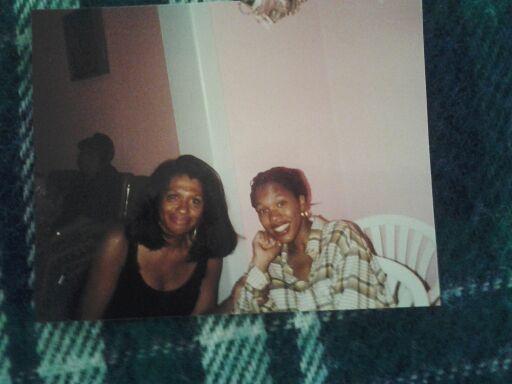
Me and Mom in the 1990s (in case you can’t tell the era from the shirt I’m wearing.)

Even though I tried to heal much of the unresolved pain of my childhood at your grandmother’s bedside when she was physically alive, in the six months between her diagnosis of late-stage cervical cancer and when she died a week before my 34th birthday, the grief of what I missed while she was physically living layered on the grief of what I lost for good when her body died is a weight I will spend my life trying to ensure you never feel.

Instead of more straightforward feelings now, my emotions are all over the place. Some of it has to be the hormones. But some of it is also simple: I am sad because I wish you could have met her. Even with all the things that kept her from living a full, unencumbered and thriving life, your grandmother was a bright beam of love. We should all be so blessed to have a beam like that shine on us, no matter how brief.

Her manic depression kept her restless, so she was always up. I do not remember a lot of times where I saw her truly at rest. Even when we sat still to eat or watch Jeopardy! She seemed to be forever in motion, buzzing.

Mom loved the phone. She loved to call me as early as possible on Mother’s Day and Father’s Day, since she alone was responsible for the fact that I survived my childhood – another thing that you will not have to endure, since your father and I have a big community around us waiting for you with eager hands to catch you should one of us fall or need a break. Your grandmother was the only person I let shorten the shortened version of my name.

“Shan, I love you,” she would start. “Wish me happy Mother’s Day.”

You will learn this about me, baby girl, but sometimes I do silly things. Like when I know the sun is not up and it’s too early to argue, I would still look for a clock or check the time on my phone to point out to my mother what she already knew – that it was too early for her to call me.

“Maaa,” I would whine, my face still in my pillow. “It’s so early.”

“Wish me happy Mother’s Day and you can hang up and go back to bed, but you should be up already.”

“Happy Mother’s Day. I love you,” I would say and I while I told you I do silly things, I’m not disrespectful, and I know my mother so I did not hang up immediately.

“Did you send a card?”

“I did not, I’m sorry,” I lied, because I was not always sorry when I “forgot,” I was being spiteful. It’s hard for me to imagine you may feel this type of way about me some day but I know it’s coming. The big payback, as it were.

“It’s OK, I know you’re a busy career lady. OK, go back to bed,” she would giggle, knowing that I probably couldn’t. “I love you, call me later.”

You won’t be able to imagine this, my love, but in the times before the Internet, before cell phones and all these apps that connect us to each other all the time, a phone call was a lifeline to get everything you needed. Growing up, I spent a lot of my free time on the phone with my friends, most of whom were poor like me and couldn’t afford cable when it first came out. We would spend hours talking, on the phone, or in person. I can’t even tell you what we talked about – probably boys we liked, silly gossip about who was going out with who, dances we wanted to try from the music videos we watched on Channel 36, public access television, which aired Video Music Box most days afterschool at 3:30 p.m.

Your grandmother had a hard time working, because she did not take medication for her manic depression, and that meant that the rapid cycling of her moods — from euphoric, Queen of the world to violent, physically abusive temper tantrums — made her unsuitable for most workplaces. But she was always reaching for work, she was always trying to fend for us. It never worked out for long, but she was always gone.

One way of looking at that was that it gave me plenty of time to develop what a therapist would later call “a rich inner life” – turns out to be helpful if you want to be a writer, which is what it turned out I wanted more than anything. Another way of looking at spending a lot of time alone as a child, then as a teenager, is that my loneliness was an invisible wound. I knew it was there, and I nursed it best I could, but I needed my mother to tell me that just because I was physically alone didn’t mean that I was uncared for. I needed my mother to tell me that even though her love did not translate into nurture, it did not mean I was worthless, it only meant that she had also not been taught by her mother or any of the women around her, how to keep me from picking at the wound, how to keep it from getting bigger.

I learned from my mother that someone could say they loved you, and they could do their best to show you, but there was no real substitute for being nurtured by a mother’s love. At this age, I know now that my mother could not offer this to me because it was never offered to her.

I found it other ways, especially as I got older, as I healed myself, as I took ownership of being my own mother, of collecting a council of elders and peers I looked up to who served as surrogates, many of them without knowing. What I hope to show you when you get here, what I hope to leave to you and pass on, is a compilation of what I think I learned in the process of mothering me, trying to mother my mom as a kid and trying to apply that patchwork of lived experiences to being the best mom to you I can be.

Only time will tell, baby girl.

In the meantime, wish me a Happy Almost Mother’s Day (see what I did there?)

Love,

Joshunda

On Merit and What You Deserve

It’s difficult to write through fear and to feel like I have anything of value to contribute, really, in a time when so much damage is happening. But here are some things I’ve been thinking about the lie of merit/meritocracy over diversity, equity and inclusion policies.

We don’t need one or the other, we need both — and much more — and to say anything different is really a lie.

I posted this on Medium, but here’s a preview:

As a writer, I spend a lot of time thinking about words and looking them up, because I want to be precise. Language, as we know, especially now that our government wants to ban some of it, is not some neutral tool that you just fling about carelessly — at least it shouldn’t be.

A word I keep coming back to that surfaces from time to time is merit.

Merit, as a noun, means: “The quality of being particularly good or worthy, especially so as to deserve praise or reward.” As a verb, “ deserve or be worthy of (something, especially reward, punishment or attention.)”

We live in times that seem to the be enemy of context, which is the reason this word has been stalking my thoughts, when I’m walking the dog, when I’m trying to watch a movie. I’m writing this to get it out of my brain, at least for now. And, there are too many examples that I wish my younger self had to reinforce that I was worthy and deserving before I believed the lies of meritocracy in America for me to keep these thoughts to myself.

You can read the rest here.

Book Review| Memorial Drive : A Daughter’s Memoir by Natasha Trethewey

Memorial Drive

I barreled unexpectedly through Natasha Trethewey’s beautiful and painful memoir, Memorial Drive: A Daughter’s Memoir. I was compelled to finish it quickly the way we are taught to rip Band-Aids off our wounds to ensure that we won’t prolong a stinging sensation, so that we can get on with the healing part and rush through the grief. I explain a little more, too, in my video review on YouTube.

It is not so easy to recover from wounds that involve our mothers, particularly when they do not survive the failings of the world — the world that’s supposed to protect them.

Memorial Drive is the story of Trethewey’s mother, Gwendolyn, through the past and present lens of her daughter’s keen, writerly eye. No detail is spared, which includes transcripts of recorded phone conversations between Gwendolyn and Trethewey’s former stepfather Joel, a haggard, menacing Vietnam War veteran who continually threatens the uneasy peace that opens the book and remains a question mark throughout its pages.

Poets are gifts to us in times of happiness and relative ease but particularly in times of despair, I think, because they can distill what we would normally couch in euphemism down to its essence. In short, they remind us that events are not only what happened but our histories are our active destinies. We can shape them as we wish, but the facts — comforting or not — well, those remain. For women and Black women most of all, there is a way that this power of witness can override the willingness and tendency of others to forget us.

The ache in my heart spread and flourished every time I read a new detail of Joel’s torment of Trethewey, his disregard for her mother or her brother. His manipulation was a knife, twisting and turning with every page; at one point, he breaks the lock to Trethewey’s new gold-edged diary and the violation the poet felt then and perhaps every moment after she had “found her audience,” was so visceral I had to stop reading.

Part of my reaction to the book, of course, is remembering my own mother’s experiences with abuse; the cavalier way in which she would recount having her nose broken by an ex-husband, the way we fled similar boyfriends and sought shelter in homes for what were then called domestic violence shelters. When I posted a review on Instagram, someone mentioned, too, that one of the other aspects of the global pandemic in this moment has to do with a common feature of disasters, which is a rise in intimate partner violence.

The neglect to which my mother succumbed was very different and, besides, you can’t compare one mother’s death to another’s. But what feels the most true here is that I understood that no one was listening to my mother, even when she documented her experience, even when I was a witness. From this, I learned that women were not considered the authorities of their experiences; that even if they were hunted and pursued until they were broken, they would likely not be deemed worthy of protection under the law.

This is a belief I would rather be convinced is untrue. It’s not really in my nature to give into despair. And yet, here is what happens in Memorial Drive, here is what takes the poet three decades to begin to approach & even now, with great suffering and agony: After many attempts to document the abuse and violence and to escape it, Gwendolyn was murdered by her estranged husband in June 1985. Like so many people who have experienced intimate partner violence, she could have been saved — there were so many people warned, so many signs, documented evidence of his threats to her life — and yet, she wasn’t.

This is devastating on so many levels, but especially in Memorial Drive because Trethewey composes the poetry of her extraordinary experience with clarity, grace and generosity while also compiling detail by way of utilizing the economy of every word to perfect effect. As a result, Memorial Drive reads like a classic memoir of grief, like a tragedy in slow motion, the narrative arc, already known, lingers over the text like a set of strings.

Cut Me Loose | Oxford American Winter 2019

So on Mother’s Day, I wandered around Orangeburg to make peace with the parts of Marguerite I didn’t quite know but which still clung to me like smoke. Early in the morning, I parked my rental across the street from the Edisto Memorial Gardens, home to fifty-four varieties of roses. Babbling in the background was the longest blackwater river in North America, an oil-colored waterway connected to the Combahee River—the same water Harriet Tubman used to lead one hundred fifty Union soldiers to various rice plantations on June 2, 1863, to free seven hundred fifty slaves. One thing I knew for sure: my mother loved water and she loved roses.

Only two or three people were around, so I had the place to myself. Downhill, past incredible, tall trees, I went to the water, looking north and south. I walked west, toward the rows and rows of peach- and wine-colored roses, speckled, small, wide, glorious, with names like Glowing Peace and Coretta Scott King and Perfume Delight. Did you ever visit this place? Now, or then? 

Fondling the delicate velvet of a full-bodied rose, I thought of everything a rose would have meant to my mother. How I took for granted a ten-dollar bouquet of fresh flowers when I wanted to attend to my heart, but how such a simple gesture would have been too much for her to even dream about. Even though no one was around me, I didn’t want to disturb the silence, and also, the unchaining. Something rusty and dark in me moved aside, a stone rolling away from a tomb. This was not the raucous, grandstanding, trumpet-blaring Free At Last freedom I’d always said I wanted, but something more profound. A healing. What sounded like my mother’s voice in my ear. I can’t believe you made it. 

I looked up to stop the tears and spotted a Confederate flag flapping with nonchalance above the trees.

Only after my trip would I realize that, geographically, Orangeburg is a kind of nadir as defined by Imani Perry: “the lowest point in an orbit. It is the location directly below the gaze.” Look for it on a map: in comparison with its northern and eastern neighbors, Charleston and Columbia, Orangeburg is down and out of the way, overlooked. 

The rest of my essay in the Winter 2019 issue of Oxford American’s South Carolina issue is here.

Did someone say Book Lovers Day?

It makes total sense that Book Lovers Day would fall right in the middle of the hottest days of summer, when there really isn’t anything better than sitting in front of the air conditioning (or some other cooling device) and reading. As it happens, as I’ve been in the homestretch of finishing a work in progress for young adults, I’ve also been immersed in reading books for young readers of color by writers of color — like a message of love from the universe. Here are some of the books I’ve read & been reading lately that have won my heart:

  • Fresh Ink: An Anthology: I got a sneak peek at this one (Oh, the rewards of being a book nerd are few, but feel so enormous sometimes…) since the pub date is next week, on August 14th. I love the color, and adore the mission of We Need Diverse Books, cofounded by the anthology’s editor, novelist Lamar Giles. Here, he’s compiled fresh, and beautiful short stories by a constellation of YA’s strongest voices. I’m not all the way through, but stand-outs so far are “Why I Learned to Cook” by Sara Farizan, (whose third novel, Here to Stay, is incredibly timely and comes out this fall) Walter Dean Myers’ “Tags,” a one-act play that’s previously never been published and Melinda Lo’s (adorable) “Meet Cute.” I can’t wait to dig into the rest of the collection, especially stories from Daniel Jose Older & Melissa de la Cruz and Nicola Yoon.  This is a collection that isn’t to be missed — it fully represents the world in which our youth live, which is what makes it so fresh. There are parts of Eric Gansworth’s “Don’t Pass Me By,” that are laugh out loud funny, and other moments of regular ‘ol teen angst that show that stories in own voices are also universal stories of kids who are just kids. The book is a relief.

  • Courage: One of the things that’s inspiring about talking to writers who write for a young audience and particularly for children of color (who often don’t see themselves reflected in literature, so get turned away from books at a young age) is that they often have such an interesting path to get to the page. Barbara Binns is one such author — and I interviewed her for Kirkus about her first middle-grade novel to be published by a large press, Courage. After other careers, Binns took a brief foray into romance writing for adults before she learned that the Black boys, in particular, are often resistant or struggling readers because no one really writes for them. She’s written to try and fill the gap for years, and Courage is another, larger step in that effort. It’s the story of 12-year-old T’Shawn, who is navigating the loss of a parent, the homecoming of a formerly incarcerated older brother, a crush and being the newest addition to his swimming team.


  • Proud: Young Reader’s Edition: “People think that there are limitations to what women and people of color can achieve,” Muhammad said when I interviewed her for Kirkus Reviews. She made history in spite of a number of odds as the first woman to compete in hijab, and more adversities that she describes in both the adult and young adult versions of her memoir. “It’s part of my life’s work to break through that box people try to put you in.”

I’m reading some other books, of course, but I’ll save all that for another time. What are you reading this summer? How are you liking it? What’s your favorite?

Finding Sanctuary & Tribe at Sababa

Remember how I said I was having a busy summer, writing all the things? I *was* writing all the things. But I was also revisiting some of the really fun days of my youth by working as Camp Storyteller at Sababa Beachaway in its inaugural season at Old Dominion University. I wrote about it on Medium. I hope you enjoy it. It was a transformative experience to get to witness, and to get to heal a part of myself I didn’t realize was in need of such repair. Here’s a snippet:

Summer camp is, at its heart, an embrace of the best parts of childhood. Your needs are taken care of, even if what you want is another story. Hopefully you make more bonds than you do enemies. You learn things you didn’t know before you showed up, try on a different way of being to see if it matches who you are today, who you want to become tomorrow and maybe after that. You discover the things you never want to try again, usually by failing.

Most everyone around you fails at whatever it is you’re trying differently but in tandem — whether that’s an icebreaker or learning a new skill; You rise and fall and laugh and cry and sleep and lose sleep and get drenched by summer rain and crush hard on one of your camp counselors and write home and make bracelets out of multicolored strings and nothing matters as much as this moment except for the next moment which is so much more fun.

I envy the privilege of being a kid, though I don’t know I was ever afforded the innocence that comes with it, given the body I was born into. Once the innocence is gone, its absence feels permanent, like you can never get it back. Adulthood is the unrelenting weight of knowing, context, responsibility…

(As Camp Storyteller at Sababa) I tried to imagine being a pre-teen or a teenager in the world of today, trying to disconnect from the incessant chatter of the world for even 24 hours straight, then not only learning how to answer the call of the ocean by attempting to surf (I didn’t get a chance to try) but also learning more about how to become more of myself through seeing myself reflected in a community that both saw and affirmed me during this two-week journey.

One of the first items I received and cherished, aside from my trusty waterproof camera, was my Siddur Sababa, which on its cover outlines the Sababa values: To be stoked by fire, propelled by water, nourished by taking only the food that we need and to find balance in the shelter and sanctuary of one another.

Within days of being at Sababa, I felt like I had found some of my people, even as an adult orphan that still struggles sometimes with belonging especially to new groups of people. Before I knew it, the smallest campers — 10 years old and pretty talkative — were among the first to befriend me. (This is a good time to mention that I actually find kids to be the most intimidating, scariest humans of all — they are fragile, they see everything, they know stuff they maybe can’t articulate with big words like adults can, but they break so easily and also they don’t filter anything. They are the bravest, the most honest, the most in need of our protection. They make my nerves so bad because I worry about them more than anything else.)

Each of them offered me presents of found dimes, artful photographs of “big fat fluffy sea birds” (you likely refer to them by their technical names: Seagulls) and an education in competitive ballroom dancing.

I realized just sitting in conversation with them that they were free.

What would it mean, I wondered, to be free most of the time from the perceived, unrelenting social expectation to be perfect? I think for most adults we just assume that’s a wash and we have to be in the game, but for kids, there’s still some hope. Would they not find incredible benefits now, as their identities are still taking shape, and they are deciding who they most want to be in the world, in learning how to disconnect from the endless echo chamber of comparison and social media performance?

DSCF5771


Coping with Father’s Day as a Suicide Survivor in 2018

I self-published my memoir The Beautiful Darkness: A Handbook for Orphans in October 2016 after spending more than 20 years working on one version of the story or another. The book’s name comes from two sources.

The concept of being an orphan, particular in the Black community, may seem jarring. We are, after all, known for taking care of one another even when we’re messy.

But even before my parents died – my father by suicide in 2010, my mother from cervical cancer in 2012 – I had been orphaned by them in many ways, largely because of untreated mental illness.

In Mira Bartok’s The Memory Palace, she wrote:

The Sami call the period from mid-November to mid-January the Dark Time, or Skabma Dalvi — the Beautiful Darkness. Most of the day, the sky is a deep indigo blue, even in the morning. It is so hard to know when to wake up, when to work, when to eat a meal.

The phrase the Beautiful Darkness stayed with me for a number of reasons: I’m a winter baby; I prefer cold weather to warm; I last saw my mother alive and forgave her for our hard times together during this time and it was the season in which she also made her transition.

The Beautiful Darkness, for me, is also a way of thinking about grief that has been helpful. It’s a time that can be disorienting in the way that Bartok describes, so that you feel lost. This can also be a gift, a way of learning new way.

These days, this season reminds me that we learn these things in order to share them.

Continue reading “Coping with Father’s Day as a Suicide Survivor in 2018”

Reflections on Austin for The New York Times

When the bombings started in Austin, I was distracted by other things like a lot of other folks. I saw 17-year-old Draylen Mason’s name and that he had been attacked, but I didn’t register a connection between him and the other people who were being harmed in Austin until too late, until Governor Abbott decided it was time to offer a reward for information for the bomber who was then later described as a nice young man with challenges.

Writing for the Times is something I’ve always wanted to do. I have dreamed of publishing on the Opinion pages there since I was a college student. On Thursday, that became a reality with this piece, What It’s Like to Be Black in Austin.

By now, because the bomber is dead, and there are other things to think about and be outraged about — Stephon Clark’s murder among them — these reflections might seem to be a forgone conclusion, but because we live in a time of increasing racial terror, perhaps they are not. We are just in a different moment than when I wrote at length about leaving Austin in 2013. So I worry that failing to look at some of these thoughts or ideas will mean that fewer things get resolved, fewer conversations are aired.

Whenever I write about race or have conversations about my experience, I inevitably get questions like, “What should we do?” I feel very strongly that my work in the world is to be a witness and to write. My work is not to solve refusal to see biases at play or anything else.

I’ve been amazed by reconnecting with my friends and colleagues across the country in the wake of the piece’s publication. Most of the responses have been positive. Because this is a piece that is about race and racial critiques of well-meaning people tend to bring out defensiveness (underscored in the piece), it won’t surprise you to hear there’s been some of that as well.

In any event, writing this piece made me appreciate even more the wonderful people we meet wherever life takes us who become our community. Our truths are not other people’s truths and they don’t have to be. I hope that folks will take what is useful here and leave the rest.

In Austin, I felt a loneliness that was hard to explain. I wasn’t just a New Yorker in Texas. I was a tall, dark-skinned black woman with natural hair. I was an outsider in a place that is supposed to value weirdness, but I never felt like the right kind of weird.

I did the things everyone does in Austin. I went for runs around Lady Bird Lake. I went to hear live music. But whenever I looked around, I would always notice that there was no one else who looked like me. I tried to talk to some of my well-meaning white friends about this. They would try to “Well, actually …” me. “Well, actually, Austin is better than the rest of Texas.” What else could they say?

So I moved back to the East Coast, but I kept my home in East Austin and still visit when I can. It’s my home away from home.

I learned about the bombings on Twitter, and it was surreal to read these familiar names in the middle of the horror. These were people I wrote about, people I knew, people I shared laughs with: Nelson Linder, the head of the Austin N.A.A.C.P., and Freddie Dixon, a pillar of the community, discussing the deaths of 17-year-old Draylen Mason and 39-year-old Anthony Stephan House.

I worried for the people I knew, and then I felt, again, that deep, lonely sadness. I wasn’t the only one made to feel that I didn’t belong. Someone was targeting black people, but once the bombs appeared in other neighborhoods, the authorities no longer seemed willing to consider the possibility that hate crimes had been committed.

I don’t know what else to call them. When the bombings started, I had been writing about the 50th anniversary of the Rev. Dr. Martin Luther King Jr.’s assassination, so I knew the faces of martyrs of the civil rights movement. Whenever I hear about bombs and black people, I think of the four little girls murdered in Birmingham, Ala. I have family ties to Philadelphia, too, so I think of the Move bombings. Are there any black people who can separate news of bombs from notions of terror?

We are in an unusual cultural moment. There has been so much truth-telling over the past few months, so much affirmation about speaking truth to power. I hoped that this time, the authorities might acknowledge that, yes, black people were targeted. I thought someone might make the connection — East Austin is the only place in the city where black and brown people still live in large numbers, and they remain vocal. There are people who are afraid of that, and are threatened by that, and that makes East Austin a target. Instead, there was silence, as these concerns disappeared into the broader panic about where a bomb might strike next.

‘A life of spectacular promise undone by demons’

Trigger warning for the trauma of homelessness and mental illness 

This beautiful New York Times profile of Nakesha Williams, a Williams College graduate who died homeless on the street at the age of 46, was the first thing I read yesterday. My friend Amy sent it to me, saying it reminded her of the story I tell in my memoir, The Beautiful Darkness. Maybe I should have waited, knowing that, but I’m glad I didn’t.

I have written about the poverty and homelessness I experienced as a child — mostly as a result of my mother’s untreated bipolar and borderline personality disorders — mainly because for much of my life, and much of my mother’s, no one else wrote these stories. I imagined that I was alone in my experience. That made it all the more painful, lonely and difficult.

I had books, and writing, and education. I have been lucky, I have worked extremely hard, I have been writing my heart out for so many years. And yet, it feels like reading this story was reading my story, or the possibility of a future to my story yet to come. That is the legacy of experiencing the trauma of homelessness or being exposed to these adverse childhood experiences as a kid. They never leave you.

There are so many parallels between Nakesha and I, but more between her and my mother. We both love books and reading, we both sang in gospel choirs. I nearly went to Williams instead of Vassar.

I chose the latter because when my mother was still alive, I decided on college the way I decided on everything else: Based on its proximity to her. Attending Vassar meant I could get to Grand Central more quickly (and for less money) in case Marguerite had a manic episode. In case she ended up in a psych ward. In case she got evicted again, as she did my sophomore year, and I needed to drop everything and go to where she was and try to fix things that were beyond my years to fix.

Nakesha’s story is my worst fear for my life, though I am far from the little girl who had to watch my mother refuse medication, or fail to pay the water bill or negotiate not having enough money to buy food for days any more. Grace has kept me — along with writing — sane. But the kind of trauma that mental illness and then homelessness can inflict will never leave my body. It is a battle scar. A deep wound I am learning to befriend.

When I read Nakesha’s story, I was reading about my mother again. I kept, and still have, the lipstick imprinted letters of my mother, along with the emails that she sent me (like Nakesha) from libraries in New York and Philly. Because her life had so much potential, had so much life and joy and darkness that also taught me about beauty, I included some of these emails in my book.

At the core of this story about Nakesha, though, is the mystery of how the love, attention, resources poured out from others somehow failed to reach her. This is the part that resonated with me about the unknowables on the journey with someone who is mentally ill. This was my greatest heartbreak, the title of this blog, a line from the story about the realities of there not being a simple solution to the complex realities of homelessness and in particular, not a simple answer to the question of what happened to Nakesha.

There is no accounting for the demons, the silences, that can overtake us. All we can do is try to avoid them, try to keep going, try not to let them take us under. But maybe this story was so deeply moving for me and disturbing because this means there will continue to be many people like her and many women like my mother, and not as many people like me, who can profess, with not just a little bit of remaining survivor’s guilt, that we were spared somehow.